• The move to the new server is done. There are some software and database maintenance updates in process. This has us passing the hat around to help out. We appreciate any donations. Seriously, even a dollar helps. The payment page may be found here - https://www.audiokarma.org/support.html

Help with the flutter echo in the room

pixelandsoda

New Member
Hi Guys,

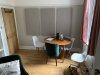
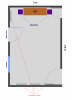
I'm struggling with my listening room acoustics. The room (3m x 4.5m) itself is not ideal in terms of the layout, and there are some elements that can't be changed due to its characteristics e.g. 3x doors (including one glazed kitchen door) and window.

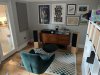
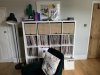
I've managed to reduce some of the reverb and flutter echo a bit by putting some acoustic panels on the walls, some record shelves and a rug on the floor. I also experimented with the listening position but I'm still not happy with the outcome. Actually the best listening experience I've managed to achieve is when I'm seating very close to the speakers approx. 1m, but it seems agains the rules since the distance between the speakers is 1.6m apart.

What else would your recommend to do in order to reduce the sound reflections?

Thanks
 

Attachments

  • IMG_1156.jpeg
    IMG_1156.jpeg
    118.2 KB · Views: 65
  • IMG_1155.jpeg
    IMG_1155.jpeg
    91.8 KB · Views: 67
  • Screenshot 2021-08-21 at 16.39.00.png
    Screenshot 2021-08-21 at 16.39.00.png
    204.7 KB · Views: 65
  • IMG_1157.jpeg
    IMG_1157.jpeg
    114.6 KB · Views: 63
Register to hide this ad
Nice room.
You can cover glass w heavy drapes or curtains. Draw them back for light when not listening.
We put a heavy curtain over our sliding glass door & it made a big difference.
Glass is highly reflective.
Good luck.
 
What else would your recommend to do in order to reduce the sound reflections?

Nice looking room! A couple of suggestions I can make would be:
  • Lower the acoustic panels to try and get the center of each panel as close to ear level as possible.
  • Get a panel or some absorption on the reflection point to the right - if you're lucky, it can mount on the door.
  • Consider swapping the art by the stereo with the treatments by the table behind you.
  • Consider putting a couple of panels on the ceiling at the stereo end.
What I found worked best for me was to deadening the area around the speakers and using less absorption behind me.

Good luck! I'm sure you can get things sorted in a way that balances the visual and acoustic requirements you're after.
 
Thanks guys for the tips. I've played with covering the glazed doors with a comforter and this treatment reduces some reflections indeed. The next step worth trying would be adding some diffusers/absorbers behind the speakers. Unfortunately, because of the room layout (cabinet doors) I'm unable to have a symmetrical treatment in the corners on both sides, but I might try adding them in the ceiling corners instead. I'm also considering adding a bigger rug that would cover the front area and the back of the room. Would the larger rug work better than a smaller but thicker one? Lastly what do you think about foam absorbers like these ones https://www.efoam.co.uk/acoustic-fo...0RbCKkPRBuZo20cp8B7FCAUZmHoBzJyIaAmzyEALw_wcB do they even work if yes to what extend?
 
Nice looking room! A couple of suggestions I can make would be:
  • Lower the acoustic panels to try and get the center of each panel as close to ear level as possible.
  • Get a panel or some absorption on the reflection point to the right - if you're lucky, it can mount on the door.
  • Consider swapping the art by the stereo with the treatments by the table behind you.
  • Consider putting a couple of panels on the ceiling at the stereo end.
What I found worked best for me was to deadening the area around the speakers and using less absorption behind me.

Good luck! I'm sure you can get things sorted in a way that balances the visual and acoustic requirements you're after.
Thanks, I've made an experiment and moved all the back panels to the front and there was a slight improvement in the sound. Someone recommended installing honeycomb blinds on the glass doors and this seems like a non invasive option.
 
Reflective items behind your speakers usually not good. Try some absorption behind the speakers. The glass door is problematic. Nearfield listening may be your best option with this room.
Is there any specific kind of the absorption panel you have in mind? I've tried the basic foam absorbers and they make only a minimal improvement.
 
You could be having a floor to ceiling echo problem. The carpet may not be enough to fix that. Assuming it's an acoustically transparent carpet with an open back and no plastic stain guard built in, you could try putting a thick felt carpet pad under the carpet. I'd also consider getting a bigger carpet that goes completely under the speakers as well as reaching back a bit past your listening position and putting a wool felt carpet pad under that.
 
Sit in your listening chair & have someone move a mirror across the floor.
Where you can see your speakers reflected in the mirror, thats where you need the rug.

Some folks have good results w the foam absorbers but there are better options.
I think you'll need something thicker over the glass than an honeycomb shade. I don't see that as being very effective - they're pretty lightweight.

Good luck. Short of having some measurement equipment, there's a lot of experimenting before you get where you need to be.
I messed w my last listening room over 6 months before I felt I was in a pretty good place.
 
I'm also considering adding a bigger rug that would cover the front area and the back of the room. Would the larger rug work better than a smaller but thicker one?
I agree that the floor is the main problem with your room. I'd cover more of it.
How have you determined that you have a flutter echo rather than just generally lively acoustics?
 
I've ordered a rug much larger than the current one, so I'm hoping it fixes some issues. Good point rothwellaudio what is the main difference or how to determine if this is a flutter echo or rather as you said lively acoustics?
 
I agree that the floor is the main problem with your room. I'd cover more of it.
How have you determined that you have a flutter echo rather than just generally lively acoustics?

I've ordered a rug much larger than the current one, so I'm hoping it fixes some issues. Good point rothwellaudio what is the main difference or how to determine if this is a flutter echo or rather as you said lively acoustics?
 
I've ordered a rug much larger than the current one, so I'm hoping it fixes some issues. Good point rothwellaudio what is the main difference or how to determine if this is a flutter echo or rather as you said lively acoustics?
The simple test is to just clap your hands and listen. A flutter echo sounds pretty much like the name implies - there's a distinct but very quick series of discrete echoes. It's like a slap-back echo, but there's a series of them, and they occur so quickly that you hear a fluttering effect. It happens when you have two surfaces which are parallel to each other so that the sound bounces back and forth between them. That's why recording studios avoid parallel walls if possible and concert halls have sloping ceilings and non-parallel opposite walls. The smaller the room, the less time there is between echoes, so big rooms don't tend to have flutter problems.
Of course, non-parallel walls in a domestic setting are usually impractical, so absorbtion or diffusion has to be used instead to deal with flutters.
You may find that having that large (Ikea?) shelving unit on the back wall instead of the side sounds better, but my instinct is that there's too large an area of reflective wooden floor. Maybe a two-seater sofa (well upholstered) instead of the chair would help too.
Having said all that, I realise there are aesthetic and domestic practicalities to consider too.
 
I've ordered a rug much larger than the current one, so I'm hoping it fixes some issues. Good point rothwellaudio what is the main difference or how to determine if this is a flutter echo or rather as you said lively acoustics?

Make sure the carpet is open backed and doesn't have a stain guard or other hard reflective layer built in. Don't forget the thick wool felt carpet pad! It makes a huge difference. 100% pure wool felt 1/2" thick would be great. I have no affiliation with any sellers of carpet pads of any kind, but here's a link https://www.rugpadusa.com/collections/felt/products/eco-plush-1-2
 
The simple test is to just clap your hands and listen. A flutter echo sounds pretty much like the name implies - there's a distinct but very quick series of discrete echoes. It's like a slap-back echo, but there's a series of them, and they occur so quickly that you hear a fluttering effect. It happens when you have two surfaces which are parallel to each other so that the sound bounces back and forth between them. That's why recording studios avoid parallel walls if possible and concert halls have sloping ceilings and non-parallel opposite walls. The smaller the room, the less time there is between echoes, so big rooms don't tend to have flutter problems.
Of course, non-parallel walls in a domestic setting are usually impractical, so absorbtion or diffusion has to be used instead to deal with flutters.
You may find that having that large (Ikea?) shelving unit on the back wall instead of the side sounds better, but my instinct is that there's too large an area of reflective wooden floor. Maybe a two-seater sofa (well upholstered) instead of the chair would help too.
Having said all that, I realise there are aesthetic and domestic practicalities to consider too.
Thanks, actually there is no flutter echo when I clap in the middle of the room. It only exists to some extend when I clap standing in the both front corners of the room. I can tell the sound is bouncing a bit and it's actually a bit louder and slightly distorted. So I would say it's mainly a reverb in general that causes the problem rather than a fluttering echo except those two corners.
 
Guys, just a quick update on my case :) I've put a larger rug that covers the front and the back area of the room and it seems already making a difference, It can be noticed there is less of the slap echo in the room. It's time for the second line treatment now. Would you rather add bass traps to the front corners of the room, or an absorption/diffuser panel (similar to the one on the pic) on the wall behind the speakers?

 

Attachments

  • Screenshot 2021-09-02 at 10.20.43.png
    Screenshot 2021-09-02 at 10.20.43.png
    793.6 KB · Views: 5
I'd start with bass traps in the front corners. You've already got panels on the wall opposite the speakers so there's no slap echo going on between the front and back walls. And you've also got some diffraction and breakup from the equipment rack between the speakers. You'd also have to take down your pictures to put the diffusers up.
 
Back
Top Bottom