

You are using an out of date browser. It may not display this or other websites correctly.
You should upgrade or use an alternative browser.
You should upgrade or use an alternative browser.
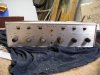
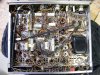
HH Scott LK72B, a dirty dog!
- Thread starter spxer
- Start date

Register to hide this ad

looks mostly dusty but at first glance it doesn't appear to be particularly damaged, missing anything besides knob brites, or hackily modified. Blow the dust out and wipe it down, fair bet you'll find a pretty decent amp under there.
transformers you may have to shoot some paint on, looks like the lam stacks are a bit rusty but thats not really a big deal.
transformers you may have to shoot some paint on, looks like the lam stacks are a bit rusty but thats not really a big deal.

I’ll second gadget! Looks a little dirty, but otherwise all there (minus the knob caps).
worth a shot, just monitor the current. If it starts going way nuts, turn it off. I'd probably bring it up without the rectifier tube first just to check the basic integrity of the transformer and whatnot.
something I've started doing when bringing things up after a long sleep is to sub the tube rectifier with a solid state one. That will let you more slowly re-form the filter caps. Tube rectifiers don't really conduct under about 75v, but a solid state will start right away. Bring it up 10v at a time while monitoring the current and checking for warming caps or odd voltage drops between the sections that don't make sense. If something is really displeased you'll know it pretty quick.
something I've started doing when bringing things up after a long sleep is to sub the tube rectifier with a solid state one. That will let you more slowly re-form the filter caps. Tube rectifiers don't really conduct under about 75v, but a solid state will start right away. Bring it up 10v at a time while monitoring the current and checking for warming caps or odd voltage drops between the sections that don't make sense. If something is really displeased you'll know it pretty quick.




Dswankey
Lunatic Member
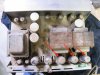
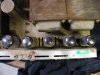
wiped the tops off. the tubes are labeled SCOTT. I assume they are original. Where does on get tubes tested these days?
Good news that they were just dusty , as to are they original yes unless they came from another SCOTT amp which I doubt.
As for testing tubes, see if you can find a local to your region audio repair shop hopefully the have a tester, if not maybe an AK'er local to you who has one can help you out with testing.
Here's some semi recent threads on your unit you might find useful/helpful etc
https://audiokarma.org/forums/index.php?threads/bringing-dormant-scott-lk-72b-back-to-life.893788/
The author of this thread still posts regularly
https://audiokarma.org/forums/index.php?threads/my-scott-lk-72-project.614887/
My guess is she'll clean up really nice

This will be helpful:
http://akdatabase.com/AKview/albums/userpics/10007/HH Scott LK-72B Assembly Manual.pdf
http://akdatabase.com/AKview/albums/userpics/10007/HH Scott LK-72B Assembly Manual.pdf
Depends where you are. Places that do guitar amps will be able to test, or am AK member may be local to you. Sticky up top with members and locations with testers available for use.wiped the tops off. the tubes are labeled SCOTT. I assume they are original. Where does on get tubes tested these days? I remember when a tube tester was in the grocery store and you bought the tubes right there.
View attachment 2698196

kvflyer
Super Member
I have found this more than one time as well. Symptom can be lower voltage and/or hum, depending on design. Recently on a Fisher KX-200, it had developed a hum, traced to the preamplifier section. It was in fact the bias/filament capacitor was totally open (high ESR). Replacement was the fix. (Actually, re-stuffing the original can).With my Scott 222C one of the sections of the electrolytic for the bias was dead.

spxer
Active Member
Looking better! Mostly dust. Compressed air and a chip brush took most of it off. For what didn't want to come off, I tried diluted simple green. The labels started coming off! I switched to water with a bit of Dawn. The labels are still coming off. So I quit cleaning. Brushed some rust reformer on the trans, and then black paint. I read through all the transformers. No opens.


