Many do better than others. This one is not among those. Still enjoy the music!This is my main complaint about most pop/rock studio recordings. They sound like cardboard cutouts with little to no depth and a nice left right spread.


You are using an out of date browser. It may not display this or other websites correctly.
You should upgrade or use an alternative browser.
You should upgrade or use an alternative browser.
Holographic Stereo Image & Volume Level
- Thread starter drp1003
- Start date

fill35u
Super Member
This is my main complaint about most pop/rock studio recordings. They sound like cardboard cutouts with little to no depth and a nice left right spread.
But that soundstage is exactly how you would hear them if you were in the studio, listening to the song on monitors - which is as close to the original event "occurring" as we'll ever get. It's also pretty close to how you'd hear them in concert, if you were in the stereo sweet spot of a FOH system. So it's actually realistic.
That does raise an interesting point. Why is modern recorded pop music so "dry", compared to pop music from decades ago? It must be intentional, as these days it's so easy to add reverb, and the pressure to minimizing file size favors narrowing audio bandwidth.
My guesses would be: Obviously, once you add reverb, you can't take it out. And so many people have their say in how a song sounds, for so many markets, it's better to keep the musical information simple than risk it becoming unacceptable for a potentially lucrative application. It will be probably be remastered for each application, but you can't take out reverb, and synthesizing bandwidth extension is an educated guess.
There's also the point that familiarity sells. Once a trend has become profitable, nobody wants to buck it. Pop music tends to sound the same (while differentiating itself from older music that had more reverb and depth of soundstage).
Another interesting question would be: given the choice, would most people *prefer* music with a deep soundstage? I bet most of us here would. But we audiophiles enjoy meditating on the subtleties in the music, and the pride ourselves on the technical achievements that reveal them. Does the average music consumer care?
DaveVoorhis
Addicted Member
Fashion. Pop music always needs to sound "now" or in fashion, the definition of which evolves slowly. It's evolved away from reverb but may evolve back to it in the future.But that soundstage is exactly how you would hear them if you were in the studio, listening to the song on monitors - which is as close to the original event "occurring" as we'll ever get. It's also pretty close to how you'd hear them in concert, if you were in the stereo sweet spot of a FOH system. So it's actually realistic.
That does raise an interesting point. Why is modern recorded pop music so "dry", compared to pop music from decades ago? It must be intentional, as these days it's so easy to add reverb, and the pressure to minimizing file size favors narrowing audio bandwidth.
We tend to be interested in why a particular sound is the way it is. The average music consumer generally only cares whether it sounds "new" (i.e., in fashion, and thus reflective of whatever qualities are in fashion) or "old" (i.e., out of fashion, with characteristics that identify a past fashion, like reverb) or "weird" (i.e., out of fashion, and without recognisable characteristics of an identifiable time or style.)Another interesting question would be: given the choice, would most people *prefer* music with a deep soundstage? I bet most of us here would. But we audiophiles enjoy meditating on the subtleties in the music, and the pride ourselves on the technical achievements that reveal them. Does the average music consumer care?

Can also hear when the turn their head from the mic, look down etc.The "ambience" in a mono recording is not the same thing as a soundstage. The definition of a soundstage is exactly what I've been saying. Ambience is a part of it. Again, I suggest listening to any Groove Note recording. They are known for having a good soundstage. When I play one I hear a large open space with musicians playing in it. I can also hear when someone steps up to the mic for their solo.

JoeESP9
ESL's & tubes since 83
Can also hear when the turn their head from the mic, look down etc.
I'm inclined to believe that many have never heard a soundstage. The way most pop/rock is recorded there isn't a soundstage for a stereo to reproduce. One listen to a Groove note CD or LP provides an example of what can be done with the latest everything except a bunch of multitracking and studio manipulation.
All Groove Note CD's and LP's are made live to a two track master in a studio.
Adding reverb to a track or all the tracks in a studio recording doesn't result in a soundstage. The result is a recording with a flat perspective that has reverb.
JoeESP9
ESL's & tubes since 83
Can also hear when the turn their head from the mic, look down etc.
I'm inclined to believe that many have never heard a soundstage. The way most pop/rock is recorded there isn't a soundstage for a stereo to reproduce. One listen to a Groove note CD or LP provides an example of what can be done with the latest everything except a bunch of multitracking and studio manipulation.
All Groove Note recordings are made live to a two track master in a studio.
Adding reverb to a track or all the tracks in a studio recording doesn't result in a soundstage. The result is a recording with a flat perspective that has reverb.

sqlsavior
Lunatic Member
You can't take out compression either, but that didn't slow down twenty years of pancaked masterings.My guesses would be: Obviously, once you add reverb, you can't take it out. And so many people have their say in how a song sounds, for so many markets, it's better to keep the musical information simple than risk it becoming unacceptable for a potentially lucrative application. It will be probably be remastered for each application, but you can't take out reverb, and synthesizing bandwidth extension is an educated guess.
It is said that language can limit the thoughts one can think.Another interesting question would be: given the choice, would most people *prefer* music with a deep soundstage? I bet most of us here would. But we audiophiles enjoy meditating on the subtleties in the music, and the pride ourselves on the technical achievements that reveal them. Does the average music consumer care?
I'd gladly revert to grunts if that would disable the kind of thinking that results in a term like "average music consumer". Calculated appeal sucks. Formulaic music ain't. IMO, of course.
And I still insist that wow and flutter is the anti-auto-tune, and the anti-drum-machine!

Last edited:
I'm having a hard time not picking up on some serious genre snobbery. I just checked. The thread title is still "Holographic Stereo Image & Volume Level", as opposed to "Purity of Venue Recreation & Volume Level". Sorry, but if you don't hear all kinds of depth and space in DCD's Song of the Stars, I'm gonna say your system is falling pretty short. It's there. I'll also throw Tool's Fear Inoculum album into that mix. And Loreena McKinnett's The Book of Secrets. And Daft Punk's RAM. Bruce Springsteen too. I could easily go on.
I played that just a while ago. Listen to it again as I note by approximate time stamp what I hear. See if your perception parallels mine (using my "unnecessarily expensive" digital source):Sorry, but if you don't hear all kinds of depth and space in DCD's Song of the Stars, I'm gonna say your system is falling pretty short.
0:30 - Shakers enter but are flat in perspective with no space around them or sense of air
0:55 - Drum enters hard left in front
1:04 - Brendan's voice is literally on top of drums in same location
1:34 - Brendan's voice quickly moves to the right and back to the left
1:58 - Enter background vocals on top of drum in same hard left space
2:30 - New percussion hard left - again flat with no natural ambience
3:30 - Lisa enters same left space as if she walked into the same cubicle as Brendan and drum
3:34 - Guitar begins right then pans left and back to the right. (Beatle's Revolution 9?)
4:25 - Bells hard right front stage only
4:45 - Drum strikes first right then jump hard left. Did the performer really move the drum from one side of the stage to the other as he alternated strikes in a matter of seconds?
The recording is dynamically flat too. Such is easy to recognize:
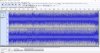
Got Madonna's Ray of Light? Here's Frozen:
0:36 - Madonna's voice enters nearly centered but sounds like she is located in a large space
1:15 - Kickdrums sound further back and located in same large space. Strings join that same larger space
1:45 - Synth bass comes from rear of stage and you can delineate the wave launch.
1:54 - Percussive sequence has lively transient response and life to it
2:45 - Guitar riffs clearly articulated with decay
3:30 - More synth bass wave launches
5:20 - Nice percussive attack and airy synth delivery
5:30 - Articulation on lyrics "If I could melt your heart" rendered so clearly and focused so that you could hear her emotion. Her voice melted mine.
5:45 - Strings across stage fade distantly.
Engineer William Orbit's mix is still artifice but rendered SO much more naturally with a genuine sense of Madonna and the instruments sharing a larger space together. At Sea Cliff in 2001 with HP's Burmester 969/970, Conrad-Johnson ART II, VTL Wotans driving Nola Exotica Grand Reference via Valhalla cabling, the walls disappeared with this recording. Not at all with DcD.
Dynamics? Can you tell the difference?

Got the soundtrack from Gladiator where Lisa Gerrard collaborated with Hans Zimmer? Play tracks "Wheat" and "Now We Are Free". What a difference in the rendering of her beautiful voice! Like Madonna, her voice presented in greater focus sharing the same space as the instruments with strings further back stage. I confess the the latter is very emotional knowing the story line and always brings tears to my eyes. He sees his wife and son running towards him...
Last edited:
fill35u
Super Member
I'd gladly revert to grunts if that would disable the kind of thinking that results in a term like "average music consumer". Calculated appeal sucks. Formulaic music ain't. IMO, of course.
I'm not sure why you object so strongly to marketing. Every professional artist needs to consider how to sell their art, otherwise they won't be professional for very long. No matter how small their niche market, that niche has an "average consumer".
Of course, some artists become financially independent because of their success, and then sometimes they create without marketing concerns. Such efforts aren't always outstanding...
Even artists who are subsidized by the government have to meet standards, and the relevant government and standards are ultimately responsible to the taxpayers.
Underground art has a lot of wonderful stuff, but if the point is to get a message to the masses, you have to know your masses. Even Daniel Johnston eventually went pro.
sqlsavior
Lunatic Member
In the movie Bedazzled, Peter Cook as the Prince of Darkness says: "I invented the Seven Deadly Sins in one day. The only thing I've come up with since is advertising." This pretty much sums up my feelings right there. Just try to get away from it; it's nearly everywhere. At the gas pump. Taking a whiz. Many corporations will not serve you unless you accept their ads. Death penalty.I'm not sure why you object so strongly to marketing.
<reset>
Sorry, my mind wandered.

I can see all your points, but you are corresponding with someone who doubts the wisdom of agriculture.
Last edited:
fill35u
Super Member
I can see all your points, but you are corresponding with someone who doubts the wisdom of agriculture.
Brother, most days I have the same doubts.
I played that just a while ago. Listen to it again as I note by approximate time stamp what I hear. See if your perception parallels mine (using my "unnecessarily expensive" digital source):
0:30 - Shakers enter but are flat in perspective with no space around them or sense of air
0:55 - Drum enters hard left in front
1:04 - Brendan's voice is literally on top of drums in same location
1:34 - Brendan's voice quickly moves to the right and back to the left
1:58 - Enter background vocals on top of drum in same hard left space
2:30 - New percussion hard left - again flat with no natural ambience
3:30 - Lisa enters same left space as if she walked into the same cubicle as Brendan and drum
3:34 - Guitar begins right then pans left and back to the right. (Beatle's Revolution 9?)
4:25 - Bells hard right front stage only
4:45 - Drum strikes first right then jump hard left. Did the performer really move the drum from one side of the stage to the other as he alternated strikes in a matter of seconds?
The recording is dynamically flat too. Such is easy to recognize:
View attachment 1705809
Got Madonna's Ray of Light? Here's Frozen:
0:36 - Madonna's voice enters nearly centered but sounds like she is located in a large space
1:15 - Kickdrums sound further back and located in same large space. Strings join that same larger space
1:45 - Synth bass comes from rear of stage and you can delineate the wave launch.
1:54 - Percussive sequence has lively transient response and life to it
2:45 - Guitar riffs clearly articulated with decay
3:30 - More synth bass wave launches
5:20 - Nice percussive attack and airy synth delivery
5:30 - Articulation on lyrics "If I could melt your heart" rendered so clearly and focused so that you could hear her emotion. Her voice melted mine.
5:45 - Strings across stage fade distantly.
Engineer William Orbit's mix is still artifice but rendered SO much more naturally with a genuine sense of Madonna and the instruments sharing a larger space together. At Sea Cliff in 2001 with HP's Burmester 969/970, Conrad-Johnson ART II, VTL Wotans driving Nola Exotica Grand Reference via Valhalla cabling, the walls disappeared with this recording. Not at all with DcD.
Dynamics? Can you tell the difference?
View attachment 1705821
Got the soundtrack from Gladiator where Lisa Gerrard collaborated with Hans Zimmer? Play tracks "Wheat" and "Now We Are Free". What a difference in the rendering of her beautiful voice! Like Madonna, her voice presented in greater focus sharing the same space as the instruments with strings further back stage. I confess the the latter is very emotional knowing the story line and always brings tears to my eyes. He sees his wife and son running towards him...
No. That's not what I'm hearing at all in Song of the Stars. I hear the didgeridoo start center and set way back. The first set of shakers shifting left to right is clearly more forward that those that come in stationary. Then the drum comes in close just to the inside of the right speaker accompanied closely by a shaker. It's clearly closer than the one to the left and has far less sense of space around it being so close. Brendan is set a little further back. When Lisa comes in she's set back behind Brendan but a bit in front of the chorus of chanters. Later Lisa steps to the fore and center while Brendan's voice slips back with the guitar. I hear the song close with tracks of Brendan to the right and Lisa to the left, set back with another vocal track of Lisa front and center.
I had to double check to make sure we're talking about the same song. I just checked to make sure I didn't have cables crossed somewhere too. There's something wrong with your stereo based on your description.
I've listened to her sound tracks, both from Gladiator and The Insider. I don't think the Gladiator soundtrack is her best sound. It sounds thin and buried like an island in the mid"field of the orchestra, and I don't like how her voice is processed in Now We Are Free. It's clearly a product of studio recording. She sounds much better in the KCRW studio sessions and in their live album.
I listened to Frozen. I don't feel like the space around her voice is convincing. It's truncated to a bubble and there's none of room resonances you get from a real space. An example of that would be Adele: Hello. The other imaging effects are pretty well executed and simple.
Like I said, I think there's something wrong with your stereo. We're not even hearing the same stuff coming out of the same channels, let alone the imaging details. Where you hear flatness, I hear all kinds of variations in space. If I were to walk into your room and hear what you described, I'd be looking for a problem. I'm not saying that to upset you. It sounds to me like your speakers are out of phase and your channels are flipped.
And vice versa. Perhaps my CD was mastered differently as it is sub-par in performance. Like all seven of my DcD CDs. And they all are measureably compressed and lifeless in that respect.Like I said, I think there's something wrong with your stereo. We're not even hearing the same stuff coming out of the same channels, let alone the imaging details. Where you hear flatness, I hear all kinds of variations in space.
Then obviously something is wrong with your system.I listened to Frozen. I don't feel like the space around her voice is convincing. It's truncated to a bubble and there's none of room resonances you get from a real space.
And vice versa. Perhaps my CD was mastered differently as it is sub-par in performance. Like all seven of my DcD CDs. And they all are measureably compressed and lifeless in that respect.
Then obviously something is wrong with your system.
Are you listening to the remasters?
I am listening to rips of purchased CDs. What's the provenance for your copies of Ray of Light and Gladiator?Are you listening to the remasters?
Do any of your DcD have any sense of measurable dynamic range? If so, kindly show us the profile of which one(s).
Last edited:
I am listening to rips of purchased CDs. How about your copy of Ray of Light?
Do any of your DcD have any sense of measurable dynamic range? If so, kindly show us the profile of which one(s).
I stream both. Not surprised there's no startling dynamics in Song of the Stars. My Tool albums are what my "known quantities" for dynamics. Deriving dynamics is a little tougher than looking at the signal on a scope.
Using what service/resolution? I streamed Dionysus via Qobuz Studio at 44.1/24. I quit Tidal since their "lossless" was not always as good as CD quality. Forget lossy MQA. What is your digital hardware source?I stream both.
Quite simple when using applications like Audacity. Free download if you're interested. My references are all classical in nature. Here's the opening track from the 96/24 soundtrack to Rogue One:Not surprised there's no startling dynamics in Song of the Stars. My Tool albums are what my "known quantities" for dynamics. Deriving dynamics is a little tougher than looking at the signal on a scope.

I used that for Glenn's speaker video post a couple of years ago since he asked for dynamics. Since then, I've upgraded the microRendu to ultraRendu and the Audio Research DAC8 now has a new USB3 board. Along with amp stand and cosmetic changes. New plants for diffraction. I guess its time to update info on the member system page.
Last edited:

xmo
Member
Hi, I'll revive this old topic. I was searching for peoples' thoughts on the subject of soundstage / imaging and the difference between older recordings and popular music today.
I found comments such as:
"That does raise an interesting point. Why is modern recorded pop music so "dry", compared to pop music from decades ago?"
and
"The way most pop/rock is recorded there isn't a soundstage for a stereo to reproduce"
So I conclude that I am not the only one to have noticed this. I am glad it's not just my imagination.
I think it has to do with the way the average consumer listens to music. Many of us came through the huge rise in popularity of stereo systems in the 70's and 80's where a substantial number of people listened to music - and through real speakers - speakers set up to be able to present a soundstage. So the studios and recording engineers targeted their product to that audience.
Then, along came the Walkman, then ipods, and today - phones, where the average listener has music in their ears.
Put a giant soundstage in a set of earbuds and your head will explode! So now the recordings are mixed for a different listener.
I do really enjoy the imaging in some of the older recordings, for example some tracks from Dire Straits and Fleetwood Mac and of course a lot of classical and jazz tracks sound awesome through a real stereo.
And, based on what I see when I look through topics about members' systems and in the focused forums, there are a lot of you with awesome systems.
I found comments such as:
"That does raise an interesting point. Why is modern recorded pop music so "dry", compared to pop music from decades ago?"
and
"The way most pop/rock is recorded there isn't a soundstage for a stereo to reproduce"
So I conclude that I am not the only one to have noticed this. I am glad it's not just my imagination.
I think it has to do with the way the average consumer listens to music. Many of us came through the huge rise in popularity of stereo systems in the 70's and 80's where a substantial number of people listened to music - and through real speakers - speakers set up to be able to present a soundstage. So the studios and recording engineers targeted their product to that audience.
Then, along came the Walkman, then ipods, and today - phones, where the average listener has music in their ears.
Put a giant soundstage in a set of earbuds and your head will explode! So now the recordings are mixed for a different listener.
I do really enjoy the imaging in some of the older recordings, for example some tracks from Dire Straits and Fleetwood Mac and of course a lot of classical and jazz tracks sound awesome through a real stereo.
And, based on what I see when I look through topics about members' systems and in the focused forums, there are a lot of you with awesome systems.
Hi, I'll revive this old topic. I was searching for peoples' thoughts on the subject of soundstage / imaging and the difference between older recordings and popular music today.
I found comments such as:
"That does raise an interesting point. Why is modern recorded pop music so "dry", compared to pop music from decades ago?"
and
"The way most pop/rock is recorded there isn't a soundstage for a stereo to reproduce"
So I conclude that I am not the only one to have noticed this. I am glad it's not just my imagination.
I think it has to do with the way the average consumer listens to music. Many of us came through the huge rise in popularity of stereo systems in the 70's and 80's where a substantial number of people listened to music - and through real speakers - speakers set up to be able to present a soundstage. So the studios and recording engineers targeted their product to that audience.
Then, along came the Walkman, then ipods, and today - phones, where the average listener has music in their ears.
Put a giant soundstage in a set of earbuds and your head will explode! So now the recordings are mixed for a different listener.
I do really enjoy the imaging in some of the older recordings, for example some tracks from Dire Straits and Fleetwood Mac and of course a lot of classical and jazz tracks sound awesome through a real stereo.
And, based on what I see when I look through topics about members' systems and in the focused forums, there are a lot of you with awesome systems.
I don't know what modern pop music you and those others who's comments you point out listen, but I don't find that to be the case at all.