

You are using an out of date browser. It may not display this or other websites correctly.
You should upgrade or use an alternative browser.
You should upgrade or use an alternative browser.
Register to hide this ad

audiodummy
Well-Known Member
never tried it but heard that the simplest flux is just using 100% tallow or lard. Doesn't help too much removing crap (only slightly) but it definitely prevents new crap from forming and thus helps.


Its useful if you have to work on old stuff and need to solder to a tab that was installed 60 years ago and never used.
Don't see where anything fat or oil based would be effective.
the classic stuff was based on pine rosin. If you dissolve some of that in a solvent it should work fine and smell nice as well.
Don't see where anything fat or oil based would be effective.
the classic stuff was based on pine rosin. If you dissolve some of that in a solvent it should work fine and smell nice as well.


ChrisMarantz
Super Member
I've had the same 2oz bottle of flux for like 10 years - I don't really see ever running out of it. How much fluxing is everyone doing??? - Chris

Me - very little - because I just don't find it necessary or desirable, I use rosin cored (leaded) solder which satisfies 99% of my needs. I do have a small container of flux which I use very occasionally for difficult joints. I really can't understand people who use a separate application of flux for every joint, unless I have misunderstood the descriptions of those people's soldering technique.How much fluxing is everyone doing???

ChrisMarantz
Super Member
unless I have misunderstood the descriptions of those people's soldering technique.
I think poor soldering techniques are more common than you would think. Most commonly caused by inadequate equipment I suspect - Chris

trainbuftony
Electron Herder
Having a tin of flux on hand is much more useful in automotive work where one is often splicing old oxidized harnesses together, than in hifi work. I virtually never need it when wiring an amplifier, although its useful for getting a fresh soldering tip tinned. Its just good to have at hand. A small tin should last several years...

ChrisMarantz
Super Member
Very very small amounts of flux are handy for SMD work.
Very true, however I use flux that's designed for SMD work - not the typical rosin type - Chris
Very true, however I use flux that's designed for SMD work - not the typical rosin type - Chris
A homemade colophonium solution of the right viscosity has been a favorite among some SMD technicians out there.
They were basically the ones that gave me the idea to prepare the solution and use it.
So it seems to be particularly good for that kind of SMD work.
Personally I don't do surface mounting, so I don't use it that often.
For most work, the typical rosin core solder will do fine.
But when I need the extra flux, i do prefer it.
It doesn't splatter very much, can withstand heat nicely and to my nose it smells better.

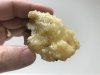
Yeah.
First put it in-between two sheets of paper and smash it into a powder with a hammer.
Add the smashed colophonium to a sealed glass container with IPA.
Leave it there to dissolve.
It might take a few days.
Filter it through a coffee filter.
That is all. It's ready for use.
You can adjust viscosity according to your needs, by adding more IPA or colophonium.
Optionally, you could also add a few drops of glycerine to the solution.
Store it in a sealed container.
First put it in-between two sheets of paper and smash it into a powder with a hammer.
Add the smashed colophonium to a sealed glass container with IPA.
Leave it there to dissolve.
It might take a few days.
Filter it through a coffee filter.
That is all. It's ready for use.
You can adjust viscosity according to your needs, by adding more IPA or colophonium.
Optionally, you could also add a few drops of glycerine to the solution.
Store it in a sealed container.

Violin or cello bow resin...
https://www.amazon.com/s?k=bow+rosi...=c&hvqmt=e&tag=mh0b-20&ref=pd_sl_6bptze9kyz_e
https://www.amazon.com/s?k=bow+rosi...=c&hvqmt=e&tag=mh0b-20&ref=pd_sl_6bptze9kyz_e
I guess you could dissolve something like that in IPA and filter the results.
Rosin is basically what you get when you take pine sap and cook the terpenes out of it. Just takes some heat. If you want to collect the vapors and cool them you can make both turpentine and rosin.
ChrisMarantz
Super Member
I guess you could dissolve something like that in IPA and filter the results.
Seems like a waste of a perfectly good IPA
 - Chris
Violin or cello bow resin...
https://www.amazon.com/s?k=bow+rosi...=c&hvqmt=e&tag=mh0b-20&ref=pd_sl_6bptze9kyz_e
Once you buy one of those blocks, what to you do with them? Anything? They look like a solid block of rosin. Crush it up and mix it with ipa?


