• The move to the new server is done. There are some software and database maintenance updates in process. This has us passing the hat around to help out. We appreciate any donations. Seriously, even a dollar helps. The payment page may be found here - https://www.audiokarma.org/support.html

How can I test the frequency response of an output transformer?

Hi Guys and Gals,

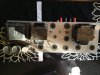
I have a pair of Conn (Artist)(I think 720 ?)organ amps,and I was wondering if there is a way to compare them to Dynaco output transformers as far as frequency response.They are a little more massive,and don't have ultralinear taps,and are driven by 7027's Has anyone(possibly Dave Gillespie)tested organ OPT's?

I know that the Allen OPT's are supposed to be good...

On a related note if anyone has the schematic for the amps, I could use a copy. The amp has 4 7027's and 2 7868's
I bought the amps from Amalog Addict on BT
I hope he doesen't mind I borrowed the pics

conn top.jpg
conn bottom.jpg
conn organ amp tube chart.jpg


Thanks,
Scott
 
Last edited:
Register to hide this ad
Right off the top of my head, a sweep generator and an O-scope I think would do it.

Larry
 
I have the o-scope,and a signal generator.What is different with a sweep generator?I have some other signal generators,TV aignment,Stereo generator,Ham/CB,but I'm not sure if I have a sweep generator.
 
Sweep generator IIRC will "sweep" from one frequency to the next, say 20hZ to 20kHz. Where a normal Siggen will only output one freq as required.

Larry
 
Scott,

Not sure about this.....but I believe you need to be sure of a few things first; like the supply source (amp) you're using is 'linear' within the desired frequency range. Also, you have to consider the 'range' of output you're measuring. In other words, measuring frequency response at full rated power....vs measuring it at something like say 1 watt of output. As I understand it...there can be a HUGE difference!! I went through this some time back.....and my recollection is that one needed a linear supply capable of putting output voltage (signal) TO the output transformer at a consistent level across the frequency range in order to properly gauge how the OT processed that signal. It also had to be 'variable' in output voltage in order to measure at what ever was needed to achieve different power levels. So, the RMS voltage of the source from say 10 hz to 20 khz, had to be variable with respect to being able to drive the OT from 1 watt of output voltage to say a rated maximum output of 17 or 35 watts. The use of a scope to 'monitor' that processing was good ..... to be able to watch for any distortion generated in the wave form. A Distortion Analyzer is also something that I believe one would have to include if results were to be considered as rendered at a 'professional / LAB' level. Also needed is a good RMS volt Meter in order to determine power level at a given output. Finally.... a non-inductive load source was also necessary in order to assure that any reverse EMF from something like a speaker didn't mess up your voltage readings. All that would provide a solid ability to measure OT response at basically 'lab' level. Short of that, you get into what I guess is just kind of wingin' it! You can always just hook up an RMS volt meter to any output, put a signal generator into the amp at what ever voltage is needed to drive the amp to a desired power level ..... and then take your measurements at the OT putput. I think the limits are basically where the wave form either begins to distort to any degree......or the voltage as measured in RMS output from the OT starts to fall off radically. After I realized that doing this as an 'in-home' test was either very questionable or completely beyond my means, I gave up on the idea. I now just trust the published specs. But, it's funny that you ask the question, as I'm looking at a pair of OT on an old Rowe Juke Box amp driven by 7868 output tubes.....and wondering just what the 'hi-fi' capability of these gems will be? I've been told that where a lot of guys will convert old Conn, Hammond, Lowrey, and other Organ amps to home audio .... the frequency range of the OTs in those units generally rolls off at around 10Khz, making them really NOT a true 'hi-fi' amplifier. So, I've stayed away from those in the past...just for that reason. But, these old Juke box amps were, in may cases, true Hi-Fi units......so....interesting days ahead. WC

 
I recently rebuilt a pair of Seeburg MRA3 amps for a friend and was surprised at how nice they sounded despite being "alien" with field coil speakers,a muting circuit,and remote filament transformers.
 
Last edited:
There is a lot more to how an output transformer sounds than static frequency response , the rise times are limited by it the capacitance and the inductance of the windings .

http://www.bunkerofdoom.com/xfm/UTC_1955_WEB/024.jpg

Most mediocre output transformers will sound good in most systems because the are in the feed back loop in the amp , which extends the frequency range at the expence of the dynamics of the amp .

How much current a transformer can deliver at a certain voltage is also important , if the transformer is tested without a proper load ( non-inductive )
The results will be meaningless .
 
Damn Bat......'rise time'...eh? I know you're right...but I never even considered that aspect of things. Yet, the whole thing clearly gets into the arena of 'just how much can you measure?' Add 'rise time'... inductance, interleave design, and probably 'flux' measurements in the core itself....and as you said....more to a OT than just Frequency Response. Still, 'freq resp' as related to some of the more well known 'limited' units, like the Organ OTs....or some of the OTs used in some of the old 'console' amps......it would be nice to have an easy way to test those for 'hi-fi' capability. WC
 
I have Dynaco 70 output transformers and these Conn organ amp transformers And I was just looking for a way to see just how bad they might be,whether they were worth spending any time on.I thought frequency response might be a way to compare them.
 
Last edited:
Scott....... this is where I just trust the reputation of them. 'YES', they're good OTs, and make GREAT guitar amp units! BUT.....the general consensus that I have heard is that they have a peak frequency response of about 12Khz. This, as compared to those Dynaco OTs that probably would offer up to 20K. Now, consider your own listening abilities....and just where your own listening range might peak out. Some people can still perceive sound above 15 to 18K....but most adults over 50 start having some roll off in their ability to hear high frequency. So, if you're ability to hear HF has somewhat diminished, then the OTs may work well for you. BUT, that said......you have to ask yourself the question of: Why would I want to go through all the work of building an amp that has limited range, if I can do it for about the same effort and cost and end up with a truly superior device? To me, that's the deciding factor. If the Organ OTs 'are' limited....then why bother with them? Sell 'em to a guitar amp builder and let him roll with them!! Use the Dynaco OTs and you can be SURE your efforts will pay off. Just my opinion.... for what its worth! WC
 
The Dynaco's are headed for a new chassis.I have heard the diverse opinions on the different organ manufacturers output transformers,some good,some bad.
I just wanted to use them if they are good,and I have something to compare them to at the moment.so... I was looking for a quick and dirty way to compare them.
 
I have had some very good output transformers through here in the last few years , The UTC LS 57's with 6B4G's PP are the best , Acrosound TO-300's PP with 5881's have been the next best and a Pair of Antek toroid outputs with PPP 6550 after that .

The UTC use Nickel-iron cores and are wound semi-toroidal , not sure what the how the Acrosound cores are made of but , but they are better that the equivalent Dynaco transformer .The Anteks are toroids and wound on ferrite .

http://www.the-planet.org/dynaco/Misc/acrosound.pdf .

Find some Allen organ amps they have fine output transformers , The Eico HF 20 , 22 and 60 have very good output transformers , early (50 to 58 ) Fishers used Todd transformers and are very nice .
 
I e-mailed Foster Transformers today(the manufacturer) and they sent me this:
k70272trans.JPG
it doesn't list frequency response,I'll try again,maybe there is more info.
 
Last edited:
First line of specification says 10K minimum impedance (26 Henries) at 60 Hz, with 10 mA DC. That's equivalent to 20 mA imbalance between output tubes. Will be higher with output tubes balanced. Achieving this spec probably requires some gap in core - probably will be stacked in blocks, not alternating E and I laminations. Won't affect low frequency power limit, but may prevent low level frequency response to 20 hz (though feedback can fix that).

Leakage inductance is specified. 22 mH is 2.7K at 20 KHz, bumping up primary impedance from 4K to to 4.8K - not bad. Dyna A470 is 12 mH, measured at 1 KHz (your data sheet doesn't say, but it will vary somewhat with frequency)
 
it has a strange configuration if the lams,I can only guess at to the inside configuration,but if they used identical lams it would look like this
 

Attachments

Last edited:
Yes organ and PA transformers are often stacked like this. Makes them more tolerant of imbalance in the output stage.
 
Well, Foster transformer company e-mailed me back,They didn't have the exact frequency response info,but said that it has a flat response from 50hz-15Khz so not to bad.if accurate,
 
I built a Mullard 5-20 around the transformer,and it sounds pretty good(only 1 channel)

A 10k square wave looks like this:

10kconn.JPG


The slope on the rise/fall, Is that transformer dependant?
 
Last edited:
The rise time is definitely a product (in part) of the transformer: The HF characteristics of the transformer determine how significant the HF compensation networks need to be to achieve HF stability. The more the response of the basic circuit is reduced by these networks to achieve an acceptable level of stability, the longer the rise time will be.

Dave
 
Back
Top Bottom