• The move to the new server is done. There are some software and database maintenance updates in process. This has us passing the hat around to help out. We appreciate any donations. Seriously, even a dollar helps. The payment page may be found here - https://www.audiokarma.org/support.html

How necessary is a separate phono preamp?

The WP design has been simplified and used for a commercial design. Alas, I STILL can't say who it is, but it retails at $250- a bit more than the Mani 2.
The first pre/initial production phase is sold out and the new phase is awaiting the availability of the opamps from TI.
The architecture is very different from the Mani 2, so it measures far better in several ways, at the cost of being less flexible.
Comparative listening sessions have been very positive.
 
Last edited:
The production unit is actually a little inferior to the DIY unit, not that you'd notice...
If I were a young buck (which was a long time ago!), I'd build yours. And socket mount the op amps for long term flexibility. I might also increase power supply stiffness with the knowledge I have today.

We have some yungins' with us at AK but one in particular seems more interested in boom boxes and cheapie speakers than beginning to explore the world (far) beyond. I had an early passion to seek the summit.
 
Most of us who have gone to separate phono preamps won’t go back. I really like the zero Zone clones of the EAR 834 tube phono preamp, under $300 on eBay, half that if you can solder and wire the kits together.
+1 on the EAR834 clones for performance (given cost) like this Zhili version as well. They’re also easy to work on if you want to swap components and tubes in or out. I would like to try fiddling with a Marantz 7 clone next.

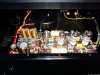
ear834.jpg
 
+1 on the EAR834 clones for performance (given cost) like this Zhili version as well. They’re also easy to work on if you want to swap components and tubes in or out. I would like to try fiddling with a Marantz 7 clone next.

View attachment 2675904


IMO, the Marantz clone can edge out the EAR clone (have both), if you get the version with the shielded transformer and tube 6X4 rectifier. There are several variants offered so be careful before you plop your cash down.
 
IMO, the Marantz clone can edge out the EAR clone (have both), if you get the version with the shielded transformer and tube 6X4 rectifier. There are several variants offered so be careful before you plop your cash down.
Is there any chance you could show a picture of yours, or the one you are describing?
 
If I were a young buck (which was a long time ago!), I'd build yours. And socket mount the op amps for long term flexibility. I might also increase power supply stiffness with the knowledge I have today.

We have some yungins' with us at AK but one in particular seems more interested in boom boxes and cheapie speakers than beginning to explore the world (far) beyond. I had an early passion to seek the summit.
You don't need to be a young buck, just steady hands, and a soldering iron. I have a few extra PCB (v1.1)of the early versions. You drop ship the parts and I'll put them together. It is outstanding.
 
I highly recommend the above mentioned "kits" if you're feeling handy and looking into a phono stage. Sometimes you can even buy them pre-built which makes the whole process easier while still getting good performance for the price paid.

With regards to this EAR834 clone, I just replaced my (upgraded) K71 polystyrene and CMK polycarbonate coupling caps with even better ARC teflon caps and Sprague PIO. The larger capacitors and heavy-duty gold plated tube sockets were also bypassed underneath with CBB polypropylenes. Along with the power cable and rest of the caps and tubes I chose for it, this is the best phono stage I've heard (so far).

It's detailed, dimensional, natural and "huge" sounding from top to bottom without any stridency or listener fatigue. Of course I'd still be interested in others at some point, but for now I'm more than satisfied.

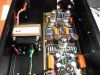
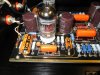
ear834.jpg 20221106_113420.jpg
 
Last edited:
I highly recommend the above mentioned "kits" if you're feeling handy and looking into a phono stage. Sometimes you can even buy them pre-built which makes the whole process easier while still getting good performance for the price paid.

With regards to this EAR834 clone, I just replaced my (upgraded) K71 polystyrene and CMK polycarbonate coupling caps with even better ARC teflon caps and Sprague PIO. The larger capacitors and heavy-duty gold plated tube sockets were also bypassed underneath with CBB polypropylenes. Along with the power cable and rest of the caps and tubes I chose for it, this is the best phono stage I've heard (so far).

It's detailed, dimensional, natural and "huge" sounding from top to bottom without any stridency or listener fatigue. Of course I'd still be interested in others at some point, but for now I'm more than satisfied.

View attachment 2707456 View attachment 2707457


I'm looking at the EAR 834 clone.
What other phono stages have you compared it to?
 
I'm looking at the EAR 834 clone.
What other phono stages have you compared it to?
Oddly enough, a comparison between the ear and the WP was performed recently. This is a slightly edited copy of the result- posted without permission of the author, - hence the editing.

"I received the EAR834 preamp today and the Acrux yesterday, thanks for sending both (good packaging job BTW).


I opened the covers on the EAR and was surprised how little circuitry there was, very minimalist design. I used the enclosed power cord for all the tests; what is so specific about this cord?


Measurements first:


Fairly good for a tube preamp, I was not able to discern any distortion products a 0dBV output. The RIAA conformance is average (±0.2dB), but not stellar (compare the Acrux at ±0.05dB). Noise floor was also ~10dB worse than the Acrux, but that is to be expected in a tube preamp. Hum and noise was 15dB worse, but that’s not surprising either as the power supply is in the same enclosure, not very well shielded and in close proximity to the amplifier section.


Listening tests:


The elevated noise floor was apparent when I was next to the speakers as there was a low level audible hiss present, but I don’t think I could hear it directly (although it may affect other details, see below) from my listening position. I also heard hum from the woofer at close range, but not at bad as I would’ve expected; also inaudible at my listening position. Overall, it was quieter than my DIY tube preamp, but noticeably worse than the Acrux.


I listened to one album that I’m quite familiar with, Lynn Stanley’s Potions from the 50’s, first track (Lullaby of Birdland). I chose that album/track because it was the first one I use when I auditioned the Acrux and I heard several low level details that I was not aware of previously. There is a cymbal in the back ground that went un-noticed prior to the Acrux, although I can hear it now on my DIY tube amp because I know it is there and what to listen for. I attribute the revelation with the Acrux to its lower noise floor; on both my DIY tube preamp and the EAR834, I hear the cymbal, but there is a “veil” over it, it just isn’t as clear and doesn’t have the same shimmer as with the Acrux. The other detail is a triangle that is being struck throughout the track that was audible previously, but sounded rather “tinny” prior to the Acrux. With the Acrux, it was much fuller and there was a definite ring to it rather than a “plink”. With the EAR834, it still sounded tinny to me. I attribute the perceived increase in detail of the Acrux to the lower noise floor not masking low level details, even though the noise in the EAR834 is not directly audible at the listening position.


Perhaps we appreciate different experiences when listening to music, but to me, I find the Acrux more “involving” because of the additional detail that I hear; it lends more immediacy to the music and Lynn’s voice seems just that much more realistic and slightly forward in the sound stage. I was surprised at this as it is the opposite of what you reported as far as the Acrux being less involving".
As should be obvious, the prior person preferred the EAR, and actually produced Youtube videos to illustrate the point. However, on my system the videos illustrated exactly the opposite, so there it is.

 
This zhili audio ear834 pcb sounded ok with the supplied, stock components- even better after upgrading some of them. Better yet after upgrading them even more, tube rolling and using a better power cord. It's very responsive to upgrades in component materials and selection with a resolving, accompanying system.
 
Back
Top Bottom