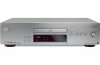
Once again - thanks to all who have contributed to the discussion.
I am going to try to summarise what I think has been said here, as well as incorporate one or two things that have come up in searches on the internet as a whole.
The CD format was well established as a 44kz 16-bit process by the early 2000s when SACD and DSD came along in an attempt to improve matters. This coincided with the take-off of cheap music downloads and streaming and the new, more expensive, high-fidelity audio disc formats were sidelined and quickly faded out of the market. Today only a few true" ultra-high fidelity" discs are available and they are typically very expensive.
However, new video formats made good use of the increased disc data-densities. (Blu ray etc.) These entailed reading more data per second and so video playback systems incorporated higher-spec lasers and decoders than typical in a straightforward CD player.
It then became apparent that if the newer video systems were treated as a transport only, and the output connected to a decent DAC, then the strengths of the DVD could be exploited, at the same time as by-passing any potential weakness such as poor quality built-in DACs.
So - it seems that unless you go for a very high-end CD player, there can be advantages in opting for a decent video player connected to a decent DAC. Moreover, "good video machines" include those made in the early 2000s - so there are potential bargains to be found on second-hand markets.
That said, when it comes to judging just where the crossover is in terms of comparing the output of a decent video player/DAC with a quality, dedicated CDP, the jury is out - and will probably remain so, given the somewhat subjective nature of assessing the quality of "sound".
Is this a fair summary?
I’ll offer a different perspective.
For some genres (e.g., classical music), modern recordings (i.e., performances in the last 15 years or so) are commonly available in “hi-res” formats including SACD, Pure Audio Blu-ray, 24bit/192kHz download, DSD download, Blu-ray, and Ultra HD Blu-ray. Most of these modern formats include a stereo audio track, in addition to a multi-channel audio track.
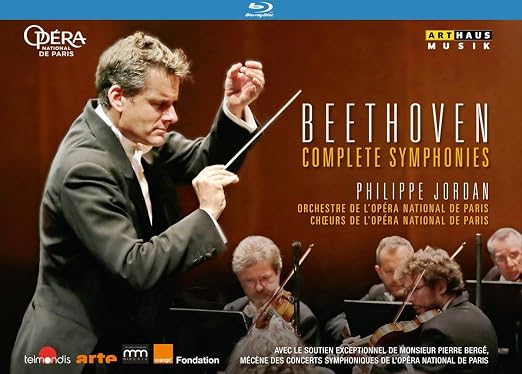
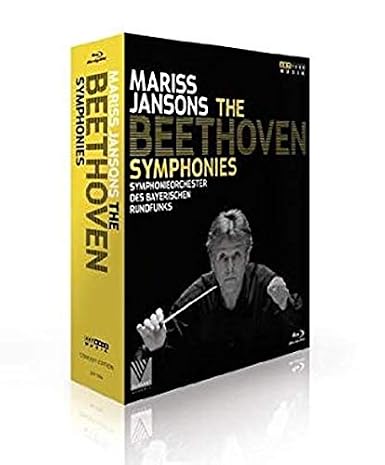
Modern hi-res formats have not “faded out of the market”, and IMO the ones that I purchase are not over-priced. For example, there are at least 4 box sets of all Beethoven symphonies available on Blu-ray audio/video, including this box set available on amazon for $38 – which I think is a great value for state-of-the art audio/video recordings of 12 major compositions:
Rafael Frühbeck de Burgos Danish NSO
- Ludwig van Beethoven: Symphonies Nos. 1–9
- Joaquín Rodrigo: Concierto de Aranjuez
- Hector Berlioz: Symphonie fantastique, Op. 14
- Richard Strauss: Eine Alpensinfonie (An Alpine Symphony), Op. 64, TrV 233
Audio options:
Video: 1080p
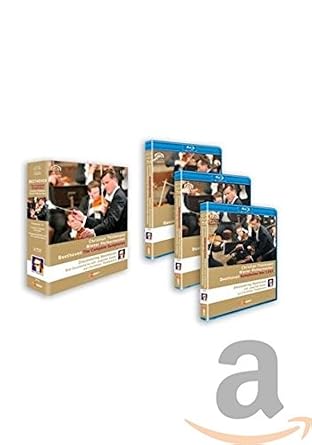
Here’s some of the other Blu-ray box sets that include all 9 Beethoven symphonies, delivered with state-of-the-art audio and video:
Additionally, there are at least 4 SACD box sets of modern performances of all Beethoven symphonies (Osmo Vanska, Simon Rattle, Philippe Herreweghe, and Bernard Haitink). There are at least two Pure Audio Blu-ray box sets of modern performances of all Beethoven box symphonies (Simon Rattle, and Andris Nelsons). Additionally, there are many more modern recordings of individual Beethoven symphonies in various hi-res formats.
I also have Blu-ray audio/video box sets of symphonies by Tchaikovsky, Sibelius, Brahms, Bruckner, Schumann, and Mahler. Plus numerous other classical concerts on Blu-ray. Plus numerous modern opera and ballet audio/video recordings on Blu-ray. And a few in Ultra HD Blu-ray. IME/IMO there is no comparison between watching and listening to opera and ballet, vs. just listening to a CD.
Not only does audio/video enable seeing the performers, IMO seeing the venue can be enjoyable. One of the things that I like about this DVD box set titled "Berliner Philharmoniker 25 years of EUROPAKONZERT" is the opportunity to see 25 concert halls, in addition to seeing/hearing 25 concerts. IMO a great value for $99.
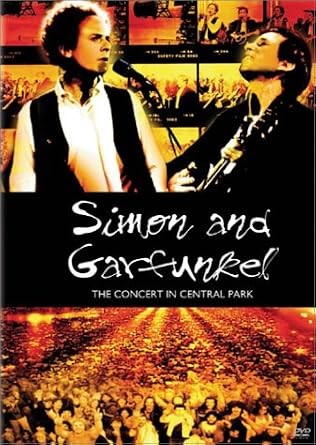
I’ll give one example involving popular music. I attended this concert in 1981 (which was a great experience), and I’d much rather see and hear the DVD, vs. just listening to the CD:
Plus, I own many classical recordings on SACD, and I greatly prefer SACD’s hi-res surround-sound vs. CD.
Whether formats newer than CD are relevant to you depends on the genre(s) of music you listen to.
There are numerous web sites that catalog hi-res recordings. Here’s a few:
I generally suggest that a consumer first shop for recordings, and determine which formats for consumer deliverables are relevant to the music that they like:
- LP?
- Downloaded hi-res PCM (e.g., 24bit/192kHz or 24bit/96kHz FLAC from HDTracks.com, or prestomusic.com/classical/formats/download, etc.)?
- Downloaded hi-res DSD (e.g., nativedsd.com, or acousticsounds.com/superhirez, etc.)?
- CD?
- DVD (e.g., concert videos)?
- DVD-Audio (i.e., older better-than-CD-quality audio recordings)?
- SACD (newer hi-res recordings)?
- Pure Audio Blu-ray (i.e., newer hi-res audio-only disc – i.e., no video)?
- Blu-ray (e.g., concert videos)?
- Ultra HD Blu-ray (e.g., state-of-the-art concert videos)?
- Will you play music directly from the disc (e.g., CD, SACD, Pure Audio Blu-ray), or will you copy all music to network-attached-storage ("NAS"), and play music files from NAS? (Copying the SACD layer of a hybrid SACD reportedly requires arcane “hacking” procedures. Copying Blu-ray reportedly can be done with the right hardware and software.)
- Spotify Premium, Tidal HiFi, Qobuz, etc.? Support for MQA?
- Other?
Once the consumer knows which recording formats are important to them, then they will know the requirements for a player.
There are issues regarding outboard DACs with some hi-res formats. I’m not an expert – following is my understanding of some of the issues - hopefully others can share their experience.
Most SACD discs are “hybrid SACD”, meaning that they contain 2 layers: a Redbook CD layer, and an SACD layer. (A very few older SACDs have only an SACD layer.)
The SACD layer has copy protection features. As a result, you cannot play the SACD layer on a PC, or copy the SACD layer (without a “hacking” procedure). (You can play the CD layer of a hybrid SACD on a PC, and you can copy the CD layer.)
Almost all disc players have copy protection features that affect playing SACDs via outboard DACs. Moreover, there are sometimes bandwidth limitations associated with a disc player connecting an outboard DAC. For example, following is an excerpt from the User Manual of my Oppo UDP-205 universal player:
“Due to bandwidth limitations, high resolution audio formats such as Dolby Digital Plus, Dolby TrueHD, DTS-HD High Resolution and DTS-HD Master Audio cannot be sent through the coaxial or optical digital audio output. A reduced resolution version of the same audio track will be output instead. To listen to high resolution audio formats in their best quality, please use the HDMI connection if you have a receiver that handles HDMI audio (see page 12) or use the multi-channel analog outputs if you do not (see page 15).
Due to copyright restrictions, SACD audio cannot be sent through the coaxial or optical digital audio output. To listen to SACDs, please use the HDMI or analog audio connections.
Due to copyright restrictions and bandwidth limitations, full resolution audio from DVD-Audio discs cannot be sent through the coaxial or optical digital audio output. To listen to DVDAudio in full resolution, please use the HDMI or analog audio connections.”
The important takeaway is the difference in the capabilities of analog and HDMI interfaces, vs. TOSLINK and coax.
My understanding (bearing in mind that I’m not an expert) is that if you want a universal disc player, and an outboard stand-alone DAC, and you want to play SACD and Blu-ray, you’ll need a DAC with an HDMI interface. (McIntosh has a proprietary solution for their products that enables playing SACDs.) Examples of HDMI DACs that I’m aware of include the Essence Evolve II-4K, which is a HDMI v2.0a Multi-Channel Audio DAC. And, the Bryston BDA-3 External DAC, which includes an HDMI input – but only supports stereo. (I have no experience with these DACs, and I’m not certain of the formats they support. And I have no experience with their sound quality. There may be other choices.)
A much simpler solution is to get a universal player with built-in high-quality DACs, such as the Oppo UDP-205, BDP-105, BDP-95. I own all of these products and IME they work great with my vintage tube amplifiers. (Unfortunately, Oppo no longer manufactures equipment.)
For a universal player that provides only 2 channel analog audio output (i.e., stereo), then consider the Sony UBP-X1100ES. If you want to spend less, I suggest that you consider the earlier model Sony UBP-X1000ES which is often available as a "manufacturer refurbished" unit on eBay for $280. (For example, eBay item number:312383606733. I have no affiliation with this eBay seller, and I have no experience with the Sony players. You can find reviews on AK for the UBP-X1000ES.)
My Oppo UDP-205 (and BDP-105, BDP-95) works great with my late 1950s and early 1960s tub amps, enabling me to play my favorite format for music: Blu-ray classical concert audio/video recordings. For me, the experience of watching and listening to a concert on Blu-ray is much more enjoyable than listening to a CD. (My second favorite formats are SACD and Pure Audio Blu-ray featuring surround-sound.)
Whether formats newer than CD are relevant to a particular audiophile depends of the genres of recordings they listen to. With that said, to dismiss formats other than CD would result in a significantly inaccurate assessment of the options currently available for enjoying recorded music in the home.