• The move to the new server is done. There are some software and database maintenance updates in process. This has us passing the hat around to help out. We appreciate any donations. Seriously, even a dollar helps. The payment page may be found here - https://www.audiokarma.org/support.html

Interesting Bose Center Speaker...Really!

jdmccall

Super Member
I know Bose is a polarizing name in audiophile circles, and this particular model isn't even in the line-up anymore and hasn't been for four years...but this VCS-10 is new to me and I find the design to be fascinating and the performance surprising.

When I first hooked it up and listened to some music in DTS NEO:6 Music mode, I was underwhelmed to say the least. Sensitivity seemed low and highs rolled off. Then I discovered the phasing was wrong, so I corrected that and listened again, this time mostly with video material in Dolby Digital EX. First thing I noticed was the fullness of the sound through the lower mids and upper bass. It was very seductive and made for a much more seamless match with my RBH MC-6CT's that are in the front L & R positions. Of course the speaker immediately preceeding the Bose in my system was a little Dayton SAT. It did a fine job for what it is, but the VCS-10 is in a different league. The Dayton did nothing wrong that called undue attention to it, but there was just a lot that it wasn't doing. The Bose just has a much fuller, bigger sound. I guess the comparison is not really a fair one in light of the price difference, but life isn't always fair.

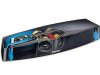
I don't recall what Bose calls the enclosure design, but it is certainly different. There's a pair of compounded 2.5" drivers and the front two of each pair appears to use a whizzer cone. Here's a good pic:
 

Attachments
  • x018VCS10-o_vcs10_diag_01.jpg
    x018VCS10-o_vcs10_diag_01.jpg
    13.4 KB · Views: 176
Last edited:
Register to hide this ad
Looks like a simple transmission line. Bose sometimes confounds me, they will use cheap drivers then spend money on the enclosure with sometimes elaborate transmission lines to get as much as they can out of the cheap drivers they put in.
 
I've been running one of these in my HT system for many years. As you say it isn't bad at all, and does nothing wrong.
 
I've used a Wave Radio II under my TV since it was launched and it always does the job. It has two 3" drivers in a transmission line arrangement and of course their heavy DSP stuff going on. It plays from 50Hz very strongly which, for day-to-day TV viewing, is plenty enough for my needs given the near zero space it occupies.
 
I don't recall what Bose calls the enclosure design, but it is certainly different. There's a pair of compounded 2.5" drivers and the front two of each pair appears to use a whizzer cone. Here's a good pic:

Looks like a simple transmission line.

Transmission line, yes. But perhaps less simple than just that. Looks like those double pairs of drivers have an isobaric thing going on also.

Bose seems to be pulling all the tricks out of the bag to get as much bass as possible from their miniature drivers.
 
Last edited:
Looks like a simple transmission line. Bose sometimes confounds me, they will use cheap drivers then spend money on the enclosure with sometimes elaborate transmission lines to get as much as they can out of the cheap drivers they put in.

Transmission line, yes. But perhaps less simple than just that. Looks like those double pairs of drivers have an isobaric thing going on also.

Bose seems to be pulling all the tricks out of the bag to get as much bass as possible from their miniature drivers.

Seems I recall reading somewhere that some companies use uncommon parts in common ways and some use common parts in uncommon ways...or something like that. Bose seems to use common parts for the most part but applies them in some very creative ways.
 
People often accuse Bose of using cheap drivers yet some Bose speakers use drivers of pretty good quality, such as the Celestion full rangers used in their "stick" line array. I'd like to see it demonstrated just how and why Bose drivers are of poor quality the next time someone makes such an accusation.

Some years ago Speaker Builder ran an article analyzing the Bose acoustic cannon subwoofer that SV referrs to in his post above; a kind of double ended transmission line, a big straight pipe with the driver mounted inside an unequal length from the ends. It works pretty well and is head slappingly simple. I wonder if Danley had it in mind when he developed the tapped horn.
 
Last edited:
I had one when I had an all Bose HT set-up with 201's in the front and 161's in the rear. It was not bad and its fairly compact compared to a lot of other channel speakers.
 
Looks like a simple transmission line. Bose sometimes confounds me, they will use cheap drivers then spend money on the enclosure with sometimes elaborate transmission lines to get as much as they can out of the cheap drivers they put in.

Once they've amortized the tooling costs for the enclosure, it becomes cheap too.
 
For all the knocks on Bose, you have to give them credit for thinking outside the box. They have brought a lot of innovative designs to market over the years. The sound cannon is one of their more interesting ones. I do wish they would at least show a little interest in the audiophile segment occasionally, though.

Speaking of innovation, and again, although they take flak for it, the fact is that plastic enclosures (or polymer, if you prefer:nerd:) do allow for more affordable, creative possibilities for speaker designers.

The VCS-10 does share it's transmission line tech. with other Bose products, but I don't know of any that combine that with compound drivers...although the Sound Link Mini may...:scratch2:

One issue I have with this speaker is that the finish is kind of course and is hard to clean without leaving lint all over it. I don't know if it was made that way or if the original owner used a cleaner on it that caused it. I suspect it was the former. Still, so far I'm very impressed with it, performance-wise.
 
People often accuse Bose of using cheap drivers yet some Bose speakers use drivers of pretty good quality, such as the Celestion full rangers used in their "stick" line array. I'd like to see it demonstrated just how and why Bose drivers are of poor quality the next time someone makes such an accusation.

Tom many people use the word cheap when inexpensive would be a far better choice of words. :)

Bose offers an affordable product for the price.
Basically you are getting what you pay for with Bose.

I have used oem Bose drivers in a few DIY speaker projects.
My comments are in these old posts below.

http://audiokarma.org/forums/showpost.php?p=7058772&postcount=24

http://audiokarma.org/forums/showpost.php?p=3645993&postcount=19
 
Looks like a simple transmission line. Bose sometimes confounds me, they will use cheap drivers then spend money on the enclosure with sometimes elaborate transmission lines to get as much as they can out of the cheap drivers they put in.

Cheap?? Those use 4 Twiddler drivers. Hard to put a price on those.
 
The design looks interesting being compound loaded.

I wonder if any damping material is in use inside the enclosure?

I suspect the two front drivers are playing full range.
The two drivers inside the enclosure are probably just playing the lower bandwidth due to a bass resonator circuit.

attachment.php
 

Attachments

  • g018VCS10-o_vcs10_diag_01.jpg
    g018VCS10-o_vcs10_diag_01.jpg
    48.9 KB · Views: 61
The design looks interesting being compound loaded.

I wonder if any damping material is in use inside the enclosure?

I suspect the two front drivers are playing full range.
The two drivers inside the enclosure are probably just playing the lower bandwidth due to a bass resonator circuit.

attachment.php

I would say those drivers were set up in an isobaric arrangement except that red arrow seems to indicate that there in an opening in the front. If that is a sealed chamber, it would probably be an isobaric transmission line speaker. Interesting speaker.
 
I never really noticed, or at least thought about the red arrow. I'm not sure what it means. Pointing front and back, is it indicating the front and rear drivers are not in phase with one another? In a push/pull arrangement, both drivers are in phase, right? I would rather think the arrow is just indicating the direction of the audible radiation from the front and back of the sets of drivers.
 
Back
Top Bottom