• The move to the new server is done. There are some software and database maintenance updates in process. This has us passing the hat around to help out. We appreciate any donations. Seriously, even a dollar helps. The payment page may be found here - https://www.audiokarma.org/support.html

Is there such a thing as a clean speaker selector box?

Couldbfishin

Couldbfishin
Have any of you found a speaker selector box that will handle four or more pairs of speakers, has quality connectors for the speaker wire, and does not decrease the volume or distort the signal? I have tried three or four different brands and none are adequate. Most are designed to control speakers in various rooms of the house, or business, and not for comparison as I am wanting to use them.

I want to compare various pairs of speakers by listening to them one at a time, using the same power source, music and music source. Ideally it would also be rated at 150 - 200 watts.

Most speaker selectors claim to be passive and not to distort or affect the signal, but I have not found one that lives up to that claim yet.

Suggestions welcome.

Thanks,
Couldbfishin
 
Register to hide this ad
Have any of you found a speaker selector box that will handle four or more pairs of speakers, has quality connectors for the speaker wire, and does not decrease the volume or distort the signal? I have tried three or four different brands and none are adequate. Most are designed to control speakers in various rooms of the house, or business, and not for comparison as I am wanting to use them.

I want to compare various pairs of speakers by listening to them one at a time, using the same power source, music and music source. Ideally it would also be rated at 150 - 200 watts.

Most speaker selectors claim to be passive and not to distort or affect the signal, but I have not found one that lives up to that claim yet.

Suggestions welcome.

Thanks,
Couldbfishin
Make your own.
 
Have any of you found a speaker selector box that will handle four or more pairs of speakers, has quality connectors for the speaker wire, and does not decrease the volume or distort the signal? I have tried three or four different brands and none are adequate. Most are designed to control speakers in various rooms of the house, or business, and not for comparison as I am wanting to use them.

I want to compare various pairs of speakers by listening to them one at a time, using the same power source, music and music source. Ideally it would also be rated at 150 - 200 watts.

Most speaker selectors claim to be passive and not to distort or affect the signal, but I have not found one that lives up to that claim yet.

Suggestions welcome.

Thanks,
Couldbfishin

I have two, both Jamo brand that support 2 amps and multiple speakers (one four pairs and one six pairs). You can only use one amp at a time, but can have as many pairs of speakers active at a time as you want. It uses a speaker connection that supports bare wire or banana plugs, but not spades.

I’ve used them specifically to compare amps on the same set of speakers, or to compare multiple sets of speakers (one at a time). IF it decreases the volume, it would do so to any of the selected pairs similarly, so wouldn’t affect comparing speakers. But I wouldn’t know if it affected volume because once the amp is connected to the switch, I don’t have an easy means of comparing volume of amp direct vs amp through switch, but it’s a non-issue to me as long as any volume decrease is small and affects all speakers identically.

As far as whether it degrades sound, not that I’ve ever noticed. A shorter/simpler signal path is of course better, but if there were a minute degradation in sound, as long as it affected all speakers (or amps) identically, it seems to me it’d still be useful for comparative purposes. Then when you’ve found the best combination, remove the switch and simplify the path.
 
I've used an Adcom GFS-6 for comparing 2 sets of speakers and never noticed any distortion. It cuts the volume some when you engage the protection circuit, but you only need to use that when you are running more than 2 pairs simultaneously. Connectors are those twist-lok type that I think only accept bare wire.
They made 3-pair and 4-pair units too. Try one of them if you haven't already.
 
Most speaker selectors claim to be passive and not to distort or affect the signal, but I have not found one that lives up to that claim yet.
So do tell,which ones have you used so far?
Or would you prefer we list off a bunch of them so you can shoot us down by telling us one by one that you've tried that one already ???
Sorry 'bout that,I guess that might come off sounding a bit snarky,it really was'nt meant that way @ all,twas a lame attempt at sarcasm.
It's getting kinda late I guess.
Connectors are those twist-lok type that I think only accept bare wire.
FYI the GFS-300 (3 pairs of speakers) & GFS-600 (6 pairs of speakers) both have 5 way binding posts and NOT those twist loc connectors the GFS-3 & GFS-6 use.
Also their GFS-4 uses 5 way binding posts as well.
Ideally it would also be rated at 150 - 200 watts.
The Adcoms are typically rated to 200wpc so they can be used with their 200wpc GFA-555 amps.
The GFS-4 is rated for power peaks up to 1000wpc.

Of course if using the "protection" feature you wanna be careful and not max out the volume knob running multiple pairs at once.
As doing so will heat the unit up and can lead to a failure,but that's not a design flaw,that's just the box doing it's job.

Me,I use the Adcom speaker switches.
Have a GFS-3 and a GFS-600 in service and have zero complaints with them.
I never use the protect feature,as I only run one pair of speakers at any given time.

Have'nt ever noticed any SQ difference either.
But I freely admit the systems I use them in may not be the most resolving of systems out there.
Though IME I tend to feel if there is any affect on the SQ,it HAS to br pretty miniscule IMHO.

FWIW ~ HTH

Bret P.
 
Have any of you found a speaker selector box that will handle four or more pairs of speakers, has quality connectors for the speaker wire, and does not decrease the volume or distort the signal? I have tried three or four different brands and none are adequate. Most are designed to control speakers in various rooms of the house, or business, and not for comparison as I am wanting to use them.

I want to compare various pairs of speakers by listening to them one at a time, using the same power source, music and music source. Ideally it would also be rated at 150 - 200 watts.

Most speaker selectors claim to be passive and not to distort or affect the signal, but I have not found one that lives up to that claim yet.

Suggestions welcome.

Thanks,
Couldbfishin

In my experience if a box will run more than one pair at a time it's a fail. Because of whatever method used to match the load of many pair of speakers. And if it plugs into the wall it's a fail.
On the other hand if it's a simple break before make that will run only one pair you're good to go.

For example this AR box does a good job of running any combo of one to eight at a time. But it will favor the number one spot. The other three suffer no sound change, if clean inside.
P2220048.JPG

This old Amco store comparator break before make will run only one of twenty at a time. Plenty busy inside. But the contacts are good and the sound is clean.
P2210008.JPG P2210003.JPG

The little JEC tc-616 box is a six position break before make that will run only one at a time.
P2220054.JPG

The 8-PORT MT-VIKI is a eight position break before make. Run it in reverse.
P2220053.JPG
 
Last edited:
Thanks to all who have responded so far. I will find the boxes I have used and list them. I just didn't want to bash any products, but ask for what had worked for others instead. And, the most recent box doesn't have a manufacturers name on it. I bought it off of eBay this week because it has banana plug speaker connections, rather than those cheap little crimping type connections that restrict the wire gauge size so much.

The box that I just bought makes a lot of popping sounds and is scratchy, like a dirty pot would make as you turn it. And, it is not just when you turn the volume control on the box, but even after you stop turning the volume knob. I thought at first it was a loose connection, but it was similar on all four speaker sets, so I was thinking the problem is probably inside the box. I plan to do some experimenting with it this weekend to see if by process of elimination I can narrow down to the cause of the noise and fix it, or exchange it.

I am using a Marantz 2325 receiver that I just had restored and tested to factory specs (actually better) as the power source. The speaker selector box is on the "Main Speaker" outlet, and I had the B&W Nautilus 805s on the "Remote Speaker" outlet. Assuming the these two speaker outs on the receiver should sound the same, the B&W was my baseline. All four of the speakers on the speaker selector box, and "main" speaker outlet on the receiver sounded 'dirty', with popping and distortion. The B&W on the 'remote' speaker outlet on the receiver and without the speaker selector box, sounded clear and much louder. So, I am eliminating the receiver as the potential source of the noise.

I am also thinking that a box without volume controls would be less likely to add noise to a signal.

I do have in my audio work area, a box that I use to switch two amps, and it also switches two sets of speakers. It seems to work ok. I will make note of that brand and model. I use it to test equipment after I work on it.

Thanks again. If you can think of anything else I can do to eliminate the variables and identify the problem, please let me know.

BTW- since this is the Speaker Forum, I will list the speakers I am attempting to compare this first go round- KLH 5, KLH 6, AR2ax, Wharfedale Melton II and B&W Nautilus 805. I also have a pair of KLH 20s and JBL L110s that I want to compare. These are mostly 70's vintage, 2 way or 3 way, large bookshelf or small floor standing speakers. I have listened to each in different rooms for at least a year, and now I am thinking I would like to do a direct comparison, keep the favorites and trade or sell the others for something else.
 
Also, thanks for mentioning Adcom. I will do some research on those. I have two Adcom preamps I use primarily when working on amps. I am using a Adcom GTP-500 now with my MC452, while my Mac C34 preamp has been at Audio Classics for a clean and service. I like the Adcoms, but not as much as the Mac. IMO, they are a good value for the price when a few years old.

Couldbfishin
 
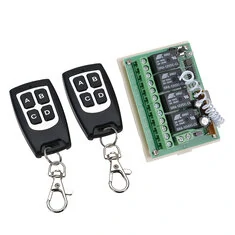
Unless you have line level matching, you will never be able to fairly compare two pair of speakers. I built my own A/B/X box with both line level and speaker level matching. I use a readily available 4-channel, key fob remote and could easily expand this to four sets of speakers. I use the four remote channels for A=Speaker A, B=Speaker B, C=Random Speaker, D=Speakers Mute.

https://www.banggood.com/Geekcreit-...p-1012323.html?rmmds=search&cur_warehouse=USA

80eba97c-e8c5-4b3a-82eb-f4b0cf97ac29.jpg.webp


DSC_0055.JPG

Line level connections in gold. Extra RCA plugs for the lights that show which set of speakers is playing. This is switchable to off/panel/panel & speaker for blind and double-blind testing.
DSC_0057.JPG

Schematic showing A/B/X switching via my own design "randomizer."

ScreenHunter_125_Dec_28_16_50.jpg


Simple A/B switching with line level matching but omits the speaker level matching Lpads and randomizer.

ScreenHunter_149_Sep_19_18_25.jpg
 
Unless you have line level matching, you will never be able to fairly compare two pair of speakers. I built my own A/B/X box with both line level and speaker level matching. I use a readily available 4-channel, key fob remote and could easily expand this to four sets of speakers. I use the four remote channels for A=Speaker A, B=Speaker B, C=Random Speaker, D=Speakers Mute.


Todd, very, very nice. I have never built anything like this, so I have a few questions if you don't mind. With simple answers please-
  1. How does it determine line signal strength on each line and equalize them? I can imagine looking at meters and making manual adjustments, but I cannot imagine how it is done automatically.
  2. Assuming that each line signal strength is then the same, would the more efficient speaker still be louder than the less efficient speaker?
  3. Would this 'selector' affect the signal at all, other than equalizing it to the other line? Distortion? Frequency curve?
Again, I am impressed. Very nice.

If you built another one, what changes would you make on it?

I like the remote control feature. When you select random choice, and you like one sound over the other, do you walk up to the speaker and place you hand on it to determine which speaker is playing at that moment?

The random selection would mean that I could do a blind test by myself. I like that.

How long did it take to build, and what was the cost? Approximately?

Thanks Todd.

PS- What do you do for a living?
 
I’ve had many selectors.

A lot of unknowns make the Adcom look cheap and the Adcom is pretty nice.

I get cast offs from high end whole home integrators and custom installs. Brands that you probably don’t see anywhere in the eBay/Amazon world.

The very old Niles and Russound were very very serious units. Very high quality switches and connectors and simple high quality circuit board. There are some with stepped attenuators rather than high grade volume pits.

I offered a lot of them here in Bartertown but either the lack of name recognition or asking price kept them home. Since they are heavy, shipping price may have hurt.
 
Todd, very, very nice. I have never built anything like this, so I have a few questions if you don't mind. With simple answers please-
  1. How does it determine line signal strength on each line and equalize them? I can imagine looking at meters and making manual adjustments, but I cannot imagine how it is done automatically.
  2. Assuming that each line signal strength is then the same, would the more efficient speaker still be louder than the less efficient speaker?
  3. Would this 'selector' affect the signal at all, other than equalizing it to the other line? Distortion? Frequency curve?
Again, I am impressed. Very nice.

If you built another one, what changes would you make on it?

I like the remote control feature. When you select random choice, and you like one sound over the other, do you walk up to the speaker and place you hand on it to determine which speaker is playing at that moment?

The random selection would mean that I could do a blind test by myself. I like that.

How long did it take to build, and what was the cost? Approximately?

Thanks Todd.

PS- What do you do for a living?


1. I play pink noise from the CD player into one speaker (A), then the other (B) and determine which is louder with a dB meter at the seating position. Then I manually adjust the appropriate pot to make both speakers register the same on the meter (+0.1 dB) to match their levels.

2. No, the idea is to compensate for any differences so that you are listening to both at the same volume level.

3. No, I used very high quality relays for the signal source (taken from a professional mixing console) and high quality 20 amp relays for the speakers. The electronic portion is entirely passive so the quality of the signal can only be influenced by the quality of the relays, 100,000 ohm volume pots, and wire/connections.

I would possibly omit the Lpad section and just use the line level pots for cost savings and because the Lpads do have a very minor effect on sound. But, they are very useful if I just want to run two different sets of speakers simultaneously on the "A" and "B" speaker selector of the amplifier, and be able to adjust the level to get a better match. Often the difference in volume between two sets of speakers is more dramatic than the slight loss of damping using the Lpads.

This unit is on the "Speaker B" selector and if I select "A" and "B" on the amplifier and put the louder speaker on the "B," I can attenuate it to the level of the speakers playing on the "A" to get a better match at the loss of a bit of damping.

There is a selector switch and LED on the panel and "lights" that can go on the speakers. The switch can display both the panel and speaker lights, just the panel lights (single blind testing), or leave all lights off (double blind testing).

Probably cost me ~$75 with the two ebay, surplus, stereo, 100 watt L-pads being the most expensive items. But I had the acrylic and access to a laser to cut it.
 
Last edited:
One of the best that I’ve found is the OSD Audio ATM-7. Handles two sources into seven outputs or the reverse. No coloration that I can detect and excellent full size connection posts on the back. No impedance matching, tho.
 
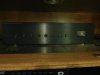
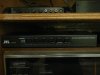
Here are some photos of the five (5) speaker selector boxes I have tried so far. I am still using one to switch amps and listen to them on two sets of speakers. Another I am trying now, is the one without a name on the front, installed and labeled for four sets of speakers. It is making popping noises and I have not determined why yet. At least one of the others I didn't like because the wire connectors were cheap and the wire pulled out easily. Several would not handle wire larger than 16 gauge, in spite of claiming they would handle wire up to 14 gauge.

I wanted a selector for four pairs of speakers, one amp is sufficient, 200 watts, and banana sockets for speaker connections. I only intend to listen to one pair of speakers at a time, so I don't need protection against low ohms overheating my receiver. Since my main intent is to compare speakers to see which I want to keep and which I want to sell, I want a selector that will not affect the sound.

I appreciate everyone's help.

Couldbfishin

IMG_4232.JPG IMG_4233.JPG IMG_4237.JPG IMG_4244.JPG IMG_4246.JPG
 
I use a TEC tc616 to switch between my speakers. Amp is Marantz 2285b speakers are AR2ax,JBLl36's some home mades .It will handle six sets and I have never had any issues with distortion or wierd noises, been useing it for years.
 
I use a TEC tc616 to switch between my speakers. Amp is Marantz 2285b speakers are AR2ax,JBLl36's some home mades .It will handle six sets and I have never had any issues with distortion or wierd noises, been useing it for years.

Hey Don,
Thanks for the post. i will do a search on the TEC TC616.

I noticed you use a Marantz 2285B and AR2ax speakers. I have that receiver and it is nice. Did you know it is rated at 94 wpc and not 85 as I always thought. The 2285 was rated at 85, and the 2285B was rated at 94. I have been meaning to sell my 2285B and I am having trouble making myself do it. It is nice looking and sounding. I have photographed it, tested it, and it is ready to post, but I just can't seem to do it.

The AR2ax are some of my favorite speakers, although they are not very efficient. I prefer them over the more highly rated AR3's.

I enjoy JBL speakers of all sizes. I would have a collection of all older JBL speakers if I could afford it.

And, I like your bug. I drove a '62 VW beetle while in high school ('71-'73). Dark blue, 4 speed, filled the gas from under the hood in front. The 6V battery was under the back seat on the passenger side I believe. We sold it to the next door neighbor, and I got a '66 white Mustang to start college with. The neighbor was an avid rabbit hunter, and he transported his three Beagles in the front trunk of that VW. Not a lot of room up there, but they didn't seem to mind. They loved to go rabbit hunting also. They just laid down for the short trips to the field. Whenever I see an older VW, I always check it out. Would still like to have a VW van, especially the camper version. Classics.
 
I’m always actively searching for stuff locally and stumbled upon a Vintage Luxman C-1010 Control Center. I knew that Luxman was high end and immediately bought it. I got it home and realized that not only was it an amazing preamp but it also had a speaker selector section. It has inputs for 2 speakers and Outputs for 4. A & B buttons. It’s a really great function that most preamps do not have. I run the main speaker outs from a 150WPC amp to the Luxman and run a pair of Bose 901 2’s on A & a pair of Klipsch KG3’s on B and i get what seems to be full capacity from the amp on both pairs even when using both at the same time. I’ve tested running one at a time and then both at the same time at the same volume and there was no difference. So yes it kind of answers you’re question but it probably wouldn’t be a very likely or sensible choice, since these Luxman’s aren’t cheap nor are they readily available. I see some on the bay now and again but normally around $1k.. Guessing way more than anyone would want to pay for a speaker selector. But you would be getting a super high end preamp too. So basically if you get lucky and can find a deal on either the Luxman C-1010 or C-1000 buy it! Don’t procrastinate , just get it! You won’t regret it.
 
coulbefishin, Why would you sell your 2285b? I had mine recapped by Blaine,anAK member and had a beautiful wood case made for it by another AK member would never sell it.
I do like the ar2ax's but I'm still hunting for the 3a's that don't cost an arm and a leg.
 
Back
Top Bottom