• The move to the new server is done. There are some software and database maintenance updates in process. This has us passing the hat around to help out. We appreciate any donations. Seriously, even a dollar helps. The payment page may be found here - https://www.audiokarma.org/support.html

Is this what a bad transformer looks like? (QSC CX12 amplifier content)

tlite

Active Member
Hi All,

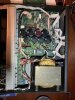
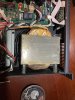
This was a free find - a QSC CX12 2 channel amp I got from an old theater. I took the hood off and saw this- never seen a bad transformer before, but guessing I'm looking at one now...?

If I'm right... send to the junk heap?

(FYI, I think I can probably get another one of these free, which I plan on doing, but just figured I'd check in to see what I'm looking at here.)

Thumbnails will open a larger photo...
IMG_7847_2016x1512.jpg IMG_7848_2016x1512.jpg IMG_7849_2016x1512.jpg IMG_7850_2016x1512.jpg
 
Register to hide this ad
Bad should look burnt? or leaking? I do not see that here. Anyone else?
That second photo shows a lot of layer separation and the top is shiny- that's what made me nervous. Took another photo that might show it better.

Or maybe that’s not actually part of the transformer like I thought?

Either way is it something to worry about? That would be great if not...
IMG_7851.JPG
 
Last edited:
My guess is ugly, but not broken. As long as the insulation between windings is intact there shouldn't be a problem. I agree with @elitopus, plug it in. If it doesn't blow a fuse, smoke, or get unusually hot, then measure transformer secondary voltages and compare those to what should be shown in the Service Manual (which you should obtain if you don't already have one).

I would definitely grab that 2nd QSC, sooner than later :)

Check out this pic of the transformer in a Bose 1801
https://www.audiokarma.org/forums/index.php?threads/bose-1801-revisited.499313/#post-6480310
 
Last edited:
Might have gotten a little hot at some point. Perhaps something to do with that one replacement elco.

Obviously you find out by plugging it in. Preferably thru a DBT.
 
Then I wouldn’t worry too much about it. You could check the above things mentioned like operating temp, voltage at the trans etc if you really want to.
Also I agree, grab the second amp.

I’ve picked up quite a few ex-theatre amps. They are usually in better condition than their road going cousins. Even if kept on 24/7. Most of them are just dirty inside is all.
 
I've rarely had bad transformers, but they fail in two ways, either open or shorted. Shorted ones make a lot of heat, or they blow the fuse almost immediately. Open just don't do anything, and rarely look damaged unless its some sort of ugly mechanical failure that cut through windings.

Stuff with a lot of hours can sometimes look a little "tan" but rarely indicates anything about the working condition.

to me that one just looks like they didn't use extra paper to cover the ends of the layers.
 
That's great news- thanks very much folks. I wasn't sure whether those separated layers would adversely impact cooling and/or anything else. I don't know much about this stuff, but do try to open the case and see what looks suspicious. Appreciate the help!

On another note... any advice on how to quiet this thing down? That fan is like a freight train!
 
I think those have a rather standard "muffin" type fan, although not sure if the size is 80mm or maybe 120mm.

Either case, all but certainly you can find a fan of the same size and voltage rating that spins slower and moves less air, so it will be more quiet. For home use it's an easy modification because seldom is home duty anywhere near the duty cycle pro amps were designed to operate. Meaning, you can slow down the fan/move less air through it without any issues.

I put slow/low volume fans in the four QSC PLX amps I use in my main HT system. Never any cooling issues since the average duty cycle is pretty low. It made a great reduction in fan and air movement noise.
 
If the noise is not bearings but fan blade noise you can also slow it down with a resistor. I did this successfully with an Adcom GFA-1.
 
I think those have a rather standard "muffin" type fan, although not sure if the size is 80mm or maybe 120mm.

Either case, all but certainly you can find a fan of the same size and voltage rating that spins slower and moves less air, so it will be more quiet. For home use it's an easy modification because seldom is home duty anywhere near the duty cycle pro amps were designed to operate. Meaning, you can slow down the fan/move less air through it without any issues.

I put slow/low volume fans in the four QSC PLX amps I use in my main HT system. Never any cooling issues since the average duty cycle is pretty low. It made a great reduction in fan and air movement noise.

Super helpful- thanks. I'm sure I've got an old PC fan around somewhere that might work, but if not will look for a 24V 120mm fan.

If the noise is not bearings but fan blade noise you can also slow it down with a resistor. I did this successfully with an Adcom GFA-1.

GENIUS. Gonna Try that first. If you have any suggested resistance values lemme know- otherwise I'll just try a few and see if it works.
 
Back
Top Bottom