• The move to the new server is done. There are some software and database maintenance updates in process. This has us passing the hat around to help out. We appreciate any donations. Seriously, even a dollar helps. The payment page may be found here - https://www.audiokarma.org/support.html

Isolated the hum

jpatti75

Amazing I haven’t electrocuted myself, yet.
Subscriber
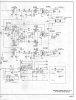
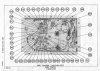
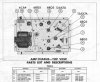
Well, I had given up on the hum in my ‘61 Motorola console for awhile, but the OCD in me finally kicked back in and I decided to do more troubleshooting. I don’t know how I missed it before, but I have isolated the hum in the amp to the center channel. When I pull the 12AX7 tube (V5) for the “Center Channel AF Amp Phase Inverter,” the unit goes darn near silent. I tried swapping in a couple different 12AX7, but the hum returns in all instances. Hooked up a different center channel speaker and still a hum. So, it seems the hum is in the amp circuitry and not a bad tube or speaker. I assume I am looking for a capacitor or resistor out of spec. Given I have already replaced the filter caps, any likely culprits I should focus on first? Here are some Sam PhotoFact images:
E9D08C52-61C4-44DA-87F3-FCEB6794921A.jpeg F1B9F259-A674-4D88-A809-49E633187F1F.jpeg 1CD11652-F57A-4E64-BA05-8F3425817B7F.jpeg


Thanks,
JP
 
Last edited:
Register to hide this ad
Try a different (hopefully matched) pair of 6BQ5 (V6 and V7). They could be badly matched and causing that hum in the center channel. :idea:
 
Try a different (hopefully matched) pair of 6BQ5 (V6 and V7). They could be badly matched and causing that hum in the center channel. :idea:

Hi Mr. Boochie - thanks for the tip. I believe the JJs I installed last year were purchased as a matched set, but I can swap in another set to see if it makes a difference.
 
If it's due to the output stage, pulling the phase inverter wouldn't kill it. The hum might be coming from further upstream - only the center channel would reproduce it.

Have the electrolytics been replaced? Full schematic would be helpful.
 
Thanks, Tom. All the electrolytics have been replaced….most were in the preamp. Here is the full schematic of the amp, split between two pages in the Sams document. No reverb in my unit.

When I pull Tube V5 12AX7 for the center and then listen, the left channel is totally quiet, but I can hear a faint hum in the right channel. When you put the center 12AX7 back in, the hum can be heard in all the channels, but certainly the loudest in the center.

29C9564B-85B2-486B-A060-CA089B05840C.jpeg 2FEC3A8F-417F-4ED0-9619-2D11A66AD89F.jpeg
 
Last edited:
Does this have the "Vibrasonic" control? That's what drives the center channel, although the note on the schematic says the reverb preamp isn't used on a certain model. Does this have a spring reverb unit?
 
Trick here is that the L and R channels have limited bass response and I expect they feed small speakers. They may have the same hum problem but you can't hear it. The center is the only one running a big enough speaker to reproduce 60 or 120 hz.

Question is whether its 60 or 120 hz. That will give us a troubleshooting direction. Also might be worth unplugging the cables from the preamp and installing some shorting plugs to see if its in the amp or coming from before the amp. Shorting plugs are just an RCA plug with the center pin tied to the outer ring.
 
Does this have the "Vibrasonic" control? That's what drives the center channel, although the note on the schematic says the reverb preamp isn't used on a certain model. Does this have a spring reverb unit?

No Vibrasonic/reverb in this unit. This model is the SK71, which seemed to be more of a bare-bones model.
 
Trick here is that the L and R channels have limited bass response and I expect they feed small speakers. They may have the same hum problem but you can't hear it. The center is the only one running a big enough speaker to reproduce 60 or 120 hz.

Question is whether its 60 or 120 hz. That will give us a troubleshooting direction. Also might be worth unplugging the cables from the preamp and installing some shorting plugs to see if its in the amp or coming from before the amp. Shorting plugs are just an RCA plug with the center pin tied to the outer ring.


When I get home tonight I will listen closely to determine whether this is a 60 or 120 Hz hum.
 
Grounding the first cap after the rectifier any place different will create hum. It should connect to the same spot as the transformer center-tap (which originally connected directly to the can, I'm sure)
 
Grounding the first cap after the rectifier any place different will create hum. It should connect to the same spot as the transformer center-tap (which originally connected directly to the can, I'm sure)

Tom- Forgive my lack of knowledge in reading the schematics, but could you help me identify the Cap # on the schematic I need to check. The center tap transformer wire is hooked up to the C1D (cathode), and there is no other direct connection to it. While there is a cement resistor coming off the rectifier, I can't trace what would be considered the first cap directly after the rectifier?
 
The schematic shows the power transformer C-T connecting to ground through a 22 Ohm resistor. Can't tell for sure, but may use an unused pin on the 6CA4 socket as a tie point. Odd that they didn't ground it at the C1 can - the best place. C1A + (40 uF) is directly connected to pin 3 on the rectifier - a resistor could have been added, though. This also connects to the center-tap of the (center channel) output transformer and a 100 Ohms resistor to the next filter cap. If individual caps were used as replacements, see where the cap that replaced C1A is, and where its negative terminal is connected. If there's a new can, is one mounting (-) lug soldered to the chassis?
 
C1A-C1C are part of a three-part replacement filter can, and so all three of those filter caps (and their connections) have the negative soldered to the chassis via the tabs on the can. I replaced the C1D (cathode) with a stand-alone cap, which is connected to the yellow/green striped wire coming from the transformer, and the negative side of the cap is soldered to the chassis. I connected everything as it is shown in the Sams wiring picture, with the exception of C1D being a stand-alone cap and not part of the can.
 
OK, sounds good. C1A carries a fairly high AC ripple current, can cause hum if that current flows in the wrong place.

Here's off-the-wall suggestion - try another 12AX7 in the R-L channels. Heater-cathode leakage there can cause hum (especially since cathode isn't bypassed). Center channel (low-pass) amplifies it, R-L (high-pass) won't.
 
Just listened to the hum with a test tone comparison, and it is definitely a 120hz hum. Also, when the unit volume is all the way down, in addition to the hum you get the occasional hiss. (Or as Terry From DLab would say, the “hissy poppies.” :naughty:).
 
two things typically cause 120 hz hum

poor power supply filtering
or with push-pull stages, poor output tube balance

Ripple currents in the chassis can do it too, but if everything is grounded where it was originally, either its a design fault that was always there, or that ain't it. If its enough to bug you today I'd assume someone in 1961 would have been irritated by it too.

You have new caps, so unless one is faulty I wouldn't assume that to be it either. The can is soldered to chassis, so its not a bad ground connection either.

The push-pull center channel amp gets less filtering than the rest because it can cancel out a lot of noise, though only if the tubes are reasonably well matched. Upset that too much and you'll get power supply hum. What are you using for tubes in this, originals, new, something in between? If they are old and assuming you have no way of testing tubes, maybe the thing to try here is shuffling tubes around to see if one set in the center channel behaves better.
 
Back
Top Bottom