• The move to the new server is done. There are some software and database maintenance updates in process. This has us passing the hat around to help out. We appreciate any donations. Seriously, even a dollar helps. The payment page may be found here - https://www.audiokarma.org/support.html

JBL 4311 Speaker Insulation Mold?

Drakevinyl

New Member
4F6AF03F-693D-402E-9B51-6B31617E727A.jpeg 5EC31172-6B35-4073-8965-EA231CBE4D08.jpeg image.jpg image.jpg 8D537B49-214A-4570-A697-86131E44D8C6.jpeg
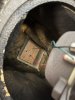
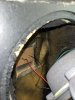
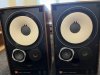
I just recently got a pair of JBL 4311 speakers off Marketplace for $50, the cabinets are really beat with a good bit of damage (a sizable chunk missing from one and a bit of warping on the other) but the drivers are pristine and they sound amazing. I took them apart the other day to see the other side of the drivers and how bad the inside was and noticed the insulation has a layer of black all over it. I’m not used to seeing mold and frankly this is stumping me right now, hoping someone here can help me on identifying whether it is or not and where to go from here.
 
Register to hide this ad
Most of it is Black paint over spray. The easy way to check,
take a clean piece of white paper and rub it against the Black Insulation.
Dried Black paint won't rub off, Mold will.
also try some white vinegar on a paper towel.
It should immediately change the color of Mold.
If it is indeed mold, take the cabs outside, prob better to wear a mask,
remove all the insulation, and wipe down the insides, a few times.
there is a white paint that homeowners used on their studs,and inner sheathing
after Hurricane Sandy to prevent the Hazardous Mold from spreading.
especially important in speakers that push out air whenever played.
 
View attachment 2841764 View attachment 2841765 View attachment 2841766 View attachment 2841768 View attachment 2841769
I just recently got a pair of JBL 4311 speakers off Marketplace for $50, the cabinets are really beat with a good bit of damage (a sizable chunk missing from one and a bit of warping on the other) but the drivers are pristine and they sound amazing. I took them apart the other day to see the other side of the drivers and how bad the inside was and noticed the insulation has a layer of black all over it. I’m not used to seeing mold and frankly this is stumping me right now, hoping someone here can help me on identifying whether it is or not and where to go from here.
On my old JBL L100A speakers, the fiberglass cabinet lining had black spray paint specks all over it. The front baffle is painted black, probably sprayed on before the drivers were mounted.

If that is mold, it would have grown on most any surface, including the backs of the woofer. If the woofers backs are clean, it is probably sprayed on paint.
 
Last edited:
Those drivers look great. Glad it sounds fantastic! The cabinets look like someone took an axe to them! Still a super find with plenty of potential @ $50 a pair which is unheard of.....
 
Those drivers look great. Glad it sounds fantastic! The cabinets look like someone took an axe to them! Still a super find with plenty of potential @ $50 a pair which is unheard of.....
Have you tried the drivers yet? You can play some music through them just to see if they make any sound all.

Other simple-to-do tests are touch the driver's terminals with the probes of a simple volt/ohm meter. Is there continuity, low resistance, high conductivity? If so, the driver's voice coils are intact and probably work. If not, the driver's voice coil may be disconnected or broken. It will have very high resistance, that is no continuity.

You can also test them with an AA 1.5 volt battery by touching the driver's terminals. Tape short wires, about 6" long, to the battery's terminals. Then touch the wires to the driver's terminals. Watch what the driver's cone does when you complete the connection. After you connect the battery (+) terminal to the driver's (+, usually marked with red) terminal, and the battery (–) to driver's other terminal, you should see the cone pop forward away from the voice coil/magnet. If you touched the battery (+) to the driver's (–) terminal, it will pop to the rear. After you disconnect the battery, the cone should return back to it's neutral position.

Does this speaker have variable L-pads that control the volume of the mid-range and tweeter? They often get corroded and don't work. Try working the knobs back & forth quickly, about a dozen times. Does that improve things? You can try cleaning them with Caig DeoxiIT D-5 spray or other brands of contact cleaner, but you might have to replace them. Corrosion of contact surfaces is a constant problem in both old and new variable L-pads.
 
Last edited:
My JBLs have black paint overspray also. That is a good deal if they mostly (or fully) work.

Are you going to restore them?
 
+1 on the over-spray. If it bugs you, just get some normal yellow household fiberglas insulation and have at it.
Great steal!
 
Have you tried the drivers yet? You can play some music through them just to see if they make any sound all.

Other simple-to-do tests are touch the driver's terminals with the probes of a simple volt/ohm meter. Is there continuity, low resistance, high conductivity? If so, the driver's voice coils are intact and probably work. If not, the driver's voice coil may be disconnected or broken. It will have very high resistance, that is no continuity.

You can also test them with an AA 1.5 volt battery by touching the driver's terminals. Tape short wires, about 6" long, to the battery's terminals. Then touch the wires to the driver's terminals. Watch what the driver's cone does when you complete the connection. After you connect the battery (+) terminal to the driver's (+, usually marked with red) terminal, and the battery (–) to driver's other terminal, you should see the cone pop forward away from the voice coil/magnet. If you touched the battery (+) to the driver's (–) terminal, it will pop to the rear. After you disconnect the battery, the cone should return back to it's neutral position.

Does this speaker have variable L-pads that control the volume of the mid-range and tweeter? They often get corroded and don't work. Try working the knobs back & forth quickly, about a dozen times. Does that improve things? You can try cleaning them with Caig DeoxiIT D-5 spray or other brands of contact cleaner, but you might have to replace them. Corrosion of contact surfaces is a constant problem in both old and new variable L-pads.

Yes I listened to them quite a bit after I opened them up. Everything sounded good except maybe the mids and highs were more forward than they should be with the bass a bit lacking but I also didn’t position them at all really.

Should I still test the drivers at all like you described or should I be all good since they sound okay?

I did play around with the L-Pads a bit too but I don’t think there was any difference in the mids and highs but it did crackle a bit as I moved them so I definitely will be trying to clean them out. Really hoping they aren’t bad too.
 
My JBLs have black paint overspray also. That is a good deal if they mostly (or fully) work.

Are you going to restore them?

That’s the plan, already got a friend of the family who will help me out with restoring the cabinets and the drivers seem nearly perfect so I think the cabinets and L-Pads are the only things with issues right now.
 
+1 on the over-spray. If it bugs you, just get some normal yellow household fiberglas insulation and have at it.
Great steal!

Thank you! And it doesn’t bother me at all, just got me wondering with the water damage on one and how all the pics I could find had yellow insulation so I just wanted to be safe.
 
Yes I listened to them quite a bit after I opened them up. Everything sounded good except maybe the mids and highs were more forward than they should be with the bass a bit lacking but I also didn’t position them at all really.
Good, none of those drivers are dead. They all work, despite the cabinet damage.
Should I still test the drivers at all like you described or should I be all good since they sound okay?
Your listening test was good enough.
I did play around with the L-Pads a bit too but I don’t think there was any difference in the mids and highs but it did crackle a bit as I moved them so I definitely will be trying to clean them out. Really hoping they aren’t bad too.
Those L-pads you have seem OK. Just clean them and see if that gets rid of the crackling. I've seen L-pads so badly corroded that the tweeter or mid-range got no signal at all.
 
Good, none of those drivers are dead. They all work, despite the cabinet damage.
Your listening test was good enough.
Those L-pads you have seem OK. Just clean them and see if that gets rid of the crackling. I've seen L-pads so badly corroded that the tweeter or mid-range got no signal at all.
Thank you so much for the responses, should I remove the L-Pads to clean them or would getting Deoxit deep in there behind the knobs work? And any thoughts on a recap overall?
 
Thank you so much for the responses, should I remove the L-Pads to clean them or would getting Deoxit deep in there behind the knobs work? And any thoughts on a recap overall?
If all the drivers are working and you can adjust the L-pads without dropouts or static, you should be good to go.
IMHO, people overthink recapping JBLs. How do they sound?

I have an original pair of L100 Century in-line-driver Gen-1 that I first heard back around 1970 and they haven't needed any of that. The crossover is stupidly simple, anyway, but they sound just fine as they are. Most modifications to these is to change their voice. I wanted to leave mine original as the icons they are—even it that means "fake but fun".
 
If all the drivers are working and you can adjust the L-pads without dropouts or static, you should be good to go.
IMHO, people overthink recapping JBLs. How do they sound?

I have an original pair of L100 Century in-line-driver Gen-1 that I first heard back around 1970 and they haven't needed any of that. The crossover is stupidly simple, anyway, but they sound just fine as they are. Most modifications to these is to change their voice. I wanted to leave mine original as the icons they are—even it that means "fake but fun".
They sound good, maybe with a bit too much in the mids and highs but that could be the intended sound or placement. However for the L-pads, when I adjusted them there was a bit of static and I’m unsure on whether or not there was any difference when I adjusted them. I’m going to try to play around a bit with them more this week, if I do need to clean the L-pads do you know how I should go about it?
 
Spray Deoxit 100 in the holes in the Lpad case, rotate the dial fully through its whole range a bunch of times, wait 5 minutes and do it again. They should be good to go after that. Deoxit Gold after cleaning will supposedly improve contact on the pots but I haven't used it.

CRC cleaner and pot lube would probably work as well but aren't as revered.
 
And any thoughts on a recap overall?
Replacing the capacitors of the 4311 crossover is not a good idea. Here’s why:

The crossovers on the JBL 4311 and L100A were meant to be minimal, but they were simply not up to the job. It contained only 1st order high-pass filters at 1.5 kHz for the mid-range and 6 kHz for the tweeter. The woofer had no filter at all, and the mid-range lacked any low-pass filter. It was certainly simple, but it’s far too simple for those drivers. It’s a good example that vintage is not always better.

Look at the L100A speaker’s frequency response curve with the JBL crossover. It graphically shows just what “The West Coast Sound” is really about. Several features are prominent:
  • A big ugly looking peak appears from 6 to 7 kHz. With the right music provoking those frequencies, it sounds downright ugly, hissy & sibilant. This might be caused by running the mid-range driver beyond its breakup frequency without a low-pass filter, this peak certainly took some work before it was tamed.

  • There is also a general rising response as frequency increases, especially above 2 kHz, which contributes to the overall forward sound. This was easily corrected.

  • Finally, destructive cancellations were seen resulting in deep troughs at 3.3 kHz and above 9 kHz, producing a prominent comb filter effect. These peaks and troughs are probably due to the unfortunate placement of the mid-range driver relative to the other drivers on the front baffle. The best correction for this would be building a new cabinet in which the 3 drivers are placed one above the other vertically. Short of that, some of these peaks & troughs can be corrected by some equalization incorporated into the crossover network.
attachment.php


Replacing the capacitors in your 4311 will only preserve those flaws of this speaker. Instead, you should consider building an entire new crossover that was designed by Dennis Murphy in 2006. It creates new crossovers (high & low-pass filters) for the woofer-to-mid at about 950 Hz, and mid-to-tweeter at 5,000 Hz. They will result in a much smoother frequency response with greater balance between lower & higher frequencies, as shown below.
attachment.php


See the attached PDF file for all the details about this new crossover. It is already 2 years old. Prices & availability of the crossover parts have changed since then. I'll have to work on getting that up to date.

The new crossover also eliminates those troublesome variable L-pads. Variable L-pads always suffer from corrosion. It doesn’t matter if you are able to completely clean & restore your old L-pads, or if you replaced them with new ones. Their corrosion would continue, resulting in further degraded performance. Better to get rid of them.

 

Attachments

Replacing the capacitors of the 4311 crossover is not a good idea. Here’s why:

The crossovers on the JBL 4311 and L100A were meant to be minimal, but they were simply not up to the job. It contained only 1st order high-pass filters at 1.5 kHz for the mid-range and 6 kHz for the tweeter. The woofer had no filter at all, and the mid-range lacked any low-pass filter. It was certainly simple, but it’s far too simple for those drivers. It’s a good example that vintage is not always better.

Look at the L100A speaker’s frequency response curve with the JBL crossover. It graphically shows just what “The West Coast Sound” is really about. Several features are prominent:
  • A big ugly looking peak appears from 6 to 7 kHz. With the right music provoking those frequencies, it sounds downright ugly, hissy & sibilant. This might be caused by running the mid-range driver beyond its breakup frequency without a low-pass filter, this peak certainly took some work before it was tamed.

  • There is also a general rising response as frequency increases, especially above 2 kHz, which contributes to the overall forward sound. This was easily corrected.

  • Finally, destructive cancellations were seen resulting in deep troughs at 3.3 kHz and above 9 kHz, producing a prominent comb filter effect. These peaks and troughs are probably due to the unfortunate placement of the mid-range driver relative to the other drivers on the front baffle. The best correction for this would be building a new cabinet in which the 3 drivers are placed one above the other vertically. Short of that, some of these peaks & troughs can be corrected by some equalization incorporated into the crossover network.
attachment.php


Replacing the capacitors in your 4311 will only preserve those flaws of this speaker. Instead, you should consider building an entire new crossover that was designed by Dennis Murphy in 2006. It creates new crossovers (high & low-pass filters) for the woofer-to-mid at about 950 Hz, and mid-to-tweeter at 5,000 Hz. They will result in a much smoother frequency response with greater balance between lower & higher frequencies, as shown below.
attachment.php


See the attached PDF file for all the details about this new crossover. It is already 2 years old. Prices & availability of the crossover parts have changed since then. I'll have to work on getting that up to date.

The new crossover also eliminates those troublesome variable L-pads. Variable L-pads always suffer from corrosion. It doesn’t matter if you are able to completely clean & restore your old L-pads, or if you replaced them with new ones. Their corrosion would continue, resulting in further degraded performance. Better to get rid of them.


4310/4311/L100 were voiced that way intentionally, to compete with the then popular Altec 604 based studio monitors. IMCO, people should leave them be and enjoy them (or not) for what they are. JBL made plenty of flat responding speakers as well.

@Drakevinyl , the black on the insulation is just paint overspray. Very common on painted baffle JBLs.
 
Last edited:
Spray Deoxit 100 in the holes in the Lpad case, rotate the dial fully through its whole range a bunch of times, wait 5 minutes and do it again. They should be good to go after that. Deoxit Gold after cleaning will supposedly improve contact on the pots but I haven't used it.

CRC cleaner and pot lube would probably work as well but aren't as revered.
Should I take the L-pads out for that and would Deoxit D5 work too? Sorry I’m still fairly new to this stuff
 
Should work fine. D5 is a lower concentration so you might need multiple repeats/more rotations, but it's the same stuff. The D5 has a solvent in addition to the deoxidizer so be aware - keep it away from plastics and paint.

As long as you can get at them there's no need to take them out but it might be a tough angle. I don't know how they're mounted on that model.
 
Last edited:
Back
Top Bottom