• The move to the new server is done. There are some software and database maintenance updates in process. This has us passing the hat around to help out. We appreciate any donations. Seriously, even a dollar helps. The payment page may be found here - https://www.audiokarma.org/support.html

JBL C34 SPEAKERS - Need advice

Great! Thank you Gordon!. I'll look into the 2405 tweeters, As far as corssover, this may be a stupid question, but will the 130A work well with either N7000 or N8000 crossover?

You will want the original crossover and the 175 mid horn, as well as the 130A. It will wind up being a 3-way.

You'll want to wire it up as follows:

Use the N7000/N8000 input, as the speaker system input of the whole speaker. Run the HF output of the N7000/N800 to the 2405 tweeter. Run the LF output of the N7000, to the input of the original N1200 crossover. Leave the output of the N1200 as-is (LF to the 130A, HF to the 175 horn).

This will allow the new tweeter to produce the range above 8000Hz, while the 175 will do from about 1200Hz to 8000 Hz, and the 130A will do everything below 1200Hz. You will also be able to adjust both the level of the 175 (midrange) and the 2405 (treble), to fine-tune the balance of the speaker.

As for placement- it looks like there is room, to put the 2405 just below the 175. Just use the appropriate size hole saw to make a hole for mounting. Or, if you don't want to modify the baffle- the 2405 can be hung from brackets, in the mouth of the horn, just below the woofer. That's been done in many cases. It doesn't necessarily need to be mounted in a baffle- it will work fine, just hanging from brackets.

Or, you can do as some others have- make a custom mounting housing, and set the 2405 on top of the cabinets. That can look really cool, if it's done well...

Regards,
Gordon.
 
You will want the original crossover and the 175 mid horn, as well as the 130A. It will wind up being a 3-way.

You'll want to wire it up as follows:

Use the N7000/N8000 input, as the speaker system input of the whole speaker. Run the HF output of the N7000/N800 to the 2405 tweeter. Run the LF output of the N7000, to the input of the original N1200 crossover. Leave the output of the N1200 as-is (LF to the 130A, HF to the 175 horn).

This will allow the new tweeter to produce the range above 8000Hz, while the 175 will do from about 1200Hz to 8000 Hz, and the 130A will do everything below 1200Hz. You will also be able to adjust both the level of the 175 (midrange) and the 2405 (treble), to fine-tune the balance of the speaker.

As for placement- it looks like there is room, to put the 2405 just below the 175. Just use the appropriate size hole saw to make a hole for mounting. Or, if you don't want to modify the baffle- the 2405 can be hung from brackets, in the mouth of the horn, just below the woofer. That's been done in many cases. It doesn't necessarily need to be mounted in a baffle- it will work fine, just hanging from brackets.

Or, you can do as some others have- make a custom mounting housing, and set the 2405 on top of the cabinets. That can look really cool, if it's done well...

Regards,
Gordon.
Ok, got it! Thank you so much Gordon. Looking for the add-ons on Ebay...
 
Great! Thank you Gordon!. I'll look into the 2405 tweeters, As far as corssover, this may be a stupid question, but will the 130A work well with either N7000 or N8000 crossover?
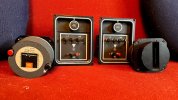
Ordered 2405s from Japan today off Ebay and bought N800 crossover also from Ebay $$$ :( , both looking like it's in great shape, will see... I'll post an update when I get them. Thanks again!
 
You will want the original crossover and the 175 mid horn, as well as the 130A. It will wind up being a 3-way.

You'll want to wire it up as follows:

Use the N7000/N8000 input, as the speaker system input of the whole speaker. Run the HF output of the N7000/N800 to the 2405 tweeter. Run the LF output of the N7000, to the input of the original N1200 crossover. Leave the output of the N1200 as-is (LF to the 130A, HF to the 175 horn).

This will allow the new tweeter to produce the range above 8000Hz, while the 175 will do from about 1200Hz to 8000 Hz, and the 130A will do everything below 1200Hz. You will also be able to adjust both the level of the 175 (midrange) and the 2405 (treble), to fine-tune the balance of the speaker.

As for placement- it looks like there is room, to put the 2405 just below the 175. Just use the appropriate size hole saw to make a hole for mounting. Or, if you don't want to modify the baffle- the 2405 can be hung from brackets, in the mouth of the horn, just below the woofer. That's been done in many cases. It doesn't necessarily need to be mounted in a baffle- it will work fine, just hanging from brackets.

Or, you can do as some others have- make a custom mounting housing, and set the 2405 on top of the cabinets. That can look really cool, if it's done well...

Regards,
Gordon.
N8000 and 4205s arrived today, will set up tomorrow, excited to see (listen) how that turns out!
 

Attachments

  • N8000 4205.jpg
    N8000 4205.jpg
    126.3 KB · Views: 15
The proper wiring sequence would be main input to the N1200 not the N7000/8000. The HF output from the N 1200 is then connected to the input of the N7000/8000. The LF of the N7000/8000 is connected to the 175 mid and the HF connects to a 075/2402 or 077/2405. The latter being the better of the 2 choices in the tweeter
 
So, I hooked everything today, wow, what a difference the 2405 makes! Sound is way more detailed and crisper and for some reason I feel Im getting smoother LF from the 130A woofer. I followed Poweman's instructions, kept the N1200 for the 130A and the N8000 for the 2405 and 175, so the control on the N8000 will control both the tweeter and the horn, is that right?
 

Attachments

  • 2405B.jpg
    2405B.jpg
    161.9 KB · Views: 23
  • 2405A.jpg
    2405A.jpg
    136 KB · Views: 23
You appear to have it correct.

No, the control on the N1200 will affect both the horn and tweeter, but the knob on the N8000 will only affect the tweeter. My suggestion is to put an Lpad on the N1200 on the horn terminals and use that to fine tune the horn. The adjustment on the N1200 is too coarse. Then you can play with the three settings and still get the volume you desire, regardless of which setting you prefer.

Also, you will want to try different phase settings for the horn and tweeter and see which you prefer. In theory you would use an RTA or some sweep program and see which is smoothest at the sweet spot. Each way will accenuate some frequencies and attenuate others and you want what's smoothest in your situation. Horns will exhibit peaks and dips and there really is no right or wrong, only what produces the smoothest response.
 
Last edited:
You appear to have it correct.

No, the control on the N1200 will affect both the horn and tweeter, but the knob on the N8000 will only affect the tweeter. My suggestion is to put an Lpad on the N1200 on the horn terminals and use that to fine tune the horn. The adjustment on the N1200 is too coarse. Then you can play with the three settings and still get the volume you desire, regardless of which setting you prefer.

Also, you will want to try different phase settings for the horn and tweeter and see which you prefer. In theory you would use an RTA or some sweep program and see which is smoothest at the sweet spot. Each way will accenuate some frequencies and attenuate others and you want what's smoothest in your situation. Horns will exhibit peaks and dips and there really is no right or wrong, only what produces the smoothest response.
Hi Todd,
So below instruction is not accurate? if the LF of the N8000 is connected directly to the 175, then you can only control with the N8000.

The proper wiring sequence would be main input to the N1200 not the N7000/8000. The HF output from the N 1200 is then connected to the input of the N8000. The LF of the N8000 is connected to the 175 mid and the HF connects to a 2405.

Thank you.
 
This is correct except to note that the LF from the N1200 goes to the 130A.

The proper wiring sequence would be main input to the N1200 not the N7000/8000. The HF output from the N 1200 is then connected to the input of the N8000. The LF of the N8000 is connected to the 175 mid and the HF connects to a 2405.
 
Thanks Todd! So, the LF of the N8000 should not be connected to anything, right?
No, the LF on the N8000 is connected to the horn driver.

The stereo speaker output feeds the N1200 input. The LF output from the N1200 goes to the woofer. The HF from the N1200 goes to the N8000 input. The LF on the N8000 goes to the horn driver. The HF on the N8000 goes to the tweeter.

Everything gets connected.
 
The proper wiring sequence would be main input to the N1200 not the N7000/8000. The HF output from the N 1200 is then connected to the input of the N7000/8000. The LF of the N7000/8000 is connected to the 175 mid and the HF connects to a 075/2402 or 077/2405. The latter being the better of the 2 choices in the tweeter

Actually, if you do it that way, every time you adjust the midrange level on the N1200, you'll have to go back and re-adjust the HF level on the N7000/N8000- as the entire input level to the N7000/N8000 will be affected by changes in the N1200 HF level.

Using the N7000/N8000 as the first unit in the chain, makes the non-attenuated lowpass (below 8000Hz) the input for the N1200. That makes the level control for the mid, independent of the level control for the tweeter. A much easier, more intuitive way of adjusting things.

Also, doing it this way, puts less stuff in line with the tweeter. Probably makes a "purer" signal path, in the treble range, where it would likely be more audible. Same reason why we tend to use higher quality caps on a tweeter, than a woofer- the tweeter is where it can be heard most readily...

Regards,
Gordon.
 
Last edited:
Actually, if you do it that way, every time you adjust the midrange level on the N1200, you'll have to go back and re-adjust the HF level on the N7000/N8000- as the entire input level to the N7000/N8000 will be affected by changes in the N1200 HF level.

Using the N7000/N8000 as the first unit in the chain, makes the non-attenuated lowpass (below 8000Hz) the input for the N1200. That makes the level control for the mid, independent of the level control for the tweeter. A much easier, more intuitive way of adjusting things.

Also, doing it this way, puts less stuff in line with the tweeter. Probably makes a "purer" signal path, in the treble range, where it would likely be more audible. Same reason why we tend to use higher quality caps on a tweeter, than a woofer- the tweeter is where it can be heard most readily...

Regards,
Gordon.
Good Morning Gordon,
I'll give it a try, per your previous comment: Use the N8000 input, as the speaker system input of the whole speaker. Run the HF output of the N8000 to the 2405 tweeter. Run the LF output of the N8000, to the input of the original N1200 crossover. Leave the output of the N1200 as-is (LF to the 130A, HF to the 175 horn).
On another note, I mostly listen to 50's / 60s Jazz, and it's great, the other day I was listening to Linda Ronstadt and noticed the highs becomes really coarse and trembling, actually sounded terrible! I thought perhaps there is a problem with the horn (175) and diaphragm had to be replaced or something , but I listened close to the other horn, also the tweeters and that same sound was coming out from everywhere, which tells me I could be the N1200.
Hard to explain in words how it sounds, I'll post a video sometime later. Any ideas what may be causing the coarseness?
Thanks again!
Best REgards,
 
Actually, if you do it that way, every time you adjust the midrange level on the N1200, you'll have to go back and re-adjust the HF level on the N7000/N8000- as the entire input level to the N7000/N8000 will be affected by changes in the N1200 HF level.

Using the N7000/N8000 as the first unit in the chain, makes the non-attenuated lowpass (below 8000Hz) the input for the N1200. That makes the level control for the mid, independent of the level control for the tweeter. A much easier, more intuitive way of adjusting things.

Also, doing it this way, puts less stuff in line with the tweeter. Probably makes a "purer" signal path, in the treble range, where it would likely be more audible. Same reason why we tend to use higher quality caps on a tweeter, than a woofer- the tweeter is where it can be heard most readily...

Regards,
Gordon.
The problem with doing it this way is that you are putting the signal (voltage/amperage) for both the horn and woofer through the relatively small gauge wiring in the N7000/8000 choke rather than just what would go to the horn driver and this is not the way JBL intended it. Just maybe JBL intended that the tweeter also be affected with the horn level to maintain a balance between the drivers.

I still say that the best way is:
Run the amp to the N1200 IN.
Run the LO from the N1200 to the 130A
Run the HI from the N1200 to the N7000/8000 IN
Run the LO from the N7000/8000 to an L-pad (25 watt is plenty but I really like those nice cast 50-watt units that are screwed together)
Run the L-pad to the horn driver
Run the HI from the N7000/8000 to the tweeter.

Play with the three settings on the N1200 in combination with the L-pad to find what gives the smoothest, most pleasing response between the woofer and the horn. With the addition of the L-pad, this is now infinitely adjustable as the three settings on the N1200 are too crude and will give slightly different responses. Then you can dial in the highs to the tweeter with the N7000/8000 L-pad and it will not affect the horn. Alternatively, if the horn is a bit loud/soft, you can tweak it's L-pad and not affect the tweeter.

I lived with this same set-up for many years and this was the best way I found to do it.
 
Last edited:
The problem with doing it this way is that you are putting the signal (voltage/amperage) for both the horn and woofer through the relatively small gauge wiring in the N7000/8000 choke rather than just what would go to the horn driver and this is not the way JBL intended it. Just maybe JBL intended that the tweeter also be affected with the horn level to maintain a balance between the drivers.

I still say that the best way is:
Run the amp to the N1200 IN.
Run the LO from the N1200 to the 130A
Run the HI from the N1200 to the N7000/8000 IN
Run the LO from the N7000/8000 to an L-pad (25 watt is plenty but I really like those nice cast 50-watt units that are screwed together)
Run the L-pad to the horn driver
Run the HI from the N7000/8000 to the tweeter.

Play with the three settings on the N1200 in combination with the L-pad to find what gives the smoothest, most pleasing response between the woofer and the horn. With the addition of the L-pad, this is now infinitely adjustable as the three settings on the N1200 are too crude and will give slightly different responses. Then you can dial in the highs to the tweeter with the N7000/8000 L-pad and it will not affect the horn. Alternatively, if the horn is a bit loud/soft, you can tweak it's L-pad and not affect the tweeter.

I lived with this same set-up for many years and this was the best way I found to do it.
Thanks again Todd! Any specific brand of L-Pad you have in mind? I suppose it needs to be 16ohm, correct?
 
The problem with doing it this way is that you are putting the signal (voltage/amperage) for both the horn and woofer through the relatively small gauge wiring in the N7000/8000 choke rather than just what would go to the horn driver and this is not the way JBL intended it. Just maybe JBL intended that the tweeter also be affected with the horn level to maintain a balance between the drivers.

I still say that the best way is:
Run the amp to the N1200 IN.
Run the LO from the N1200 to the 130A
Run the HI from the N1200 to the N7000/8000 IN
Run the LO from the N7000/8000 to an L-pad (25 watt is plenty but I really like those nice cast 50-watt units that are screwed together)
Run the L-pad to the horn driver
Run the HI from the N7000/8000 to the tweeter.

Play with the three settings on the N1200 in combination with the L-pad to find what gives the smoothest, most pleasing response between the woofer and the horn. With the addition of the L-pad, this is now infinitely adjustable as the three settings on the N1200 are too crude and will give slightly different responses. Then you can dial in the highs to the tweeter with the N7000/8000 L-pad and it will not affect the horn. Alternatively, if the horn is a bit loud/soft, you can tweak it's L-pad and not affect the tweeter.

I lived with this same set-up for many years and this was the best way I found to do it.

Problem I had with running things that way- N1200, then N8000- was that by the time one turned down the midrange horn enough on the factory N1200 controls, to match the woofer- the tweeter was too attenuated, even turned all the way up.

If, as you say, you put a separate L-pad in series with the horn- then, you don't have to attenuate the N1200 HF section. That should solve that problem. But, without a separate L-pad for the horn, after the N8000- that setup never worked well for me.

Regards,
Gordon.
 
Back
Top Bottom