


Ridgeback
New Member
A while back I inquired here about doing either the "Murphy" crossover or the commercially sold "Jantzen" crossover "upgrade" for the L100. Several people in this forum including leesonic and especially Richard Swerdlow were kind enough to go out of their way to produce a diagram and a parts list complete with costs. The Jantzen folks also replied with their 4 kit options. It turned out that the cheapest (#4) Jantzen kit was the same price as the kit Richard put together but the Jantzen kit also included replacement damping material, Polyester Accoustilux, the crossover boards, and high-quality internal wire so I ended up going with the Jantzen designed by Troels Gravesen. Truth be told, I went with their next-best #3 kit with slightly better caps in the crucial midrange section. In the other thread litefootdan asked that I post notes and photos of the project so here goes nothin':
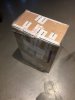
The box of parts came from Poland, I believe, via FEDEX in just 4 days! Well-packed and smart using the supplied baffle material and Accoustilux to act as the packing material.
Step 1 on the crossover was to measure and mark the holes for the binding posts and the mounting holes and to mount the solder strips on the hardboards via the provided template.

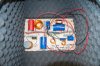
My next step was to layout the components on the board before mounting them. I used clear 100% silicone adhesive. The thick consistency gives you good hold at first but with time to make minor adjustments before it starts to cure. Here is my completed board (component values have been blurred to protect Jantzen's intellectual property). Those big coils and caps are a thing of beauty. The crossover probably adds 5 lbs to the overall weight of each speaker. Incidentally, I spray-painted the back of the crossover board black where it would show through on the back side where the binding posts stick out.

At this point I began to remove the drivers and make note of the wiring. I opted to keep the original crossover intact should I ever opt to return it to stock. Next, I removed the old damping material. Note the small bit inside the midrange driver enclosure.


After bundling the stock crossover wires, I cut away the spades that go to the tweeter in order to re-use on the new crossover as seen above.
Next I removed the old binding post board and pulled away any remaining staples and chipped away any old adhesive.
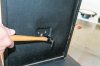
After vacuuming the cab out thoroughly, I determined the ideal location for mounting the crossover and drilled pilot holes for the mounting screws. BE CAREFUL YOU DON'T DRILL ALL THE WAY THROUGH THE BACK OF THE CAB!!
Then I began cutting and installing the baffle material. Don't forget to but a little baffle material in the midrange pocket. Next I cut away the baffle material where the crossover mounts to the back of the cab and I glued and screwed it down as seen below.
Then I soldered the spades to the tweeter portion of the wires and used shrink wrap tubing to seal the splices.

Finally, I zip-tied the wires for a neater setup and installed the Accoustilux over the crossover and reinstalled the drivers.

Overall, the kit took me the better part of a weekend to complete but the instructions were well-written and Troels Gravensen was quick to respond via email to a couple of questions I had including one on polarity which I will address next.
As many of you already know, JBL was unique in the way they assigned Red/Black with regards to polarity on speaker terminals, often outside of what I understand are current "industry standards" (where Red is positive and Black is negative). With JBL, sometimes Red was positive and sometimes Black was positive--(especially with the LE5-2). And in my case, one LE5-2s driver had "correct" polarity and the other was inverted!! Weird! Anyway, with either Troels' design or the Murphy design, you must determine and mark which pole is positive or negative despite JBL's assignments. There is a technique where you use a 1.5v battery to determine which is which terminal is which.
Besides differences in crossover components, Troels' design and Murphy's design differ in the way they wire the crossover to the drivers with regard to polarity. The Murphy crossover has all the positive leads going to the (+) terminals on the drives. Troels' design has only the woofer wired in normal polarity while the midrange and tweeter are wired with inverted polarity! I'm curious to hear what you guys think of that strategy and the effect it would have on the sound.
On to the way they sound now as compared to stock. Forgive me as I'm not great at articulating these things but it's an alarming difference. The speakers no longer have that in-your-face presence, that so-called West Coast Boom-tizz. They are now way more balanced and listenable IMO. No more ear fatigue. They do seem like they require a bit more power to achieve similar volumes but to me that's a fair trade-off. I much prefer the new sound.
The box of parts came from Poland, I believe, via FEDEX in just 4 days! Well-packed and smart using the supplied baffle material and Accoustilux to act as the packing material.
Step 1 on the crossover was to measure and mark the holes for the binding posts and the mounting holes and to mount the solder strips on the hardboards via the provided template.
My next step was to layout the components on the board before mounting them. I used clear 100% silicone adhesive. The thick consistency gives you good hold at first but with time to make minor adjustments before it starts to cure. Here is my completed board (component values have been blurred to protect Jantzen's intellectual property). Those big coils and caps are a thing of beauty. The crossover probably adds 5 lbs to the overall weight of each speaker. Incidentally, I spray-painted the back of the crossover board black where it would show through on the back side where the binding posts stick out.
At this point I began to remove the drivers and make note of the wiring. I opted to keep the original crossover intact should I ever opt to return it to stock. Next, I removed the old damping material. Note the small bit inside the midrange driver enclosure.
After bundling the stock crossover wires, I cut away the spades that go to the tweeter in order to re-use on the new crossover as seen above.
Next I removed the old binding post board and pulled away any remaining staples and chipped away any old adhesive.
After vacuuming the cab out thoroughly, I determined the ideal location for mounting the crossover and drilled pilot holes for the mounting screws. BE CAREFUL YOU DON'T DRILL ALL THE WAY THROUGH THE BACK OF THE CAB!!
Then I began cutting and installing the baffle material. Don't forget to but a little baffle material in the midrange pocket. Next I cut away the baffle material where the crossover mounts to the back of the cab and I glued and screwed it down as seen below.
Then I soldered the spades to the tweeter portion of the wires and used shrink wrap tubing to seal the splices.
Finally, I zip-tied the wires for a neater setup and installed the Accoustilux over the crossover and reinstalled the drivers.
Overall, the kit took me the better part of a weekend to complete but the instructions were well-written and Troels Gravensen was quick to respond via email to a couple of questions I had including one on polarity which I will address next.
As many of you already know, JBL was unique in the way they assigned Red/Black with regards to polarity on speaker terminals, often outside of what I understand are current "industry standards" (where Red is positive and Black is negative). With JBL, sometimes Red was positive and sometimes Black was positive--(especially with the LE5-2). And in my case, one LE5-2s driver had "correct" polarity and the other was inverted!! Weird! Anyway, with either Troels' design or the Murphy design, you must determine and mark which pole is positive or negative despite JBL's assignments. There is a technique where you use a 1.5v battery to determine which is which terminal is which.
Besides differences in crossover components, Troels' design and Murphy's design differ in the way they wire the crossover to the drivers with regard to polarity. The Murphy crossover has all the positive leads going to the (+) terminals on the drives. Troels' design has only the woofer wired in normal polarity while the midrange and tweeter are wired with inverted polarity! I'm curious to hear what you guys think of that strategy and the effect it would have on the sound.
On to the way they sound now as compared to stock. Forgive me as I'm not great at articulating these things but it's an alarming difference. The speakers no longer have that in-your-face presence, that so-called West Coast Boom-tizz. They are now way more balanced and listenable IMO. No more ear fatigue. They do seem like they require a bit more power to achieve similar volumes but to me that's a fair trade-off. I much prefer the new sound.


 .

