• The move to the new server is done. There are some software and database maintenance updates in process. This has us passing the hat around to help out. We appreciate any donations. Seriously, even a dollar helps. The payment page may be found here - https://www.audiokarma.org/support.html

Lenco L75 or Ariston Audio RD11s or Thorens TD125 mk2?

Empire 208 used a single-point bearing back in 1962 — so the debate is moot: Thorens/Linn/Ariston were late-comers.

1DSC002831.JPG

Note also the spiral groove up the shaft — this continuously moved oil up from the bottom of the well to the top of the shaft, whence it ran back down, so the shaft-and-sleeve were constantly coated.

It really worked too. Dubious, I tested mine. I drained the oil and wiped the shaft: the bearing was bone dry. I added new oil, let the shaft settle down, then rotated it, only 2 revolutions, by hand. I pulled the platter to examine, and the dry shaft was now fully coated with the new oil from top to bottom — after just 2 rotations: it constantly recirculates the oil while playing.

Drag/stretch on the belt is reduced, pitch stability improved (aided by the massive flywheel, perfectly balanced.)

Why others don't do this eludes me. Cost? On a $5K–10K table? The Empire cost $110.
 
Last edited:
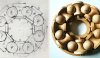
Speaking of bearings, here are two commonly used in turntables and tonearms — ball-race, and nested-balls...

1372279410cb718c8210c398c2ffe6214.jpg 1bearings with three spheres3.jpg

Designed over 500 years ago by Leonardo da Vinci... BTW, the latter looks very like a Linn or Thorens platter bearing shaft, sans the balls...
 
Last edited:
Which bearing came first begs the BIG question — WHO INVENTED THE PLATTER?

Turns out it was a POTTERS WHEEL. Wheels for travel and transport only came later.

The Wheel is the Mother of All Inventions — and the first wheel was a PLATTER — spinning horizontally on an axle, at a fixed place, at a regulated speed. Just like yours.

From Wikipedia, with dates, "The Wheel"

The invention of the wheel falls into the late Neolithic, and may be seen in conjunction with other technological advances that gave rise to the early Bronze Age. This implies that many millennia passed, even after the invention of agriculture and of pottery, and the domestication of the horse,.

Potter's wheels, which are the first freely-spinning wheel and axle mechanism, were developed in Mesopotamia (Iraq) by 4200–4000 BCE.[4]
Evidence of wheeled vehicles appeared by the late 4th millennium BCE. Their wheels were simple wooden disks with a hole for the axle.
The spoked wheel took two millenna more, dating to c. 2000 BCE. They allowed lighter and faster vehicles. .

NB: Wikipedia doesn't name the inventor, "lost to History." This is obviously wrong. His/Her name was obviously Potter.
 
Which bearing came first begs the BIG question — WHO INVENTED THE PLATTER?

Yes, I agree; the "wheel" inventor must be worshiped everyday :) And named... :confused: Still to set the "record straight" there should be relevant in order to simmer down the speculative arguments permanently spread out. Even if nothing about pride or even implemented ingenuity can be relevant to our playback enjoyment and pleasure. At least not for me and my ears that is.

Since I do not own such British manufactured turntable, pity me, could someone actually show me a 1971 Castle 'RD11' single point sub-platter bearing since those for the Linn 'LP12' from 1973 are still featuring the "old" captive ball bearing apparently. And I can hardly imagine a rewind in design on those decks. Especially if they were THE "originators" of such revolutionary design !!!
 
Yes, I agree; the "wheel" inventor must be worshiped everyday :) And named... :confused:
I did name him/her in the fine print at the bottom. It was a Neolithic husband and wife team named POTTER — she worked with clay, he worked with wood, so together they invented the "POTTERS WHEEL".

And of course it was named after them! I mean, put yourself in that village 6000 years ago, and your neighbors invent something like that!?

"Damn, did you see what the Potters did?!! They changed the course of human history!"

"No, them? They're so boring."

"But smart! In fact, let's name the village after them, they really put us on the map! Pottersville: Birthplace of the Wheel"!!
 
I don't think they had a contest.

The OG Ariston partners Tiefenburn father & son and Hamish had some strong contests with each one another though... :p For the rest of it it seems more to be a contest between different turntable's brands enthusiastic worshipers than between brands themselves.

It's not really a feat of engineering anyway. The single point bearing shaft is basically just a cheaper alternative to it's ball point predecessor. That ball isn't even suppose to turn - just minimize the contact point with the thrust plate but it required extra machining and milling plus a lock ring.

Further researches and dips into it on t'intenet, I now understand that the few first Ariston RD11 turntables (late 1971) had that tapered single point bearing. After what they switch to a non captive ball bearing for the following RD11 and RD11s. That would seem like they either had some issues with it or had to cut down production costs.

It's only the Linn Sondek LP12 (1973) that returned to a single point bearing spindle design for their turntables. Evidently there was that patent thing and law suits happening between those ex-partners of Ariston, but still I'd have thought that to manufacture a single point bearing would be simpler and cheaper.

But then what about this; ...their main bearing was an expensive single point type... (copied from a web page over Linn Sondek). So is the high precision turner job much more involving than that of a ball bearing either captive or not there ? I am no expert nor engineer to understand better but it seems odd somehow.
 
I have read the whole thread that was very interesting when you compare both Lenco and Thorens TD125 I have both but I will not tell which one i prefer.

I am a big fan of Thorens record player since 1982 when I bought my first used TD150 then I have owned several different models I have renovated basically all of their different models I also fix to others who own a Thorens.

Instead, I will talk about TD125, Td125 was a replacement for TD124 and would use the same suspension the famous "mushrooms" but when the work was about to complete in the development, Linn started selling their turntables and got a great response which made Thorens change there mind and choose to put springs there instead. When the EMT chose to make 928, the whole concept Thorens abstained and EMT made a TD125 on steorides.

I am doing my TD 125 mk1 which will be like Thorens had imagined from the beginning with mushrooms, I have had to manufacture parts that EMT uses in the cups because the mushrooms should be at the right height.

Regards
Anders

As another poster mentioned, I believe I too can guess at your favourite, based on the rest of your post. Can't say I blame you, though. (Glad you found the Lenco/Thorens comparisons interesting, btw). However, I found it very difficult to make a choice between the two, simply because I like the slightly superior dynamism and midbass 'punch' of the Lenco and I also appreciate the slightly nicer 'air' and delicacy (and natural tone) of the Thorens.

My quest has recently been to find a way to combine the best traits of the other in each of these TTs.

I now wonder if I've found a partial route to this goal with th 125 so far, at least.

Am I imagining things, or is it that the simple use of the Lenco's mat on the Thorens' platter imbues the latter with some of the Lenco's midbass 'punch'? I wonder!

Perhaps someone else could try this simple tweak and report back here.

Might be helpful to others (or not).

Just a thought!
 
I'm at the point where I can get a new Jelco 950 tonearm. I'm just wondering if I go with the TK950-S 9" or TK950-L 12" arm? The plinth is big enough to accommodate 12". I'd be using the current Nagaoka MP-11 cartridge as it's in great shape and I prefer to put my budget into the arm at this time.
 
I recently purchased a TK-850L (12"), but have not used it yet. My corian plinth for my Lenco L75 is inching closer to being done, and this arm will go on that table. It appears very well built, and I'm excited to try it. When I spoke to George Merrill (GEM Dandy turntables), he talked me into the 850 over the 950, basically saying the performance between the arms was nearly the same. I decided to save a few bucks and get the 850. By the way, his prices are as good as I could find, and he's a super nice guy that spent time chatting with me on cartridge selections and how they would mate with the arm. I highly recommend giving him a call.

I'm getting close to being able to share my thoughts on the comparison between the TD-125, and the L-75. I have been rebuilding a TD-125, and it will have a recapped circuit board, rebuilt bearing, new belt, SME 3009, and new plinth. The L-75 will be mounted in a corian plinth with PTP5, Pete's bearing upgrade, audio silent idler wheel, and the Jelco arm mentioned above. I haven't decided on a cartridge for each table yet, but I've got some decent MC's to choose from.
 
I recently purchased a TK-850L (12"), but have not used it yet. My corian plinth for my Lenco L75 is inching closer to being done, and this arm will go on that table. It appears very well built, and I'm excited to try it. When I spoke to George Merrill (GEM Dandy turntables), he talked me into the 850 over the 950, basically saying the performance between the arms was nearly the same. I decided to save a few bucks and get the 850. By the way, his prices are as good as I could find, and he's a super nice guy that spent time chatting with me on cartridge selections and how they would mate with the arm. I highly recommend giving him a call.

I'm getting close to being able to share my thoughts on the comparison between the TD-125, and the L-75. I have been rebuilding a TD-125, and it will have a recapped circuit board, rebuilt bearing, new belt, SME 3009, and new plinth. The L-75 will be mounted in a corian plinth with PTP5, Pete's bearing upgrade, audio silent idler wheel, and the Jelco arm mentioned above. I haven't decided on a cartridge for each table yet, but I've got some decent MC's to choose from.

Sounds exciting. I don't live in the US, and the store I'm working with seem like your contact, easy going and open to talking. I'll get a price comparison on the 850 and 950 12" tonearms, see how they stack up.

Did you discuss setup of the arm and cart on your plinth? Advantages over a 9" arm with a similar cart?
 
Did you discuss setup of the arm and cart on your plinth? Advantages over a 9" arm with a similar cart?

We discussed set up a little, but not much. I asked George about 9" vs 12", and he just said the longer the arm the less distortion. We didn't go into it any further because I had already decided I wanted a 12", I just wanted to give him the opportunity to talk me out of it.
 
We discussed set up a little, but not much. I asked George about 9" vs 12", and he just said the longer the arm the less distortion. We didn't go into it any further because I had already decided I wanted a 12", I just wanted to give him the opportunity to talk me out of it.

Funny. I'm reading there are advantages to the 12" arm, another being that it's further away from the motor (outboard on the plinth itself) which should improve things as well. Plus it won't be as affected by different vinyl record thickness (160, 180, 200g), and the typical less tracking errors as the arm approaches the centre of the record, a more natural sound, etc.
 
Funny. I'm reading there are advantages to the 12" arm, another being that it's further away from the motor (outboard on the plinth itself) which should improve things as well. Plus it won't be as affected by different vinyl record thickness (160, 180, 200g), and the typical less tracking errors as the arm approaches the centre of the record, a more natural sound, etc.

Yes, the reduction in tracking error, and the record thickness are both true advantages. I'm skeptical on the distance from the motor advantage. Any reasonably well designed turntable should isolate motor vibrations from the plinth or arm board. To say moving the pivot of the arm another 2" out is an advantage would be tough to prove, and tougher to hear.
 
To add to these advantages I have to question why so many high end TT tend to have 12" tonearms? I see a lot of TD 124, Garrards and the Jean Nantais TT sporting 12" arms.
 
To add to these advantages I have to question why so many high end TT tend to have 12" tonearms? I see a lot of TD 124, Garrards and the Jean Nantais TT sporting 12" arms.

Well 12" tonearm will have less wider angular tracking movement than 9" tonearm and so a more linear stylus alignement all the way through the concentric groove. Understandingly they require a more precise/trickier (maybe) adjustment alignement of the cartridge. But they also have another sonic signature than those who have 9" counterparts of the same brand, series and build. That due to the mass and resonance difference that some seem to favor as well.

Those 12" can look stunning but can only be fitted on turntables with larger armboards accommodation possibilities or else externally if ever... But I'm poor, humble and very happy for the moment with my large conical stylus to play my MONO 45's on my initially SME' 3009 Imoproved' SII 9" (DIY'ed converted into a detachable headshell fetching almost 10" :p) of now very heavy effective mass so I doubt I should really hear the obvious benefit those 12" bring there.
 
Last edited:
Back
Top Bottom