• The move to the new server is done. There are some software and database maintenance updates in process. This has us passing the hat around to help out. We appreciate any donations. Seriously, even a dollar helps. The payment page may be found here - https://www.audiokarma.org/support.html

Line Level Attenuation and Volume Dial position - Discussion

PJuddery

Well-Known Member
So, as the title suggests, I'd like to have a discussion about line level attenuation and volume dial position. Apologies if this has been discussed before. I did have a search, but didn't see anything specific.

So here's some background that has prompted me to want to discuss this subject and what I've found so far.
This is a new subject for me, that I only came across yesterday, for the first time. I've just restored my Sansui 6060. I rebuilt the power and driver boards first, testing again after each board was rebuilt. After recapping the pre-amp/ tone board and also fitting a replacement for the fuse resistor, I suddenly found there was a huge jump in volume. At first I was impressed, but then I quickly noticed a lot of sibilance in vocals and that the whole top end was hugely bright, harsh and fatiguing. I did quite a bit of further testing, with various sources and with different styles of audio. What I found was that even at low volumes, the audio was distorted slightly and that only got worse with higher volumes.

Prior to the volume jump, I'd been listening with the volume control set to around the 10:30 - 11:00 position, but after wards it was more like 08:30 - 09:00 position.

I did some research on the subject and eventually found articles that discussed line level attenuation and how it's often necessary and really important for good, clean audio, to reduce the level of input sources, prior to entering the audio amplifier/ receiver/ pre-amp, because otherwise, by the time the signal gets through all of the amplification stages and depending on the original source level, it can already be clipping and therefore distorted, even at low listening levels. This is often evident by the user being unable to turn up the volume beyond around the 8 or 9 o'clock position. From what I've read, the higher the volume control position can be turned without it becoming too loud for comfort, the cleaner and better sounding the resulting audio will be.

So, armed with that information, I decided to test it out. I'm using an rca source selector switch, because my Sansui only has a single aux input and I need at least 4 and as it happens, that switch box has a volume control. So I experimented with turning it down more and more with various sources, while simultaneously turning up the volume control on my receiver.

The more I turned down the switch box volume control and turned of the receiver volume control, the cleaner and cleaner the audio became, until it began to sound absolutely amazing. The harsh brightness is gone, most of the sibilance is gone and the distortion seems to be gone too. The volume control on my receiver is now sat at the 11:00 position and that's giving a nice comfortable volume level.

However, I've never had to do this before. My Kenwood amp that I've been using for years until now, has always just had the input rca connections plugged in and has never even had a hint of distortion, so I wanted to have this discussion, to see if this is quite normal for vintage receivers, if other people have experimented with line level attenuation and what sonic differences were gained or not gained by doing so.
 
Register to hide this ad
As a guess I would say one of the amplification stages has lost its feed back network allowing the gain to go wild. Usually the volume control is between stages, but if it is contained with in a stage it could becoming intermittent itself and causing the issue. Especially if it is involved with the loudness compensation circuits.
 
It does read like there is a problem with the amp. If you use one source directly into the Sansui and your volume is too much, too early the amp needs work. I don't know if the switch box has gain or just volume reduction is the reason I say one input direct to the 6060..

What you had is a good volume control. Flexibility down low, not just low, almost loud and loud but a nice range. And then at the high end at least 11:00 but I prefer 1:30 for full volume. This leaves some more crank fir those quiet parts or low output sources. The change as you say isn't as good without the decrease on the selector.
 
It does read like there is a problem with the amp. If you use one source directly into the Sansui and your volume is too much, too early the amp needs work. I don't know if the switch box has gain or just volume reduction is the reason I say one input direct to the 6060..

What you had is a good volume control. Flexibility down low, not just low, almost loud and loud but a nice range. And then at the high end at least 11:00 but I prefer 1:30 for full volume. This leaves some more crank fir those quiet parts or low output sources. The change as you say isn't as good without the decrease on the selector.
Hi Blue Shadow and thanks for replying. That's interesting. It hadn't occurred to me that there might be a fault with the receiver. Based on research, I had been under the assumption that it was relatively common for vintage amps and receivers to need cd inputs attenuating, because cd players output is a little hot.

If there were a fault with the pre-amp though, wouldn't that only affect one channel, not both equally? The volume control is on the ore-amp board, which is the last board I worked on prior to the volume jump. The control itself works perfectly though and the 6060 as a whole sounds incredible once the signal is attenuated, and stays sounding fantastic even if I turn the volune control up to at least the 1 o'clock position. I can't turn it up further as that's incredibly loud at that point and also I'm not sure my speakers can take it.

The switch box is completely passive, so no gain at all and I was using it prior the the volume jump also. The volume control on it is just there for attenuation purposes. Plugging a source directly into the aux input of the 6060 has the same volume level as via the switch box. Other functionality/ buttons on the preamp board are the mono button, loudness button and audio muting button. All 3 of those operate perfectly too.

If there were a fault with that board, wouldn't at least something not be operating correctly?
 
Is the comparison of volume position based on same source/same source output level before and after you noticed the difference in volume setting?

If it is same source / same source output level before and after, I think the point is what changed to cause such a clear difference in volume position?

If it was simply that the source is overloading the input now, isn't it logical that it would have been before too, presuming it's the same source? If it's a completely different source then the difference in volume position might make more sense.

Rule #1 about volume position comparisons is being sure it's apples to apples. But, it's very easy to be comparing apples to oranges instead.

Did you change component values, use different (as in substitute) parts when you went through it?
 
Last edited:
Twiiii mentioned a fault. I was agreeing with him because
1- you had proper volume before the work was done
2- a cd even with its high level output should not overload an input and you say it doesn't sound good from the start of the volume control.
3- the things whoaru mentioned
 
Twiiii mentioned a fault. I was agreeing with him because
1- you had proper volume before the work was done
2- a cd even with its high level output should not overload an input and you say it doesn't sound good from the start of the volume control.
3- the things whoaru mentioned
Apologies @Blue Shadow, @twiiii, I'd literally just woken up when I replied and was still all blurry eyed and not at all with it and was reading and replying on my phone. I somehow read both posts and Twiiii's post as one and the same post. To be honest I'm still not fully awake, but have coffee now at least, so I'm getting there and I'm now on my PC, which helps too. Just to be clear though, I'm not saying that anyone is wrong, in fact I have a horrible feeling that you all may be correct, (which isn't what I was hoping for with this discussion). Note to self, wait until properly awake to reply beyond cave-man speak, lol.

So, I see the logic in what all 3 of you are saying and I definitely agree that "something" changed when working on the pre-amp and that something caused the volume jump. My initial hope and assumption, was that previously one of the components had been failing, (possibly the fuse resistor had gone high) and was starving the circuit of potential and afterwards, having all new components, it was just back up to full potential and that's what the difference was.

So, if that isn't the case, do any of you have any advice regarding how I can track down what the real cause is? I inspected the board prior to refitting it back in the chassis and there are no solder shorts or broken traces that I could detect and all caps were replaced in the correct polarity and replaced like for like in almost all cases. The only exceptions were a few that had a slight voltage rating jump from 6.3 to 10v and 2 caps that were originally polarised 0.47 electrolytics, but are now 0.47 Wima film.

Also, thank you to all 3 for your replies so far. It is appreciated. :)
 
By the way, the sources are indeed exactly the same as they were prior to the gain change. However, I didn't actually measure the sources output prior, so I can't say that they themselves haven't changed. However, I can say that although I specifically mentioned the CD player, that was just for ease of discussion. The same gain change is evident when I use my DAC from my PC too.
 
Is the comparison of volume position based on same source/same source output level before and after you noticed the difference in volume setting?

If it is same source / same source output level before and after, I think the point is what changed to cause such a clear difference in volume position?

If it was simply that the source is overloading the input now, isn't it logical that it would have been before too, presuming it's the same source? If it's a completely different source then the difference in volume position might make more sense.

Rule #1 about volume position comparisons is being sure it's apples to apples. But, it's very easy to be comparing apples to oranges instead.

Did you change component values, use different (as in substitute) parts when you went through it?
Hi @whoaru99 and thanks for your reply. I'm comparing using the same cd and the same DAC via the same switch box and have also tested each directly into the aux input, without any difference to when using the switch box.

You'll probably see my reply to Blue Shadow and Twiiii below, but I had assumed thae change was a previously failing component, (like the fuse resistor drifting too high and starving the circuit) had caused a drop in gain, whereas after the rebuild, the new component or components allowed full voltage through and so increased the gain. I'm no expert though and still learning, so that was just was I thought and I guess hoped on what little understanding I have.
 
As a guess I would say one of the amplification stages has lost its feed back network allowing the gain to go wild. Usually the volume control is between stages, but if it is contained with in a stage it could becoming intermittent itself and causing the issue. Especially if it is involved with the loudness compensation circuits.
Hi @twiiii, thanks for the reply. I got slightly confuddled when replying first thing and somehow thought that your reply and Blue Shadows reply, were the same reply or the same person replying. I'm a little bit more awake now though, so hopefully I'll do a better job of replying.
 
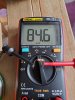
So, further to the above, I've just measured the 220 ohm fuse resistor that I removed from the pre-amp board and on 2 different meters, it's reading as 87k!!! Holy moly, that's a massive difference to the 220 ohms that it ought to have been. I didn't measure it previously, because while restoring the receiver, I did it board by board, starting with the power board, then the driver board and then the pre-amp and on the other boards, the fuse resistors were pretty much exactly what they should have been, so I stupidly didn't bother to measure the one that came out of the pre-amp.

So, my new questions would be, knowing now that the removed fuse resistor was giving an 87k resistance in circuit and knowing that the replacement is the correct rated 220 ohms:
A: Would that account for the gain difference
And
B: If the Answer to A is yes, could I replace that 220 ohm with a higher value and mitigate the need for line level attenuation?
C: If the answer to A is no, then what else could have caused the gain spike?

By the way, I didn't mention this previously, but it could be important. A few days before I starting the restore work, I repaired a heavy distortion fault in the left channel and the repair for this was replacing transistor pairs on the pre-amp board. The originals were 2 pairs of 2sc1313 and the replacements are KSC1845Y. The replacements have less hfe gain than the originals, which is why I didn't mention it previously, as I didn't think it could be related. However, just on the off-chance that it could be, in combination with the new resistor replacement, I thought I'd mention it now.
 
Here is the offending fuse resistor on the multimeter. It shows slightly lower, (just under 85k instead of 87k) because I'm using different leads that have less resistance. I needed these clip leads to hold the resistor so that I could take a photo of it.
Fuse resistor out of spec.jpg
 
So, my new questions would be, knowing now that the removed fuse resistor was giving an 87k resistance in circuit and knowing that the replacement is the correct rated 220 ohms:
A: Would that account for the gain difference
It's difficult to work out the circuit diagram from that PCB layout, but the answer is almost certainly yes.
And
B: If the Answer to A is yes, could I replace that 220 ohm with a higher value and mitigate the need for line level attenuation?
I wouldn't recommend that. Line level attenuation would be preferable.
By the way, I didn't mention this previously, but it could be important. A few days before I starting the restore work, I repaired a heavy distortion fault in the left channel and the repair for this was replacing transistor pairs on the pre-amp board. The originals were 2 pairs of 2sc1313 and the replacements are KSC1845Y. The replacements have less hfe gain than the originals, which is why I didn't mention it previously, as I didn't think it could be related. However, just on the off-chance that it could be, in combination with the new resistor replacement, I thought I'd mention it now.
Hfe shouldn't have any impact on the circuit gain, there should be enough feedback to make it irrelevant.

Do you have a proper circuit diagram? That would be a big help.
 
Last edited:
Regarding the transistor replacements. The original 4 transistors measured 529, 609, 638 and 685 hfe, whereas the substitutes were all matched to 437 hfe. I didn't know if matching was important for the pre-amp stage, but I figured it wouldn't be a bad thing, so I might as well match them. KSC1845Y seems to be a widely accepted substitute for 2sc1313, despite the lower hfe, which is why I used them, but I don't have enough knowledge to know what affect the lower hfe might have on the circuit. I would have assumed that there would be less amplification, not more, or does it mean that there's less headroom, as alluded to in one of the posts above?
 
It's difficult to work out the circuit diagram from that PCB layout, but the answer is almost certainly yes.

I wouldn't recommend that. Line level attenuation would be preferable.

Hfe should have any impact on the circuit gain, there should be enough feedback to make it irrelevant.

Do you have a proper circuit diagram? That would be a big help.
Thanks for the reply @rothwellaudio. It looks like you posted, just as I was typing my last post.

I did think that resistance value change would be what at lest mostly accounted for the gain difference, but as mentioned, I'm still learning, so wasn't really sure.

So regarding the line level attenuation, is this often needed for this type of scenario in your experience, or could the need for it still possibly indicate a fault in the pre-amp board?

Google and YouTube searches suggest that it's at least sometimes needed, but this is my first experience of it, so I'm literally only going off that limited information.

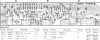
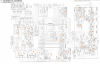
I do have the circuit diagram, but it's big and covers the entire receiver in one diagram, so I'm not sure how well you'd be able to see it due to size limitations. I've give it a go though.
 
Last edited:
Unfortunately the above circuit diagram is a screen grab, from a 4k screen, of a rather low resolution photocopy of the original, which I got from hifiengine. I have actually got an original service manual, with a nice sharp circuit diagram printed in it. However, it's an A3 pullout and my scanner is only an A4, so that would be a bit tricky also.
 
Back
Top Bottom