

You are using an out of date browser. It may not display this or other websites correctly.
You should upgrade or use an alternative browser.
You should upgrade or use an alternative browser.
Line Level Attenuation and Volume Dial position - Discussion
- Thread starter PJuddery
- Start date

kyle
Super Member
Your receiver has a line input sensitivity of 150mV (.15V) while a standard CD player has a line output of about 2V. This looks like a possibility for overload.
Regardless of how your receiver sounded before, after or with the outboard attenuator, you would need to keep the volume control at a low-ish setting to avoid overload.
When you refurbished the preamp board, you may have brought it back into spec and caused the apparent issue.
OR,
You may have other problems. The volume control is after the balance control which is fed from the input so there's nothing other than the source selector in between. If there is an actual problem it's either in the redone preamp, which you tested, or after in the tone control or output stages.
My bet would be on the sensitivity difference.
Do you have a record player to see if the sensitivity / sound quality problem also occurs in the phono section? That could eliminate the line level preamp if it occurs in both. If the phono sounds OK, it's probably the sensitivity mismatch problem.
Regardless of how your receiver sounded before, after or with the outboard attenuator, you would need to keep the volume control at a low-ish setting to avoid overload.
When you refurbished the preamp board, you may have brought it back into spec and caused the apparent issue.
OR,
You may have other problems. The volume control is after the balance control which is fed from the input so there's nothing other than the source selector in between. If there is an actual problem it's either in the redone preamp, which you tested, or after in the tone control or output stages.
My bet would be on the sensitivity difference.
Do you have a record player to see if the sensitivity / sound quality problem also occurs in the phono section? That could eliminate the line level preamp if it occurs in both. If the phono sounds OK, it's probably the sensitivity mismatch problem.

PJuddery
Well-Known Member
Hi Kyle and thanks for the reply.Your receiver has a line input sensitivity of 150mV (.15V) while a standard CD player has a line output of about 2V. This looks like a possibility for overload.
Regardless of how your receiver sounded before, after or with the outboard attenuator, you would need to keep the volume control at a low-ish setting to avoid overload.
When you refurbished the preamp board, you may have brought it back into spec and caused the apparent issue.
OR,
You may have other problems. The volume control is after the balance control which is fed from the input so there's nothing other than the source selector in between. If there is an actual problem it's either in the redone preamp, which you tested, or after in the tone control or output stages.
My bet would be on the sensitivity difference.
Do you have a record player to see if the sensitivity / sound quality problem also occurs in the phono section? That could eliminate the line level preamp if it occurs in both. If the phono sounds OK, it's probably the sensitivity mismatch problem.
Agreed on the 150mv input sensitivity and the 2v cd line out. I've spent quite a few hours trying to get my head around how to calculate the required attenuation now and had to start by looking up those values.
I think actually on the 6060, the path of the audio from the aux input goes Selector switch, then the pre-amp board, the path of which goes mono/ stereo switch and loudness then volume, then balance then bass and treble and finally the audio muting button, before then exiting the board and heading off to the filter board and then the driver board. That is assuming I've understood the circuit on that board correctly.
Regarding having to keep the volume control low even with an attenuator, it's my understanding that an attenuator, which is basically just a voltage divider, would drop the inbound voltage to meet that of the aux input and therefore make it safe to drive and subsequently not cause any problems with having the volume control at higher levels?
I do have a record player, but have been using it via an ifi Zen phone stage. I actually haven't tested the phono stage on the 6060 since buying it yet, so I don't actually even know if it works or not and haven't gotten around to rebuilding it yet either. It's all on my to do list. I could plug my TT in and see how it sounds, but I'm not sure if it would be a fair assessment, since the phono board is in an unknown state and could also have a failing fuse resistor or other components that would throw the results off.
Regarding the possibility of it being overdriven by a 2v cd player, I've actually been wondering if that is what caused the fuse resistor on the pre-amp board to drift so high. It's pretty much the first line of defence for power into that board, (I think), so it would make sense that over-volting the input might cause it to get driven harder. Again though, my understanding of it all is rudimentary, so I may not be correct.
Anyway, I'm in the process of making a simple and adjustable inline L-pad attenuator, so I can test what happens to the cd voltage as it passes through and if it indeed gets reduced down to the 150mv that I think it ought to. If it works as I expect, won't that solve my problem?
kyle
Super Member
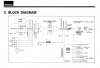
I may not be interpreting the block diagram or the schematic correctly but it looks like the AUX input goes to the input selector to the balance control to the volume control then to the tone controls. How are you seeing this?
I still think connecting your record player directly is the simplest way to eliminate a potential source of your problem. You'll know right away whether it's overload causing it.
I still think connecting your record player directly is the simplest way to eliminate a potential source of your problem. You'll know right away whether it's overload causing it.

No, it isn't.Regarding the possibility of it being overdriven by a 2v cd player, I've actually been wondering if that is what caused the fuse resistor on the pre-amp board to drift so high.
2V is about 22dB higher than 150mV, but if the circuit is as described by kyle the front end cannot be overloaded anyway. Having a high signal at the input doesn't overload anything because it gets attenuated by the volume control anyway. The advantage of using an attenuator to reduce the signal level is that the volume control becomes more user-friendly, ie less twitchy, and you can use more of the volume control's travel and have better control at low listening levels. However, it won't reduce distortion.
On the other hand, some gear (admittedly not much these days) has the signal at the input go through a stage of amplification before it reaches the volume control. In that case using attenuators at the input would reduce distortion and increase headroom, though at the expense of a degraded signal-to-noise ratio.
PJuddery
Well-Known Member
Hmm... yes, I see what you're saying. The block diagram does show that, although on the pre-amp/ tone board, which is the same board, the layout of the circuit itself hides that quite well. Physically, from the signal input, the volume control is placed first on the board, then the other controls, aspects that I mentioned before. Of course, that doesn't mean that's how the signal path travels. I just thought that it did.I may not be interpreting the block diagram or the schematic correctly but it looks like the AUX input goes to the input selector to the balance control to the volume control then to the tone controls. How are you seeing this?
I still think connecting your record player directly is the simplest way to eliminate a potential source of your problem. You'll know right away whether it's overload causing it.
View attachment 2539141
Regarding connecting the record player, I've got to do that before rebuilding the phono eq board anyway, to find out if it works or not, so I'll combine the 2 tests together. I probably won't be able to today, but will do tomorrow.
PJuddery
Well-Known Member
Ah, okay, fair enough. In that case, based on this and previous posts, I'm unsure what the score is then. Before the signal was attenuated, (both DAC and cd player), there was lots of sibilance and also some distortion, even at relatively low listening levels. After attenuation, it's completely corrected and sounds amazing from liw volume, right up to louder than I can listen to.No, it isn't.
2V is about 22dB higher than 150mV, but if the circuit is as described by kyle the front end cannot be overloaded anyway. Having a high signal at the input doesn't overload anything because it gets attenuated by the volume control anyway. The advantage of using an attenuator to reduce the signal level is that the volume control becomes more user-friendly, ie less twitchy, and you can use more of the volume control's travel and have better control at low listening levels. However, it won't reduce distortion.
On the other hand, some gear (admittedly not much these days) has the signal at the input go through a stage of amplification before it reaches the volume control. In that case using attenuators at the input would reduce distortion and increase headroom, though at the expense of a degraded signal-to-noise ratio.
However, based on the various posts, I'm now unsure whether attenuation ought to have such a reduction on distortion, or if there's a fault that needs fixing. Obviously I will test the phono input as suggested, but due to the unknown condition of that board, I don't know that it will conclusively tell me anything. I suppose I could pull and replace the fuse resistors from that board first, (assuming there are any), which ought to eliminate that possibility somewhat.
A view of the part of the circuit diagram between the inputs and the volume control would be useful.

That's a challenge for the eyesight. Do you know which pot is the volume control?
PJuddery
Well-Known Member
It is a bit tricky isn't it. I've just cross referenced the circuit board image and parts list and Kyle is correct, the volume pot is the 2nd in the chain, the balance being the first one. It's difficult to see the designators on the image, but vr01 is the balance pot and that is 100k. Vro2 is the volume pot and that is 250k. Hope that helps.
PJuddery
Well-Known Member
Right, so the answer to the phono input question is that it seems fine. I've got it hooked up and have just finished listening to Stevie Wonder's Talking Book, (fantastic album by the way) and it sounds pretty good. Perfect? No, but very good and that's at the 10 o'clock position on the volume dial. I've had it at almost 12 for a very short while, but man that was loud and I didn't want to cause any damage to either my speakers or the receiver, or my ear-drums, lol. I'm also in fairly close proximity to the speakers, (around 5 or 6 feet) due to my living room not being very big Even that loud though, it wasn't distorting, just very uncomfortable.
As mentioned previously though, the caveat is that I haven't rebuilt that board yet, so it probably won't sound at its best. however after looking at the service manual again, there doesn't appear to be any fuse resistors on that board, so that shouldn't complicate the issue. It definitely doesn't sound as good as my ifi Zen phono stage, but that doesn't even slightly surprise me considering the age of the phono board. Quite honestly, I'm surprised it works at all, considering the left channel was knackered on both the pre-amp and the driver board before I repaired it.
So does this mean that all is well and I just need to attenuate the other line inputs from the cd player and DAC as necessary etc?
As mentioned previously though, the caveat is that I haven't rebuilt that board yet, so it probably won't sound at its best. however after looking at the service manual again, there doesn't appear to be any fuse resistors on that board, so that shouldn't complicate the issue. It definitely doesn't sound as good as my ifi Zen phono stage, but that doesn't even slightly surprise me considering the age of the phono board. Quite honestly, I'm surprised it works at all, considering the left channel was knackered on both the pre-amp and the driver board before I repaired it.
So does this mean that all is well and I just need to attenuate the other line inputs from the cd player and DAC as necessary etc?
PJuddery
Well-Known Member
I'm now also almost half way through listening to Dire Straits - On Every Street and I don't know if it's that I'm getting used to the difference in sound compared to my ifi Zen phono, or if the old components have just come back to life a bit after probably years of not being used, but it's starting to sound really good. It could also be that the current LP is a better, cleaner recording I guess, but either way, it's definitely sounding fantastic. Lovely and warm, yet crisp and detailed. I have dropped it down to around the 9 0'clock position though, because it's getting late and the 10 o'clock position is pretty loud at such close proximity to the speakers.
PJuddery
Well-Known Member
I can honestly say one thing for sure, understanding what an attenuator is and what is does, is super easy, but trying to wrap my head around how to correctly calculate the 2 resistor sizes, with respect to the source impedance, source voltage and destination device sensitivity etc., sure is spinning my head. On one hand, it's just a simple voltage divider, but on the other hand, from what I can understand, the source has to still see the same load impedance and that's the part that's warping my little grey cells.
On the 1 hand, I'm pretty sure that given 2v source voltage and the required 150mv on the aux input of my Sansui receiver, a voltage divider with a12k resistor and a 1 k resistor would get me 154mv, which is pretty damn close, but what I know, is what the source will see as a load. I think that my cd player for example, has an output impedance of 600 ohms, but what does that mean, if anything, in terms of calculating resistor values?
On the 1 hand, I'm pretty sure that given 2v source voltage and the required 150mv on the aux input of my Sansui receiver, a voltage divider with a12k resistor and a 1 k resistor would get me 154mv, which is pretty damn close, but what I know, is what the source will see as a load. I think that my cd player for example, has an output impedance of 600 ohms, but what does that mean, if anything, in terms of calculating resistor values?
As near as dammit, it will see 13kOn the 1 hand, I'm pretty sure that given 2v source voltage and the required 150mv on the aux input of my Sansui receiver, a voltage divider with a12k resistor and a 1 k resistor would get me 154mv, which is pretty damn close, but what I know, is what the source will see as a load.
Not much. You want a load impedance about ten times the source impedance, or more. Your 13k load satisfies that easily. There'll be no problem.I think that my cd player for example, has an output impedance of 600 ohms, but what does that mean, if anything, in terms of calculating resistor values?
PJuddery
Well-Known Member
That's fantastic and thank you again for the reply. As I'm sure you can tell, I'm an electronics noob. I know just enough to have some basic understanding, test most components, follow a circuit and do repairs etc but I know that I've got a lot to learn. I'm getting there slowly though.As near as dammit, it will see 13k
Not much. You want a load impedance about ten times the source impedance, or more. Your 13k load satisfies that easily. There'll be no problem.
Ah, I think a penny has just dropped. So if I'm understanding correctly, the load impedance for this scenario is then a combination of the 2 resistors, because as far as the source is concerned, they form a series circuit from signal out, via both resistors, to ground and back to the source? Am I understanding that correctly?
So for arguments sake, if I wanted to take the 10 times rule right down to the wire, (I don't, but let's just suppose I do), I could use a 6k resistor and a 500 ohm resistor and it would do exactly the same as the previous example, but only barely satisfy the 10 times the source impedance rule?
Are there any advantages or disadvantages to going higher than 10 times the source impedance?
This has been covered in another thread recently.
https://audiokarma.org/forums/index.php?threads/on-attenuators.992942/page-2#post-15537735
Anyway, sounds like you've got the idea.
https://audiokarma.org/forums/index.php?threads/on-attenuators.992942/page-2#post-15537735
Anyway, sounds like you've got the idea.
PJuddery
Well-Known Member
Awesome, thanks for all of your help @rothwellaudio. I've spent hours Google searching and trying to work this out and you made it totally easy to understand in a single short post. I probably just wasn't using the right search terms, to get the answers that I needed, but that's the beauty of being able to just ask a real human. Simple questions and simple answers.This has been covered in another thread recently.
https://audiokarma.org/forums/index.php?threads/on-attenuators.992942/page-2#post-15537735
Anyway, sounds like you've got the idea.

So based on everything that's been discussed and my testing with my turntable etc, would you think that in all likelihood, my receiver is working as intended and it really is just a case of the signal from the source needing attenuation?