Even a minor warp and the record impacts the tonearm housing on my Sony.From earlier in this old thread, there was a discussion about LT's tracking warped records better than pivoted. Here is an example of that. Not sure if a pivoted would be able to do this (maybe, I didn't try). Some rip these old H/K Rabcos, but I enjoy mine.


You are using an out of date browser. It may not display this or other websites correctly.
You should upgrade or use an alternative browser.
You should upgrade or use an alternative browser.
Linear tracking - a myth debunked?
- Thread starter Sam Cogley
- Start date


amit46
Member
I am a great fan of Linear Tracking turntables. I have a collection of them.....The Technics SL-DL5 and Pioneer PL-L550 which have been serviced and restored by me work great and sound excellent with a Audio Technica AT311 Shibata stylus. Both have excellent tracking abilities and effortlessly went through the TEST LP which is very demanding.
I am using a bi-amping setup with high end speakers and crossovers. The phono preamp is home assembled lately after trying out many other DIY's online. The latest phono preamplifier has two stage RIAA equalization and I have used high end low noise resistors, Wima capacitors with TI OPA2134.
The sound stage is absolutely stereophonic with excellent channel separation.
Cheers! to linear trackers....
I am using a bi-amping setup with high end speakers and crossovers. The phono preamp is home assembled lately after trying out many other DIY's online. The latest phono preamplifier has two stage RIAA equalization and I have used high end low noise resistors, Wima capacitors with TI OPA2134.
The sound stage is absolutely stereophonic with excellent channel separation.
Cheers! to linear trackers....

Pio1980
AK Member
Funny this gets a bump recently, I just put the Big Mitz LT-30 back into service by swapping the barely used resident DL-110 out for a RS R27 /M75, as the TT default location has become a high traffic zone. The RS cart can take the cheap and cheerful EVG /Jico N75 aftermarket stlii.
Last edited:

bimasta
Addicted Member
I'm using a Mitsubishi LT-22. Got it five years ago at a flea market. The guy told me it didn't work, hence the price — $5. Otherwise is was in great condition, so I bought it on a whim. It took two–three hours but I got it working. I didn't trust it, so I used a garbage cartridge and garbage records. It worked fine. But that was only a mechanical test, I still didn't know how it sounded.
I took a deep breath and put a very good cartridge on it — a $1500 Van den Hul LOMC. And one of my best LPs, a live Jazz performance beautifully recorded in a packed nightclub.
It sounded fantastic. I was in the club, hearing every nuance of the music, and all the ambient sounds around me, like women's laughter and ice cubes clinking in their cocktail glasses at the ringside tables, the clicking footsteps of the waitresses' high heels...
My "standard" TTs also delivered this multi-layered texture and fine details, so all it proved is that the LT-22 is competitive. Those "standard" turntables are a Thorens 125 with SME 3009 II — Denon DP80 with Linn Ittok — Micro Seiki DQX-1000 with SME 309. They're all considered very good turntables, and all were all fitted with cartridges as good or better than the VDH. The mid-fi LT-22 isn't quite as good, but the difference is small, and the mere fact the LT-22 can compete at this level impressed me.
But it was my first linear-tracker, and I wanted to hear if that really has advantages. The Jazz wasn't a good test for that — I needed something extremely dynamic, especially in the inner grooves, the hardest to play.
I think the tracking error of the LT-22 is 0.25°, compared to 2° or more for most pivoted arms — that's 90% less tracking error, and the stylus is always correctly aligned in the groove.
I chose Mahler 3, which I know very well, as the test record. The symphony ends with an insane crescendo — brass blaring, timpani and cymbals crashing, and the whole orchestra rocking out. And this overwhelming crescendo happens at the end of the side, the most compressed and highest velocity grooves, where IGD lurks to drive your stylus crazy.
The LT-22 was mind-blowing. Night and day better. I've never heard it this good on a LP — it always compresses, soundstage collapses, timpani and cymbals distort — even with my other, better turntables. As Mahler gets louder and crazier, my better TTs get more chaotic. But the LT-22 just gets louder and crazier right along with Mahler.
I've been using the LT-22 for five years. My Thorens, Denon and Micro Seiki are in the closet. Yes they're slightly better — but when those complex dynamic passages come — whether it's Mahler or Marley or Massive Attack — the humble Mitsubishi always wins.
It's now married to a Fidelity Research FR1 Mk3F cartridge, a classic LOMC. It married way out of its class, but it's a match made in heaven.
If you have 5 minutes to spare, check the Mahler crescendo — skip ahead to 1:40:00
I took a deep breath and put a very good cartridge on it — a $1500 Van den Hul LOMC. And one of my best LPs, a live Jazz performance beautifully recorded in a packed nightclub.
It sounded fantastic. I was in the club, hearing every nuance of the music, and all the ambient sounds around me, like women's laughter and ice cubes clinking in their cocktail glasses at the ringside tables, the clicking footsteps of the waitresses' high heels...
My "standard" TTs also delivered this multi-layered texture and fine details, so all it proved is that the LT-22 is competitive. Those "standard" turntables are a Thorens 125 with SME 3009 II — Denon DP80 with Linn Ittok — Micro Seiki DQX-1000 with SME 309. They're all considered very good turntables, and all were all fitted with cartridges as good or better than the VDH. The mid-fi LT-22 isn't quite as good, but the difference is small, and the mere fact the LT-22 can compete at this level impressed me.
But it was my first linear-tracker, and I wanted to hear if that really has advantages. The Jazz wasn't a good test for that — I needed something extremely dynamic, especially in the inner grooves, the hardest to play.
I think the tracking error of the LT-22 is 0.25°, compared to 2° or more for most pivoted arms — that's 90% less tracking error, and the stylus is always correctly aligned in the groove.
I chose Mahler 3, which I know very well, as the test record. The symphony ends with an insane crescendo — brass blaring, timpani and cymbals crashing, and the whole orchestra rocking out. And this overwhelming crescendo happens at the end of the side, the most compressed and highest velocity grooves, where IGD lurks to drive your stylus crazy.
The LT-22 was mind-blowing. Night and day better. I've never heard it this good on a LP — it always compresses, soundstage collapses, timpani and cymbals distort — even with my other, better turntables. As Mahler gets louder and crazier, my better TTs get more chaotic. But the LT-22 just gets louder and crazier right along with Mahler.
I've been using the LT-22 for five years. My Thorens, Denon and Micro Seiki are in the closet. Yes they're slightly better — but when those complex dynamic passages come — whether it's Mahler or Marley or Massive Attack — the humble Mitsubishi always wins.
It's now married to a Fidelity Research FR1 Mk3F cartridge, a classic LOMC. It married way out of its class, but it's a match made in heaven.
If you have 5 minutes to spare, check the Mahler crescendo — skip ahead to 1:40:00

I'm using a Mitsubishi LT-22.
I've been using the LT-22 for five years. My Thorens, Denon and Micro Seiki are in the closet. Yes they're slightly better — but when those complex dynamic passages come — whether it's Mahler or Marley or Massive Attack — the humble Mitsubishi always wins.
It's now married to a Fidelity Research FR1 Mk3F cartridge, a classic LOMC. It married way out of its class, but it's a match made in heaven.
I'm with you! I'm running the Soundsmith Voice cartridge ($1800 back then) on my B&O 8002 linear tracker.
Some people look on this condescendingly. I just smile.
My PX-2? Well, I rotate carts on that one.
amit46
Member
Here is some more information for the linear tracking turntable improvements which I had made to Technics SL-DL-5 and Pioneeer PL-L550 models.
1). Replaced the tone arm motors which were exact size to the originals with 1.5-12 volts working range. These mini DC motors (Brand:Mabuchi they are also used in high quality dvd drive assemblies)) are available on Ali-express and cost just a couple of $$$. One important note is that I choose the low rpm motors. The specs were 2700-3500 rpm at 12 volts. These new motors are very good and they respond to even 0.75 volts and there load current is just 20-25 ma. The old motors of the tonearm drive assembly had become weak due the age and were responding to at least 2-3 volts supply....what a difference!
2). Replaced all resistors around the tracking circuits with Vishay-Dale 1% ultra low noise resistors. The tracking adjustment presets (variable resistor) was replaced by multi-turn Bourns presets. This gave an accuracy of 0.01 volts adjustments!
3). All pulleys, worm gear, main gear on which the tracking wire is wound and other parts around were carefully removed and cleaned with warm solution made of dish washing liquid.
4). Used silicon grease and silicon lubs for the tone arm drive assembly.
Finally when I made the tracking adjustment exact to the original designed circuits the tonearm motors was responding three times in one revolution of the LP (previously the tone arm motor would respond only once in about 1.5
revolutions).....WOW that was the new sensitivity!!! and the tone arm motor was moving very smoothly too, The analogue TEST LP from Hi-Fi News was used to check the tracking abilities and other settings such as bias and many more...the results were astounding...all the tracks played flawless....the cartridge and tone arm resonance test where very good below 20hz.
Also the above results were the courtesy SHIBATA stylus......who says that Linear tracking turntables are not Good....those days resistors and capacitors were not all that good and accurate although the op-amps where pretty good to the standards of the new op-amps the optical-senors arm same as of these days and are highly accurate in translating the movements across the photo transistors. The new tonearm drive motors are far superior than original motors. Hope this post is usefully to our members on the forum...CHEERS!
1). Replaced the tone arm motors which were exact size to the originals with 1.5-12 volts working range. These mini DC motors (Brand:Mabuchi they are also used in high quality dvd drive assemblies)) are available on Ali-express and cost just a couple of $$$. One important note is that I choose the low rpm motors. The specs were 2700-3500 rpm at 12 volts. These new motors are very good and they respond to even 0.75 volts and there load current is just 20-25 ma. The old motors of the tonearm drive assembly had become weak due the age and were responding to at least 2-3 volts supply....what a difference!
2). Replaced all resistors around the tracking circuits with Vishay-Dale 1% ultra low noise resistors. The tracking adjustment presets (variable resistor) was replaced by multi-turn Bourns presets. This gave an accuracy of 0.01 volts adjustments!
3). All pulleys, worm gear, main gear on which the tracking wire is wound and other parts around were carefully removed and cleaned with warm solution made of dish washing liquid.
4). Used silicon grease and silicon lubs for the tone arm drive assembly.
Finally when I made the tracking adjustment exact to the original designed circuits the tonearm motors was responding three times in one revolution of the LP (previously the tone arm motor would respond only once in about 1.5
revolutions).....WOW that was the new sensitivity!!! and the tone arm motor was moving very smoothly too, The analogue TEST LP from Hi-Fi News was used to check the tracking abilities and other settings such as bias and many more...the results were astounding...all the tracks played flawless....the cartridge and tone arm resonance test where very good below 20hz.
Also the above results were the courtesy SHIBATA stylus......who says that Linear tracking turntables are not Good....those days resistors and capacitors were not all that good and accurate although the op-amps where pretty good to the standards of the new op-amps the optical-senors arm same as of these days and are highly accurate in translating the movements across the photo transistors. The new tonearm drive motors are far superior than original motors. Hope this post is usefully to our members on the forum...CHEERS!
Last edited:

Funny. I have an SL-5 I'm very happy with.Well, all in can say is that my old SL-5 apparently didn't know that it wasn't supposed to work right in practice. And I'd suspect it wouldn't have cared, even if I had told it - ignorant little bugger...
Grinnings from Munich!
Manfred / lini


plugto
Well-Known Member
I have a Yamaha PX3 in my closet that has been collecting dust for over 35 yrs. Inherited it from my brother in law when he passed. He used it for 4 months. Perfect condition. I left records when CDs came out. I myself had a Thorens. I can remember the sound was nothing shocking but the way records were cut is linear so play back should be the same. Vinyl is so limited in response and dynamic range, when I was in the record store last they were looking for 30$ for some. I had to laugh. The poor kids today that are getting screwed for such a miserable sound. When digital is done right it blows away records.
amit46
Member
Well it is a matter of listening taste...The basic signals of all audio recordings are in analogue form..I too have a high end home surround with OPPO blue ray player.... only high grade audio music on Blu-rays are nearly perfect to analogue signals so it boils down to what you want to listen. But even today when it comes to music....Vinyls wins hands down.....the stereophonic image becomes music to ears.I have a Yamaha PX3 in my closet that has been collecting dust for over 35 yrs. Inherited it from my brother in law when he passed. He used it for 4 months. Perfect condition. I left records when CDs came out. I myself had a Thorens. I can remember the sound was nothing shocking but the way records were cut is linear so play back should be the same. Vinyl is so limited in response and dynamic range, when I was in the record store last they were looking for 30$ for some. I had to laugh. The poor kids today that are getting screwed for such a miserable sound. When digital is done right it blows away records.
I have a Yamaha PX3 in my closet that has been collecting dust for over 35 yrs. Inherited it from my brother in law when he passed. He used it for 4 months. Perfect condition. I left records when CDs came out. I myself had a Thorens. I can remember the sound was nothing shocking but the way records were cut is linear so play back should be the same. Vinyl is so limited in response and dynamic range, when I was in the record store last they were looking for 30$ for some. I had to laugh. The poor kids today that are getting screwed for such a miserable sound. When digital is done right it blows away records.
Gosh! I had no idea!
I'll take that anachronistic piece of miscellany off your hands for cheap. I mean, WTF, it's just taking up space.

tw1st
Active Member
You’ve stumbled across the wrong forum... we like vinyl here.I have a Yamaha PX3 in my closet that has been collecting dust...
Please put the PX3 out of its misery and sell it to someone appreciative of the marvel of engineering that it is.

I've long been fascinated by the concept of linear tracking. I first became aware of them through an ad in the old DAK Catalog for a BSR programmable linear-tracking turntable. I have yet to find one (guessing they didn't sell very well in the CD era of the early '90s), but I have an RCA MTT-230 (from the unfortunately-named "Dimensia" system) which has similar features.
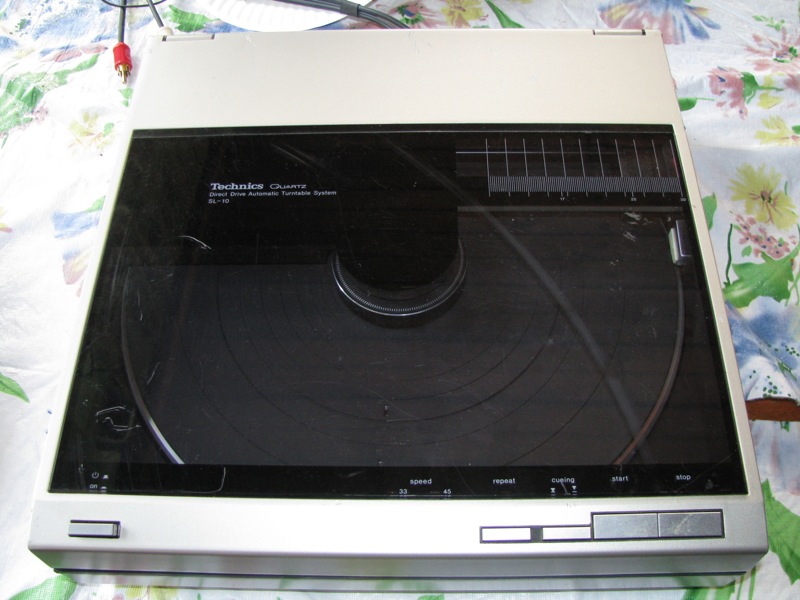
The first linear-tracker I acquired was a Technics SL-5. It had issues with the arm 'leaning' to one side when first cueing up the record, but seemed to work fine otherwise. I eventually found a SL-10 for a nice price, and ended up selling the SL-5 to someone who was just getting started in vinyl. The SL-10 is missing its feet (I'm using some Audio-Technica spring feet in their place), as well as the original EPC-310MC cartridge, but it works fine other than the arm generating a small amount of audible noise from the speakers when in use (most noticeable in the lead-out groove).
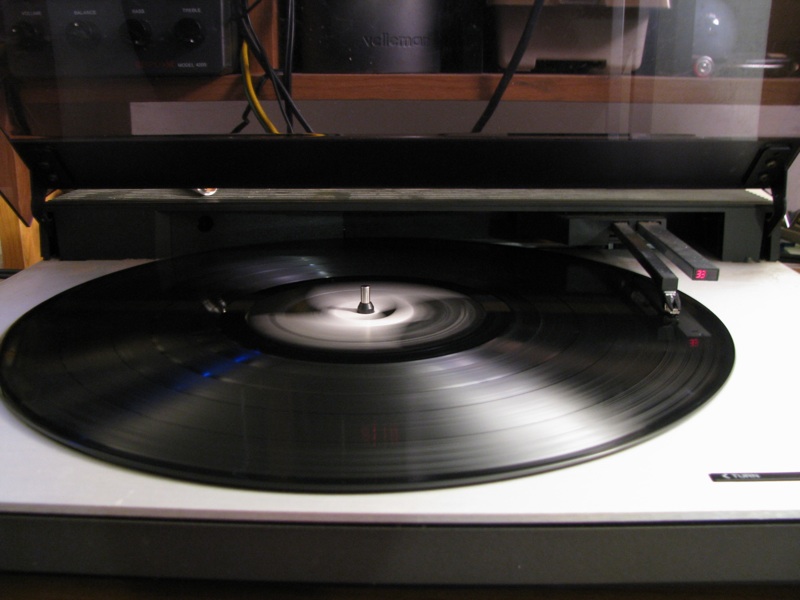
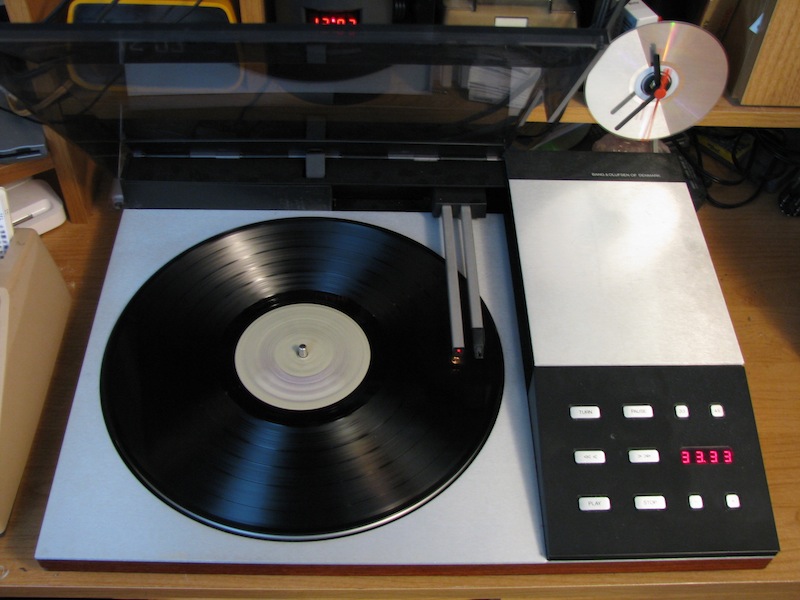
Eventually, I got into the wild, wonderful world of Bang & Olufsen linear trackers. The first one I found was a Beogram TX-2, which remains the best turntable I have for playing badly-warped records. Not long after that, I found a Beogram 8000, which has been part of my computer desk setup for several years now. I love the overall design, and think it wouldn't look out-of-place on the Starship Enterprise. It's had issues with bad solder joints, but has been solid overall. I've since acquired a Beogram 4002 which is waiting to be lubricated and recapped before I can put it to use.
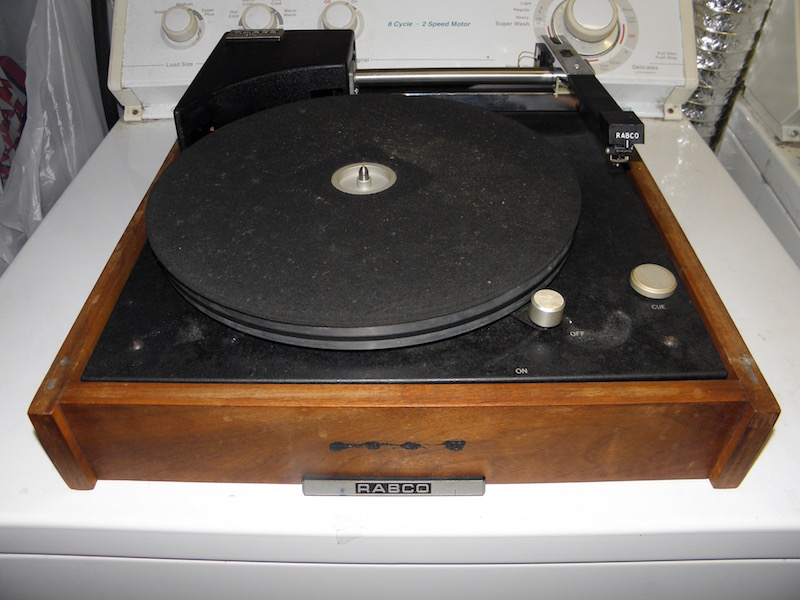
Recently, I acquired one of the first examples of an 'integrated' linear-tracking turntable, the Rabco ST-4. Unlike the original SL-8E arm mentioned elsewhere in this thread, the ST-4 arm was much more passive, utilizing a small rubber roller within the arm which rides along a much larger roller that is driven by the platter to keep things tangential. I have yet to sort out its various issues, but it seems like it should be a wonderful turntable if/when I can get it working properly.
The first linear-tracker I acquired was a Technics SL-5. It had issues with the arm 'leaning' to one side when first cueing up the record, but seemed to work fine otherwise. I eventually found a SL-10 for a nice price, and ended up selling the SL-5 to someone who was just getting started in vinyl. The SL-10 is missing its feet (I'm using some Audio-Technica spring feet in their place), as well as the original EPC-310MC cartridge, but it works fine other than the arm generating a small amount of audible noise from the speakers when in use (most noticeable in the lead-out groove).
Eventually, I got into the wild, wonderful world of Bang & Olufsen linear trackers. The first one I found was a Beogram TX-2, which remains the best turntable I have for playing badly-warped records. Not long after that, I found a Beogram 8000, which has been part of my computer desk setup for several years now. I love the overall design, and think it wouldn't look out-of-place on the Starship Enterprise. It's had issues with bad solder joints, but has been solid overall. I've since acquired a Beogram 4002 which is waiting to be lubricated and recapped before I can put it to use.
Recently, I acquired one of the first examples of an 'integrated' linear-tracking turntable, the Rabco ST-4. Unlike the original SL-8E arm mentioned elsewhere in this thread, the ST-4 arm was much more passive, utilizing a small rubber roller within the arm which rides along a much larger roller that is driven by the platter to keep things tangential. I have yet to sort out its various issues, but it seems like it should be a wonderful turntable if/when I can get it working properly.
plugto
Well-Known Member
I used to go crazy with the Thorens, the antiskating adjustment and the weight of the cartridge could sound off from one record label to the other. I could screw with them and get the distortion from one channel to the other and then equal in both and then gone. Used to get so frustrated with the lack of standards from one label to the other. Don't get me wrong I enjoyed vinyl when it was brand new, but the tics and pops after a while when the record got damaged really sucked. And don't forget limited bandwith Not saying digital is better than analogue, just when done right by a skilled engineer digital can have much quieter s/n and huge dynamic range. Can't wait to hear high res files.
amit46
Member
The cartridge alignment and correct tracking force plays a very important role in life of the vinyls...Linear tracking turntable when its finely aligned the anti-skating force is almost nil with a tracking error within 0.3 to 0.1 degrees and where as the pivoted arm turntables (the best of best) will still give a tracking error of 2-3 degrees which is huge when playing back tough signals.I used to go crazy with the Thorens, the antiskating adjustment and the weight of the cartridge could sound off from one record label to the other. I could screw with them and get the distortion from one channel to the other and then equal in both and then gone. Used to get so frustrated with the lack of standards from one label to the other. Don't get me wrong I enjoyed vinyl when it was brand new, but the tics and pops after a while when the record got damaged really sucked. And don't forget limited bandwith Not saying digital is better than analogue, just when done right by a skilled engineer digital can have much quieter s/n and huge dynamic range. Can't wait to hear high res files.
Shibata stylus was originally made for quadraphonic playback and the recording was in the range of 40-50 khz....when used on stereo vinyls the tracking abilities go above 25khz. There is an interesting article on net comparing the digital and vinyl recording frequencies....vinyls have shown far higher frequencies.
I think when we are talking of signal to noise ratio there many components in the system which will contribute to the over all output!
All components in the signal and feedback path of the phono preamplifier, preamplifier and the audio amplifier will contribute to noise. Than comes the DC offset levels starting from the first stage to the last stage.
I have made many changes to my stereo audio setup by using Vishay-Dale 1% ultra low noise resistors and high quality Wima/Vishay PET capacitors and using only Texas Instruments OPA2134P SoundPlus op-amps....and finally the power amplifier is driven by TI LME49830 ultra low distortion IC using MOSFETS at the output stage. The maximum DC offset I have in all stages in left and right channels is below 0.1mV. That gives a fantastic stereo imaging and sound stage. Also when using balanced connections the signal noise is zero!
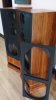
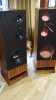
Finally the speakers which are built at home using high quality cross-over inductors and capacitors with high end drivers gives the final sound quality. I am using excellent Air Motion Transformers tweeters, Peerless Midranges and JBL Harman Kordan woofers. Here are some images of my speaker system for Home surround and stereo playback setups........Cheers!
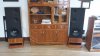
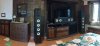
Attachments
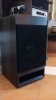
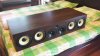
bimasta
Addicted Member
I'll have to get it! What label? The one I was referring to is Ben Webster "At the Renaissance".Bill Evans, “Sunday at the Village Vanguard.”
bimasta
Addicted Member
Thanks!
The one I recommended (Ben Webster) was recorded at the club Renaissance on Sunset Strip in LA. I lived about 10 blocks away. I was only 13 so of course I couldn't get in, but I used to stand outside listening. It was a trip watching the guests arrive and depart, a mix of Hollywood glam in limos and hardcore jazz fans. From the doormen's behavior, I quickly sussed the hierarchy — the Hollywood types ran up huge bar tabs, the jazz fans didn't, just paid the cover. They were treated accordingly. The cops stopped once and questioned me — kid alone on the street after midnight, either in trouble or looking for it — but I explained and they were cool, left me alone and drove away. They even drove me home once. They doormen were great too — they brought me Cokes in tall icy frosted glasses. So even though I couldn't get in, I felt like a guest.
A few years later I was living in NYC, going to college. I went to the Vanguard once. Miles Davis. Standing room only. The NY crowd was much more reserved, jazz cognoscenti listening closely — at some point Miles was going to reveal God and they didn't want to miss it. I only went that one time, because something else was beginning to happen. Rock.
I'll be very curious to hear the Bill Evans record, and compare the LA and NY crowd sounds. Jazz as Sociology.
The one I recommended (Ben Webster) was recorded at the club Renaissance on Sunset Strip in LA. I lived about 10 blocks away. I was only 13 so of course I couldn't get in, but I used to stand outside listening. It was a trip watching the guests arrive and depart, a mix of Hollywood glam in limos and hardcore jazz fans. From the doormen's behavior, I quickly sussed the hierarchy — the Hollywood types ran up huge bar tabs, the jazz fans didn't, just paid the cover. They were treated accordingly. The cops stopped once and questioned me — kid alone on the street after midnight, either in trouble or looking for it — but I explained and they were cool, left me alone and drove away. They even drove me home once. They doormen were great too — they brought me Cokes in tall icy frosted glasses. So even though I couldn't get in, I felt like a guest.
A few years later I was living in NYC, going to college. I went to the Vanguard once. Miles Davis. Standing room only. The NY crowd was much more reserved, jazz cognoscenti listening closely — at some point Miles was going to reveal God and they didn't want to miss it. I only went that one time, because something else was beginning to happen. Rock.
I'll be very curious to hear the Bill Evans record, and compare the LA and NY crowd sounds. Jazz as Sociology.