

You are using an out of date browser. It may not display this or other websites correctly.
You should upgrade or use an alternative browser.
You should upgrade or use an alternative browser.
LK72B rectifier replacement and wiring
- Thread starter sbcrockett
- Start date

Will do in a few hours when I'm home

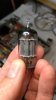
Alrighty, not much else on the Baldwin 12AX7. Hard to capture with my phone, but the numbers are as follows (I think):
39
11
23
39
11
23


kvflyer
Super Member
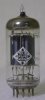
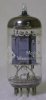
A Telefunken ECC83/12AX7 tube will look like the pictures below. If you notice, one picture of the plates shows "ribs". These are referred to as rib plates. Another variation is to have plates that are "smooth" with no ribs. Whilst many swear by ribbed vs smooth as one sounding better, I am no of that camp, so I won't debate or go there. To each, his own.
The final picture shows the bottom of the tube with the diamond imprinted in the glass. That is a typical Telefunken trait. The Telefunken tube was made in Western Germany, probably in Ulm, German. (I only wish I knew that in 1970 when I spent a year there in the army!)
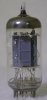
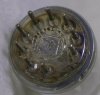
The final picture shows the bottom of the tube with the diamond imprinted in the glass. That is a typical Telefunken trait. The Telefunken tube was made in Western Germany, probably in Ulm, German. (I only wish I knew that in 1970 when I spent a year there in the army!)
I put a pair of Telefunkens in my Fisher years ago and I recall the sound became less colored, more accurate? Been so long. I just peeked and saw that I have the smooth plate variety.
I'll use what I have for now with the Scott to get it up and running, get a baseline and then consider changing them. I believe I have a set of 4 Electro Harmonix 12AX7s from when I was trying different tubes in some of my microphones. They're all about the same age and low hours, although from reading here, that probably doesn't really matter. It would still be fun to experiment
Great information Don. Thanks for sharing some of the history!
I'll use what I have for now with the Scott to get it up and running, get a baseline and then consider changing them. I believe I have a set of 4 Electro Harmonix 12AX7s from when I was trying different tubes in some of my microphones. They're all about the same age and low hours, although from reading here, that probably doesn't really matter. It would still be fun to experiment
Great information Don. Thanks for sharing some of the history!

kvflyer
Super Member
I've got several of those Baldwin-branded Sylvania tubes in use. Quiet and they work fine, no complaints.
I have to agree. There is nothing wrong with the Baldwin labeled Sylvania tubes.
kvflyer
Super Member
I have a 299C on the bench, essentially just using it for entertainment. I have replaced the bias bridge so it is working just fine. I looked at the Phase Inverter tubes. One is a GE (EIA 188) that is labeled "Scott" and the other is an unknown, it came with the amplifier. In the era of this amplifier and the OP's LK-78B, Scott was still using Telefunken in the preamp stages and in this one as well.
But in my original 299, the preamp tubes were Raytheon that were labeled (in yellow) "Scott". Plates on Raytheon tubes were often shiny black as opposed to dull gray as in Telefunken. Of course, all of this is no big deal, just "trivia" but it helps to date and follow history of HH Scott vacuum tube equipment.
But in my original 299, the preamp tubes were Raytheon that were labeled (in yellow) "Scott". Plates on Raytheon tubes were often shiny black as opposed to dull gray as in Telefunken. Of course, all of this is no big deal, just "trivia" but it helps to date and follow history of HH Scott vacuum tube equipment.
I enjoy the trivia about these units. Plus, all this information will help when searching Craigslist or garage sales down the road for deals
Just a few more caps to replace and I should be ready for power up. The most time consuming part has been cleaning up the ugly solder and flux that I find along the way.
Got my Staco variac the other day and it was in better shape than I thought it would be. Accurate too, according to my Fluke handheld.
I found two wires that were unsoldered on C204, one of the 30-30@500 can caps. They were on one of the outer pins, so I believe the positive. They had good mechanical wrap, but still, I wonder if this could have been contributing to any of the random issues I was having or possibly noise that I hadn't picked up on. The black wire and the BLK/WHT wires on the right side of the picture:
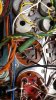
The black wire goes to the other 30-30 positive and the BLK/WHT wire goes to a terminal strip for the 7159s so kind of important I'm guessing!
I have tomorrow off so I hope to finish with parts replacement and the final insp and cleaning. Then I'm sure I'll be requesting assistance for the voltages check and biasing. I'll bring an oscilloscope home from work in case that proves useful during the initial testing.
-Steve
Just a few more caps to replace and I should be ready for power up. The most time consuming part has been cleaning up the ugly solder and flux that I find along the way.
Got my Staco variac the other day and it was in better shape than I thought it would be. Accurate too, according to my Fluke handheld.
I found two wires that were unsoldered on C204, one of the 30-30@500 can caps. They were on one of the outer pins, so I believe the positive. They had good mechanical wrap, but still, I wonder if this could have been contributing to any of the random issues I was having or possibly noise that I hadn't picked up on. The black wire and the BLK/WHT wires on the right side of the picture:
The black wire goes to the other 30-30 positive and the BLK/WHT wire goes to a terminal strip for the 7159s so kind of important I'm guessing!
I have tomorrow off so I hope to finish with parts replacement and the final insp and cleaning. Then I'm sure I'll be requesting assistance for the voltages check and biasing. I'll bring an oscilloscope home from work in case that proves useful during the initial testing.
-Steve