• The move to the new server is done. There are some software and database maintenance updates in process. This has us passing the hat around to help out. We appreciate any donations. Seriously, even a dollar helps. The payment page may be found here - https://www.audiokarma.org/support.html

Lubricating main bearing on the Pioneer PL-630

Hey All,
the manual for the pioneer pl-630 states that the main bearing is oil less. But does that mean that it is still NOT needing any oil when it is 50 years old and have been running all these years?
TIA
Søren
 
Register to hide this ad
You're correct, the main platter motor shaft and bearings use "oil-less" (sintered bronze) bearings, meaning they do not require regular lubrication. Are you are experiencing issues like speed instability or audible grinding noises? If you aren't, then I wouldn't be concerned as everything is working as it should. If not, you'll have to follow a long careful teardown process to re-oil a main spindle bearing which was never intended to need servicing.
 
You're correct, the main platter motor shaft and bearings use "oil-less" (sintered bronze) bearings, meaning they do not require regular lubrication. Are you are experiencing issues like speed instability or audible grinding noises? If you aren't, then I wouldn't be concerned as everything is working as it should. If not, you'll have to follow a long careful teardown process to re-oil a main spindle bearing which was never intended to need servicing.
Yes! Too much oil, or oil applied to the wrong places, may not lubricate what you want. But it may attract dust, which you don't want.

It's a lose-lose situation. Follow the manufacturer's guidelines!

:thumbsup:
 
I'd be inclined to give it a drop of synthetic oil. I'd rather it had oil than any chance of a lack of oil.
Bearing in mind that's not as good as a full wash out with solvent and replacement.
 
Last edited:
...to re-oil a main spindle bearing which was never intended to need servicing.
...in the TT's lifetime, whereby half a century wasn't the intention. Here's what Studer thinks (thought) about it:

1790530983206.png

My Revox TT and cassette deck got a drop, or two, because it just makes sense. It would make even more sense, if I knew which oil the TT used.
 
...in the TT's lifetime, whereby half a century wasn't the intention. Here's what Studer thinks (thought) about it:

View attachment 3845366

My Revox TT and cassette deck got a drop, or two, because it just makes sense. It would make even more sense, if I knew which oil the TT used.
His turntable has a sintered bronze bearing. Those often have a different lubrication procedure than standard bearings or bushings.
 
I'm just offering a different, yet a fairly common, perspective on oiled-for-life.

Neither the B790 turntable, nor the B215 and H1 cassette decks (or their Studer counterparts) have a reservoir or a wick...and they aren't sealed either. OP's shaft/bearing has an O-ring at the bottom. Besides perhaps making a mess, which can be wiped off, adding a drop of oil to many can't cause mechanical damage to the bearing and/or the shaft, so... I would at least check, if the shaft is wet with oil when pulled out, and act accordingly...by adding a drop or two. :biggrin:

1790580638195.png

While impregnation with oil is easy, hardly anyone of the "regular" users can remove and refit a bearing properly, so just adding a drop of oil is the next best thing...and still beyond the abillity, and concerne, of most.

Edit:

BTW, @Mr Boochie, how many times have you oiled the spindle/shaft sintered bearing on your Technics SL-1200 MKII allready? How do you keep count of them 2000 suggested hours of operation? ;)
 
Last edited:
BTW, @Mr Boochie, how many times have you oiled the spindle/shaft sintered bearing on your Technics SL-1200 MKII allready? How do you keep count of them 2000 suggested hours of operation? ;)
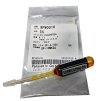
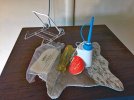
I oiled the spindle as instructed by the Technics owner's manual. With the supplied Technics oil.

I have a spare shaft assembly, if that is ever needed.

Technics 1200MkII oil maintenance.jpg

technics tuntable oil sfw0010.jpg

shaft assy bearing (small).jpg
 
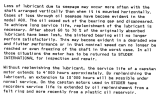
problem with any of those old oil impregnated bearings is the oil eventually oxidizes and gets gummy. There are ways to properly re-charge it, basically you heat it enough to cook the oil oil out and then put it in an oil jar under vacuum to fizz out the air. When the vacuum is released the oil goes in.

Short of that, a drop down the shaft is far better than nothing. Don't go nuts with it, literally a drop is all you need here.
 
If the old oil has oxidized, fresh oil is unlikely to be able to reach the entire bearing surface, so there's a chance that all that is gained is a false sense of security.

Also, be aware of what a sintered bearing is. For example, I've never seen a sintered main bearing in a Technics 'table - certainly not the SL-1200's.
 
For example, I've never seen a sintered main bearing in a Technics 'table
Well, you were speculating, but you're very knowledgeable, hence your speculations carry a different kind of weight. I agree though, regardless.
10R bearing looks sintered. With modern lubricants I'd probably not worry about it for a decade or two.

IMG_0188.JPG

Looking at pics in www, I tend to agree that SL-1200 bearings are not sintered (they look to shiny), though I didn't find a clear enough one (perhaps @Mr Boochie will cover that base). If not sintered bronze, what is it...solid bronze + grease? Adding oil every couple of thousands hours feels wrong then.
 
I tend to compartmentalize old Technics and new Technics in my head. This discussion is old Technics, for which I've never seen a sintered main bearing. They're just bronze lubed with oil.
 
Be careful when mixing different lubricants as it may lead to a degradation of lubricant performance. Combining oils can create a viscosity which may not support the required load-bearing film, leading to excessive friction and heat. The chemical ingredients can neutralize each other, destroying the properties which make them effective.
Combining oils like silicone, mineral or synthetic can be incompatible and turn gummy or sludge-like over time, affecting the TT performance.
 
Last edited:
Well, you were speculating, but you're very knowledgeable, hence your speculations carry a different kind of weight. I agree though, regardless.


Looking at pics in www, I tend to agree that SL-1200 bearings are not sintered (they look to shiny), though I didn't find a clear enough one (perhaps @Mr Boochie will cover that base). If not sintered bronze, what is it...solid bronze + grease? Adding oil every couple of thousands hours feels wrong then.
Look, I'm gonna follow Technics' recommendation. It seemed to have worked for many, many users. Bearing failure is not really that common in a unit that has not been abused. :idea:

technics spindle.jpg
The main oiled bearing (bronze color) can be seen pressed into the shaft assembly. The tapered bronze sleeve is where the platter fits.
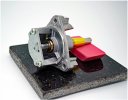


shaft assy circlip (small).jpg
There is another bearing pressed in, at the bottom of the shaft assembly casting. Notice the circlip. That has to be removed to remove the shaft.
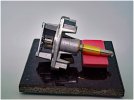
shaft assy bearing (small).jpg
There's a ball pressed into the shaft at the bottom, too.

The 2-3 drops are sufficient to penetrate down to the ball at the bottom. If you go hog wild with the oil, it leaks out. And it can gum up the electronics and other things that shouldn't see oil.

I lube the thing with 2 drops every year (which is less than 2000 hours, probably closer to 500). I have a Sony 2251, too. Sony recommends every 1000 hours (or every year, whichever comes first). I oil both turntables I own at the same time. Around Jan. 1st. It makes things easier to remember.

There are many threads on the Net since the 1200MkII came out about people having issues that may be due to over-lubricating. One little side note — the tonearm bearings are sealed. Do not place oil on the outside of them. This will attract dust and gums up the pivots.

 
Last edited:
Look, I'm gonna follow Technics' recommendation.
Well, yes, all is good - I didn't suggest otherwise, I just wrongly assumed the bearings are sintered bronze and you didn't correct me. I wanted a close-up and sharp picture of the bearing because it is likely to show, if it's sintered (a dull/mate look due to pores) or not (a shiny look). Unlike the sintered ones, your bearings are a breeze to clean (so mixing different lubricant's is easily prevented)...and this definitely isn't the way to do it:

Here's why I mentioned grease (they're a supplier of parts and services, so they should know...one is lead to believe):

Anyway...OP's concern remains without a definitive answer, but the thing seems to be easy to take apart and checked if lubrication is needed. Mine sintered bearings example and yours with the Technics and the Sony suggest it likely might.
 
Back
Top Bottom