• The move to the new server is done. There are some software and database maintenance updates in process. This has us passing the hat around to help out. We appreciate any donations. Seriously, even a dollar helps. The payment page may be found here - https://www.audiokarma.org/support.html

Marantz 1060 Recap list.

Richs_Trains

Well-Known Member
I finally found a 1060, since everybody raves so much about them, it will be here next week and I would like to recap this unit. I was wondering if there is a stock list (value for value as, or close as possible) for this unit. I have seen some threads on upgrades and modifications, but I think my skill set is limited to the electrolytic caps at this point, after a few more recaps, I will feel more confident in more intense rebuilds. If someone has a list or a link, I would greatly appreciate it as I could order the caps in advance of its arrival. As always THANKS! Rich
 
Register to hide this ad
thatToolguy, Was wondering, because I did not see anything in the SM that showed the adjustments, so cap coupled amps require a scope to set up, bummer for me. Can I at least rebuild the power supply and filter caps, or should I let this one for more experienced times? I have looked for a scope, but then I would also need instruction as I have never used one, but that is my goal in all this, to learn, restore my equipment and enjoy myself. Thanks Rich
 
Which one's fall in that category, I was going to try to get a 2230 next as they are a popular thread also.? And my AC/DC coupled amps like the 1180dc and 170dc, are they the same?
 
I have recapped a couple of 2230's and have not done the clipping adjustment because 1) I don't have an oscilloscope or Oscope experience and 2) I haven't seen recommendations to make this adjustment. However, after reading the procedure in the SM, this looks like it might be a good place to begin learning Oscope skills. I've been thinking of getting an oscilloscope, signal generator and dummy load with the idea of eventually being able to do more of my own adjustments. This looks like a relatively simple adjustment. Would this be a good place to start down that road or is this more complicated than it looks like on paper?
 
If you don't have a scope, you can set the clipping adjustment using a DC voltmeter.
2230:
1. Volume all the way down.
2. set the voltage atJ758 to 29VDC

Do the same for the other power amp.

1060:
1. Volume all the way down.

3. Move red lead to J715, set R723 for 29VDC
4. Move red lead to J716, set R724 for 1or 29VDC

I like to set it for equal clipping, then use a distortion analyzer to finalize the adjustment.

Tom
 
Last edited:
I will post when I get back into it, I had the power supply and power amp caps already and ordered the posted list to replaced the ones I used. The quantity in the order is not what the power amp requires, each only require 2 caps except the 3000uf 75v filter cap. I will see if I can find the power supply caps invoice. Rich
 
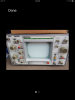
As far as oscilloscopes go ( and I also have no knowledge about them or how to use but like Steven would like to learn ) would this be any good to start. It's offered locally near where I live. No idea if it's a good place to start.
 

Attachments

  • image.png
    image.png
    149.2 KB · Views: 27
Oh and this is the description.

Vintage - Leader Oscilloscope LBO-514A w/ box of various test leads

Manufacturer / Brand: Leader Electronics Corp.; Yokohama

Year: 1982 ? Category: Service- or Lab Equipment

Valves / Tubes 1: 130BXB31

Semiconductors (the count is only for transistors) 88:

Wave bands - without

Power type and voltage Alternating Current supply (AC) / 100; 117; 220; 240 Volt

Loudspeaker - - No sound reproduction output.

Shape Tablemodel, with any shape - general.

Dimensions (WHD) 290 x 160 x 375 mm / 11.4 x 6.3 x 14.8 inch

Notes 15MHz Dual trace / dual channel oscilloscope, bandwidth DC (AC 2Hz) to 15MHz. X/Y display with intensity modulation input.

Net weight (2.2 lb = 1 kg) 6.5 kg / 14 lb 5.1 oz (14.317 lb)
 
1060 came today, very nice cosmetic condition. Plugged it in through the DBT and it checked out, so went direct AC. Everything seem to work, but it sounds very muddy to me, I am hoping the recap will make it sing. Parts should be here Monday, then the moment of truth, with the info Tom provided am I confident enough to tackle this one? I guess I'll see on Monday. Thanks for all the info and I'll keep you posted. Rich
 
Oh and this is the description.

Vintage - Leader Oscilloscope LBO-514A w/ box of various test leads

Manufacturer / Brand: Leader Electronics Corp.; Yokohama

Year: 1982 ? Category: Service- or Lab Equipment

Valves / Tubes 1: 130BXB31

Semiconductors (the count is only for transistors) 88:

Wave bands - without

Power type and voltage Alternating Current supply (AC) / 100; 117; 220; 240 Volt

Loudspeaker - - No sound reproduction output.

Shape Tablemodel, with any shape - general.

Dimensions (WHD) 290 x 160 x 375 mm / 11.4 x 6.3 x 14.8 inch

Notes 15MHz Dual trace / dual channel oscilloscope, bandwidth DC (AC 2Hz) to 15MHz. X/Y display with intensity modulation input.

Net weight (2.2 lb = 1 kg) 6.5 kg / 14 lb 5.1 oz (14.317 lb)

I think that scope should be fine for audio work.

Tom
 
Well, couldn't wait for the order to come in, so I checked what I had and did 75% of the power supply and 90% of the tone board, have not touched the power amp. Did the power supply first, short a 100uf 50v, but put the rest in and used the DBT, all was well, so connected it and fired it up. Okay, I am amazed at the difference the caps I did on the power supply board made, I could hear much better highs and it wasn't really muddy anymore (one of the caps had come apart at the bottom, so don't know if that was it), so with such progress, I decided to see if I had enough for the tone board. I had everything except the 1uf 50v non polar, so I did all the rest, DBT'd it and listened again. When I got it, I really did not like the sound of it at all, but with just doing those 2 boards, there is a marked improvement and I would say it sounds pretty good. I have recapped a few of my receivers and never really noticed a large improvement in sound (they did sound better, but they all sounded pretty good beforehand), but this 1060 did not sound good when I got t and now 1/2 done, it sounds pretty decent. So, I now believe that recapping can and does improve the sound and sometimes a lot! Thanks for everyone's help so far, I will get the rest of the parts Monday and report back. Rich

 
I have revised my original post. This is less complicated.
If you don't have a scope, you can set the clipping adjustment using a DC voltmeter.
2230:
1. Volume all the way down.
2. set the voltage at J758 to 29VDC

Do the same for the other power amp.

1060:
1. Volume all the way down.

3. Move red lead to J715, set R723 for 29VDC
4. Move red lead to J716, set R724 for 29VDC

I like to set it for equal clipping, then use a distortion analyzer to finalize the adjustment.

Tom
 
Back
Top Bottom