• The move to the new server is done. There are some software and database maintenance updates in process. This has us passing the hat around to help out. We appreciate any donations. Seriously, even a dollar helps. The payment page may be found here - https://www.audiokarma.org/support.html

Marantz 2215 hiss and hum

bdondo

Active Member
Hi, I have a 2215 (non-B) that has an audible hiss and some hum. I'd like to try fixing this myself, but I don't know if I want to do a full re-cap and replace all transistors, etc. if I can narrow down the cause. I'd like to start by fixing the circuit(s) that needs fixing if possible. I have a good fluke multimeter but don't have an oscilloscope. My degree is in electronics engineering, but I haven't used that skillset in 25 years, and really never did any real engineering after school anyway. I have built a lot of guitar effects pedals though, so I can solder, know how to not zap myself, etc.

The current state of the amp's hiss:
- The hiss goes away when the volume is turned down to zero.
- The hiss usually exists in both channels, but is more prominent in the left. Sometimes it's not noticeable in the right channel.
- The hiss gets worse around 12 o'clock and peaks at around 2 o'clock. I often don't hear it at all until almost 12 o'clock. But other times I can hear it as low as 8 or 9 o'clock.
- The hiss exists on all input sources (AM, FM, phono, and aux).
- When 'phono' is selected, the hiss turns into a hum when the volume is turned all the way up (that might just be normal, and I don't crank it anyway)
- When 'aux' is selected, the hiss almost goes away when the volume is turned all the way up.
- Adjusting the balance doesn't affect the hiss -- it stays in both channels and doesn't change volume, etc.
- The loudness button doesn't seem to have any effect

A few weeks ago I used Deoxit D5 to clean the pots, which helped a lot -- there was a lot of crackling, channels would drop, and the hiss was much worse -- and the only place I could get no hiss in aux mode was when the volume was cranked (so that's how I'd listen to it -- crank the amp and turn the input volume from the iPhone or whatever way down).

I also took it to a service tech who replaced the lamps and cleaned the pots. He thought it sounded good. But I don't think they had it turned up high enough to hear the hiss, which was only kicking in at 12 o'clock at that time.

Any ideas on where I should start? I imagine I could test voltages on filter caps (and how long the hold them after powering down), etc. Or maybe it's best to just replace certain things as a first step?

Thanks!
 
Register to hide this ad
The 2215 is a capacitor-coupled model, and has no relay like most of the other 22xx models, the filter caps could be responsible for passing the noise, but the 2215 was the cheapest unit on the lot, and used many of the old purple caps (worst), and some cheap transistors too. Below is my 2215 restoration if you're curious how it can be done:


The Elna Silmic II caps are no longer available unfortunately, but the parts list I made has the right values, I double checked the values in the service manual, and then made a correction on my parts list when the manual was in error, and the physical board contained a different value.

I'd start in the power section. Then the pre-amp.
 
Thanks! I'm not sure how I missed your thread before.

I just found a 2215 full-restoration kit on eBay, but I'm not sure if I should trust them. Anyone have experience with eBay kits? I also see kits for just the power supply and phono circuits.
 
The eBay seller that is trusted around here, and has a good reputation, is peaceloveandmusic (sorry if I botched that name), some combination of those words, is the one to go with.

Easy to make your own order from the parts list on that thread, Mouser or Digi-key are great vendors for parts, and it's fun to make your own order if you get far enough in to this.
 
Last edited:
Thanks! I was just noticing there are several threads advising against hifiaudio.com parts, which is the full kit I was looking at. But yeah, peace.love.and.music is the seller who with the power supply and phono kits.

I think I'll just order directly..
 
Avoid hifiaudio.com like the plague, right you are.

If you take the cap and transistor values from that parts list, you can choose 105C temp caps in the power supply, or audio grade caps in the pre-amp, and be selective or thrifty, Mouser/Digi make it easy to choose.

Also, taking good pictures of your restoration process, and posting them here, with the boards before and after restore, can save you from errors, or help others to troubleshoot with you if something were to go wrong. The polarity marking on the PCB can be reversed some times, this is why before and after pics can save the day. Enjoy the journey!

EDIT: The the Collector on the replacement transistors, or the orientation of the face can be different, this is the only thing that can be difficult at times, the rest is straight forward.

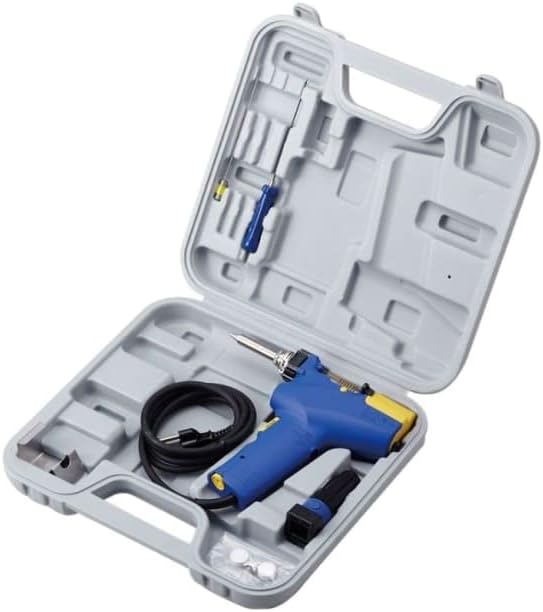
EDIT2: The Hakko FR-301 desoldering tool is the best thing imaginable for this kind of work, it makes removal of the components too easy, and this makes sure the traces on the PCB's aren't lifted or pulled up accidentally.

41lW7DXqfSL._AC_SL1024_.jpg


Can't recommend that enough.
 
Last edited:
Thanks, will do. Quick question though: When you say "pre-amp", do you mean the tone amp, the stereo decoder amp, or both? And by power section do you mean power supply board or power amp?

By the way, my receiver (also a champagne, etched) has the same power cord as yours.
 
I'd get that desoldering tool if I thought I was going to repair a few more amps, but I'm not sure yet. I currently have a small desoldering iron that uses a bulb to suck the solder off the board. Works ok, but not great.
 
I'd start with P800 power supply rebuild, it's easiest and is the foundation. The P500 is fairly easy, but my problems were found on the P700 ultimately. The filter/coupling caps could be as soon as you wanted, but those cheap transistors are abundant in the 2215. Lots of the bad purple caps in there too.

The 2215's, a majority of them seem to be engraved, and would've been between serial #'s 1000-5000:

The 2215 in a way is harder to troubleshoot than the rest of the 22xx series because there are no jumpers in the rear to split between pre-amp out, and power-amp in, makes solving where the problem is more time consuming.

The FR-301 can pay for itself if you find other projects for it. I build guitar amp clones, and use it for that too, makes cleanup or overhaul a joy. Buy old gear to fix and resell - mine paid for itself with a couple eBay overhaul-resales.
 
Cool, I'll start with the P800. Thanks for the link to the schematic. I had seen that one a few months ago but couldn't find it and ended up using a crappy black-and-white one that's hard to read.

My serial number is 3528.

Guitar amp clones are something I might do some day...
 
The Mojotone kits are really high quality components, and far less expensive than a vintage amp - which needs to be recapped at some point, and if they're missing the original transformer/'s, is it really vintage any longer.

Y5h4Ydy.jpg
 
Nice one! Doesn't have oxidized chassis spots, which you'll see if they came from Florida or in the humid south sometimes. That should cleanup really well.

The white/gray Elna caps can still be good these days, not sure for how much longer, but those purple caps measure a high ESR almost without exception.
 
Yeah, makes sense. They're about 52 years old now, which is kind of crazy. Here's the 2215 sitting on top of my dad's old Kenwood (which somehow sounds great even though all I've done is clean the pots). I unfortunately dropped the 2215 on its corner when I got it (or maybe my sister did.. I'll go with that). A repair guy was able to straighten it out, so it's better than it was. The scratch above the headphone jack was there when I got it. I bought this for about $75 + shipping (so $100 total, roughly) sometime around 2005, and never got around to restoring it until recently. I originally got it for my sister, thinking it would magically work just fine as-is. She never used it because the pots really needed cleaning.
CfBjWHd.jpg
 
Many have said the 2215 was the under-powered, poor man's model and therefore not worth a full restore. That's why I went out of my way to leave a parts list, so others can see for themselves this is a quality unit, worthy of the effort.

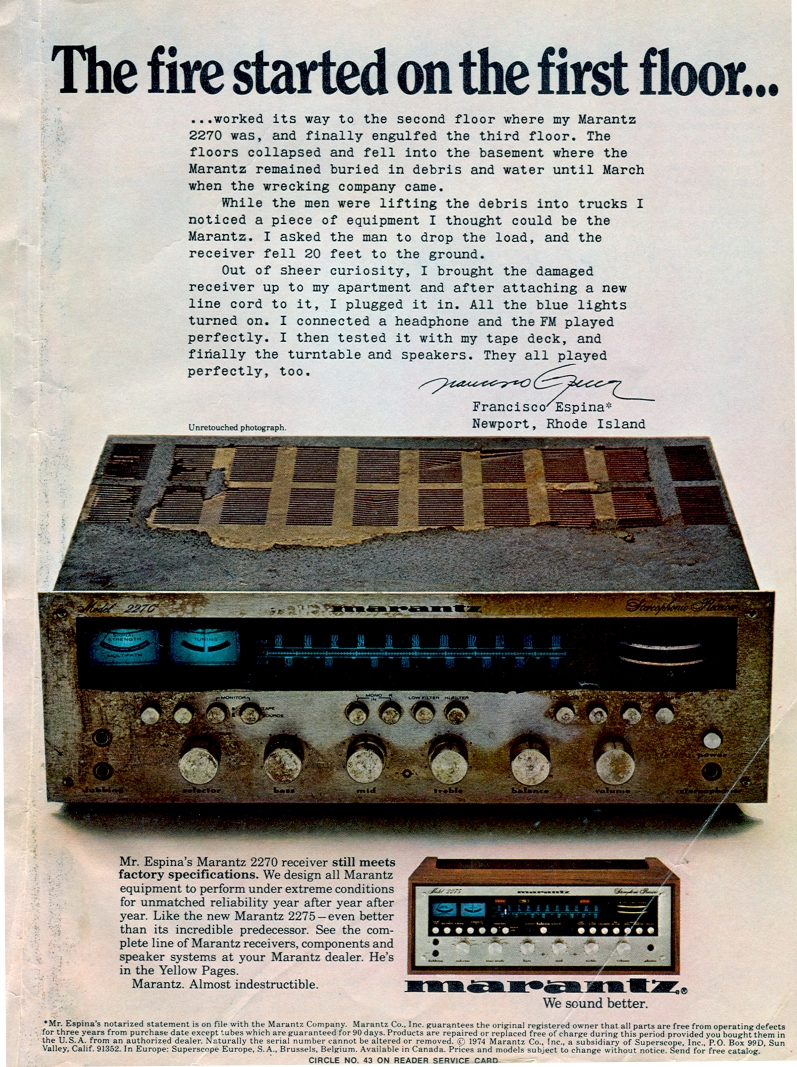
The abuse these things can take, being solid state, is unreal. Reminds me of that ad from the old magazine's:
AdMarantz%202270.jpg
 
Back
Top Bottom