• The move to the new server is done. There are some software and database maintenance updates in process. This has us passing the hat around to help out. We appreciate any donations. Seriously, even a dollar helps. The payment page may be found here - https://www.audiokarma.org/support.html

Marantz 2270 - Never meet your heroes?

marcpitt

New Member
This is my first post and will start with a caveat and backstory. The caveat is although I have read a lot of this forum, I have certainly not read it all. Sorry if anything I bring up has been already hashed out 10 years ago. I want to share my experience just to get feedback, opinions and maybe even some confirmation from the community here.

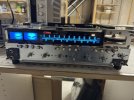
I have always liked listening to music. I have a whole house audio system, several soundbars/surrounds/subs and even an outdoor system with buried sub for the pool. However shy of the Bowers & Wilkins system in my car, I have never really owned a proper system. So recently while rethinking my home office, I decided that I wanted to get a nice turntable, receiver and speakers. This led me down a rabbit hole of YouTube where I learned that there was a proper vintage audio store in my home town. On my first visit I found myself deciding between a Pioneer SX-1050 and a Marantz 2270. Both units really spoke to me from a vintage look and feel, but I was admittedly persuaded by all the videos praising the 2270 and of course the blue lights. So I plunked down, what I know realized was way to much money and came home with the 2270.
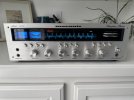
IMG_0005.jpg

After getting this thing home I immediately started thinking about turntable and speakers. I like the vintage look of the JBL's and the Klipsch Heritage ( Fortes, Heresy, etc.). But before I spent that kind of money, I really wanted the chance to listen to them. So in the meantime I bought a pair of Klipsch RP-600m IIs as a holdover and an Eversolo DMP-A6 Streaming DAC so I could start pushing some music through this receiver. I have Apple Music and Amazon music, both of which allow to play hi-res lossless through the Everysolo natively.

At first I was kind of amazed. I couldn't turn the volume passed a quarter turn and it sounded great. I was reflecting on what the guy at the store told me. That this is 70 vintage watts and that is different than the watts of today...blah blah. I think he used the words face melting with some high efficiency Heresy's. I was thinking maybe there is something to that. haha. Of course what I later found out the hard way was that the DAC was pushing out 2.5 volts into the aux port that has a sensitivity of 180 mV. Essentially really overpowering the preamp. How did I learn this. I learned it one day when the receiver was quite warm from playing for a while and the song Juke Box Hero came on. About mid way through the song gets quite hot and the amp started to clip producing horrible popping noises in the speakers.

After reading a lot and doing some test, I realized I needed to turn down the output db's on the dac to not overload the preamp. I also tried to plug the dac directly into the main in, to skip the Marantz preamp. But honestly none of this really worked great. No matter what I did/do, there always seems to come a time when a certain song just pushes this thing to clip. I even bought a turntable and at just below or at half volume (11 or 12 o'clock) I start to hear the popping in the mid to low range.

At this point many of you might be thinking....

1) This guy is listening to music to loud
2) The speakers are the problem
3) Was this receiver restored, sounds like xyz capacitor, board, transistor needs to be replaced

I am here to tell you that all of the above may be true. But let me continue with part B of this story.

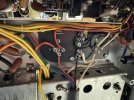
After buying this receiver I did what all good new vintage hobbiest do. I started stalking ebay and marketplace. And to my surprise not three weeks after I bought the 2270, another 2270 shows up on my local marketplace feed. It was certainly dirty and all but one lamp was burnt out, but before I knew it, I was driving 50 minutes to pick it up. This one was going to be a project for me and I paid less than 1/3 of what I paid for the first one. Here is a picture of it on the left. It is dirty!
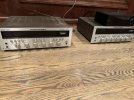
IMG_0137.JPEGIMG_0148.JPEG

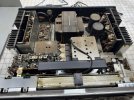
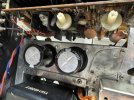
Now I will not go to deep into the story of this second receiver except to say that I have since completely cleaned it up, replaced all the lamps, rebuilt the power supply board and replaced the main filter capacitors. As you can see this second one was made in '76 (the first one is from '75) and from my eye had never been touched. Amazingly it worked. It was missing the pre-out main in jumpers, the controls were dirty, but otherwise it made great sounds out of both channels. In fact the only thing I really counld find wrong with it was the protection relay would take a good 15-20 seconds to click and the power supply reference voltage for the tuner and such was reading around 12.8 which is lower than the 13.5 to 14.2 or whatever it should be. This is why I decided to rebuilt the power supply. Here is a couple of picutres of it now, still not completely together yet.

IMG_0496.JPEGIMG_0493.JPEG

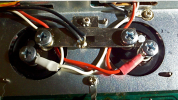
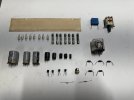
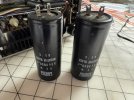
And here is the original Capacitors and a picture of this board used to install the new ones.
IMG_0512.JPEGIMG_0511.JPEGIMG_0510.JPEG

After these changes the protection relay clicks on in 3-4 seconds and all the reference voltages are in spec. So naturally I decided to do some listening. Guess what, this receiver behaves basically the same way. I thought it must be the speakers or these receivers just cant get as loud as I may want them occasionally. And don't get me wrong it can get loud. But every so often there is a song or two where I want just a touch more and just can't get it without clipping.

Now I promise I will try to wrap this up and fill in more details when/if someone starts asking questions, but for now, one last part of this story. As i tried to get to the bottom of this the scientific part of me kicked in and I bought an oscilloscope. I had read and heard so many people talking about how great these receivers are and how underrated they were where many were showing the units pushing 90 watts. So I had to test. Here is what I can tell you. Both of my receivers are putting out about 71-72 watts before clipping. Worse, at 70 watts with a 1000 Hertz test tone, if I move the mid tone control one click up from the 12 o'clock position, both receivers will clip. Now, if I move the balance to one side and test only that channel, then yes, I can get 92 watts before clipping. But clearly when asked to run both channels the amp simply cannot do 90 watts.


So here are my thoughts/questions:

- Should I continue to restore/rebuild more of this second receiver in hopes that refreshing the amps boards or preamp boards might bring something additional? I probably will anyway with at least one of these receivers, because I am enjoying the rebuild.
- Should I buy new speakers and hope that I don't have the same experience with maybe even more efficent speakers? I probably will anyway, but hate to think about spending 5-6K on speakers only to have them popping when the amp clips.
- Should I buy a separate amp and only use the 2270 as a preamp?
- Is this just vintage audio and I need to lower my expectations.

Maybe it's true...don't meet your heroes.
 

Attachments

  • IMG_0496.JPEG
    IMG_0496.JPEG
    100.4 KB · Views: 32
Register to hide this ad
This is my first post and will start with a caveat and backstory. The caveat is although I have read a lot of this forum, I have certainly not read it all. Sorry if anything I bring up has been already hashed out 10 years ago. I want to share my experience just to get feedback, opinions and maybe even some confirmation from the community here.

I have always liked listening to music. I have a whole house audio system, several soundbars/surrounds/subs and even an outdoor system with buried sub for the pool. However shy of the Bowers & Wilkins system in my car, I have never really owned a proper system. So recently while rethinking my home office, I decided that I wanted to get a nice turntable, receiver and speakers. This led me down a rabbit hole of YouTube where I learned that there was a proper vintage audio store in my home town. On my first visit I found myself deciding between a Pioneer SX-1050 and a Marantz 2270. Both units really spoke to me from a vintage look and feel, but I was admittedly persuaded by all the videos praising the 2270 and of course the blue lights. So I plunked down, what I know realized was way to much money and came home with the 2270.

View attachment 3836411

After getting this thing home I immediately started thinking about turntable and speakers. I like the vintage look of the JBL's and the Klipsch Heritage ( Fortes, Heresy, etc.). But before I spent that kind of money, I really wanted the chance to listen to them. So in the meantime I bought a pair of Klipsch RP-600m IIs as a holdover and an Eversolo DMP-A6 Streaming DAC so I could start pushing some music through this receiver. I have Apple Music and Amazon music, both of which allow to play hi-res lossless through the Everysolo natively.

At first I was kind of amazed. I couldn't turn the volume passed a quarter turn and it sounded great. I was reflecting on what the guy at the store told me. That this is 70 vintage watts and that is different than the watts of today...blah blah. I think he used the words face melting with some high efficiency Heresy's. I was thinking maybe there is something to that. haha. Of course what I later found out the hard way was that the DAC was pushing out 2.5 volts into the aux port that has a sensitivity of 180 mV. Essentially really overpowering the preamp. How did I learn this. I learned it one day when the receiver was quite warm from playing for a while and the song Juke Box Hero came on. About mid way through the song gets quite hot and the amp started to clip producing horrible popping noises in the speakers.

After reading a lot and doing some test, I realized I needed to turn down the output db's on the dac to not overload the preamp. I also tried to plug the dac directly into the main in, to skip the Marantz preamp. But honestly none of this really worked great. No matter what I did/do, there always seems to come a time when a certain song just pushes this thing to clip. I even bought a turntable and at just below or at half volume (11 or 12 o'clock) I start to hear the popping in the mid to low range.

At this point many of you might be thinking....

1) This guy is listening to music to loud
2) The speakers are the problem
3) Was this receiver restored, sounds like xyz capacitor, board, transistor needs to be replaced

I am here to tell you that all of the above may be true. But let me continue with part B of this story.

After buying this receiver I did what all good new vintage hobbiest do. I started stalking ebay and marketplace. And to my surprise not three weeks after I bought the 2270, another 2270 shows up on my local marketplace feed. It was certainly dirty and all but one lamp was burnt out, but before I knew it, I was driving 50 minutes to pick it up. This one was going to be a project for me and I paid less than 1/3 of what I paid for the first one. Here is a picture of it on the left. It is dirty!

View attachment 3836413View attachment 3836414

Now I will not go to deep into the story of this second receiver except to say that I have since completely cleaned it up, replaced all the lamps, rebuilt the power supply board and replaced the main filter capacitors. As you can see this second one was made in '76 (the first one is from '75) and from my eye had never been touched. Amazingly it worked. It was missing the pre-out main in jumpers, the controls were dirty, but otherwise it made great sounds out of both channels. In fact the only thing I really counld find wrong with it was the protection relay would take a good 15-20 seconds to click and the power supply reference voltage for the tuner and such was reading around 12.8 which is lower than the 13.5 to 14.2 or whatever it should be. This is why I decided to rebuilt the power supply. Here is a couple of picutres of it now, still not completely together yet.

View attachment 3836415View attachment 3836417

And here is the original Capacitors and a picture of this board used to install the new ones.
View attachment 3836418View attachment 3836419View attachment 3836420

After these changes the protection relay clicks on in 3-4 seconds and all the reference voltages are in spec. So naturally I decided to do some listening. Guess what, this receiver behaves basically the same way. I thought it must be the speakers or these receivers just cant get as loud as I may want them occasionally. And don't get me wrong it can get loud. But every so often there is a song or two where I want just a touch more and just can't get it without clipping.

Now I promise I will try to wrap this up and fill in more details when/if someone starts asking questions, but for now, one last part of this story. As i tried to get to the bottom of this the scientific part of me kicked in and I bought an oscilloscope. I had read and heard so many people talking about how great these receivers are and how underrated they were where many were showing the units pushing 90 watts. So I had to test. Here is what I can tell you. Both of my receivers are putting out about 71-72 watts before clipping. Worse, at 70 watts with a 1000 Hertz test tone, if I move the mid tone control one click up from the 12 o'clock position, both receivers will clip. Now, if I move the balance to one side and test only that channel, then yes, I can get 92 watts before clipping. But clearly when asked to run both channels the amp simply cannot do 90 watts.


So here are my thoughts/questions:

- Should I continue to restore/rebuild more of this second receiver in hopes that refreshing the amps boards or preamp boards might bring something additional? I probably will anyway with at least one of these receivers, because I am enjoying the rebuild.
- Should I buy new speakers and hope that I don't have the same experience with maybe even more efficent speakers? I probably will anyway, but hate to think about spending 5-6K on speakers only to have them popping when the amp clips.
- Should I buy a separate amp and only use the 2270 as a preamp?
- Is this just vintage audio and I need to lower my expectations.

Maybe it's true...don't meet your heroes.
Have you adjusted the bias and DC offset on these according to the manual? A 2270 should sound pretty great. More recapping will improve the sound. I just recapped my 2235B, and it's night and day difference. The amp and preamp boards especially. Some models have troublesome transistors in the preamp and amp sections which may need to be replaced. I'm sure experts will chime in! I recently fixed my recapped 2275 and it sounds fantastic, and it's not much different from a 2270. I understand your DAC may have too high of an output. Does it allow you to lower it? If not, maybe try a dac with a level control?
 
Last edited:
The position of the volume knob doesn’t necessarily mean that maximum output is fully clockwise. All of my Marantz in signature reach full output with the knob sitting around 11–11:30.

To get even more out of them, you can switch loudness off and set the tone controls flat. Klipsch are extremely efficient, but it seems they still appreciate some serious wattage to really show what they can do.

I have the RP-280F towers rated at 98 dB. They sound good with all of my amps, but things get seriously interesting once the 2275 takes over. Once I had another monster in the house, the 2330B unfortunately, just for flipping.

Now that was loud as hell and absolutely balls-to-the-wall. The good news for my ears was that the 2330B found a new owner pretty damn quickly.
 
Keep in mind the 2270 is a medium range consumer product, it is no D'Agostino amp. However it is outstanding for the monetary value even in today's inflated market. I agree with the above comments and there are indeed a few parts replacements that help sonically. One is replacing the diodes in the power supply with ultrafast soft recovery (these reduce noise floor). Another is recapping and replacing all transistors in the tone board - many times this comes with C1000s and others that are known to become noisy. You also have the opportunity following the service manual itself to upgrade some capacitor values. All these things done comprehensively help quite a lot.
 
My first concern would be the thickness of the copper traces on that cap adapter board. You will be carrying a lot of current and if you don't have enough copper, then the traces will look like resistors, and under heavy current load drop the voltage. This will limit the surge current that is supplied to the power transistors. That's why there are normally heavy metal bus bars connecting the terminals. Put a voltmeter on the caps and watch the voltage during your loud passages to see if the voltage drops.

1789396199846.png
 
Last edited:
Have you adjusted the bias and DC offset on these according to the manual? A 2270 should sound pretty great. More recapping will improve the sound. I just recapped my 2235B, and it's night and day difference. The amp and preamp boards especially. Some models have troublesome transistors in the preamp and amp sections which may need to be replaced. I'm sure experts will chime in! I recently fixed my recapped 2275 and it sounds fantastic, and it's not much different from a 2270. I understand your DAC may have too high of an output. Does it allow you to lower it? If not, maybe try a dac with a level control?
Thanks for your reply and experience with the 2275.

After letting the units run for 20 minutes or so, these are the adjustments I made.

Power Supply adjusted to 35.02 VDC
DC Offset on both Channels into the .0x mV
BIAS on both channels set to 10 mV

As for the DAC. I was able to lower the output coming from it. But the amp clipping even happens with a turntable (audio-technica LP120X) plugged into the phono input. Sounds like I need to keep going on the recapping and component replacements and see if something improves.
 
The position of the volume knob doesn’t necessarily mean that maximum output is fully clockwise. All of my Marantz in signature reach full output with the knob sitting around 11–11:30.

To get even more out of them, you can switch loudness off and set the tone controls flat. Klipsch are extremely efficient, but it seems they still appreciate some serious wattage to really show what they can do.

I have the RP-280F towers rated at 98 dB. They sound good with all of my amps, but things get seriously interesting once the 2275 takes over. Once I had another monster in the house, the 2330B unfortunately, just for flipping.

Now that was loud as hell and absolutely balls-to-the-wall. The good news for my ears was that the 2330B found a new owner pretty damn quickly.
Thank you for the reply. I know the volume control is not linear and full output for most people seems to be in the half way mark. I only mentioned the volume position for reference.
 
Keep in mind the 2270 is a medium range consumer product, it is no D'Agostino amp. However it is outstanding for the monetary value even in today's inflated market. I agree with the above comments and there are indeed a few parts replacements that help sonically. One is replacing the diodes in the power supply with ultrafast soft recovery (these reduce noise floor). Another is recapping and replacing all transistors in the tone board - many times this comes with C1000s and others that are known to become noisy. You also have the opportunity following the service manual itself to upgrade some capacitor values. All these things done comprehensively help quite a lot.
Okay maybe I tackle the tone board next. Thanks for sharing your experience.
 
My first concern would be the thickness of the copper traces on that cap adapter board. You will be carrying a lot of current and if you don't have enough copper, then the traces will look like resistors, and under heavy current load drop the voltage. This will limit the surge current that is supplied to the power transistors. That's why there are normally heavy metal bus bars connecting the terminals. Put a voltmeter on the caps and watch the voltage during your loud passages to see if the voltage drops.

View attachment 3836526

This is a good point. It might be hard to see in the picture but the board actually has big fat traces. Nevertheless, i will do some testing with the meter. Also, I have some even bigger caps for the other 2270, without this adapter board, so I will get those installed and try to replicate the picture above. From the factory both of these have a solid wire between the caps which I would not say is the same as the nice bus bar in your picture.
 
It is not only the trace "fatness", width, but also the thickness of the copper layer. Did the supplier of the board specify the thickness that they use?

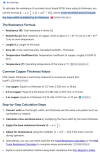
Here's a quick AI answer to how to compute board trace thickness. You can calculate the resistance of the high current paths on your board. From that you should be able to calculate the voltage drop or current drop under heavy load. Most PC boards do not use 2oz copper so yours may be either 1oz or even 0.5oz which will add more resistance.

1789400499388.png
Another article:
1789401189138.png
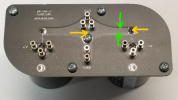
The website does not state the copper thickness, but also your current will be limited by the narrowest part of the circuit trace (green arrows) and length from cap terminal to wire (yellow arrows). I am assuming that the board only has a single copper layer and does not stack multiple layers to decrease resistance. Think of it as a garden hose. You have free flowing water through the hose, but if you pinch the hose anywhere along the path the amount of water that gets through is reduced. I'm not sure why they chose that shape for the ground trace?

1789401684613.png
Also, be careful not to increase the capacitance over stock values too much because it will impose a higher inrush current on power-on because of the extra capacitance that needs to be charged up. This higher current puts higher demands on the bridge rectifier diodes to handle higher peak current. You may need to put higher current diodes in if it becomes a problem of heating or current limiting.
 
Last edited:
I have no experience with the 2270, but I think the thing about the "vintage watts" is not necessarily that they deliver that much over the spec, but just that they perform very reliably up to their rated spec (70 wpc into 8 ohms in this case). This is because the 1974 FTC amplifier rule required amps to be run at 1/3rd full power for 60 minutes straight, followed by 5 minutes straight at full continuous power, both channels driven, all with full spectrum (20-20khz) signal. That testing standard ensures everything in that era is very robust up to the rated power output, but doesn't say much about headroom above that. Given that it was very much a power "arms race" to sell equipment back then, I'd guess that ratings probably didn't have that much headroom, but were extremely robust up to the rated spec. Was all your testing at 1khz? You should be able to get 70wpc continuous with a full spectrum signal given the testing in period when it was produced was so strict.

There is testing some info here that might help provide some reference (I only skimmed it):

 
Last edited:
It is not only the trace "fatness", width, but also the thickness of the copper layer. Did the supplier of the board specify the thickness that they use?

Here's a quick AI answer to how to compute board trace thickness. You can calculate the resistance of the high current paths on your board. From that you should be able to calculate the voltage drop or current drop under heavy load. Most PC boards do not use 2oz copper so yours may be either 1oz or even 0.5oz which will add more resistance.

View attachment 3836545
Another article:
View attachment 3836546
Also, be careful not to increase the capacitance over stock values too much because it will impose a higher inrush current on power-on because of the extra capacitance that needs to be charged up. This higher current puts higher demands on the bridge rectifier diodes to handle higher peak current. You may need to put higher current diodes in if it becomes a problem of heating or current limiting.
Thanks for the additional information. Here are the words directly from the board manufacturer, which is pro audio.

“The mounting board itself is manufactured with double-sided 2 ounce copper and large copper pours to ensure very low impedance connections to the turrets, a 2.4 mm thick FR-4 laminate to reduce board flex, and a gold finish.”

Nevertheless, will do some testing of my own.
 
I have no experience with the 2270, but I think the thing about the "vintage watts" is not necessarily that they deliver that much over the spec, but just that they perform very reliably up to their rated spec (70 wpc into 8 ohms in this case). This is because the 1974 FTC amplifier rule required amps to be run at 1/3rd full power for 60 minutes straight, followed by 5 minutes straight at full continuous power, both channels driven, all with full spectrum (20-20khz) signal. That testing standard ensures everything in that era is very robust up to the rated power output, but doesn't say much about headroom above that. Given that it was very much a power "arms race" to sell equipment back then, I'd guess that ratings probably didn't have that much headroom, but were extremely robust up to the rated spec. Was all your testing at 1khz? You should be able to get 70wpc continuous with a full spectrum signal given the testing in period when it was produced was so strict.

There is testing some info here that might help provide some reference (I only skimmed it):

So far for all the testing with the scope, I was using only a 1 kHz tone. Now that I have both of these 2270’s apart and on the bench I will do some more testing with different ranges. Will also check out the video you linked. Thank you.
 
So far for all the testing with the scope, I was using only a 1 kHz tone. Now that I have both of these 2270’s apart and on the bench I will do some more testing with different ranges. Will also check out the video you linked. Thank you.

This whole thing kind of suggests that, as important as it was to fix the "peak" power output stats that manufacturers were abusing before the FTC 1974 Amplifier Rule came out, it would have been good for them to leave in some kind of controlled "peak" measurement to indicate how much short-term headroom an amp provided. Continuous power would still dictate the power rating the manufacturer could use for the amplifier rating, but peak would be an accompanying data point stat that gave insight into short-term headroom for peaks, which probably varied a LOT (primarily based upon power supply design).

Your example of cranking it loud enough to clip isn't as extreme as it sounds. While there is no real music that requires continuous 70 wpc -- peaks above 70 are certainly normal at very high volume levels. It seems like the FTC threw the baby out with the bathwater :( -- they were right to make continuous/full-spectrum THE number used for the advertised spec -- but they (presumably unintentionally) made peak/dynamic irrelevant (which your example proves quite well that short-term peak is also very relevant).
 
Last edited:
Thank you for the reply. I know the volume control is not linear and full output for most people seems to be in the half way mark. I only mentioned the volume position for reference.
There's also the possibility that you may want a receiver with a mute button. This cuts the sound level via the preamp section. I engaged it on my Sansui and recapped Pioneer SA-8100 when I was using Klipsch speakers. It lowers the floor noise and allows more flexibility with the volume knob. Unfortunately, the 2270 doesn't have that button (I don't think). I'm sure you can easily get good money for your Marantz if they don't work out for you, or even a trade for something with a mute button. There are still other options to pursue, like a volume knob between the preamp out and main in RCAs on the back. This would let you cut the level. There are pre-made tube buffers or other passive type devices on Ebay.
 
Another factor on clipping levels is your line voltage. The amps' supply is unregulated so is whatever the line voltage in will provide. I get over 90W on these at my nice fat 124+Vac line voltage. If you have 120V or less, no way would it be 90 watts. I'm assuming you've used a non-inductive load for both channels to measure. Using speakers is a crap shoot. And you may cook the speakers!
 
Another factor on clipping levels is your line voltage. The amps' supply is unregulated so is whatever the line voltage in will provide. I get over 90W on these at my nice fat 124+Vac line voltage. If you have 120V or less, no way would it be 90 watts. I'm assuming you've used a non-inductive load for both channels to measure. Using speakers is a crap shoot. And you may cook the speakers!
Yes I have some 8 ohm - 200 watt non inductive dummy load resistors that I am using during this testing. The line voltage point is something I didn't think about. I just checked my line voltage and found 119.6 Vac. Guess I need to move :)
 
Almost half way up on the attenuator with 96 spl speakers and it clips, you need bigger speakers. My 2225 has me turning it down with 90 spl speakers at that approx level. Bigger speakers or smaller room for 70wpc.
 
IMO, you need to do a frequency response test to find out if the thing can make reasonable power from 20 Hz to 10 kHz or so. I don't like to take vintage stuff to full power at high frequencies. Look at the manual or service manual to find out what the unit should be capable of. A good 70 W/ch receiver should go satisfyingly loud in a medium sized room with reasonably efficient speakers. Even the onset of clipping shouldn't be terribly obvious. Usually the speakers complain first by bottoming out or burning up.
 
Back
Top Bottom