• The move to the new server is done. There are some software and database maintenance updates in process. This has us passing the hat around to help out. We appreciate any donations. Seriously, even a dollar helps. The payment page may be found here - https://www.audiokarma.org/support.html

Marantz 4300 puff of smoke

Med-Fi

Active Member
I've been recapping my marantz reciever one board at a time and powering on between each change I make.

Yesterday I recapped the power supply, and replaced both switching relays. everything powered up perfectly.

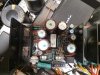
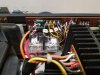
Today I replaced both main filter caps. Powered it on and I heard a sizzle, pop, then saw a puff of smoke rising from what looked like the p800 power board. My train of thought is that I somehow hooked up the main filter caps incorrectly. The old caps had no markings to determine polarity, so I just removed them, and installed new filter caps how I assumed they would go. Negative terminals to the common bar, and positive post to the wires. Please look at the provided pictures, and let me know if anything is wrong. Also, if anyone has any insight on what exactly could have fried and caused the puff of smoke, please let me know. Thank you!20190629_160935.jpg
 
Register to hide this ad
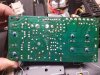
maybe I got lucky and it was just the fuse? it dosent appear to be fried though, nor does anything else on my p800 board... :dunno:15618538444865344312729053820528.jpg 15618539303824652650840284366960.jpg 15618540228718786130543750147413.jpg 1561854124226956479027115076547.jpg
 
Update: The fuse isnt blown. I tested continuity, and it's just fine. Puff of smoke came from somewhere else...
 
The bus bar goes from the positive or one cap to the negative of the other. I will try to find a picture for you. Look into building a dim bulb tester to save burning things up in the future.

Tony

4430a.png
 
Last edited:
I'm building one as we speak. I Fugured it was the filter caps being installed incorrectly. I cant seem to see what burned though. everything looks normal.
 
my guess would be the diodes? h808 and h809 perhaps? I'm not an expert, so if somone could chime in and hit me with some knowledge, I would really appreciate it
 
Filters - White wires go to a negative terminal on the cap, so that cap would have its positive terminal on the buss bar. Red wires go to a positive terminal on the cap, that cap would have its negative terminal on the buss bar.
 
I guess my next move is installing the cap correctly, and then seeing If the reciever functions. Past that, I dont know.
 
:crazy:I followed the wires on the positive post on the capacitor (supposed to be negative but was incorrectly soldered to positive), and saw no damaged wiring. Followed the wiring to their prospective circuit boards. Looks like the wiring goes from the filter caps all the way to the P700 amp boards, and the p800 power board. My question is, shouldn't whatever semiconductor that is first in the signal path be the one that gets fried? If that's the case it looks like culprit would be either a rectifier on the power board, or a transistor on the amp board. When i saw the magic smoke it was coming from the right amp board/power board area. Both boards were sandwiched together, so I couldn't really pinpoint where exactly the smoke was coming from.

Also I tested the fuse in the back of the unit, as well as the fuse on the amp board. I also tested the diodes on the p800 power board, but i haven't tested the ones on the amp boards.

At this point I'm just throwing crap at the wall, trying to see what sticks. I'm hoping somone can point me in the right direction.
 
The chain is AC to transformer.
Transformer AC to bridge rectifier.
Bridge rectifier to filter caps.
Filter caps to amps, rail voltage for the output transistors.

My first guess is the bridge rectifier wouldn’t like the backward cap.
 
The chain is AC to transformer.
Transformer AC to bridge rectifier.
Bridge rectifier to filter caps.
Filter caps to amps, rail voltage for the output transistors.

My first guess is the bridge rectifier wouldn’t like the backward cap.

My hero!

Not too sure how to to find out if the rectifier, or rectifiers are toast or not. Is there a way to test them? also, do you know of suitable replacements? Thanks for your input :)
 
I know the added expenses involved, still weight against soon potential catastrophic failure.
Both of the caps would be replaced with new ones now.
Since your there already.

JMHO!
 
I know the added expenses involved, still weight against soon potential catastrophic failure.
Both of the caps would be replaced with new ones now.
Since your there already.

JMHO!

The cap connected backward is questionable.
The other should be fine.
 
The cap connected backward is questionable.
The other should be fine.

I had the power on for maybe 2 seconds and immediately cut power as soon as I saw smoke from the amp board. Do you absolutely think the filter cap needs replaced? it's a 35 dollar cap. :(
 
I had the power on for maybe 2 seconds and immediately cut power as soon as I saw smoke from the amp board. Do you absolutely think the filter cap needs replaced? it's a 35 dollar cap. :(

How will you feel if replacing it in a day, week, month from now?
Like another stated most times they explode when connected backwards. Yours may still have internal damage that will cause a shorter life span.

Get it wired up correct and working first for now.

For peace of mind I would replace.

OBTW two seconds of hi current can do a lot of damage!
 
I had the power on for maybe 2 seconds and immediately cut power as soon as I saw smoke from the amp board. Do you absolutely think the filter cap needs replaced? it's a 35 dollar cap. :(

Electricity travels near the speed of light.

If you grab a live power line, you get zapped instantly.

We use dim bulb testers for a reason.

Asking me what the condition of the cap you powered up backwards is useless.

If you only fried a $35 cap because you did things wrong and didn't use a known sanity check method to cover yourself, it is a cheap lesson.

I'm being a bit gruff here because I want you and anyone else to understand that working on electronics or with electricity is a skill and takes knowledge. There is no room for guessing. DIY is fine but know what the f you are doing or you will at least destroy stuff and at worst kill yourself.

If that cap had exploded and launched and your head was it the way, it could have been a very bad day for your friends and relatives.

The last funeral I bought was $5000.
 
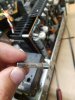
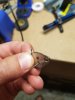
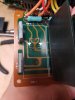
Alright guys, my dim bulb tester is built. I also checked both bridge rectifiers. One tested good, the other.... Well you be the judge. I took a picture for ya. 20190630_102824.jpg 20190630_102842.jpg
 
Back
Top Bottom