• The move to the new server is done. There are some software and database maintenance updates in process. This has us passing the hat around to help out. We appreciate any donations. Seriously, even a dollar helps. The payment page may be found here - https://www.audiokarma.org/support.html

MC-602

We all know the mc-602 amp is rated at 600/600 watts. speakers are legacy focus 20/20's. When the system is dialed up and playing rather loud it will flash on the power guard lights. So is this going to damage anything, What is the real output of these amps? I really don't hear any distress in the speakers, it seems like they could take more and keep on going.

This 11 year old thread is talking about your same system comopnents, and the AC within the house that @c_dk is talking about. This all might help you understand what is going on and how to test your power supply.
http://audiokarma.org/forums/index.php?threads/use-one-big-amp-or-bridge-two-smaller-ones.34040/


OP asks:

The lights flashing indicate the amp is approaching 0.5 % distortion. In home use this distortion level comes on most often because of AC voltage sag not at the near 800 watts these amps can produce in lab conditions.

Back in the day I would visit clients with our McIntosh variac to demonstrate why they should hire a electrician to run dedicated AC lines for peak performance.

When the red lights come on, the PG comparator circuit is engaged to lower the input signal to stay below the distortion threshold.

Lower the distortion by updating your AC wring to 20 amp circuits with 10 gauge wire and you will allow your new amp to do its best.

This all can be my limiting factor as well and most of us with big mac amps. Take a look at the link above and as you just stated.
 
For any speaker you need to supply enough watts where the speaker is normal on loud passages but does not enter the thermal compression stage which will cause a collapse of dynamic range.
The amps ability to 'control' the speaker or make the drivers start and stop as rapidly as the music waveform is related to amp power, the speed and size of the power supply section, the use of capacitors with rapid charge and discharge characteristics (ESR), etc. Watts are important but not the only factor.

I have to ask?
In a home environment, short of servicing PA duty outside, would you really listen at volume (SPL) that would require an amp that pushes past 600w rms pc nto clipping ?
Correct me if I'm wrong.
Wouldn't this be in permanent hearing damage ranges?
(Even with inefficient speakers?)

Don't think the OP really was seeing 600w,

I quoted Ron's post because it states the need and why people buy and need big amps. Most people that don't understand this just look at big amps as Watt Power....and Loud. When in reality it's to hear ALL of the music dynamic range, transient peaks, speed and control of the speakers and type of music one is listening to.
 
I understand the concept of dynamic headroom though I often think it gets over emphasized. While I'm sure there must be,conditions where this happens, (I can't think of any offhand) within a personal listening room (say 20'×20'×20' or smaller) I'm having a tough time thinking someone is listening at power levels that are engaging the power guard with regularity. For sake of staying on topic , let's leave dynamic headroom out of this discussion.
The power sag theory is interesting. I never gave that any thought before. :idea:
 
Seems any real discussion of how loud it is is useless until we get a spl meter in there and see some real numbers.
 
That's why I would run around west Michigan with a 45 lb. variac and a AA2 analyser.

There is much more to selling high end audio than sitting in a showroom talking audiophilese and in today's world designing remote controls.

Every time Gordon came to do a demo with us he would backlog me with months of future in home system evaluations of client's systems.
 
...
The power sag theory is interesting. I never gave that any thought before. :idea:

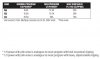
Yeah, it's possible. Attached you see the average power draw* under three conditions for an amp around the same power as a 602.

The draw at 1/8 average power isn't really all that much but then there are the peak input demands above the average.

Then, you go to the far right column and see what the average draw would be with the amp on a test bench pumping out sine waves at full power. Those max figures could be somewhat representative of the peak demand relative to the 1/8 average power figures.

AveragePowerDraw.jpg

*McIntosh power draw at lower nominal/rated speaker impedance may not progess as in the example because of the output transformer load matching. On the other hand, it seems the nominal draw would tend to be higher with McIntosh (as I understand) the actual amplifer is working into about a 3 ohm load with the reflected impedance of the output transfomer relative to 2, 4, or 8 ohms.
 
Last edited:
I love threads like this - it gets everyone thinking. Obviously, we're all fascinated with BIG power amplifiers - we are MEN dammit and if we want it loud, we want it really loud.

4-2-7 . . . nice detective work on uncovering an ancient thread with discussion of the MC602 with the very same speakers the OP is using. I find it interesting that even in that thread, ron-c doesn't talk at all about the capabilities of the MC602. From the specs, you would think it's one of McIntosh's crowing achievements. I guess I'm just going to have to buy one of them so that I can figure that out for myself. [Over at AA, there is a guy that uses a pair to some BIG ASS Infinities in an electronically biamped set up. There's also another user that uses one to power the surrounds in his HT setup of all things . . . ]

c_dk and ron-c make great points about the AC mains and how it can become THE limiting factor with such amplifiers. I'm actually in that boat currently (bad) myself with a single 20A line supplying all my gear. Of course, the electrical panel is on the opposite corner of the home (two story) from where my gear is, making the upgrade a daunting one. It's on my list.

I'm sure when the OP returns, he'll at least learn something here . . .
 
Yeah, it's possible. Attached you see the average power draw under three conditions for an amp around the same power* as a 602.

The draw at 1/8 average power isn't really all that much but then there are the peak input demands above the average.

Then, you go to the far right column and see what the average draw would be with the amp on a test bench pumping out sine waves at full power. Those max figures could be somewhat representative of the peak demand relative to the 1/8 average power figures.

View attachment 744489

*McIntosh power draw at lower nominal impedance may not progess as in the example because of the output transformer load matching.

This is also good fodder. When I worked for Rockford, we taught professionals how to upgrade vehicle electrical systems to accommodate the demands of large amplifiers. In doing so, we demonstrated how the duty cycle of the program material should be factored. Crown has always done that as well. For others here that may be new to this discussion, look at it like this - music is dynamic in nature and the duty cycle represents its average energy over time. A sine wave is 100% duty cycle whereas heavily compressed electronic music approaches 50%. What that means, is that for an amplifier that is rated to require 20A of current reproducing sine waves at full power, it'll require 10A on average playing music with a 50% duty cycle at the onset of clipping.

Most music has a duty cycle significantly less than 50% and the first column in the Crown chart represents that well. Regardless, peaks that exceed the demands of the circuit supplying the power amplifier can be for milliseconds only, allowing the music to continue to play uninterrupted. Although we don't talk much about duty cycle of the program material, it's the factor that allows us to use these massive amplifiers without tripping the circuit breakers when we crank them up. [Duty cycle gives and efficiency taketh away . . . ]

Todd - McIntosh amplifiers behave identical to others with respect to power draw when the 8 Ohm taps are used. Driving a 4 Ohm load from the 4 Ohm tap is akin to driving an 8 Ohm load from the 8 Ohm tap with a direct coupled amplifier.
 
^^^
About the last paragraph, I think we may be on two different points.

Since the output section of the McIntosh amp is always (nominally, speaking) working into about 3 ohms load using the impedance taps as intended (8 ohm tap - 8 ohm load, 4 ohm tap - 4 ohm load, etc.), the input draw will not change when lower impedance load used on the corresponding tap, as it inherently does with a direct coupled amp/without matching transformer. In effect, the Mc always operates at 3 ohms nominal load.

That said, I fully agree the McIntosh amp reacts to impedance swings like any other amp which I think was your point. But, that's a somewhat different topic.

The chart is simply to represent nominal data since it would be impossible to make a matrix that conveyed every possible scenario.

For those interested in mitigating voltage drop, have big amps operating at 240V would be a good idea. All things equal, doubling the operating voltage cuts current draw in half, which cuts the voltage drop in half. When you have half the voltage drop and twice the line voltage, the percentage of voltage drop relative to the line voltage is reduced by a factor of 4.
 
Last edited:
Agreed. I'm speaking 4 Ohm load on 8 Ohm tap, 2 Ohm load on 8 Ohm tap, etc. These big Mc amps have the current reserves to do that.
 
The pre amp is a mac c-45. I do run the amp on a dedicated 20 amp circuit. I do not normally listen at these high volume levels, just once and while I like to go a little insane and rearrange the clock on the wall an some other items in the room. I am using a velodyne hgs-18 sub with the crossover set to its lowest and the volume knob at about 1/4 turn from its lowest setting. This just beefs up the lower end a little and gets the dust off everything. I really do like the focus 20/20 speakers, don't know if there are any others that can sound this good at low and higher levels. A big plus is the 95 db efficiency. Wouldn't mine looking at upgrading the sub, I have had this sub since 1999. It still sounds good but I believe its not up to the level of the rest of the system. Could use something that is a little tighter and faster, maybe the powered legacy or one of the jl audio units.
 
Back
Top Bottom