• The move to the new server is done. There are some software and database maintenance updates in process. This has us passing the hat around to help out. We appreciate any donations. Seriously, even a dollar helps. The payment page may be found here - https://www.audiokarma.org/support.html

McIntosh C28 — What’s not to like?

cosmo61

New Member
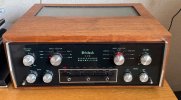
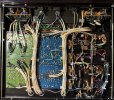
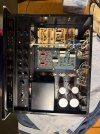
I’ve just finished going through my McIntosh C28 after previously doing a pretty thorough restoration of my MC2105.

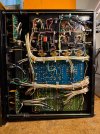
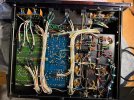
The C28 received a careful restoration. I took my time with it, cleaned all the pots and switches, checked the important resistors, fixed a few old service-related issues, carried out the relevant updates, and only replaced parts where it actually made sense.

The multi-section capacitors were rebuilt so the unit still looks original from the outside. I also tried to keep the original character of the unit intact as much as possible. Where matching mattered, the capacitors were channel matched.

The volume control is quiet—no scratching, no dropouts. The unit is now very quiet overall, and paired with the MC2105 the stereo image is rock solid, with great depth and space.

What surprises me most is just how good these old units can sound when they’re actually healthy. Not just “good for vintage gear,” but genuinely good. The C28 and MC2105 together have that classic McIntosh sound: full, smooth, detailed, and incredibly easy to listen to for hours without getting tired of it.

No noise, no crackle, no drama. Just music.

It’s easy to see why these units still have such a loyal following. When properly serviced and not over-modernized, the C28 has a really special charm. It may not be the newest design, and it definitely has its quirks, but in a well-sorted system it delivers a wonderful musical presentation.

C28 into MC2105 — what’s not to like?
 

Attachments

  • IMG_7596.jpeg
    IMG_7596.jpeg
    285.4 KB · Views: 88
  • IMG_7581.jpeg
    IMG_7581.jpeg
    314.1 KB · Views: 90
  • IMG_7604.jpeg
    IMG_7604.jpeg
    173.5 KB · Views: 89
Register to hide this ad
Both are excellent, top flight machines when fully restored. The C28 is possibly the most problematic Mc preamp ever designed from a maintenance standpoint. Every single one of the ground drain connections on the ends of the line level cables needs to be soldered and re-heat shrunk . . .
 
I agree.

The C28 isn’t the easiest McIntosh preamp to work on. I checked the line-level cable grounds, did the grounding update in the phono section, cleaned all the controls, fixed a few issues from previous work, and finished up the restoration.

The result is a really quiet unit. Even with the volume turned all the way up and the MC2105 gain controls around 3 o’clock, the system stays silent when no music is playing.

The C28 can be a bit picky when it comes to maintenance, but once it’s properly sorted out, it’s a quiet, great-sounding preamp. I’m really happy with how it turned out.
 
Both are excellent, top flight machines when fully restored. The C28 is possibly the most problematic Mc preamp ever designed from a maintenance standpoint. Every single one of the ground drain connections on the ends of the line level cables needs to be soldered and re-heat shrunk .

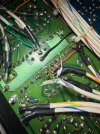
I reworked the shield/drain wire connections and also did the grounding upgrade. Why not?

The unit is now super quiet on all inputs. The phono stage has some white noise when the volume is turned up high with no signal, but it is equal in both channels and not audible at normal listening levels, so it may simply be normal for this type of vintage phono stage.

I’ll probably just keep an eye on it for now.
 

Attachments

  • IMG_7629.jpeg
    IMG_7629.jpeg
    310.3 KB · Views: 62
  • IMG_7637.jpeg
    IMG_7637.jpeg
    330.5 KB · Views: 62
Yes, it certainly was!

IMG_7640.jpegI probably underestimated how much work the shield/drain and grounding work would be, but the result was worth it.
The C28 is now extremely quiet in my system and sounds better than it ever has with the MC2105.
 
Yes !!!
I have now completed the restoration/service work on my McIntosh C28 stereo preamplifier and have finally measured it.
Since I do not plan on taking this thing apart again and measuring it one more time.
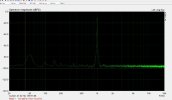
This measure is the AUX input to MAIN OUT using a 1 kHz sine wave and ARTA.

Measurement protocol​

Unit: McIntosh C28 Stereo Preamplifier
Input: AUX
Output: MAIN OUT
Test signal: 1 kHz sine wave
Measurement chain: C28 MAIN OUT → Cosmos Scaler → Focusrite Scarlett 2i2 4th Gen → ARTA
Focusrite input gain: Minimum
Measurement software: ARTA
Measurement: THD
Tone controls: Flat
Reference specification: McIntosh C28 specification is less than 0.1 % THD at rated output level.
Test conditionChannelARTA levelMeasured THDMcIntosh specResult
High volume setting, around 5 o’clockRightapprox. -10.0 dBFS0.036 %<0.1 %Pass, well within spec
High volume setting, around 5 o’clockLeftapprox. -9.9 dBFS0.037 %<0.1 %Pass, well within spec
Optimized measurement levelapprox. -6.7 dBFS0.017 %<0.1 %Excellent
Higher ADC input levelL/Rapprox. -2.6 dBFS0.039–0.040 %<0.1 %Pass
Normal listening level, around 11 o’clock, LF filter engagedL/RLower levelFunctional checkNot a formal spec testStable and quiet

The most important result for me is not only the low THD, but also the very close match between channels. At the high volume setting, the right channel measured 0.036 % THD and the left channel 0.037 % THD.

Very satisfying to see a classic McIntosh c28 preamp perform this well after all these years. And even more satisfying to finally stop measuring and start listening. :)

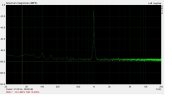
picture 2 LF filter on c28
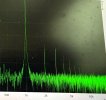
Picture 3 my favorite signature dominant H2 like a tube preamp.
 

Attachments

  • Normal.jpg
    Normal.jpg
    44.1 KB · Views: 16
  • LF_Filterl.jpg
    LF_Filterl.jpg
    40.7 KB · Views: 16
  • IMG_7645.jpeg
    IMG_7645.jpeg
    221.8 KB · Views: 15
Last edited:
In most 50 year old equipment, that would be amazing. In a properly restored Mac, it's to be expected.

Well done. :thumbsup:
Thank you!

That was exactly the goal — not to redesign the C28, but to restore it properly and let it perform as McIntosh intended.
 
I reworked the shield/drain wire connections and also did the grounding upgrade. Why not?

The unit is now super quiet on all inputs. The phono stage has some white noise when the volume is turned up high with no signal, but it is equal in both channels and not audible at normal listening levels, so it may simply be normal for this type of vintage phono stage.

I’ll probably just keep an eye on it for now.

I also enjoy the C-28 and agree with the phono section. I never had issues but would welcome any thoughts on what people may have done to reduce the noise or improve this circuit section.

On the grounding of the shielded cables, aren't they grounded on one end already? I never looked. Now you have my curiosity.
 
Yes, the shields may already be grounded at one end.
Soldering or replacing the old ferrule/crimp connections was specifically recommended by c_dk, the former McIntosh technician on AudioKarma, because these connections can deteriorate over time due to the mix of metals.
 

Attachments

  • IMG_7678.jpeg
    IMG_7678.jpeg
    63.7 KB · Views: 27
I am considering building a battery-powered test rig to select low-noise replacements for Q1 and Q2, replacement BC549C transistors, in the McIntosh C28 phono stage.

The plan is to measure transistor noise over 20–500 Hz, where low-frequency noise can be significant. This range is particularly relevant because the RIAA playback stage provides greater gain at low frequencies to restore the bass attenuated during record cutting. Consequently, the low-frequency 1/f noise generated by Q1 and Q2 is also amplified more strongly.

After selecting the quietest devices, I intend to curve-match the best pair at approximately the same operating current used in the C28.

I also plan to measure the original transistors so that they can be used as a reference before making any changes.

My aim is to determine whether the phono-stage noise floor can be reduced. Am I correct in assuming that Q1 and Q2, being the first active devices in each channel, have the greatest influence on the input-referred noise?

The attached picture shows the first part of the proposed test rig.

Any ideas or suggestions regarding the test method, measurement bandwidth, source resistance, operating conditions or matching criteria would be appreciated.
 

Attachments

  • IMG_7691.jpeg
    IMG_7691.jpeg
    171.8 KB · Views: 9
I am considering building a battery-powered test rig to select low-noise replacements for Q1 and Q2, replacement BC549C transistors, in the McIntosh C28 phono stage.

The plan is to measure transistor noise over 20–500 Hz, where low-frequency noise can be significant. This range is particularly relevant because the RIAA playback stage provides greater gain at low frequencies to restore the bass attenuated during record cutting. Consequently, the low-frequency 1/f noise generated by Q1 and Q2 is also amplified more strongly.

After selecting the quietest devices, I intend to curve-match the best pair at approximately the same operating current used in the C28.

I also plan to measure the original transistors so that they can be used as a reference before making any changes.

My aim is to determine whether the phono-stage noise floor can be reduced. Am I correct in assuming that Q1 and Q2, being the first active devices in each channel, have the greatest influence on the input-referred noise?

The attached picture shows the first part of the proposed test rig.

Any ideas or suggestions regarding the test method, measurement bandwidth, source resistance, operating conditions or matching criteria would be appreciated.

I welcome what you will find. I am busy this weekend in Indy at the racetrack but will have next week to review and chip in. I believe I have some of those on hand to monkey around with if needed. Hope you find out something good.
 
Thank you Jose — all input is welcome. I will probably start the project in a couple of weeks, depending on available time.

My first step will be to use a battery-powered signal tracer that I built for this type of troubleshooting. I intend to follow the noise through the phono stage and determine where the largest contribution appears to originate.

I will then make baseline noise and THD measurements with the C28 in its original condition. After selecting and matching several BC549C devices, I plan to replace only Q1 in one channel initially and use the other channel as a reference.

I will repeat the same noise and THD measurements to determine whether the replacement produces a measurable improvement. If there is no meaningful reduction in noise, I will leave the original circuit unchanged.

The intention is therefore not to replace the entire transistor chain, but to make one controlled and reversible change at the first active device and evaluate the result objectively
 
Thank you Jose — all input is welcome. I will probably start the project in a couple of weeks, depending on available time.

My first step will be to use a battery-powered signal tracer that I built for this type of troubleshooting. I intend to follow the noise through the phono stage and determine where the largest contribution appears to originate.

I will then make baseline noise and THD measurements with the C28 in its original condition. After selecting and matching several BC549C devices, I plan to replace only Q1 in one channel initially and use the other channel as a reference.

I will repeat the same noise and THD measurements to determine whether the replacement produces a measurable improvement. If there is no meaningful reduction in noise, I will leave the original circuit unchanged.

The intention is therefore not to replace the entire transistor chain, but to make one controlled and reversible change at the first active device and evaluate the result objectively

Were you able to start? I am ready to dig in.
 
Side question: What work did you do to the MC2105 and did you note where improvements were made? I have one in which I've replaced all capacitors, and input board transistors, and it is stock otherwise. My other amps sound clearer, and I wonder if to do a power transistor swap or pursue metal film resistors, etc.
 
Back
Top Bottom