• The move to the new server is done. There are some software and database maintenance updates in process. This has us passing the hat around to help out. We appreciate any donations. Seriously, even a dollar helps. The payment page may be found here - https://www.audiokarma.org/support.html

Mcintosh MC2300 Rebuild

Aiden T

Member
Im starting off my MC2300 rebuild this week. Picked this unit up for a steal about 3 years back. Im planning on a full restoration of this unit top to bottom. I will share progress through out. This unit came out of a local disco club here in Detroit when it closed its doors in the 90s. Used by the house dj there for many years who kept it in rough cosmetic shape but kept up on the internals serviced 3 times by McIntosh techs in its life. Just thought i would start off asking for any info from others who have worked on this unit, anything in specific i should watch out for? one of my questions to start off would be does anyone know the bias procedure for this unit? I know im along way out from that point but couldn't find any info about bias online. hope to hear from some mc2300 fans out there! more post to follow over the next few weeks. Cheers
 
Register to hide this ad
Lots of pictures of the unit in it's current state might let us see what has been done correctly or possibly short cutted to keep the show going on.

A proper bench test would also be in order to see where you are starting out.
 
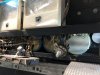
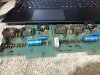
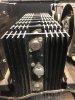
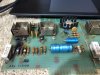
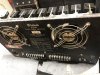
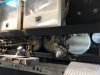
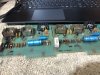
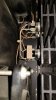
So far this is what we have it is a 3y unit. A up front bench test will not be possible both driver boards have burned up resistors. looks like 4 output transistors on the right channel have been swapped from the original and upon testing are blown. How do i go about looking for transistors for these units what is the best way to research them considering Mcintosh does not give much info on the parts in the service manual. looks like 1 of the large caps has been replaced i was planning on replacing all 4 anyways. What are some of the best replacements i can get for the output transistors? Thanks


akdfjjd.jpg adjsflsd.jpg 5665.jpg 787676.jpg kaksdfjl.jpg 5585.jpg akdfjjd.jpg 556.jpg adjsflsd.jpg 5665.jpg
 
You will have your work cut out or you.

Suprised there is no duct tape or bailing wire under the hood......

Have you searched the forum for the numerous MC2300 posts? Most all of your questions should have been already covered in them.
 
Congratulations, you have the standard blown-up driver boards. This is pretty much the only failure that the 2300 has with any frequency, otherwise very robust.

These boards were not updated (attachment) and should have been, likely the amplifier didn't see the inside of an authorized McIntosh dealer after sale or they would have been updated gratis. From what Chris and Patrice tell (very knowledgable), this is a failure mode that is prevented by proper maintenance and the updates of these boards.

AFAIK, parts are all available (except the 070-046 bias diode (a specially curve-trace screened MZ2361 diode). From what I understand it is also CRITICAL to replace all of the wirewound resistors on the heatsinks with EXACT PARTS or this failure is likely to re-occur.

Most likely you will want to replace all outputs (I buy extras so that I can match them closely), rebuild both driver boards per the attachment, test and/or replace all wirewounds with the correct (Patrice and Chris will explain) wirewound resistors (McIntosh is a good source for all of these parts last I knew).

This being the big-brother of the 2100/2105, reading about the driver boards there, ampliifers going into oscillation, etc. will give you even more information (different driver boards but same design).

Best of luck, where are you located?
 

Attachments

There is also a predriver, driver, and output transistor mod than Terry shared as inside info with me years ago. Made a lot of sense to me but since it was his trade secret it is his choice to reveal.

Jeffs79 and I have expanded on his trick to experiment with other driver transistors for the other all Szikali output stages.
 
Thanks for the info. I will have to get in touch with McIntosh about parts. For output transistors I have read that the mj15003 is a solid replacement for the original it was an older post about an mc2300 so just wondering if this is still considered a good choice (seems decent spec wise still). I have read through some older post not all of them yet. my next question would be is there any transistors on the pre driver board that benefit from an upgrade? Just trying to cover all corners while im in this beast might as well do it once and do it right. Also what is the best way to contact McIntosh phone or email? thanks
 
Last edited:
Under the NY shut down rules who know at this time, phone always worked before.

The 15003 has been the device of choice since the 80s, still is, but does have a smidge more gain than the originals so a little more sensitive to oscilation.

Central semi still makes the predrivers, the heat sinks for them have gone up in price astronomically, and as for the other semiconductors all have been subbed for multiple time over the decades.
 
Under the NY shut down rules who know at this time, phone always worked before. . .

According to their email newsletter sent Wednesday (May 27):

"We're BACK! The McIntosh factory is open again and we're all happy to be back building the audio gear you love! Stay safe everyone!"


I have the thermal switches on the heatsinks but they were bypassed so the fans would run with the power switch. It was in a rack in a Church its whole life. It was also modified to include XLR jacks. I can change the fans myself but reconnecting the circuit is beyond my ability. I really don't want to have to take the monster to a tech.
 
I have the thermal switches on the heatsinks but they were bypassed so the fans would run with the power switch. It was in a rack in a Church its whole life. It was also modified to include XLR jacks. I can change the fans myself but reconnecting the circuit is beyond my ability. I really don't want to have to take the monster to a tech.
I bet if you look closely you will see that someone just jumped the thermostatic switches on the heatsinks to make the fans run nonstop. It could be mere seconds to change that back.

Once you do that, replace the rubber bushings in the chassis for the fan mounts and they'll be nice and you'll likely never notice them.
 
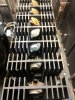
This is what they look like. It does appear to have been jumped.... Do you know how to "unjump" them?
 

Attachments

  • McInstosh2.jpg
    McInstosh2.jpg
    77.6 KB · Views: 111
  • McIntosh1.jpg
    McIntosh1.jpg
    92.6 KB · Views: 110
Did the '2300 come with thermostatic fan controls? I know the later industrial amps did.

One other thing about the fans, McMaster Carr has a good selection allowing you to specify voltage and diameter.

They also let you know the noise the fan would produce, which is helpful.

Additionally, unless you're running a shaker table or spot welder with it, the fans don't run much in a home environment. I've only seen mc-2600 fans run on the test bench. And if you do manage to get the fans to run, I'd bet the local bowling alley would call the cops to complain about the noise.

You won't hear the fans, that's for sure.

Mike
 
Did the '2300 come with thermostatic fan controls? I know the later industrial amps did.

One other thing about the fans, McMaster Carr has a good selection allowing you to specify voltage and diameter.

They also let you know the noise the fan would produce, which is helpful.

Additionally, unless you're running a shaker table or spot welder with it, the fans don't run much in a home environment. I've only seen mc-2600 fans run on the test bench. And if you do manage to get the fans to run, I'd bet the local bowling alley would call the cops to complain about the noise.

You won't hear the fans, that's for sure.

Mike
Yes. This change occurred in early 2Y s/n units. I used to add the circuit to all my 1Y amps. My MC2300 fans cycle a bit under normal use as both amps are rack mounted. I've never been able to kick on the fans on the 2500s or 2600s though!
 
Back
Top Bottom