

You are using an out of date browser. It may not display this or other websites correctly.
You should upgrade or use an alternative browser.
You should upgrade or use an alternative browser.
McIntosh MC275 MK VI Clone
- Thread starter CohibaJoe
- Start date


Pio1980
AK Member
The unity coupled output transformer circuit is what made McIntosh, the driver circuit supports it. There's room for variation there. The idea was that unity gain negative FB in the power output stage would negate the distortion generated in it, but that requires a superb OPT for stability. With no gain available from the beam tetrodes @ unity gain FB, all the gain has to come from the previous stages with special care for lowest achievable distortion.yeah, would be worth comparing the schematics. The Unity Coupled output stage is significantly different than basically anything else, and just a look at the output stage connections will tell you if its that vs something else entirely.
Last edited:
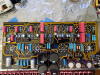
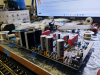

kyle
Super Member
I still have my Mc240 that I purchased in 1970 for $375.00, Worth $3,500.00 today, and it still meets the original factory specifications, never having been worked on.
BBRand.
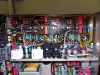
I seriously doubt this statement. This is a pic of the inside of an MC240 (not mine). That row of black caps and the power supply caps will almost certainly be out of spec.
I had MC60s and all of the similar components needed replacing. Mine started red plating before I had the out of spec caps and resistors replaced.
Dried out paper and oil or electrolytic caps and out of spec carbon comp resistors on any manufacturers 50 or 60 year old product is almost a fact of audio. You're living on the edge if you think that any amp from that long ago will have components that will last forever and be in spec.
I do admire the brand loyalty of McTypes. I can't think of another brand that has so many that will defend the honour of a company that will sell them a $1500 illuminated name plate in a component box or put LEDs around dull heater tubes so that you know
they're on and looking tubey.
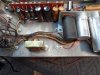

Agree...40-60yrs of not changing any internal part...I seriously doubt this statement. This is a pic of the inside of an MC240 (not mine). That row of black caps and the power supply caps will almost certainly be out of spec.
I had MC60s and all of the similar components needed replacing. Mine started red plating before I had the out of spec caps and resistors replaced.
Dried out paper and oil or electrolytic caps and out of spec carbon comp resistors on any manufacturers 50 or 60 year old product is almost a fact of audio. You're living on the edge if you think that any amp from that long ago will have components that will last forever and be in spec.
I do admire the brand loyalty of McTypes. I can't think of another brand that has so many that will defend the honor of a company that will sell them a $1500 illuminated name plate in a component box or put LEDs around dull heater tubes so that you know
they're on and looking tubey.
View attachment 2618348
 . Off all the audio forms I post too, "some" McTypes are a pompous crowd as to one reason I purchased this Amp to see a reaction. In other breaking news...I took out the Original Main Board and was looking closely
to the solder work. I found on the back side 5 not so much solder connections
 ...Since I had the board out, I reflowed ALL and replaced 2 Caps (Nichicon PW) as this board uses ELNA, Nichicon and Rubycon. Unit has been running 12hrs and KT88's B+ at 63V stable.
Last edited:

Bill Ferris
Lunatic Member
or put LEDs around dull heater tubes so that you know
they're on and looking tubey.
Those LED tube lights, are also used as a tube/circuit fault heath indicators and part of the self test when the amplifier is first powered up (at least they function that way on my (4) MC-275LEs), in case you were unaware.
Though in the 12 yrs. of ownership, I have never had any of them have a tube, or circuit failure, there was one time when I had a red LED light fault indication on the first small tube when powered up, instead of the green.
It turned out to be a indication of the amplifier`s stereo/mono, or unbalanced/balanced switch (I can`t remember which for sure) that had been inadvertently bumped from the configuration of the amp that I was using, by my housekeeper/caregiver when she was dusting it earlier in the day.
I suspected it might be something simple like that, and saw that a front panel switch had been bumped, so I powered down the amp, then put the switch back in the configuration for the amplifier`s normal for my system`s use, repowered back up the 275, and it self tested indicated all green LEDs and was happy again.
So there is a real benefit to the tube LED lights in the green running mode, which can be configured to not be engaged after the amplifier finishes it`s power up self test, via the configuration & use of the amplifier`s 12 v 3.5mm remote turn on trigger jacks.
I don`t feel the need to stare at any of my SS Mc. amp meters, or green glowing tube illumination while using them, unless I think there`s a problem with whatever system their used in, and at 67 yrs old, and a retired audio repair tech, I`m well past that visual stimuli needs when listening to my systems, though I know some folks wish to watch their audio equipment`s displays as a important part of their music system listening experience, and that`s fine with me.
Enjoy your music as you see fit.
Ciao
I had asked and used for Show....the relays will kick in on Tube Fault and Overvolts.Those LED tube lights, are also used as a tube/circuit fault heath indicators and part of the self test when the amplifier is first powered up (at least they function that way on my (4) MC-275LEs), in case you were unaware.
Though in the 12 yrs. of ownership, I have never had any of them have a tube, or circuit failure, there was one time when I had a red LED light fault indication on the first small tube when powered up, instead of the green.
It turned out to be a indication of the amplifier`s stereo/mono, or unbalanced/balanced switch (I can`t remember which for sure) that had been inadvertently bumped from the configuration of the amp that I was using, by my housekeeper/caregiver when she was dusting it earlier in the day.
I suspected it might be something simple like that, and saw that a front panel switch had been bumped, so I powered down the amp, then put the switch back in the configuration for the amplifier`s normal for my system`s use, repowered back up the 275, and it self tested indicated all green LEDs and was happy again.
So there is a real benefit to the tube LED lights in the green running mode, which can be configured to not be engaged after the amplifier finishes it`s power up self test, via the configuration & use of the amplifier`s 12 v 3.5mm remote turn on trigger jacks.
I don`t feel the need to stare at any of my SS Mc. amp meters, or green glowing tube illumination while using them, unless I think there`s a problem with whatever system their used in, and at 67 yrs old, and a retired audio repair tech, I`m well past that visual stimuli needs when listening to my systems, though I know some folks wish to watch their audio equipment`s displays as a important part of their music system listening experience, and that`s fine with me.
Enjoy your music as you see fit.
Ciao
Bill Ferris
Lunatic Member

You are correct!!!!! Quick push-on connectors (20mins to swap out boards). I changed out the caps to Nichicon as they used in that board SunCon. Main Caps to EPCOS, not to say the Rubycon are bad, but they did not look right to me.Cohiba, are you changing out the caps on the new board with the intention of then putting the re-capped board in your amp? It appears it may literally be plug-and-play as in all the connections to the board are push-on?
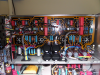
The New/Test Board has been running for 55hrs. I asked the Tech if this was a newer board and indeed it was updated. The Right 2 Main Caps was 580mf now at 680uf (left bank at 680uf) and some Piggyback films that had been soldiered on 4 resisters are now
added to the circuit board. At least they update the circuit board when changes are made. I am still pondering on using the Mundorf EVO/Aluminum Oil. It's only 15mins to remove the board .
.
added to the circuit board. At least they update the circuit board when changes are made. I am still pondering on using the Mundorf EVO/Aluminum Oil. It's only 15mins to remove the board
. 

Patents have a limited life. Trademarks can live forever (like, it seems, Coca-Cola, Cracker Jack, or Skee-Ball). Once a patent expires, what it protected becomes open to the market. It is generally believed that contributes to the advancement of science and related arts. But there is only one McIntosh. The goodwill that has been built in the McIntosh brand flows only to McIntosh. Lots of guitar amp makers have clone models of Fender classic designs, even identifying them by their Fender model numbers. But they can't be sold using Fender trademarks. This amp seems to fall nicely into that model.
I contacted the factory Tech... going thru the store and here is the response on replacing the RIFA with Mundorf.Where in the circuit are those two caps?
" The principle of these two capacitors is the same. Because we didn't test the Mundorf Mcap EVO oil range when customizing.
So, there is no guarantee that replacing this capacitor will improve the sound quality. If replaced. It is better to find the existing parameters guaranteed to be exactly the same.
We do not recommend replacing the electrolytic capacitors we use for the filter of the tube amplifier. The one in your photo is the aluminum foil divider capacitor as our line has been tested."

trainbuftony
Electron Herder
Sounds like the ancient proverb "ain't broke, don't fix it" made it through the translator intact. Now to heed the advice, well that's harder to do...
Sounds like the ancient proverb "ain't broke, don't fix it" made it through the translator intact. Now to heed the advice, well that's harder to do...

I agree...These are a matched paired so not worried on unbalanced channels and I can also put back the RIFA's..I guess If I was going to keep the amplifier long term I might think about swapping them out for film caps. That's two less electrolytic caps to have to replace 30+ years from now.
 . Will change these tonight with a New Set of 12AX7, 12AT7 tubes.
Installed and working, now to put around 100hrs for a sound check. From using Mundorf's we are looking 150hrs+ with the WIMA around 200hrs. Back with Genalex KT-88's, HP 12AT7 and Orsefon 12AX7. Ordered Genalex 12AX7 (Upscale Audio).I guess If I was going to keep the amplifier long term I might think about swapping them out for film caps. That's two less electrolytic caps to have to replace 30+ years from now.

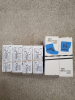
70hrs and the Films are Opening up. Just received New tubes (Tung-Sol) from Upscale Audio. Tung-Sol 2AX7/ECC803-S, Brimar CV4024/12AT7 and Genalex KT88 will be
used after 100hrs of Burn-in. Total of 200hrs (100hrs on Tubes) for overall sound check for next week.
used after 100hrs of Burn-in. Total of 200hrs (100hrs on Tubes) for overall sound check for next week.