ThanksSoundsAlike, I bet one of these procedures works.The arm has a few ways to adjust the height of the lift. One thing you got to mindful of is the dimensions of your cartridge/head shell... When I owned this table I noticed that switching head shells and cartridges would force me to mess with the tonearm lift height -- once you get it working though I doubt you'll have to mess with the heights any more.
There's a tiny screw on the tonearm wand, if memory serves me correct. The screw on the wand goes all the way through the wand and should be covered in a rubber material (it tends to disintegrate over time so it may just be bare metal) -- that's the part that actually his the crescent shaped tonearm lift paddle. I believe you can adjust the tonearm lift position this way.
OR -- you can move the tonearm lifter rod up and down slightly. This is a horizontally orientated screw near the tonearm lift mechanism.
OR -- you can adjust the tonearm height via the allen wrench port near the base of the tonearm assembly.
Hope this helps.


You are using an out of date browser. It may not display this or other websites correctly.
You should upgrade or use an alternative browser.
You should upgrade or use an alternative browser.
Micro Seiki DD-40 Tungsten Wire
- Thread starter tubed
- Start date
Yes, it'll probably involve the tying of knots.You may have to custom fabricate or adopt some other item to suit.....

Balifly
Listening
Yes, it'll probably involve the tying of knots.
May be the smallest version this sort of clips would work.

http://www.robitronic.com/en/killerbody-miscellaneous-accessories.html
Man, those may work if thin enough to feed through set hole and arm chamber!May be the smallest version this sort of clips would work.
http://www.robitronic.com/en/killerbody-miscellaneous-accessories.html
The longest might be best, easier to guide around levers and into holes.
Thanks, Bali

SoundsAlike
Super Member
ThanksSoundsAlike, I bet one of these procedures works.
Btw the tungsten wire doesn't affect the tracking force. It's the anti-skate. Note the spherical dot and the red elliptical dot --- in my opinion you don't really need anti-skate unless you're having some tonearm issues like it skating across the record surface or if the inner grooves sound markedly different.
They probably used tungsten string because of its durability -- micro filament string would probably work (fishing wire)
Thanks, that's interesting and good to know.Btw the tungsten wire doesn't affect the tracking force. It's the anti-skate. Note the spherical dot and the red elliptical dot --- in my opinion you don't really need anti-skate unless you're having some tonearm issues like it skating across the record surface or if the inner grooves sound markedly different.
They probably used tungsten string because of its durability -- micro filament string would probably work (fishing wire)
As a matter of fact I had backed the anti skate dial all the back because it seemed to track the grooves better and perceived sound seemed improved!
Still checking the lift, would it be unwise to put a drop or two of some lubricant or even Deoxit on the rising pole(lifter plate shaft) piece?
Last edited:
SoundsAlike
Super Member
Thanks, that's interesting and good to know.
As a matter of fact I had backed the anti skate dial all the back because it seemed to track the grooves better and perceived sound seemed improved!
Still checking the lift, would it be unwise to put a drop or two of some lubricant or even Deoxit on the rising pole piece?
No lubricant is necessary on that rod. Is the tonearm not dropping slowly? As far as dropping the dial all the way back you mean with the wire attached you dropped it to below "1"?
Pardon me, not the tracking force dial, I backed off the "anti-skate knob".No lubricant is necessary on that rod. Is the tonearm not dropping slowly? As far as dropping the dial all the way back you mean with the wire attached you dropped it to below "1"?
I left the tracking dial set to 1.5 grams.
As to the cue lift, it is sporadic and lifts/drops very little when raised or lowered.
SoundsAlike
Super Member
Pardon me, not the tracking force dial, I backed off the "anti-skate knob".
I left the tracking dial set to 1.5 grams.
As to the cue lift, it is sporadic and lifts/drops very little when dropped or lowered.
If I recall correctly it doesn't travel very far, when you lift the tonearm to the full UP position it should reveal a little set screw that holds the lifting rod we discussed earlier. If it's exposing that set screw when the arm is raised AND it is hiding the set screw when the arm is lowered then it's traveling its full path. It should be smooth and slow.
I'm 99% confident the flat head screw just ahead of the pivot & on top of the tonearm wand is what controls the arm lift height.
The cue arm doesn't seem to affect an up or down action of the tonearm.
I can manually push the tonearm lower while in the up position but falls slowly back down even in the "up" position.
If I push the tonearm downward while the cue arm is in the "down" position and when I raise the cue arm to "up" the lifting rod will raise the arm ?
?
What is the "Lock Arm" function for, I thought it might just be for traveling/shipping?
I can manually push the tonearm lower while in the up position but falls slowly back down even in the "up" position.
If I push the tonearm downward while the cue arm is in the "down" position and when I raise the cue arm to "up" the lifting rod will raise the arm
?What is the "Lock Arm" function for, I thought it might just be for traveling/shipping?
Well I think I found out what the Arm Lock is for and got the arm cue lift to work.
In the "unlocked" position I manually pushed the arm down to where the needle was about 1cm. above the record.
Then simply "locked" the arm.
I guess at the height the arm was the interior spring was fully "sprung", lowering the arm put spring back into the spring?
In the "unlocked" position I manually pushed the arm down to where the needle was about 1cm. above the record.
Then simply "locked" the arm.
I guess at the height the arm was the interior spring was fully "sprung", lowering the arm put spring back into the spring?

Stanton681EEES
Addicted Member
HERE IS A LINK TO VINYLENGINE WITH LOTS OF INFO ON YOUR ARM.Well I think I found out what the Arm Lock is for and got the arm cue lift to work.
In the "unlocked" position I manually pushed the arm down to where the needle was about 1cm. above the record.
Then simply "locked" the arm.
I guess at the height the arm was the interior spring was fully "sprung", lowering the arm put spring back into the spring?
http://www.vinylengine.com/library/micro-seiki/ma-505.shtml
Happy reading
Thanks, Stanton.HERE IS A LINK TO VINYLENGINE WITH LOTS OF INFO ON YOUR ARM.
http://www.vinylengine.com/library/micro-seiki/ma-505.shtml
Happy reading
I thought the first reviewer was critiquing his cartridge but he was actually listening to the turntable/arm.
I thought it was interesting that he referred to it as dark sounding but with detail.
I find it not to be dark but warmer sounding as the Sumiko Blue Point cartridge I'm using on this DD-40 has a warmer richer sound than when it was playing on my other turntable.
This is really the first time I've noticed this great a significant improvement by way of the turntable as opposed to the cartridge.
Last edited:

Ronito6
Super Member
My camera doesn't zoom in that close
However, here's some guys DD-7(DD-40)
That was mine. Dearly miss that TT .

bimasta
Addicted Member
I don't know it this has been mentioned already — if so, ignore. If the length of the new wire (connector to connector) isn't identical, the markings on the adjustment knob will no longer be accurate. They'll still apply the requisite force, but the calibration will be off.

mckennovitch
New Member
similar problem: I'd like to replace the balance wire.
can anyone advise as to what the length and thickness of such a wire should be?
as has been established, the material is tungsten. The manual mentions that the wire has been tested up to 4.5 Kg
I'll probably look for some 0.2mm wire, just because, but it would be nice to know what it's supposed to be : )
can anyone advise as to what the length and thickness of such a wire should be?
as has been established, the material is tungsten. The manual mentions that the wire has been tested up to 4.5 Kg
I'll probably look for some 0.2mm wire, just because, but it would be nice to know what it's supposed to be : )
mckennovitch
New Member
k, so i pulled the wire out of my dd-35,
and that measures 77mm long.
i'm not sure of the thickness.
0.2mm would be way too thick.
.18mm would be too thick because i tried that.
anyone have some info or ideas on that point?
and that measures 77mm long.
i'm not sure of the thickness.
0.2mm would be way too thick.
.18mm would be too thick because i tried that.
anyone have some info or ideas on that point?
Balifly
Listening
similar problem: I'd like to replace the balance wire.
can anyone advise as to what the length and thickness of such a wire should be?
as has been established, the material is tungsten. The manual mentions that the wire has been tested up to 4.5 Kg
I'll probably look for some 0.2mm wire, just because, but it would be nice to know what it's supposed to be : )
Not sure what you mean by "balance wire" ?
Can you post some pictures of the item in question (location in particular)?
Here is a link to some 0.1 mm diameter fine tungsten wire.
http://dohiku.eu/index.php?id_category=167&controller=category
Last edited:
mckennovitch
New Member
that's a really handy link : )
thanks.
maybe 0.1mm is a bit thin. i'm not sure.
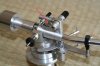
thanks.
maybe 0.1mm is a bit thin. i'm not sure.
Balifly
Listening
that's a really handy link : )
thanks.
0.2mm would be way too thick.
.18mm would be too thick because i tried that.
maybe 0.1mm is a bit thin. i'm not sure.
What is the thickness of the original tungsten wire?