• The move to the new server is done. There are some software and database maintenance updates in process. This has us passing the hat around to help out. We appreciate any donations. Seriously, even a dollar helps. The payment page may be found here - https://www.audiokarma.org/support.html

Missing Binding Post in Vintage Dahlquist

DQ!

New Member
So I recently purchased a pair of Dahlquist DQM-9s for a screamin' deal. They're a bit of a project but I don't mind.

I wanted to ask about this missing binding post. I have no hands-on experience with speaker restoration, but I'm doing my research and asking for help to make sure I do this correctly. I called the Regnar/Dahlquist support line and I'm waiting on them to call me back. All I was able to find on the website were cap upgrades, grill cloth replacements, etc.

My main question is - are binding posts like this very hard to find? I.E. do I need to look specifically for DQM-9 binding posts, or if I take the existing one out and bring it to my local electronic parts store is there a chance they'll have something that fits?

Also, is this binding post broken or missing? I was under the impression that it was just missing but after looking at some potential replacements online it looks like it may actually be snapped at the joint in the photo.

Any help or advice would be appreciated.
 

Attachments

  • image.jpeg
    image.jpeg
    72.4 KB · Views: 40
Register to hide this ad
Compliments on good pic and straightforward question on basics. Your research should come up with "5-way binding posts" which yours appear to be judging from the hole in the end of the remaining one. Here's one reference with illustration; it also references wikipedia article/info:
ttps://www.avsforum.com/threads/5-way-binding-posts-whats-the-fifth-way.1435188/
As for your questions:
  1. No, binding posts are not hard to find but I suggest you get a name brand like Pamona Electronics (see Digikey), not cheap (around $11) as opposed to some cheap import; you want top quality for your restore, cheap junk is more likely to break. Also, IDK but my guess is that your missing one was red. Yes, I agree, it looks like the missing one snapped off; they aren't exactly rugged especially when they stick out. So be careful when moving and placing the speaker and obviously don't let anything hit it.
  2. Can you find one in a local store? Depends on what they stock, but I doubt it. Digikey, Mouser, and other established reputable suppliers are preferable and have a full selection.
  3. Broken or missing? Snapped off from side impact, I'd say, so definitely broken. If Dahlquist source has exact replacement you're in luck but if not, see above.
So far as restoration goes, replacing that binding post looks relatively easy since it appears you just remove four screws and pull the cover plate out from the back of the cabinet, being careful not to damage the wires; high-end speakers might have gasket or other way of sealing here. More challenging would be recapping xovers, refoaming or replacing drivers.
Good luck and have fun!.
 
I’d rip that crossover outta the box and get a look at the other side. Order some Pomona Dual Binding Posts since they are spaced at 3/4” apart. A dual banana plug will fit nicely. Use quality like Pomona, not Chinese and no need for shiny yellow metal they add to all kinds of audio stuff.
 
  • Like
Reactions: DQ!
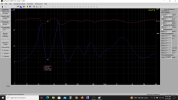
I have a pair of DQM-9's. They are really good IMO. Decent sensitivity at a rated 95dB and great extension at both ends. Those Magnat drivers are good. I use mine mainly with tube amps. The impedance curve isn't too wild, several peaks but they aren't too high, and the impedance phase is very flat around the zero degrees line so pretty resistive. Your serial number is earlier than mine so I can't swear the crossover is the same but it likely is.
 

Attachments

  • DQM-9 impedance sweep.png
    DQM-9 impedance sweep.png
    103.3 KB · Views: 6
  • Like
Reactions: DQ!
So I recently purchased a pair of Dahlquist DQM-9s for a screamin' deal. They're a bit of a project but I don't mind.

I wanted to ask about this missing binding post. I have no hands-on experience with speaker restoration, but I'm doing my research and asking for help to make sure I do this correctly. I called the Regnar/Dahlquist support line and I'm waiting on them to call me back. All I was able to find on the website were cap upgrades, grill cloth replacements, etc.

My main question is - are binding posts like this very hard to find? I.E. do I need to look specifically for DQM-9 binding posts, or if I take the existing one out and bring it to my local electronic parts store is there a chance they'll have something that fits?

Also, is this binding post broken or missing? I was under the impression that it was just missing but after looking at some potential replacements online it looks like it may actually be snapped at the joint in the photo.

Any help or advice would be appreciated.
Some options:
 
  • Like
Reactions: DQ!
Pull the crossover and look at how the posts attach. If they are soldered to a circuit board that may constrain how you proceed. Also check the binding post mounting hole diameter.
 
  • Like
Reactions: DQ!
Compliments on good pic and straightforward question on basics. Your research should come up with "5-way binding posts" which yours appear to be judging from the hole in the end of the remaining one. Here's one reference with illustration; it also references wikipedia article/info:
ttps://www.avsforum.com/threads/5-way-binding-posts-whats-the-fifth-way.1435188/
As for your questions:
  1. No, binding posts are not hard to find but I suggest you get a name brand like Pamona Electronics (see Digikey), not cheap (around $11) as opposed to some cheap import; you want top quality for your restore, cheap junk is more likely to break. Also, IDK but my guess is that your missing one was red. Yes, I agree, it looks like the missing one snapped off; they aren't exactly rugged especially when they stick out. So be careful when moving and placing the speaker and obviously don't let anything hit it.
  2. Can you find one in a local store? Depends on what they stock, but I doubt it. Digikey, Mouser, and other established reputable suppliers are preferable and have a full selection.
  3. Broken or missing? Snapped off from side impact, I'd say, so definitely broken. If Dahlquist source has exact replacement you're in luck but if not, see above.
So far as restoration goes, replacing that binding post looks relatively easy since it appears you just remove four screws and pull the cover plate out from the back of the cabinet, being careful not to damage the wires; high-end speakers might have gasket or other way of sealing here. More challenging would be recapping xovers, refoaming or replacing drivers.
Good luck and have fun!.
Thanks so much for your detailed reply. I took off the cover plate like you said and looks like yes it is snapped off (the post in question is the one in this image attached to the blue wire). So, looks like these won't require any soldering.

Could I ask you to talk a little more about what makes a high quality binding post? All I could find that matters in terms of sound quality were the same arguments for speaker wiring: conductive material -> high quality. If I can find something gold plated locally that fits the bill I'm probably fine, right? I'm not too worried about something like sturdiness as these are my only hi-fi speakers and I don't plan on moving them around much.
 

Attachments

  • unnamed (3).jpg
    unnamed (3).jpg
    46.6 KB · Views: 13
I’d rip that crossover outta the box and get a look at the other side. Order some Pomona Dual Binding Posts since they are spaced at 3/4” apart. A dual banana plug will fit nicely. Use quality like Pomona, not Chinese and no need for shiny yellow metal they add to all kinds of audio stuff.
Thanks for the reply. As I asked above, would you mind talking about what makes some binding posts better than others?
 
I have a pair of DQM-9's. They are really good IMO. Decent sensitivity at a rated 95dB and great extension at both ends. Those Magnat drivers are good. I use mine mainly with tube amps. The impedance curve isn't too wild, several peaks but they aren't too high, and the impedance phase is very flat around the zero degrees line so pretty resistive. Your serial number is earlier than mine so I can't swear the crossover is the same but it likely is.
Sincerely appreciate your input. Would you mind giving me a little background as to what I'm looking that with that graph? The extent of my knowledge is that impedance changes depending on frequency, and that voltage/current mismatches at lower frequencies can lower voltage output, which in turn diminishes sound at said frequency. Could be wrong on that, not super confident, also just haven't seen an impedance sweep before.
 
Thanks so much for your detailed reply. I took off the cover plate like you said and looks like yes it is snapped off (the post in question is the one in this image attached to the blue wire). So, looks like these won't require any soldering.

Could I ask you to talk a little more about what makes a high quality binding post? All I could find that matters in terms of sound quality were the same arguments for speaker wiring: conductive material -> high quality. If I can find something gold plated locally that fits the bill I'm probably fine, right? I'm not too worried about something like sturdiness as these are my only hi-fi speakers and I don't plan on moving them around much.
No. Plenty of junk “gold plated” binding posts. Look at the ones I linked.

If you’re using spades or banana plugs, at that point it’s just what they look like and feel like - and that’s your opinion.
 
Thanks so much for your detailed reply. I took off the cover plate like you said and looks like yes it is snapped off (the post in question is the one in this image attached to the blue wire). So, looks like these won't require any soldering.

Could I ask you to talk a little more about what makes a high quality binding post? All I could find that matters in terms of sound quality were the same arguments for speaker wiring: conductive material -> high quality. If I can find something gold plated locally that fits the bill I'm probably fine, right? I'm not too worried about something like sturdiness as these are my only hi-fi speakers and I don't plan on moving them around much.
Man, when AudioKarmites get down, they really get down. But the deeper we go, the more we learn.
Short answer: a) Materials and b) Workmanship.
Long answer: So, about quality, first consider the materials involved:
Metal--Hold a magnet by post itself and the mounting hardware (nut and washer); obviously if it sticks it's ferrous (some sort of alloyed steel). if not then probably plated brass. Nuts and washers are usually ferrous but sometimes brass in RF applications (no RF in audio like here though). Steel will be stronger but unless stainless s/b plated to prevent rust. Also note the threads and how tight/loose the mounting nut and the "knob" screw on; cheap junk most likely not as precise tight a fit. Also, a quality knob would have a metal threaded insert compared to a cheap one with the threads just part of the plastic itself.
Plastic--In the good old days, before all types of polymers, there was Bakelite (hey, look it up), tough buy brittle. Nowadays plastic parts vary and cheap, low-cost junk is more likely to crack and not hold up over time whereas more expensive plastic (e.g., Delrin) will far outlast it and not break. That's one basic factor in low-cost Chinese import stuff that distinguishes quality from a POS in practically all goods, big-box tools being a good example, as quality plastic is stronger and will not quickly become brittle and break; this is true today with electronic components like connectors. For example, why are some test leads two dollars and quality ones twenty; you can actually feel the difference in use.
**Now, what earthly effect would this have on sound quality in speaker binding post applications? I'd say none so long as there's bare metal-to-metal conductivity from wire to post (whichever 5-way connection you use)--given a pure signal from source to your ears. Kinda like "oxygen-free" copper IMHO, big difference will be marketing hype and price.
You get what you pay for. Manufacturers who sell low-priced goods, especially imports, are experts at cutting corners to save a few cents and produce junk that does not last, then you have to buy a new one . . .
 
  • Like
Reactions: DQ!
Sincerely appreciate your input. Would you mind giving me a little background as to what I'm looking that with that graph? The extent of my knowledge is that impedance changes depending on frequency, and that voltage/current mismatches at lower frequencies can lower voltage output, which in turn diminishes sound at said frequency. Could be wrong on that, not super confident, also just haven't seen an impedance sweep before.
The blue trace is the impedance magnitude in ohms. You can see that it has a double peak in the low frequency which is typical of ported speakers. The higher peaks are undoubtedly cause by the crossover but they don't get too high in magnitude. The red trace is the phase angle of the impedance and you can see that it stays pretty close to the zero degrees line which means it is a nearly pure resistance that the amplifier will see. These are a fairly easy load for a tube amp which I use.

I think you will need to pull one of the binding post plates to see what they look like on the inside and to measure the mounting hole diameter. You might be able to find new posts that will fit without drilling out the holes.
John
 
I have used these on some amps and like them very well. My choice was the tin plated version but the tellurium copper would be deluxe.


Pomona also makes a nice 3 point mounting base which I use on my amps for 4 and 8 ohm connections. I put the black/common post on the middle and then I can use a dual banana plug in either direction.
 
  • Like
Reactions: DQ!
Man, when AudioKarmites get down, they really get down. But the deeper we go, the more we learn.
Short answer: a) Materials and b) Workmanship.
Long answer: So, about quality, first consider the materials involved:
Metal--Hold a magnet by post itself and the mounting hardware (nut and washer); obviously if it sticks it's ferrous (some sort of alloyed steel). if not then probably plated brass. Nuts and washers are usually ferrous but sometimes brass in RF applications (no RF in audio like here though). Steel will be stronger but unless stainless s/b plated to prevent rust. Also note the threads and how tight/loose the mounting nut and the "knob" screw on; cheap junk most likely not as precise tight a fit. Also, a quality knob would have a metal threaded insert compared to a cheap one with the threads just part of the plastic itself.
Plastic--In the good old days, before all types of polymers, there was Bakelite (hey, look it up), tough buy brittle. Nowadays plastic parts vary and cheap, low-cost junk is more likely to crack and not hold up over time whereas more expensive plastic (e.g., Delrin) will far outlast it and not break. That's one basic factor in low-cost Chinese import stuff that distinguishes quality from a POS in practically all goods, big-box tools being a good example, as quality plastic is stronger and will not quickly become brittle and break; this is true today with electronic components like connectors. For example, why are some test leads two dollars and quality ones twenty; you can actually feel the difference in use.
**Now, what earthly effect would this have on sound quality in speaker binding post applications? I'd say none so long as there's bare metal-to-metal conductivity from wire to post (whichever 5-way connection you use)--given a pure signal from source to your ears. Kinda like "oxygen-free" copper IMHO, big difference will be marketing hype and price.
You get what you pay for. Manufacturers who sell low-priced goods, especially imports, are experts at cutting corners to save a few cents and produce junk that does not last, then you have to buy a new one . . .
This is exactly the kind of answer I was looking for, love getting into the nitty gritty and actually learning something, thanks again so much for your time.
 
The blue trace is the impedance magnitude in ohms. You can see that it has a double peak in the low frequency which is typical of ported speakers. The higher peaks are undoubtedly cause by the crossover but they don't get too high in magnitude. The red trace is the phase angle of the impedance and you can see that it stays pretty close to the zero degrees line which means it is a nearly pure resistance that the amplifier will see. These are a fairly easy load for a tube amp which I use.

I think you will need to pull one of the binding post plates to see what they look like on the inside and to measure the mounting hole diameter. You might be able to find new posts that will fit without drilling out the holes.
John
Thank you for the note about the diameter. I was able to pull the broken one out, removed the wiring o-ring, and I plan on taking it in to my local audio electronics store. Would be a shame if I got a replacement too large because I don't have any kind of drill on hand.

In reference to the impedance peaks in the upper register, would upgrading the crossover caps help significantly? I forgot to ask the seller when I saw him in person, but given the condition of these guys (particularly the dust) I wouldn't be surprised if these caps were 40+ years old and never touched. I planned on opening them up and addressing that in the future at some point, just my primary concern at the moment is the binding posts and woofer surrounds so I can actually get them playing music.

For reference, I'm using a Rockville Blutube 70w hybrid amp. Not optimal, I know, but it was a gift, it works, and I'm not exactly in the financial position to make an upgrade.
 
Unless the old caps are electrolytic, I would probably leave them. I haven't opened my 9's and they sound really good. Even and detailed from top to bottom.

Be careful of super cheap binding posts as they may be steel in the core. You can check with a magnet. Not a good conductor.
 
  • Like
Reactions: DQ!
I suggest you get a name brand
A bit more on the other side of the dual binding posts, the dual banana plug. I got some not Pomona ones and they are absolute JUNK!

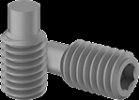
The grub screws only has a few threads in the plug to grab and the screw itself was an extended tip type:
Extended tip grub screws.jpg
I one were to use a decent sized speaker cable the extended tip prevents the threads from catching in the plug so no connection.
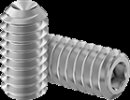
Pomona has maybe a cupped grub screw with threads to the end allowing it to grab and hold.
Cup point grub screw.jpg

A second problem with the crappy dual banana plugs is the loss of the banana 'peel' on the plug. I have one that has just a thin pin sticking out which used to be covered with the peel that allowed it to fit and hold in a binding post. Absolute junk this off brand unit was. If Pomona is good enough from most professional test equipment it is good enough for my stereo system.

pics courtesy of McMasterCarr: https://www.mcmaster.com/products/grub-screws/
 
  • Like
Reactions: DQ!
Back
Top Bottom