• The move to the new server is done. There are some software and database maintenance updates in process. This has us passing the hat around to help out. We appreciate any donations. Seriously, even a dollar helps. The payment page may be found here - https://www.audiokarma.org/support.html

Modifying my SAE P102 so it has remote control capability

. Maybe someday I’ll sell it all and grab an ML. Since you have an a502 as well, I’m curious on how drastic of an improvement it is over the sae.

At this point I am biased because of the amount of time & effort I have in my ML amp but I will try to be fair. I have a modified A202 that can hold its own! I also have a pair of 502's. They are all decent & capable amps. But you must remember the 02 series was trying to meet a price point. The ML has military grade components at every turn. The price point for ML is "If you have to ask you can't afford it". Don't get me wrong. I am not a snob when it comes to this. I will admit I would never be able to afford new ML gear. My ML was purchased in very bad condition for a low price. It had a vaporized current gain board (see current concerns below), and main caps that released black syrupy goo all over the place. It was a lengthy and costly project to get it back to working condition. I was fortunate in that I had made a connection with an audio enthusiast in another country. He hooked me up with information about a place that was raided by Police. They just happened to have some spare ML boards that were going to auction as a result. Modifying my ML to be unique and the worlds only polished ML was quite labor intensive too.

ML WILL NOT SELL ANY PARTS FOR ANY OF THEIR GEAR TO THE PUBLIC. THEY ONLY SELL PARTS TO 3 AUTHORIZED SERVICE CENTERS. THE SERVICE CENTERS WILL NOT EVEN LISTEN TO REQUESTS FOR PARTS. YOU EITHER SEND THE ENTIRE UNIT IN OR NOTHING. THE TYPICAL SERVICE CHARGE IS USUALLY AROUND $1000 OR MORE. CRATING & SHIPPING A 150 LB AMP IS NOT EASY AND NOT CHEAP. THIS IS ONE REASON I WOULD NOT BUY NEW GEAR FROM THEM, EVEN IF I COULD AFFORD IT. WOULD YOU BUY A CAR THAT YOU COULDN'T BUY SPARE LIGHT BULBS OR BRAKE PADS FOR?

I want you to open your refrigerator and look at a can of of Coca Cola. That is the size of the main caps in the ML. There are four of those Coke cans sitting in there for direct consumption by the output stages. It doesn't stop there. There are also four more smaller (but still large for an amp) caps for feeding the various other stages, which are biased A class. That is all fed by three toroid transformers. Each channel gets its own huge transformer and the logic circuits get a dedicated small toroid. The large transformers are housed in a metal isolation tunnel in the middle if the amp. The transformers are mounted vertically to save space. On power-up the in-rush current is so high that no typical outlet could support it. The initial violent in-rush is temporarily routed through special resistors that can flash off the excess current as heat for about 5 seconds, feeding the caps a dosed amount of current until they are full. This saves the life of the caps too, preventing a slam of inbound electrons.

The ML will perform better because it just plain can. It has so much reserve that it will never reach a point of output stage starvation. The amp will consume 325 watts of AC power just standing still with no audio coming out of it. If you are driving an amp like this that hard something else is going to give. The ML will just go until your speakers give up the ghost. If you need to go that loud then your primary focus is not fidelity anymore. You might as well get a stack of industrial Crown amps and a speaker array hung from your ceiling. ;)

The ML does well in the area I like to call "dark-lows". I think most would call this the thickness of the sound. It faithfully brings those lower, often diminished, frequencies into my soundscape. The SAE can do it as well but may need coaxing with a few db of EQ in the "feel-not-heard" frequency bands. The big difference is the ML won't break a sweat wasting current on these power hungry regions. Forgive my non-scientific descriptions.

The transformer in the attached photo is not from an ML amp, so displayed voltages on label may not be correct. I never thought to remove those hunks copper for a photo. I got this stock image from Google. I only show it for size & orientation reference.
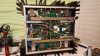
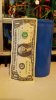
20170505_212533.jpg 20170505_212844.jpg Transformer.png
 
Last edited:
Let me see if I can help :)

1) I have not ordered from Fuzzy Noodle in a while. The chip shortages have been hard on small developers. I literally waited a year for certain semiconductors. I would try them via e-mail again. If they don't respond try sourcing something similar with similar specs.
2) I drilled a hole in the plastic black bezel and used hot glue on the back side where you cannot see. Be careful with hot glue. It can deform plastics. I may have used epoxy. I cannot remember. It's been a while. I highly suggest putting shrink tube on IR sensor leads. Glue can have parasitic effects if in contact with exposed wiring.
3) I absolutely used brass stand-offs. I had a box of assorted stand-offs I bought from Amazon. I used standoffs for the regulator board too. You can see the black screws for the stand-off in one of the photos.
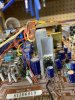
4) I grabbed it from the stand-by voltage circuit. If memory serves there should be a linear voltage regulator (ie like 7805 or 7812) mounted to a heat sink. Most linear regulators have a smoothing cap nearby. You could grab it from there. It is a source of power that never turns off. Use the schematics for the power supply section or just probe with meter. I don't have any other photos.
4) That wire was simply a console cable for a Cisco Router, but chopped up. The conductors are small and the wire is flexible. The wire does not carry any real current so it can be thin. Power wires should be a little thicker.

I would caution about that relay board if it does not have temporary contact closure. There is no guarantee with IR signals. If you have to press once for ON and then press again for OFF your board may never see and OFFG request. Infrared is "best-effort" delivery. If you are controlling volume, that relay could close and stay that way, having your pre-amp on a runaway Vol-Up request. I don't know about your amp but my SAE preamp is connected to a Mark Levinson 332 amplifier and it will immediately vaporize a speaker if not treated with respect!

Sorry it took so long to respond. I am working on a lot of stuff!


Thanks so much for the detail on that! That’s one intense amp. Definitely will respond a bit more about amps a bit when I have some more time!
Just wanted to touch base as I’m installing the relay board now.
I’m guessing this is the power you meant. And also I’m assuming you mean you’re grabbing the power from the + side of this cap (c712) right in front of the 7805. And then grab ground from the transistor? Or elsewhere?
Also you said it never loses power there. So I’m guessing that means my unit will draw a certain amount of power at all times from the wall. Is it pretty minimal? Just curious if I should shut down my rack power when not in use or if the draw is so small it’s not worth really being worried about. Maybe it’s only about the same as the standby circuit and led itself?

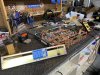
I’m sure I’ll have more questions and updates soon. I’ll post a work in progress shot as well! Had to mount my board in a bit different spot as it’s much wider. Tried to pick the least bad spot in relation to the ribbon cables. Seems I’ll still have enough room to maneuver around the relay board still. D330B4D1-1110-4D99-9BC6-EFB8AB9D0FD8.jpeg9E45E349-06D4-4A37-AA01-603AAD220F38.jpeg
 
At this point I am biased because of the amount of time & effort I have in my ML amp but I will try to be fair. I have a modified A202 that can hold its own! I also have a pair of 502's. They are all decent & capable amps. But you must remember the 02 series was trying to meet a price point. The ML has military grade components at every turn. The price point for ML is "If you have to ask you can't afford it". Don't get me wrong. I am not a snob when it comes to this. I will admit I would never be able to afford new ML gear. My ML was purchased in very bad condition for a low price. It had a vaporized current gain board (see current concerns below), and main caps that released black syrupy goo all over the place. It was a lengthy and costly project to get it back to working condition. I was fortunate in that I had made a connection with an audio enthusiast in another country. He hooked me up with information about a place that was raided by Police. They just happened to have some spare ML boards that were going to auction as a result. Modifying my ML to be unique and the worlds only polished ML was quite labor intensive too.

ML WILL NOT SELL ANY PARTS FOR ANY OF THEIR GEAR TO THE PUBLIC. THEY ONLY SELL PARTS TO 3 AUTHORIZED SERVICE CENTERS. THE SERVICE CENTERS WILL NOT EVEN LISTEN TO REQUESTS FOR PARTS. YOU EITHER SEND THE ENTIRE UNIT IN OR NOTHING. THE TYPICAL SERVICE CHARGE IS USUALLY AROUND $1000 OR MORE. CRATING & SHIPPING A 150 LB AMP IS NOT EASY AND NOT CHEAP. THIS IS ONE REASON I WOULD NOT BUY NEW GEAR FROM THEM, EVEN IF I COULD AFFORD IT. WOULD YOU BUY A CAR THAT YOU COULDN'T BUY SPARE LIGHT BULBS OR BRAKE PADS FOR?

I want you to open your refrigerator and look at a can of of Coca Cola. That is the size of the main caps in the ML. There are four of those Coke cans sitting in there for direct consumption by the output stages. It doesn't stop there. There are also four more smaller (but still large for an amp) caps for feeding the various other stages, which are biased A class. That is all fed by three toroid transformers. Each channel gets its own huge transformer and the logic circuits get a dedicated small toroid. The large transformers are housed in a metal isolation tunnel in the middle if the amp. The transformers are mounted vertically to save space. On power-up the in-rush current is so high that no typical outlet could support it. The initial violent in-rush is temporarily routed through special resistors that can flash off the excess current as heat for about 5 seconds, feeding the caps a dosed amount of current until they are full. This saves the life of the caps too, preventing a slam of inbound electrons.

The ML will perform better because it just plain can. It has so much reserve that it will never reach a point of output stage starvation. The amp will consume 325 watts of AC power just standing still with no audio coming out of it. If you are driving an amp like this that hard something else is going to give. The ML will just go until your speakers give up the ghost. If you need to go that loud then your primary focus is not fidelity anymore. You might as well get a stack of industrial Crown amps and a speaker array hung from your ceiling. ;)

The ML does well in the area I like to call "dark-lows". I think most would call this the thickness of the sound. It faithfully brings those lower, often diminished, frequencies into my soundscape. The SAE can do it as well but may need coaxing with a few db of EQ in the "feel-not-heard" frequency bands. The big difference is the ML won't break a sweat wasting current on these power hungry regions. Forgive my non-scientific descriptions.

The transformer in the attached photo is not from an ML amp, so displayed voltages on label may not be correct. I never thought to remove those hunks copper for a photo. I got this stock image from Google. I only show it for size & orientation reference.
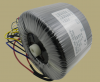
View attachment 2695463 View attachment 2695464 View attachment 2695465

Got it working. The cap I was talking about grabbing the power from was wrong. I actually wanted the cap to the left of that for 12.6v which worked fine.

Ultimately I will probably try to add arduino control to this relay board in the future. The .5 seconds is too long and so my adjustments are in +/- 6 intervals. For now this works ok.
The remote rules.
I’ll link to the YouTube test video I added and add the text from that video here
“I was inspired by @Daniel Perez video adding remote control capability to his SAE p102 preamp. I decided to try and do something similar with mine while working on a new hifi rack buildout using mostly SAE gear.

I used an all in one relay board (https://a.co/d/07giSSv) rather than programming an arduino controller as he did. This turned out to cause an issue so I wouldn’t recommend this shortcut. The .5 second timed relay triggering (shortest interval you can do with this board) cause my preamp adjustments to be in increments of 3 up or down (shows as +\-6 increments because it’s even numbers only). Standby and mute function fine.

This rack is in my dining room test area and will be moved to a better location with room treatment as soon once I refinish a second polk Lsim 705 tower. For now I’m just running Lsim 703 bookshelf’s and a dsw660 Sub.
Source on this is an apple lossless file (Gunship - when you grow up your heart dies) on my iPod through a Peachtree iDac.

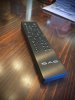
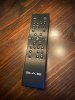
For the remote I found a seller on ali express that makes learning remotes in a nice (very heavy duty) brushed aluminum enclosure. I was able to have them custom print the remote functions for my specific needs and I made a replica SAE logo in photoshop which I had them print on the bottom of the controller. This single remote controls my SAE preamp, my peachtree iDac/iPod library, and a CD player. I am extremely happy with how this remote turned out. I’d link to it but the seller seems to have removed the item but there are others like it on ali. (Search: aluminum learning remote)

I will likely try to add an arduino controller to my relay board to have more accurate control of volume, bass, and treble in the future. For right now this is acceptable.”


Attachments

  • 8DDD2173-3BEB-4CF8-B663-9BD904B462FF.jpeg
    8DDD2173-3BEB-4CF8-B663-9BD904B462FF.jpeg
    131.1 KB · Views: 3
  • ED8BB6FB-237B-4C87-A218-F7F3BF4953F3.jpeg
    ED8BB6FB-237B-4C87-A218-F7F3BF4953F3.jpeg
    153.4 KB · Views: 3
Back
Top Bottom