
Let's hear itI am going to have it recapped and the noisy transistors replaced. Will report back once its done.



Let's hear itI am going to have it recapped and the noisy transistors replaced. Will report back once its done.

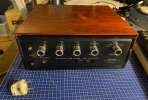

I strongly suspect that is not a “factory” case, but rather a custom made one. Don't think I’d use that with no air vents.Yesterday I picked up an entirely original AU-222, from the son of the original owner. It also has the original wood case, which is apparently very rare.
View attachment 3829179
Interestingly the wood case does not have the airflow gaps that I see in this earlier post. That one looks a little too perfect I guess.
I think it is the other way around. My wood case looks very old. But more importantly it is identical to the wood case of other AU-222s online (see this image and also this image)I strongly suspect that is not a “factory” case, but rather a custom made one. Don't think I’d use that with no air vents.
I think it is the other way around. My wood case looks very old. But more importantly it is identical to the wood case of other AU-222s online (see this image and also this image)
There is no metal case. The inside looks super clean. I think it might have been stored for years (or decades). But alas it currently doesnt workYeah I suspect this is not a factory cabinet. It looks nothing like any other Sansui cabinet: appears to be solid wood, has beveled/rabbeted face, rabbeted joints, odd fitment, and, no vents. Although in my opinion if any amp can do without the vents, it's the 222. But they still had them on the metal cases.
I wonder if maybe these were 'aftermarket' of a sort popular in Europe/UK? There certainly seem to be a lot more 222 that pop up there than in the US.
I'd be interested in seeing the case from the inside. Does it still also have a metal case?

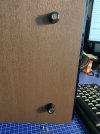
Interesting. Could you show us the rear and inside the case?There is no metal case. The inside looks super clean. I think it might have been stored for years (or decades). But alas it currently doesnt work
View attachment 3829317
The case is screwed to the amplifier by 4 screws that were hidden in the feet. I had to remove some rubber in the middle of the feet to get to these screws.
View attachment 3829318
About air flow: at the back there is some space between the case and the amplifier. You can look in, so to say. This is not possible from the front.
Interesting. Could you show us the rear and inside the case?
(and in what way does it not work? no power?!)
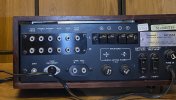
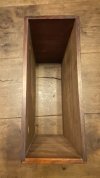
Yeah I would have no qualms about running that amp in that cabinet. Very nicely built.View attachment 3829393
View attachment 3829394
Power goes on but a lot of noise and cracks. I was worried for the speakers so I did not spend more time at this moment.
I also think it is solid wood yes

Your case looks a lot like the one that came on my PM555A tube receiver (1957).I think it is the other way around. My wood case looks very old. But more importantly it is identical to the wood case of other AU-222s online (see this image and also this image)

For giggles I converted Tape HD - input in mine to another AUX- input. Sounds good. Open mids are this device's strength.

Hi, I wasn’t happy with it after the recap, but it had to be done because the capacitors were failing due to their age. I also couldn’t get rid of the rustling noise, even after replacing the transistors. I sold it again.Let's hear it

Let me guess. Sc1845s were used and it sounded bright and/or sterile?Hi, I wasn’t happy with it after the recap, but it had to be done because the capacitors were failing due to their age. I also couldn’t get rid of the rustling noise, even after replacing the transistors. I sold it again.

That looks like a 1970 serial #, so quite far into production which started 1968View attachment 3829393
View attachment 3829394
Power goes on but a lot of noise and cracks. I was worried for the speakers so I did not spend more time at this moment.
I also think it is solid wood yes