
• The move to the new server is done. There are some software and database maintenance updates in process. This has us passing the hat around to help out. We appreciate any donations. Seriously, even a dollar helps. The payment page may be found here - https://www.audiokarma.org/support.html

My Speakers Starving?

Lossless

Super Member
I own a pair of Bowers&Wilkins DM640i tower speakers. I was told by someone the owns a set of B&W640 that my receiver is not big enough to drive the B&W DM640i. They sound good to me, but his statement stuck with me and am reaching out to all the techies that know graphs and numbers to get your expert opinion.

Here are the numbers:

Receiver - Fisher RS-Z1 Profession Digital Reference Series 1989 Japan

http://www.gammaelectronics.xyz/audio_08-1990_fisher.html

Speakers - Bowers and Wilkins DM640i 1995 England

http://bandw600series.com/wp-content/uploads/2018/02/ENG_FT00030_DM640I_info_sheet.pdf

I know speaker wire plays some role in the numbers and I'm using 12 feet of solid copper 4 conductor 16 gauge wire, bi-wired.

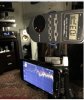
I am able to play music at 105db @ 10ft decibel meter reading C, without clipping.6E8D7455-E889-46CD-AF6C-7DECA7F9E505.jpeg
 
Last edited:
Register to hide this ad
I would have a amp that is rated higher than 200 watts more like 250-300 watts.

I guess your using a phone SPL meter, pretty sure you need to use A weighted.

If your getting actual 105 db at 10 feet with your setup, your have a ton of clipping with your setup.
 
Yeah, you see, here’s the thing. The DM640i needs a minimum of 30 watts to get going. They are 4 ohm speakers. That means they are hungry for power. In the late 80s, many manufacturers started playing games with the numbers, and so they started to use numbers that made their gear look good on paper. I’ll never forget the first time I saw that. I note that the Fisher will do 160 into 4 ohms, but the question is, for how long?

I really like 4 ohm speakers. I’ve liked them since I first got back into vintage Audio about 8 years ago. I also like to buy, refurbish, and then sell the gear that I won’t keep. All the 4 ohm speakers I’ve had need a good bit of power to really come to life. Without it, they might sound good, but they will never sound the way they were designed to sound. And if you turn up the volume, you will quickly hear the result of the amp clipping, which tends to be too bright highs and rubbery lows.

I try to mix and match all the gear I get so I have a better idea how they will perform. Ultimately, I will hook the speakers up to a favourite power amp if I want to truly hear them in action.

But you know what? If you like the way they sound, then enjoy them. At some point, you may be ready for an upgrade, and then get yourself a nice high current amp and enjoy the upgrade to your system. :thumbsup:
 
No graphs or numbers required. An amp sufficiently drives speakers to a pleasing level without clipping in a particular environment or they don't.

More is usually better and higher resolution with better dynamics than what you have is always better but I would not continue to obsess over this question.
 
One of the main points to consider about amplifier power ratings as it relates to sound pressure levels developed by speakers is dynamic range. No one purchases a MC601 or MC1.2Kw to push a continuous 600 watts or 1200 watts into speakers. What the additional power ratings allow an amplifier to deliver is unclipped and undistorted musical peaks. Nearly all well designed speakers thrive on "clean" power but will fail quickly with clipped output from amplifiers. Reserve output power is essential to accurately reproduce the complex wave forms of music.

Music is not a constant tone and volume is not a constant level unless you are amplifying test tones. Music is a continuous stream of peaks and valleys with an average level that is typically consistent. It is not unusual for momentary peaks in a musical performance to rise above the average level by 10 to 12 decibels. These same peaks are often fleeting but require substantial output power to reproduce without clipping the waveforms. We know that for every 3dB rise of input signal the output power will double. Using this information it is easy to understand why an amplifier with plenty of power becomes necessary. As an example lets say you are enjoying a performance at an average level of 25 watts output and a sudden crash of drums or blast of horns generates a 12dB peak above your average level. 3dB above 25 watts would require 50 watts, 6 dB above 25 watts would require 100 watts, 9dB above 25 watts would require 200 watts, and 12dB above 25 watts would require 400 watts of reserve power in order to faithfully reproduce the peak level of 12dB above your average listening level without clipping the output signal. Knowing this, it doesn't seem like such a stretch to have 400, 500, 600, or even 1200 watts on tap.

Granted this is a casual explanation and doesn't touch on speaker sensitivity, all of which will play into one's choice of amplifier power. None the less, I hope it helps you understand the relationship of input versus output power and why high powered amplifiers may be necessary, particularly as it applies to your speaker's sensitivity and your common listening levels.

Another point to take into consideration is almost all speaker manufacturers measure speaker sensitivity at a distance of 1 meter on axis (39.37 inches) directly in front of the speaker. These measurements are most often taken with the speaker placed inside an anechoic chamber where it is completely silent and there is no reflected sound for the microphone to hear. That's not exactly real world conditions that represent a typical end user. In addition, for each added meter of distance from the initial measurement point the audio level typically drops by 3 decibels. Looking at this another way, picture yourself listening to 96 decibels with one watt of amplifier power while sitting in front of a speaker at a distance of 1 meter. Moving your seat away from the speaker to 4 meters distance without increasing the amplifier output you will now be hearing an 87 decibel sound level. At this 4 meter distance you will need to increase the amplifier output to 8 watts to achieve the same volume level at your ears as was present when you were seated only 1 meter in front of the speaker. Move back 1 additional meter to 5 meters distance from the speaker and the amplifier power requirement will double to 16 watts for a 96 decibel sound pressure level at your ears. Even though a highly efficient speaker that produces 96dB with 1 watt at 1 meter is selected, mating it with an amplifier of 25 watts output can be a detriment or not depending on the distance you place your seat from the speakers and at what sound pressure level you commonly enjoy. Remember this, there needs to be sufficient power reserves (headroom) on tap to reproduce the dynamic differences above average level. If it takes 2 watts to sustain your desired average listening level at your selected seating location, you will still need something on the order of 30+ watts available to handle the dynamic range that is present in many recordings.

Changing the speaker efficiency to 86 decibels at 1 meter with 1 watt the perimeters differ dramatically. If you wish to listen at an average level of 95dB at a distance of 4 meters with this speaker, you will need 64 watts of output power not including reserve power for dynamics. To faithfully reproduce a 12 dB peak above 95dB average level with this speaker you will need 1024 watts, something a MC1.2KW amplifier can deliver in stride, as can a MC601 on momentary peaks. Both of these amplifier's power ratings are considered by many to be exorbitant but in fact they are necessary with this particular arrangement.

Both of these scenarios are examples of how speaker sensitivity, listening distance, and amplifier power ratings correlate into delivering satisfying listening experiences. It is clear that having additional amplifier power is an asset to reproducing undistorted, unclipped music, thereby protecting our speakers from the damage caused by inadequate power. One needs to consider speaker sensitivity, listening distance from the speakers, typical average music levels required and necessary headroom before deciding on amplifier output power.
 
Yeah, you see, here’s the thing. The DM640i needs a minimum of 30 watts to get going. They are 4 ohm speakers. That means they are hungry for power. In the late 80s, many manufacturers started playing games with the numbers, and so they started to use numbers that made their gear look good on paper. I’ll never forget the first time I saw that. I note that the Fisher will do 160 into 4 ohms, but the question is, for how long?

I really like 4 ohm speakers. I’ve liked them since I first got back into vintage Audio about 8 years ago. I also like to buy, refurbish, and then sell the gear that I won’t keep. All the 4 ohm speakers I’ve had need a good bit of power to really come to life. Without it, they might sound good, but they will never sound the way they were designed to sound. And if you turn up the volume, you will quickly hear the result of the amp clipping, which tends to be too bright highs and rubbery lows.

I try to mix and match all the gear I get so I have a better idea how they will perform. Ultimately, I will hook the speakers up to a favourite power amp if I want to truly hear them in action.

But you know what? If you like the way they sound, then enjoy them. At some point, you may be ready for an upgrade, and then get yourself a nice high current amp and enjoy the upgrade to your system. :thumbsup:
That’s a yes? The amplifier is rated at 150wpc @ 4ohm. Testing showed clipping didn’t occur until 263wpc @ 4ohm. Measured damping factor 70, dynamic headroom 2.12dB.

I do listen to a lot of classical music that's very dynamic at very high volumes, 110 dB peaks. The bass is tight and the highs are very smooth and not fatiguing. I just find it hard to believe that 263wpc @ 4ohm would be starving my speakers. The RS-Z1 uses a high current power amplifier with 2 Nichicon 22,000uf 80v Electrolytic Capacitors.
 
Last edited:
If you can play at your stated sound level without hearing distortion, you're probably not clipping. But if you really want to know, why not borrow a big power amp and hook it into the Fisher through the various loop jacks on the back and see if you notice any improvement?
 
No graphs or numbers required. An amp sufficiently drives speakers to a pleasing level without clipping in a particular environment or they don't.

More is usually better and higher resolution with better dynamics than what you have is always better but I would not continue to obsess over this question.
I would tend to agree. On paper it looks like that Fisher is up to the task of driving your B&Ws, however I also subscribe to the more is better theory for available amplifier power.
 
Your definitely listening to a lot of clipping if listening a a moderate level of 85 db @ 10 feet
 
Last edited:
"I am able to play music at 105db......."

What ?

http://www.cochlea.org/en/noise


SixCats@

Concert Band & orchestra 105 dB , so going to the symphony is bad for my health? I love high dB distortion free music and that's why I bought BiG speakers in 1995. Isn't that why they sell amplifiers that push 1200 watts, Which I want/need according to most of the responses here. I'm not deaf yet. Blind maybe, and my Dad tried to warn me about that too when I was a kid.:smoke:
https://goo.gl/images/kwTwgt
 
Last edited:
I listen at low db levels lately, my bookshelf speakers are rated for 100wpc into 8ohms with drops into the 4 ohm area when driven, my power amp is 400 wpc into 4 ohms. 250 into 8.. Reserve power sound is a glorious thing at all db levels. But dont let the friend get to you, you are saying you like what you are using for a receiver now , so there ya go, thats what matters ,unless you want to dump some money on a big power amp, to make someone else happy.
 
If you can play at your stated sound level without hearing distortion, you're probably not clipping. But if you really want to know, why not borrow a big power amp and hook it into the Fisher through the various loop jacks on the back and see if you notice any improvement?
That's a good idea to borrow a really BIG amplifier. Now only if I can find one. Everybody I know has modern 7.1 surround sound box store stereos. They don't have a clue about separates.
 
Last edited:
You have a pretty powerful receiver, and you like how it sounds in your house and with your ears. Why are you worried about what other people think? I don't doubt that you could find different amps that might be more detailed or more open, but they may not be cheap, and they may actually have less power than what you have already. What is loud to one person is only getting started to another, and it's worth considering that it takes twice the power to produce 3 dB more volume, so you'd really need a behemoth amp to play much louder.
Power ratings are funny - they are based on playing into resistors, which are very easy loads. Real speakers are complex loads, with capacitance and inductance, both of which vary with frequency and combine with resistance to impede the flow of current. Amps interact with that complex load in unpredictable ways so simple power ratings may not translate into actual volume levels.
For a while I was using Dahlquist DQ 10s with a 250 watt Parasound (designed by John Curl, apparently). Sounded good. On a whim, I tried a Dyna Stereo 70. Sounded better. Odd, perhaps, and not to everyone's taste, but I liked it more. You could have a similar response to a more powerful, better recommended component.
 
You have a pretty powerful receiver, and you like how it sounds in your house and with your ears. Why are you worried about what other people think? I don't doubt that you could find different amps that might be more detailed or more open, but they may not be cheap, and they may actually have less power than what you have already. What is loud to one person is only getting started to another, and it's worth considering that it takes twice the power to produce 3 dB more volume, so you'd really need a behemoth amp to play much louder.
Power ratings are funny - they are based on playing into resistors, which are very easy loads. Real speakers are complex loads, with capacitance and inductance, both of which vary with frequency and combine with resistance to impede the flow of current. Amps interact with that complex load in unpredictable ways so simple power ratings may not translate into actual volume levels.
For a while I was using Dahlquist DQ 10s with a 250 watt Parasound (designed by John Curl, apparently). Sounded good. On a whim, I tried a Dyna Stereo 70. Sounded better. Odd, perhaps, and not to everyone's taste, but I liked it more. You could have a similar response to a more powerful, better recommended component.
Great tech response to my question! I’m really am not worried about what people think. Most of the time it’s a “mine is bigger than yours” reply. I’m more concerned about damaging the drivers and am always hearing you have to match your speakers to your amplifier. :beerchug:
 
Last edited:
No but the independent Audio Magazine did an in depth review of the amplifier and noted clipping didn’t happen until 263 wpc for 1 kHz, 20 Hz and 20 kHz.
More importantly, what do you hear? Can you detect the change in sound character once you pass a certain level?

I don't need a meter, blue or otherwise, to tell me when my amplifier clips.
 
I'm gonna go against the main grain here and say that your Fisher isn't up to the task of delivering dynamic peaks that can require a 10x higher burst of power to accurately reproduce ,I thought my 300 watt Mc-300 was perfect for my 300 watt RMS XRT-22s until I bought my 1st pair of 1,200 watt Mc-1201s that deliver 4,800 peak watts ,with the 1200 watt RMS XR-290 line arrays I've seen my 1,200 watt amps push 2,000 watt peaks from under 500 watts continuous .
 
Back
Top Bottom