• The move to the new server is done. There are some software and database maintenance updates in process. This has us passing the hat around to help out. We appreciate any donations. Seriously, even a dollar helps. The payment page may be found here - https://www.audiokarma.org/support.html

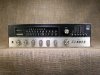
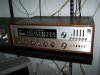
My ultimate Fisher acquisition (1800 receiver w/ box and manuals)

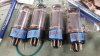
Looks like the transformer, IF cans and Sylvania 12ax7s suggest a 1966 manufacture. But the 7591s appear to indicate they were manufactured the last week of 1966. If that's the case, this 1800 receiver was probably assembled and shipped in early 1967 to the PX.
 
Looks like the transformer, IF cans and Sylvania 12ax7s suggest a 1966 manufacture. But the 7591s appear to indicate they were manufactured the last week of 1966. If that's the case, this 1800 receiver was probably assembled and shipped in early 1967 to the PX.
I'm pretty sure 1967 was the first year the 1800 was offered, and it looks like they only ran one run of 1000 units.
 
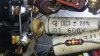
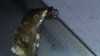
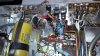
After opening the bottom up, everything looked in order until I spotted this safety capacitor, it seemed to have blown its stuffing out. Not sure what to think about this, anyone have any ideas on what would cause this, something up stream or it just failed?

20170504_200408.jpg 20170504_200423.jpg 20170504_200509.jpg 20170504_200554.jpg
 
Most likely it failed on it's own. I've seen those General Instruments caps blow out their ends quite easily as they are just wax sealed. Replace it with a Safety Cap and it should be fine. Other than that, it looks like it just came off the line. Very Nicely Picked, Steve!
 
With the lead bent back like that, that looks like a lot more than simple failure. Some kind of large transient I would think. Do you know if the unit actually operates properly?

Dave
 
With the lead bent back like that, that looks like a lot more than simple failure. Some kind of large transient I would think. Do you know if the unit actually operates properly?

Dave
It was actually bent back quite a bit farther almost like someone got it far enough away as to no arc or anything, I pulled it closer to take the picture. I did not plug it in to test yet, I was cleaning and assessing when I noticed it, wanted to do those things before putting power to it. The seller stated that it worked perfectly and sounded excellent.
 
After Dave's comments, I took a closer look and checked the schematic. The one that blew is C104 which I believe was used for switching noise abatement from the diodes, rather than C110 which has a 820K bypassing it to ground to shunt antenna spikes and has C110 as a "death cap" right in front and lower than C104. A significant voltage spike could account for it. OR the lead could have been bent back at inspection after the failure of the cap to see how bad it was. WHAT IS that roll of foil from??? Like I said before those GI caps were generally crap. They would get hot, melt the wax and blow. These are comparable to the 2sc1451, 2sa725/726's transistors in early 70's Pioneers in that they are on the top ten list of parts to replace regardless.

It would work with the cap disabled or even removed, but I'd replace it now just to get it out of the way.

 
After Dave's comments, I took a closer look and checked the schematic. The one that blew is C104 which I believe was used for switching noise abatement from the diodes, rather than C110 which has a 820K bypassing it to ground to shunt antenna spikes and has C110 as a "death cap" right in front and lower than C104. A significant voltage spike could account for it. OR the lead could have been bent back at inspection after the failure of the cap to see how bad it was. WHAT IS that roll of foil from???

It would work with the cap disabled or even removed, but I'd replace it now just to get it out of the way.
That is what was in the capacitor I believe.
 
That was blown completely out of that capacitor, I didn't know what it was so I started to unroll it a little.
 
Holy Crap. It puked the guts out too? Oh WOW, Never seen that in a G.I. cap. Just the end cap melted or blown out with the wax melted. PIO Fruit roll-ups!
 
Holy Crap. It puked the guts out too? Oh WOW, Never seen that in a G.I. cap. Just the end cap melted or blown out with the wax melted. PIO Fruit roll-ups!
It's very possible lightening caused this, Dave says it would take a serious event to cause this type of damage, or a super rare catastrophic failure. Just another mystery to wonder about I guess. :dunno:
I will replace them and power it up on the variac, but I plan on test each tube first, and that's a lot of tubes. :confused:
 
Last edited:
Is the solid state 800T that goes for big bucks on the auction site the evolutionary successor to the 1800 receiver?

I've never heard a late 60s solid state Fisher. I can't imagine that it would be more euphonic than the tubed 800c/1800. Has anyone heard both the 800T and 800C and care to comment?

I guess there are some big time fans of early solid state Fisher. This 800T on eBay sold for a whopping $1725. http://www.ebay.ca/itm/302208079139

The Tune-O-Matic looks like an innovative feature for the time, but the industrial design doesn't look as compelling visually as the 1800.

800t.jpg
 
I will most likely start passing on some of the Fisher units I have more than one of, and will not be looking to add anymore.

Sure, I've said that too... :bigok:

That looks great and the history is cool too. Enjoy it.
 
I've had a couple across the line and line to chassis caps show up exploded. Some were so charred that it looks like someone took a blowtorch to them. One set in a Bogen tuner were blown to bits. I presume it was a lightning strike, but don't really know. The tuner still works just fine.

Thats a perfect spot for a modern safety cap.
 
The 800-T is the Multi voltage version of the 500-TX. This was the culmination of FISHER's 1st and 2nd Generation Solid State Receivers. Nothing to do with the 800c/1800. The only differences between the 500-TX and the 800-T is the color of the face plate, Single vs. multi voltage transformer, and a wired remote to operate the Auto Scan on the 800-T. On the 500-TX the remote was a $30.00 option. They sound kind of 1/2way between Mid 70's Solid State and a tubed unit. At 65Watts per channel RMS, they were the most powerful Receivers FISHER MADE up to the RS2xxx series receivers of the mid/late 70's. Very good running and sounding receivers. The varactor tuning is very good, and the Auto Scan works well, but to me it's more of a gimmick as it tends to overshoot when changing channels. But if you're quick you can overcome that. The 500-TX/800-T were the last ALL FISHER Receivers, designed and 1st built before Mr. FISHER sold the Company to Emerson. It continued in production from Sept 1968 to Aug. 1971. Mine was built in August of 1969 so it's a 1st year model. I got a RK-30 remote for it a couple years ago. It works very well and is tied with the 700-T for my Favorite Solid State FISHER Receiver.

1969 FISHER 500-TX
100_1298.JPG
 
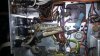
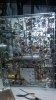
After installing safety caps, I just kept going, trained by Dave G. I guess :bowdown:. I also changed the coupling caps, installed 10 ohm sampling resistors, 100 ohm stability resistors, inrush limiter, and jumper to connect both leads of the power switch so both contacts work together. It's all become second nature since I have done it so many times. I guess it is now time to power it up and see how it works, more capacitor replacement will probably happen down the road.
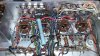
I was really pleased that all the output tubes tested very strong and pretty well matched, this receiver must not have had a lot of hours on it. :thumbsup:

20170506_191909.jpg 20170506_191920.jpg 20170506_191931.jpg 20170506_192156.jpg
 
Last edited:
Back
Top Bottom