• The move to the new server is done. There are some software and database maintenance updates in process. This has us passing the hat around to help out. We appreciate any donations. Seriously, even a dollar helps. The payment page may be found here - https://www.audiokarma.org/support.html

NAD Owner's - Unite

UPDATE

Picked-up the Rotel RCD-1570 today. Not sure this combo works. Sounded good in the store (of course). To be fair, everything is new (including the cable between the Rotel and the NAD & BJC speaker cable) except for the speakers...

...The Jury is out.

When assessing new to me gear, my first impression is very important. This tells me how much potential the new piece has to meet my expectations. Usually, pieces that give me a questionable first impression do not improve enough with tweaking which for me is swapping speakers and amps. Hopefully, your retailer has a swap program that will give you full credit towards a different CDP, should the RCD not work for you.

 
You think it may be the Rotel?

There's something about the NAD that makes me want to like this amp. Lots of air. Musical.

The combo has been playing continuously now for 12 hours. Maybe its wishful thinking but I'm so wanting it to be the stock power cords and the BJC speaker cables.

But like I said, it may be wishful thinking.


The Audio Physic Virgo III's: (power handling capability: 25 - 150 W)

The Virgo's love tubes. Whether it be a 9 RMS/channel monoblock SET's or a 40 WPC Push/Pull integrated. That's undeniable. These speakers can rock the house.
They occupy a room that is a natural horn (ceiling slopes up and away from the speakers). The speakers are pointing outward in the direction where the bell of the
horn would be.

It could be that the Virgo's are too revealing. Their motto is: No Loss of Detail. And there's lots of that just needs more midrange and the bass needs to tighten up.


Blue Jean's Cable Co. vs Analysis Plus Oval 9

The BJC speaker cable is 10 AWG vs the Analysis Plus Oval 9 at 9 AWG; however, the Oval 9's are twice the size of the BJC's but going from 9 to 10 guage "should be" indistinguishable.


The Interconnect cable:

Audio Note AN-C 99.99% pure copper litz wire symmetrical interconnect used between the Rotel and NAD. These are good cables. Luckily I didn't pay for this cable.
It's hella expensive ($450+). I acquired this in exchange for it's silver (99.99% pure silver litz wire) counterpart.

Maybe I should have kept the silver cable.


Stock power cable vs. Analysis Plus Power Oval

Anaylsis Plus makes excellent cables. The ones I have are about 12 years old and they're currently on loan to a audio dealer that is in the process of ordering
more Analysis Plus cables. I think (or is it wishing) the AP's (speaker & power) should make a difference. If not then it's back to the drawing board. :scratch2:


Lot's of air and separation except in the middle of the soundstage where it tends to get congested. On orchestral works like Dvorak and Bruckner lower strings (cellos and bass)
are muddy. I played cello. My hearing may not be as good as it used to be but this is known muscal material. I should be able to hear the lower strings clearly.

Considering the Virgo's, an all Rotel may have better synergy. Conversely, an all NAD (546BEE CDP) may be the ticket.

My options with the retailer (http://houseofmusicsf.com/) are limited to the lines the retailer carries. I can receiver store credit against something else they carry.
They didn't have a NAD C 546BEE in stock.

The RCD-1570 was marked down to $779 from $999 plus tax.


An all Rotel (RA-1570 + RCD-1570) in the mix will move the soundstage forward. Not sure if that will help the midrange.

Need to keep costs within reason. I'd like to try (cable wise) working with what I have; the sound could possibly change. I've heard changes even between tube electronics.
It may be that I'm used to the way these speakers respond to tube electronics that I prefer the sound of tubes vs. solid state.


When assessing new to me gear, my first impression is very important. This tells me how much potential the new piece has to meet my expectations. Usually, pieces that give me a questionable first impression do not improve enough with tweaking which for me is swapping speakers and amps. Hopefully, your retailer has a swap program that will give you full credit towards a different CDP, should the RCD not work for you.
 
Last edited:
Rotel RCD-1570 & NAD C 375BEE were running continuously for about 36 hrs. Turned them off yesterday morning since I had to go to work and didn't want to
chance something going amiss. Resumed playing yesterday evening, so its been another 12 hrs. or so.

Not sure what to think at the moment. It's as though the amp has a split personality. When it sounds good - it sounds really good and then there's
the flipside: source material matters either for the Rotel, the NAD or both but I have nothing to compare them with except I know what the source
material should sound like.

Very Quiet – I can’t even detect a hum. The floor lamp about 4 feet away makes more noise when it’s on than the Rotel/NAD duo. That part I like.

Soundstage is huge but the midrange is missing and bass can be thin at times.

At it’s basic level, the RCD-1570 provides the signal source to the NAD. The NAD boosts and amplifies the signal and sends it on its way to the speakers;

which in my situation is the Audio Physic Virgo III’s:

http://www.oslohificenter.no/files/tester/virgoIII.pdf

which according to the above 2003 edition of Stereophile, could be presenting a demanding load for the NAD.

Not sure if either the Rotel or NAD are imparting their own signature on the signal but whatever is on the disc should come through.

These same speakers can be driven by the two amps below at low listening levels with enough sound to fill the room and then some with undistorted sound.
Heck, it will fill the house. :yes: With the current setup, I'm hearing distortion in the highs at normal listening levels.

They are 9 Watts (Quest Silver which I owned previously) and 40 Watts (Mystere which I considered before the NAD) respectively:

http://www.audionote.co.uk/products/amps_monoblock/quest_01.shtml


http://www.mystere-usa.com/reviews/ia21_stereophile.pdf

Using the analogy of a clock face, with the volume control of the NAD at 6 o’clock (no sound), I’m listening to this setup with the volume control
at the 7 o’clock position. That’s a little bit louder than what I would normally listen to music. All things being equal, I would never listen with the
volume control any higher than say 7:45. In the case of the NAD/Rotel, it would be just more of the same just louder.

All of the music material I’ve played, I have played using these amps without the problems I’m hearing.

So what do you think is going on with the NAD? Does it require a long break-in period?

I tried swapping out the BJC’s with the Oval 9’s but the banana plugs I have don’t fit snuggly into the binding posts and the terminated ends of the
Oval 9’s are spades which are a bit large for the NAD’s speaker terminals.

May be a case of a warm sounding CDP matched with a warm sounding amp :(
 
Im picking up a NAD 906 tomorrow. It will power 2 rear surrounds, 2 front heights, and 1 bridged mode for the center channel. I have a Parasound for the main 2. This will round out my HT set up. But not before I try it on the mains to see how it stacks up to the Parasound.
 
I've got one of leesonic's restored 3020's and later picked up a 4020 tuner. Wonderful small system. That amp drives pretty much whatever I throw at it.
 
Yesterday evening around 5ish, I ran this CD thru the system:

http://www.musicdirect.com/p-6813-c...rrational-but-efficacious-ibe-burn-in-cd.aspx

I've had it for quite some time. Don't think I paid $19.99 for it though. I think I got it free at CES or somewhere.

Anywho, track 4 is supposed to be good for breaking in new equipment and cables. I put the disc on and turned the volume down until I could barely hear the brown noise and let track 4 repeat all night.

It's a pretty cool CD, especially track 7 :D
 
A 1020 Preamplifier and a pair of 2140 Power Amplifiers.

Purchased them new around 1981 or 2.

I used the 2140's bridged to power my Altec Model 15's. Now they power a pair of Bose 501 Series IV.

They rocked my house, Nelson's big back yard for New Year's Eve and several parties at the local women's club.

A few repairs over the years, but nothing major. Just normal maintenance over the past 30 years. They should last as long as I do.
 
NAD T187 Pre/Pro for me! Great gear NAD!!! :thmbsp:

XsM6b-kid9OQgu8gr0To--cq54ZXjSJqUNfzuqUnKkE=w1024-h768-no
 
Just got my hands on this NAD Model 200.

It will get a complete recap, gone be great fun to listen to it after that.
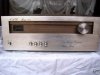
Also on my way to get my hands on a NAD Model 100 Tuner.
 

Attachments

  • Nad200.jpg
    Nad200.jpg
    60.1 KB · Views: 67
  • nad_model-100-01.jpg
    nad_model-100-01.jpg
    36.8 KB · Views: 57
Just got my hands on this NAD Model 200.

It will get a complete recap, gone be great fun to listen to it after that.
Also on my way to get my hands on a NAD Model 100 Tuner.

Wow... that there is "vintage"!!! :yes:

And first on Page 3 of this fine NAD Thread! :banana:
 
...Not sure if either the Rotel or NAD are imparting their own signature on the signal but whatever is on the disc should come through...

Since you are a cello player, you have the best possible reference image available which is live, real time sound. Reference serves as a comparator for all links in the audio reproduction chain including the source material (recording), CDP, cables, amp, and speakers. If with some recordings, you find your setup to sound very close to live, i.e. with the same dynamics, peaks, and inner details such as wood body resonance and string harmonics, the gear is reasonably signal accurate AND the recording is well done.

Highly signal accurate systems come undone when fed with poorly recorded materials such as the vast majority of pop music which is mixed to sound good on cell phones, ear buds, blue tooth devices and the like. There is a great deal of variability in how well the track is recorded depending on how good the recording environment was, the skill of the recording engineer, and finally the self control of the mixer to not add his own interpretation by adjusting tonality. A lot can go wrong that is beyond your NAD and Rotel.
 
I often e-mail my previous customers, telling them I had another NAD moment of enlightenment. They usually respond with similar experiences. Here is an example of one that I sent out recently :

"I had another NAD moment of enlightenment last night. I set up a 3020 amp and 4020 tuner, to give the usual burn-in before they go off to pastures new.

So I'm in the kitchen washing up, not even in my listening area, and the stereo is on. I'm playing some Jamiroquai, and on the song "Too Young To Die", I hear this rhythm guitar that I don't remember hearing before. It's there, clear as day, I just tried on my computer using the Creative speakers, and I can hear it now I'm listening for it. It's just the NAD amp made it so much easier to hear in the first place.

Later on, the CD changes over to the Brand New Heavies. I'm listening to the track "I Don't Know Why (I Love You)", and I thought I heard my phone bleep from the next room with an incoming text message. I went to check it, but there was nothing. I heard it again, and this time backed the CD up. Sure enough, there was a little piano riff that sounded like my phone (I have an old Samsung blackberry clone). Never noticed it before.

Lastly, I'm in the laundry room, the laundry room of all places. I hear some backing vocals that I've never heard before on another Heavies track. Maybe I'm imagining it, but I'm hardly straining to hear things am I? I think some people here on AK are sitting on the edge of their seats, with their gold speaker wire, and their optimal speaker placement, with veins popping out of their head trying to hear each last detail. For us NAD owners, the detail comes and find us.

You also hear people on here running amplifiers into the kilowatt area. I had the 3020 running last night, loud enough to hear throughout the house, and certainly at the upper level of my own comfort zone right in front of the speakers, and I LIKE loud music. The 10w LED was barely flashing. And it's not like my room is small either. The front room is 24'6" x 15'. It has two openings, one 40" wide into the kitchen (18' x 13'8") and another 70" wide open into the dining room (15' x 13'6"). So that's a lot of volume to fill with sound."


I think I was listening to the Genesis 320 speakers at that time.

Lee.
 
Since you are a cello player, you have the best possible reference image available which is live, real time sound. Reference serves as a comparator for all links in the audio reproduction chain including the source material (recording), CDP, cables, amp, and speakers. If with some recordings, you find your setup to sound very close to live, i.e. with the same dynamics, peaks, and inner details such as wood body resonance and string harmonics, the gear is reasonably signal accurate AND the recording is well done.

Actually, I have two: cello & piano. Unfortunately, the cello is gone but I still have the piano. And these are the two references I generally compare. If the audio reproduction chain
gets these two right (strings & piano) and vocals, you’re pretty much home free.

Highly signal accurate systems come undone when fed with poorly recorded materials such as the vast majority of pop music which is mixed to sound good on cell phones, ear buds, blue tooth devices and the like. There is a great deal of variability in how well the track is recorded depending on how good the recording environment was, the skill of the recording engineer, and finally the self control of the mixer to not add his own interpretation by adjusting tonality. A lot can go wrong that is beyond your NAD and Rotel.


Thought about this. The NAD could very well be doing everything right based on the signal its receiving.

I’m finding out that with my particular speakers, a flat response setting with the NAD doesn’t cut it. I’m having to fiddle with the tone controls. I get to a point where I think I have it dialed-in,
then I play different musical material and find myself having to adjust the tone controls again.

This in contrast to having an on/off button, balance and volume controls with the tube gear I’ve used. Setting it and for the most part, having to adjust the volume and maybe the balance.

I listened to music on my iPhone yesterday for the first time. I don’t know what people like about the thin sound you get from this and similar devices via earbuds. My SONY Walkman
sounded waaaay better. Maybe peoples music listening preferences come into play with audio designs these days. Everyone is used to listening to compressed and/or up-sampled hi-rez sound
that they’ve forgotten what live music is supposed to sound like anymore.

Having the convenience of a huge digital music library at ones disposal via a service like Tidal may be the appeal but you give up something in return. But if all you’ve ever listened to was WAV, MP3 files, etc.
That’s what you’re used to hearing. And once the audio gets compressed, there’s no getting it back


The NAD C 375BEE is a fine integrated amplifier. But it’s probably not a good match with my particular speakers. It could be the Virgo’s ring-radiator tweeter and 4.5" aluminum-cone midrange.
Highs’s aren’t the issue. I’m getting more highs than midrange or bass. It’s taming the highs that’s part of the problem.
 
Thought about this. The NAD could very well be doing everything right based on the signal its receiving.

I’m finding out that with my particular speakers, a flat response setting with the NAD doesn’t cut it. I’m having to fiddle with the tone controls. I get to a point where I think I have it dialed-in, then I play different musical material and find myself having to adjust the tone controls again....
Highs’s aren’t the issue. I’m getting more highs than midrange or bass. It’s taming the highs that’s part of the problem.

I know you guys don't maybe roll this way but that is a good observation... the NAD AV Gear has Audyssey built in, but based on that configuration, NAD has their own adapted profile that they call "EARS" (Enhanced Ambience Recovery System). It's much more toned down on the high end. I myself usually go with the "PLII Music" Profile rather than EARS, because I like having the added dynamics up high.

I guess what I'm getting at here is NAD does have their own perspective on how music should sound... and least you think this is just about "processing", remember, Bob Carver taught us that you can build a piece of gear to sound just like you want it to based soley on the electronics that are used! :thmbsp:
 
Some more info on EARS;

In addition to the standard Surround Sound processing modes, NAD also offers its own sound processing option: EARS (Enhanced Ambience Retrieval System) is an alternative to Dolby Pro Logic II/IIx and DTS Neo:6.

Instead of trying to replicate the precise directionality of the Dolby and DTS surround sound format options, EARS takes the ambiance cues that are present in two-channel music recordings and places only those ambience cues into the surround channels. This is designed to create a more natural immersive sound, without exaggerated directional manipulation. The result is actually quite good.

I found when scrolling through the available surround modes, EARS did a great job of keeping the main focus in the front left, center, and right channel speakers, but also sending a enough of the ambience to the surrounds and also sending slightly deeper bass to subwoofer, without over-exaggeration in either case. EARS cannot be used in conjunction with Dolby or DTS sources, it is best used with stereo music content.
 
Actually, I have two: cello & piano. Unfortunately, the cello is gone but I still have the piano...


...The NAD C 375BEE is a fine integrated amplifier. But it’s probably not a good match with my particular speakers. It could be the Virgo’s ring-radiator tweeter and 4.5" aluminum-cone midrange.
Highs’s aren’t the issue. I’m getting more highs than midrange or bass. It’s taming the highs that’s part of the problem.

Piano is one of the most difficult instruments to get right. There is speed and attack in the hammer strike, main body in the note, and micro details such as brassy over lay of the strings and the woody decay of the body. If your reproduction meets expectations with piano, chances are very good it is highly signal accurate.

Had a look of the NAD's guts and it is no slouch. The RCD-1560 has a decent transformer as well, which IMO is the key to signal integrity. The more voltage potential there is, the less chance of the gear running out of energy and compressing. I would have to agree, the powered gear in your system looks good. Not sure I can preach to a wire devotee such as yourself but be careful about using too thick wire. Sure, impedance drops but capacitance increases with has the potential of slowing down the signal, especially in the upper registers.

Speakers have shockingly high distortion figures compared to the rest of the audio chain. We are talking about single digit distortion rather that the hundredths of percentage point. One design element you mention is materials which have natural resonance frequency. Some materials can result in non-linear response and may be heard as ringing. As an example, paper tweeters have low material resonance (30 kHz IIRC) so they have the potential to sound bright and fatiguing. (Former HPM-100 and JBL L-100 here.) Titanium's material resonance is well above the audible range and Beryllium is into the ulta-sonic. The result is crystal clear sound and objective accuracy. There is so much more to speaker choice and matching than this. This is why the audio journey is at the same time exasperating and rewarding.
 
Piano is one of the most difficult instruments to get right. There is speed and attack in the hammer strike, main body in the note, and micro details such as brassy over lay of the strings and the woody decay of the body. If your reproduction meets expectations with piano, chances are very good it is highly signal accurate.

Had a look of the NAD's guts and it is no slouch. The RCD-1560 has a decent transformer as well, which IMO is the key to signal integrity. The more voltage potential there is, the less chance of the gear running out of energy and compressing. I would have to agree, the powered gear in your system looks good. Not sure I can preach to a wire devotee such as yourself but be careful about using too thick wire. Sure, impedance drops but capacitance increases with has the potential of slowing down the signal, especially in the upper registers.

Speakers have shockingly high distortion figures compared to the rest of the audio chain. We are talking about single digit distortion rather that the hundredths of percentage point. One design element you mention is materials which have natural resonance frequency. Some materials can result in non-linear response and may be heard as ringing. As an example, paper tweeters have low material resonance (30 kHz IIRC) so they have the potential to sound bright and fatiguing. (Former HPM-100 and JBL L-100 here.) Titanium's material resonance is well above the audible range and Beryllium is into the ulta-sonic. The result is crystal clear sound and objective accuracy. There is so much more to speaker choice and matching than this. This is why the audio journey is at the same time exasperating and rewarding.

The Audio Physic design utilizes a built-in woofer subsystem in the Virgo III. The port that is used in some speaker designs is replaced by two passive radiators and each side
of the cabinet houses a vertical array of a woofer and a radiator.

The speakers come as mirror-imaged pairs, the active woofer below the passive radiator on the speakers' inner sides. In other words, on each side of the speaker cabinet,
there are two-outside firing and two-inside firing woofers.

Not sure how to explain this but what I'm witnessing is that a lot of the signal (appears) to be going to the Virgo's tweeter's, ergo the amount and volume of the high's I'm hearing.
I've never witnessed this behavior with these speakers before. As a result, the high's (depending on source material and volume) are very bright and harsh.

So it's as though in my case, I have an amplifier and a speaker that want to emphasize the highs - resulting in too much of a good thing.
 
IMO, bass is not omni-directional as the sub-woofer crowd will tell us. I feel that all of the audible spectrum should be treated the same in terms of driver placement. That means non-forward firing woofers do not give me the cohesion I look for. Inward firing woofers are particularly bothersome for me because there is cross cancellation occuring as the waves collide. And what actually gets to the "stereo" position is 90 degrees off axis from the cone. This would explain why your mids and highs are so much more forward than your bass. Arrays of drivers in the same band are good for packaging and perhaps looks but the drivers would have to be matched for impedance AND amplitude or they will react differently causing the cone or dome to move out of sync with it's neighbor. Opposing drivers in a common cabinet present phase issues and cross-cancellation inside the cabinet that works against clarity. All of this leads to blurring of the cues that allow you to suspend belief that you are listening to inanimate reproduction gear.
 
Back to NADs.

A step up from the generic junk without going over the top on pricing. Pretty much that's where I started and where I've stayed. Some have needed fixing and one exploded in flames straight out of the box !, but what liked the first time I came to needing one fixed was that it could be fixed and I didn't have to chuck it in the bin.

My NADs are:
3240PE Int. Amp. (two of)
4020A Tuner (Analogue)
5120 TT (resting)
5220 CDP (repairs needed due to bad post packing)
6325 Cassette Deck
502 CDP (two of)
C272 Power Amp

My bro has at least 3 NADs too.
 
Back
Top Bottom