• Please note that Audiokarma will be offline briefly for updates early on Monday morning, September 28th.

Nagaoka MP-500H Fiasco

(...) and while Nagaokas are kind of hybrid MI that shouldn't be effected by capacitance (...)

For one thing, Nagaokas MPxx and MPxx0 family models are classic IM-type MIs. And that MIs shouldn't be affected by capacitance is just a silly rumour. Physics doesn't care about MM or MI, so an MI with high inductance generator will be just as much affected by capacitance as an otherwise identical MM with high inductance generator.

Greetings from Munich!

Manfred / lini
 
And that MIs shouldn't be affected by capacitance is just a silly rumour

I had read in several places that MIs shouldn't be affected by changing capacitance loading however the TNT Audio article and my experience concur that the MP-500 was favorably affected by a change in capacitance. That is a good thing to have a way to alter the cartridge's sound to better fit a person's system and personal taste.
 
For one thing, Nagaokas MPxx and MPxx0 family models are classic IM-type MIs. And that MIs shouldn't be affected by capacitance is just a silly rumour. Physics doesn't care about MM or MI, so an MI with high inductance generator will be just as much affected by capacitance as an otherwise identical MM with high inductance generator.

Greetings from Munich!

Manfred / lini

Any cart with a certain amount of inductance will be affected by capacitance. The fact that MIs are somehow immune to this is a myth. I have a Stanton MI here and it is affected by capacitance just like any MM. I know that because I tested the FR at different loadings using a broadcast grade test record and software.

When people say "MI isn't affected by capacitance" they really mean low inductance carts like Grado, not all MIs. Yet somehow people interpret this to mean "all MI", which is wrong.
 
If the cart is sibilant the first thing I would check is if the stylus is mounted straight on the cantilever. Nagaoka uses a method which just glues on the diamond to the end of solid boron rod. It's easy to screw things up vs. the type where a laser-drilled hole is used in conjunction with glue. You'll need some kind of magnification to check it.
 
When I examined the stylus, it appeared to be very similar in construction to the SAS stylus I have and also the AT OC9ML/II. In this case, the glob of glue is so large it is difficult to see the tip of the diamond. I had to rely on a test record and the Fozgometer to make azimuth adjustments. I adjusted the tonearm height all the way down. It still appeared to be more than 92 degrees from what I can tell. The geometry looked off using a USB microscope. It is not exactly the last word in magnification either. Any suggestions on a more powerful solution for viewing the stylus contact with the record are welcome.
 
When I examined the stylus, it appeared to be very similar in construction to the SAS stylus I have and also the AT OC9ML/II. In this case, the glob of glue is so large it is difficult to see the tip of the diamond. I had to rely on a test record and the Fozgometer to make azimuth adjustments. I adjusted the tonearm height all the way down. It still appeared to be more than 92 degrees from what I can tell. The geometry looked off using a USB microscope. It is not exactly the last word in magnification either. Any suggestions on a more powerful solution for viewing the stylus contact with the record are welcome.

I had similar frustration trying to use a USB microscope to set the SRA on the MP-500. This is what I ended up with but I can't say it is correct, just what it is.

Screen Shot 2020-03-29 at 5.55.43 PM.jpeg

I did look at the VTA/angle of the cantilever, which was 23 degrees, but I can't find a VTA spec for the MP-500.
 
When I examined the stylus, it appeared to be very similar in construction to the SAS stylus I have and also the AT OC9ML/II. In this case, the glob of glue is so large it is difficult to see the tip of the diamond. I had to rely on a test record and the Fozgometer to make azimuth adjustments. I adjusted the tonearm height all the way down. It still appeared to be more than 92 degrees from what I can tell. The geometry looked off using a USB microscope. It is not exactly the last word in magnification either. Any suggestions on a more powerful solution for viewing the stylus contact with the record are welcome.

To really see the stylus you probably need a lab microscope with 200X magnification and some various eyepieces.

Adjusting Az with a Fozgo has its own pitfalls. Getting the crosstalk even is no guarantee you'll have proper physical alignment of the stylus. People think that but it's not the case.

Same with the USB for SRA. I do not know what kind of stylus tip Nagaoka uses because they do not say. "Line contact" is just a generic term that doesn't correspond to a specific patented shape. Odds are it's from Ogura or Namiki but which shape it is from them is anyone's guess. Be aware that when using the USB microscope to set SRA you can wind up drawing the line in the wrong place because not all stylus profiles work the same way. I've seen folks try to draw a line through the middle of the diamond on an FGS profile, which is wrong.
 
Same with the USB for SRA. I do not know what kind of stylus tip Nagaoka uses because they do not say. "Line contact" is just a generic term that doesn't correspond to a specific patented shape. Odds are it's from Ogura or Namiki but which shape it is from them is anyone's guess. Be aware that when using the USB microscope to set SRA you can wind up drawing the line in the wrong place because not all stylus profiles work the same way. I've seen folks try to draw a line through the middle of the diamond on an FGS profile, which is wrong.

I don't know what to make of the shape of the stylus in the photo I took with a USB microscope and the big blob of glue doesn't help. I think cantilever angle may be the best way of setting this cartridge's SRA. I used the cart body's reflection on the record to set azimuth since the stylus was of no help.
 
I don't know what to make of the shape of the stylus in the photo I took with a USB microscope and the big blob of glue doesn't help. I think cantilever angle may be the best way of setting this cartridge's SRA. I used the cart body's reflection on the record to set azimuth since the stylus was of no help.

Photo is too blurry to help there.
 
I've seen folks try to draw a line through the middle of the diamond on an FGS profile, which is wrong.

Not necessarily. If you look into Gyger's patent, he actually describes two variants - a regular one with the tip profile parallel to the shank as usual, and another with the tip profile at a 20° angle relative to the shank.

Greetings from Munich!

Manfred / lini
 
Looks far better than what I was able to do.

The stylus is blurry but I could make a reasonable guess where the contact point was, however since there was so little of the stylus showing I couldn't estimate very well its centerline. The cantilever is a better choice with my microscope to set the SRA/VTA with this cart IMO. Problem is I can't find a VTA spec for the MP-500. Anybody know it?

Screen Shot 2020-03-29 at 5.58.45 PM.jpeg
 
Not necessarily. If you look into Gyger's patent, he actually describes two variants - a regular one with the tip profile parallel to the shank as usual, and another with the tip profile at a 20° angle relative to the shank.

Greetings from Munich!

Manfred / lini
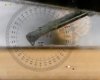
Right, but the FGS is often mounted on a cantilever with no bend at the end. The other FG shapes are usually mounted on a traditional cantilever.
 
Here are two photos I got off the Net. Ortofon Blue Cadenza stylus. Which has a nude FG70 stylus. If that is any help. :idea:

capsula-ortofon-cadenza-blue-mc-denmark-distribuidor-D_NQ_NP_13565-MLA3005322138_082012-F.jpg

stylus cadenza blue.jpg

Cadenza Blue current setup on my Technics. ↓

cadenza blue closeup (2).jpg
 
Last edited:
Back
Top Bottom