• The move to the new server is done. There are some software and database maintenance updates in process. This has us passing the hat around to help out. We appreciate any donations. Seriously, even a dollar helps. The payment page may be found here - https://www.audiokarma.org/support.html

Nakamichi RX-202 power issue

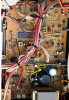
One more thing that you can check. There is a thermal fuse where the arrow is pointing. It looks like it is encased in shrink tubing, but if you can use an ohm meter to read the resistance between the two leads. I think it should measure close to 0 ohms, which means it is good, otherwise if it measures open then something caused it to blow.
upload_2023-2-16_12-36-4.png
 
Should I check the ohms first? Before looking to purchase the regulator? Is that an easy check with a multimeter? Also, what is that compound used for? Are you a Nakamichi expert? Jut curious. :)
 
Should I check the ohms first?
EDIT: Before checking the thermal fuse, just to make sure that you have voltage going to the 12v regulator, measure the voltage on the input pin (pin 1) of the regulator. It should be >12V.

With power off, check the ohms of the thermal fuse. If that is blown it would cause both the +12V and +6V to not get through. It should be an easy check with an ohm meter if you can get to the leads, just set it to read ohms and put probes on each end (if you can get to them). It is not the reason that the +12V volts is not there (since we checked it right at the output pin of the regulator), but something could have caused it to blow and you would need to replace it so you could order the part at the same time.
Also, what is that compound used for?
Thermal compound or paste is used to provide a low thermal resistance heat path between the part and a "heat sink". You need this on parts like regulators and power transistors. You can do that with a paste (a little thicker than toothpaste) that you spread a thin layer between the part and the heat sink, or a thermal pad. You can see the white paste on the first photo that I found (someone actually did a sloppy job of applying it, but you get the point). When you remove the bad part, you would use isopropyl alcohol to clean the paste off of the heat sink then reapply a small amount to the tab of the regulator, spreading it a bit before attaching the screw.
Are you a Nakamichi expert? Jut curious.
Not an expert, but I am a retired electrical engineer now and do this for a hobby. I have worked on my own Nakamichi 681ZX and 500 cassette decks to re-cap them and restore them into operation after 35-40 years of non-use as well as my Luxman, Sony and Marantz equipment. Again, just for fun in my retirement.
 
Last edited:
In those Nakamichi power supplies, the culprit is often the Shoei 100uF/25V pair filter caps used in the 12V section. We always replace them with 220uF/25V or 35 V.
 
In those Nakamichi power supplies, the culprit is often the Shoei 100uF/25V pair filter caps used in the 12V section. We always replace them with 220uF/25V or 35 V.
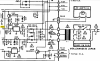
@perryinva, OK maybe I'm blind but I can't find what 100uF caps you are referring to in the schematic for the 12V? Can you help me a little more?

upload_2023-2-17_7-46-20.png
 
Hi Dankik.
When I check the pins on IC402, the one attached to the triangular piece of metal, I get the following readings on the pins:
pin 1: 23.2
pin 2: 0 (Being ground that makes sense?)
pin 3: .47.

Not really sure how to do the Ohms thing. When I set my multimeter to ohms, and touch the red and black leads, the multimeter beeps and shows zero (I believe means no resistance). When I touch each end of the thermal fuse, it reads 22. This is with no power to the unit. It is unplugged from the wall.

This help at all?
 
Yes it does. You should order the 12V regulator NJM7812FA and thermal paste as I listed above from Digikey, but first... Do you have a capacitance test mode on your DMM? If so, then we can try to test C412, 220uF capacitor with power off to make sure it is not shorted to ground causing the IC402 output voltage to go low. It should read about that value, but since it is an in-circuit measurement it might be different.

When you measure ohms, you are measuring the "resistance" to passing electrical current through the resistor. So, if you touch the red & black leads with no resistor between them it reads 0 ohms, or no resistance. The DMM will beep when there is continuity between the two leads (it's useful for checking a wire or trace that is "open" or non-conducting. When you place the leads across a resistor, it will read the value of the resistor in ohms, or kilo ohms (x1,000), or mega ohms (x1,000,000).

I'm not sure what the resistance of the thermal fuse should be, but at least it is not "open" or infinite ohms (indicated usually by "OL" on your DMM).
 
Your meter doesn't measure capacitance so we can't do that. Just order the parts and we will worry about it later.
 
Ordered. Will be here sometime next week. I'll keep you posted. :)
Thank you again for all of your help. Have a great weekend.
 
I haven’t been in an RX-202 for a long time, & not looked at the schematics. Most Nak PS circuits have that pair, but maybe not the 202. I know the CR-7/5/4 and all classic transport decks have them, including the 505 & 303.

edit: I just checked: you are correct, there are none.
 
Last edited:
Hi Dankik!!! It's alive, alive!!! :)
After replacing the power regulator, the unit stays on and I can eject and auto-reverse the cassette tray. However, it is very slow, almost as if it's sticking a bit. Is it possible the gears, or the plastic may require some sort of grease? I just hope the motors themselves aren't an issue. Thoughts? Thank you.
 
Just pop off the swiveling tray and clean it up and grease it. There is 1 c clip inside the tray.
 
Thank you. Yes when we eject the tray or do the reverse, it sticks and needs help by pushing it or twisting it, to make it finish its operation.
 
Hi there. In trying to remove the tray, to grease the gears, there is a little "rubber band" that connects the motor to the gear that ejects and rotates the tray. The band fell off. I was able to get it back on, but when I try to eject or reverse, it goes back in, but the motor still spins, as if it doesn't know the cassette is all the way in, then in pops the cassette tray out a bit and the motor stops. Same thing happens when I reverse. Is there a trick to this? or does the tray need to be at a certain spot before putting that band back on? Thank you.
 
Did you disturb the gear orientation when you put the belt back on? The belt can go on any old way, but those gears are set a precise way. 1 tooth off and it wont work properly.
 
Back
Top Bottom