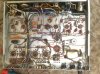
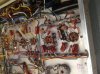
i picked up a x100b a few weeks back and have started going through it. i installed a new quad of eh 7868's along with two new sovteks 12ax7lps, set the bias at 40v. per the service manual & checked the voltages. all the voltages seem a little high. line 122vac outputs 457vdc at the plate & 405 at the grid. all the pre tubes seem to be about 25v over specks, which doesn't concern me too much but one of the new sovtek's went bad after only 4 hrs of use (in v1 or v2 ) my out put tubes are also running very hot 400 deg+.(460 max) transformers & can caps are about 130. the volume also seems high. setting the vol at 2 seems comfortable for my living room without bothering my downstairs neighbor. the same volume on my receiver would be -30db. speakers are jbl s26. i don't know their efficiency but i would guess 85 or so. their definitely not high efficiency. does any of this seem out of wack to anyone & if so where should i start. i've built a bottle head kit ,i can solder,but my experience with tubes is limited


You are using an out of date browser. It may not display this or other websites correctly.
You should upgrade or use an alternative browser.
You should upgrade or use an alternative browser.
Register to hide this ad



The KX-100 Assembly Manual (the kit version of the X-100-B) says the high voltage should be 400V. You're way higher than that. If you have 122V line voltage, that may be part of the problem.
I'd suggest that you stop running this until you can get that voltage down. Possibilities:
- Use a variac to reduce the line voltage to 110V. That should pull the HV down 10% right off.
- Look at some of the restoration threads on this amp. You may want to do something internal to lower the input voltage and/or change power resistors to get the high voltage in spec.
- Also, the original design uses 330K grid resistors and these run the 7868's very hard. Old tubes could handle that, new ones can't. A common solution is to drop those 4 resistors to something like 200K or 220K and change the coupling caps to compensate. Again, see the threads on this.
- There are also mods that improve tube life, sound quality and reliability of these amps. See the threads started by Dave Gillespie and others.
I'd again suggest that you shut it down for now, study up a bit on what you can do to make it run better, and go at it! It's a great amp. Enjoy it.
I'd suggest that you stop running this until you can get that voltage down. Possibilities:
- Use a variac to reduce the line voltage to 110V. That should pull the HV down 10% right off.
- Look at some of the restoration threads on this amp. You may want to do something internal to lower the input voltage and/or change power resistors to get the high voltage in spec.
- Also, the original design uses 330K grid resistors and these run the 7868's very hard. Old tubes could handle that, new ones can't. A common solution is to drop those 4 resistors to something like 200K or 220K and change the coupling caps to compensate. Again, see the threads on this.
- There are also mods that improve tube life, sound quality and reliability of these amps. See the threads started by Dave Gillespie and others.
I'd again suggest that you shut it down for now, study up a bit on what you can do to make it run better, and go at it! It's a great amp. Enjoy it.

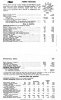
Lex; Per tube manufacturers sheets the Maximum Grid resistance for 7591 and 7868 family of tubes is as follows:
FIXED BIAS......................300K
CATHODE BIAS...............1 MEGOHM.
FIXED BIAS......................300K
CATHODE BIAS...............1 MEGOHM.
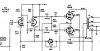
Agreed. But look at the bias setup. It's a cathode bias, so FISHER could have put anything in it all the way up to a 1 meg ohm resistor and would have been ok (theoretically). On a Fixed BIAS setup he's already over the max. I'd leave the 330K grid return resistors alone.
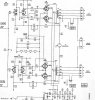
Agreed. But the determining factor on how large the grid return resistors can be here, is the BIAS DESIGN. In the case of the X-100-B its a Cathode BIAS setup. Max resistance on the 7591/7868 for grid return that has Cathode bias is 1 MEGOHM. FIXED BIAS is 300K. Below is from the RCA 1967 RC-25 Tube manual. So in the case of the X-100 and similar Cathode Biased amps, the 330K resistor does not need to be changed as it's @ 1/3rd of the maximum resistance allowed for the tube. If it was a Fixed Bias unit (like the 400-500/800B or C) then yes, dropping the value to 200K to 220K is warranted as the maximum resistance for a Fixed bias setup is 300K.

Last edited:

Well, would this be considered strictly cathode bias since it does tickle some voltage in on the grid? I realize it derives it from the cathode, but its still got the grids connected to something other than a ground connection. No idea if that plays into which is the appropriate grid resistor or not.

Gadget -- It is considered a strict cathode bias, since -- as with all cathode bias systems -- the bias voltage is developed from current passing through the tube. THAT is what makes it a cathode bias system, and as such, minimizes the concerns of negative grid current issues within the tube: If any grid current does develop, it act to increase current flow through the tube. But increased current flow ALSO then increases the bias provided to the tube (because it is developed by current flowing through the tube), which acts to reduce current flow through the tube. Therefore, it acts to control (or regulate) the problems that negative grid current can cause.
With fixed bias designs, the bias voltage is provided by an independent power supply. As such, if negative grid current occurs, there is no self controlling action to protect the tube if it occurs. Therefore, since any "reverse" bias voltage produced by a tube is developed across its grid return resistor, the value of that resistor needs to be kept smaller with fixed bias designs than with cathode bias designs. The smaller value means that less reverse bias voltage can be developed when reverse grid current occurs, which helps protect the tube when operated with fixed bias. Since the tube acts to control itself in the presence of any negative grid current with cathode bias, the grid return resistor can be permitted to be much bigger in those types of bias circuits. That's why there are two different maximum grid #1 resistance values provided by tube manufacturers.
I hope this helps!
Dave
With fixed bias designs, the bias voltage is provided by an independent power supply. As such, if negative grid current occurs, there is no self controlling action to protect the tube if it occurs. Therefore, since any "reverse" bias voltage produced by a tube is developed across its grid return resistor, the value of that resistor needs to be kept smaller with fixed bias designs than with cathode bias designs. The smaller value means that less reverse bias voltage can be developed when reverse grid current occurs, which helps protect the tube when operated with fixed bias. Since the tube acts to control itself in the presence of any negative grid current with cathode bias, the grid return resistor can be permitted to be much bigger in those types of bias circuits. That's why there are two different maximum grid #1 resistance values provided by tube manufacturers.
I hope this helps!
Dave