• The move to the new server is done. There are some software and database maintenance updates in process. This has us passing the hat around to help out. We appreciate any donations. Seriously, even a dollar helps. The payment page may be found here - https://www.audiokarma.org/support.html

Need help identifying Speakers

rotobadger

Suffering AZ Cardinals Fan
Subscriber
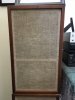
A4B76D27-2570-4381-9E17-105D3612E581.jpeg These are speakers that my folks purchased new in 1969 or 1970 when we lived in NYC. I believe they are KLH but have no markings anywhere on them.

Can anyone identify? Also, would you consider them to be decent speakers and “warmer”? I foolishly sold my Marantz Imperial 6 speakers and was hoping to find something comparable. I have Klipsch KG 4, which I love but I kinda miss the warm blanky sound too.

So, thoughts?

Thanks!
 
Register to hide this ad
The grills don't look like any KLH I've seen.though I'm sure someone will correct me if wrong. Do you have picture with the grills off or of the input connector plate?

Grills look more like AR's of that vintage but not exactly.
 
Ah, ok. I just assumed they are KLH but I could be wrong. I'll see if I can get a pic of the back of them.

And, unfortunately, the grills don't come off, at least not easily.
 
Not KLH. You can see the grill frame through the fabric and KLH didn't make grills with a thin frame like that. I'm getting a Dynaco vibe too. There is an outside chance they are AR's, but the AR's would typically have a triangle on the lower right corner of the frame with which to screw in the badge and the pics don't show that.

Worth keeping whether Dynaco or AR.
 
Oh, w.r.t. the OP's question about keeping them. YES!

They will be warmer than KG4's. They will not sound like any Klipsch, but will have the East Coast sound. Personally, I prefer the East Coast sound over that from Klipsch.

I'm assuming they are completely original and will need to be refurbished with new caps and perhaps some other maintenance. Do that before determining whether you like them. Old caps will make good speakers sound bad. If they end up being AR's, some of the old AR's have cloth surrounds that need to be re-sealed. Once you make that determination you will get a lot more suggestions.

How about some more pics?
 
Oh, w.r.t. the OP's question about keeping them. YES!

They will be warmer than KG4's. They will not sound like any Klipsch, but will have the East Coast sound. Personally, I prefer the East Coast sound over that from Klipsch.

I'm assuming they are completely original and will need to be refurbished with new caps and perhaps some other maintenance. Do that before determining whether you like them. Old caps will make good speakers sound bad. If they end up being AR's, some of the old AR's have cloth surrounds that need to be re-sealed. Once you make that determination you will get a lot more suggestions.

How about some more pics?
Awesome, thanks for the info folks!

The speakers are at my folks house out of town so I’ll have my mom take a few more and hopefully post later today.

Interesting. I assumed they were KLH but now I’m very curious to find out what they actually are.
 
Dynaco uses thin strips for grill frames, just like you can see in the pics. I have a pair of Dynaco A-25X (the older version with the tweeter between the aperiodic port and the woofer. This puts the mid grill strut (which is between the woofer and tweeter) just above the midline. A-25s with the tweeter on top and the port on the bottom have less space between the middle strut and the top.

Based on the picture, I assume that the speakers are stored upside-down.
 
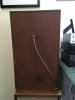
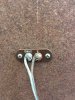
3EFFE0FF-4206-4E46-A4E4-95902B2F2FA8.jpeg 06C658BD-EFAD-4553-8AAB-5458FF192C75.jpeg AC0A2393-0E1C-47E2-AFA6-8D550B8F50D7.jpeg

Ok, here are some more pictures. They are, indeed, upside down (my dad is 78 years old so I forgive him). He still thinks they are KLH. I’m clueless now. Any more thoughts after seeing the back?
 
Last edited:
The pictures of the backs makes me think they are not Dynaco speakers. Even my old Dynacos use 5-way connectors on the back.

When you next visit, take the grills off. Those vintage speakers often used a tacky glue for the grills. They could also be nailed into the baffle. I use a small wood screw that I screw into the frame. Once it is seated, pull on the screw head to pull the grill away from the baffle. A stead pull works better than yanking.
 
Is it possible to get the backs off ? The cross overs and driver load would give a good indication of brand. Many makers stamp their name or logo on the cross over boards.

Unfortunately, the speakers and my mom and dad are not in the same state as me so it's unlikely they'll be able to pry off the back. I'll be headed to their home in October so I'll be able to take a closer look then (and maybe take them home with me!).

I'm baffled though. My dad insists they are KLH and he remembers buying them in 1969 or 1970 in when we lived in NYC. I've been looking at pictures online and the only thing that seems to look close are the Dynaco a10 but I still don't thing that's right.


I really would love to know what these are!
 
Here's the back of some a10 speakers. Pretty sure these are not my dad's speakers but the plate on the back is similar. Notice the Dynas are recessed and my dad's are not.


s-l1600[9].jpg
 
The Dynacos typically had wall mounting brackets. Your dad's don't and I don't see any screw holes on the back in your pics.

Agreed. The thing that jumped out to me on the Dynas in this pic was the connector plate. But other than that I don't see any similarities.

My mom is going to try to get the front and or back off and take pictures. I'll report back if/when she does.
 
Agreed. The thing that jumped out to me on the Dynas in this pic was the connector plate. But other than that I don't see any similarities.

My mom is going to try to get the front and or back off and take pictures. I'll report back if/when she does.

It may (still) not be necessary to do so -- a bright flashlight held up against the grille cloth, and a reasonably well-trained observer :) can often deduce much without invasive surgery.
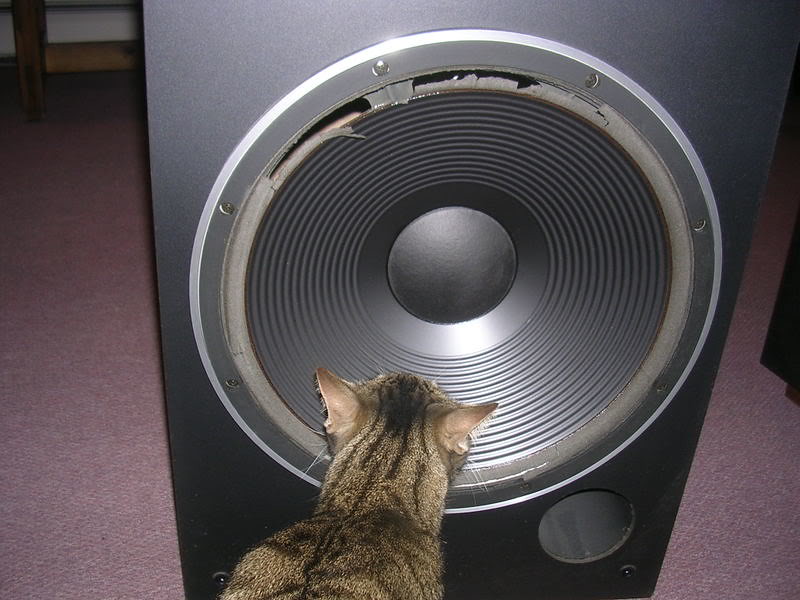
Of course, a CAT scan is another appropriate high tech tool for loudspeaker diagnoses.

DSCN6215 by Mark Hardy, on Flickr

In the image above, the CAT Scan apparatus is in use to diagnose a failed woofer surround on a Pioneer HPM-1100 loudspeaker.

;)
 
It may (still) not be necessary to do so -- a bright flashlight held up against the grille cloth, and a reasonably well-trained observer :) can often deduce much without invasive surgery.
Of course, a CAT scan is another appropriate high tech tool for loudspeaker diagnoses.

DSCN6215 by Mark Hardy, on Flickr

In the image above, the CAT Scan apparatus is in use to diagnose a failed woofer surround on a Pioneer HPM-1100 loudspeaker.

;)
I tried my cat but she just fell asleep on top of the speakers.
 
Back
Top Bottom