• The move to the new server is done. There are some software and database maintenance updates in process. This has us passing the hat around to help out. We appreciate any donations. Seriously, even a dollar helps. The payment page may be found here - https://www.audiokarma.org/support.html

Need help identifying these Altec's

captrockstar

Active Member
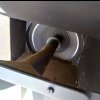
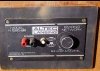
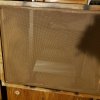
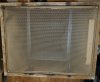
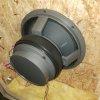
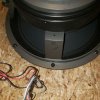
I have a line on 4 big Altec Lansing speakers which have N1285-8b dividing networks and 15" drivers with a long horn that comes out of the center of the driver. I am curious if anyone can help identify these for me? I will be picking these up this week. So far I have had no luck with identifying the driver/horns on these and any help would be greatly appreciated! These pics are all I have until Tuesday when I can see them in person. Thanks in advance! 20200223_222634.jpg 20200223_222021.jpg 20200223_221951.jpg 20200223_185833.jpg 20200223_185812.jpg
 
Register to hide this ad
Thank you! Unfortunately that doesn't really give me any info on the drivers inside. I guess I will have to wait until I take off the back to see the model number so I can figure out the specs.
 
They are part of the DTS series, 945, 645, 425 ?, They are a coaxial speaker. They use the large HF diaphragms used with either Large multicellular drivers or the Large drivers used with the Mantaray horns. If you will google. Altec Lansing DTS 945 a-F you will get the factory sheet on this model and the others also. Great. Plains Audio, has the diaphragms for the speakers. I just hope the woofers are OK. The crossovers can be rebuilt with Great Plains help, too. The speaker is basically a large coaxial system designed for high efficiency similar to a Klipschorn or La Scala with a bit better bass response than a La Scala. The horns are Manta Rays for very controlled HF dispersion to be used in large spaces with difficult acoustics to achieve a high level of intelligibility. They can be used with the most advanced diaphragms to achieve almost hifi like reproduction. The bass is intentionally rolled off to keep the boxes smaller in size and to prevent complications with the bass over balancing the lower midrange and HF's to guarantee good voice reproduction. Using the appropriate soft ware it was easy to design a system for churches, auditoriums and larger meeting spaces. They were made not to be used in large concert halls or arenas unless stacked in long line arrays or clusters, early on. The woofers could handle around 125 watts RMS, the horns depending on which diaphragm and how much crossover attenuation any where from 18 to 40 watts RMS. I use to bi-amp them using smaller Mac power amps with Power Guard to prevent the multiple drivers from being over driven. .Some school systems tried to use them for High school foot ball stadiums, but they were in adequate unless stacked in groups of 4 to get. adequate levels. The design was originally cooked up as was the Mantaray horn by Electrovoice when Altec and EV were owned by Mark IV industries as I remember.

 
Last edited:
They are part of the DTS series, 945, 645, 425 ?, They are a coaxial speaker. They use the large HF diaphragms used with either Large multicellular drivers or the Large drivers used with the Mantaray horns. If you will google. Altec Lansing DTS 945 a-F you will get the factory sheet on this model and the others also. Great. Plains Audio, has the diaphragms for the speakers. I just hope the woofers are OK. The crossovers can be rebuilt with Great Plains help, too. The speaker is basically a large coaxial system designed for high efficiency similar to a Klipschorn or La Scala with a bit better bass response than a La Scala. The horns are Manta Rays for very controlled HF dispersion to be used in large spaces with difficult acoustics to achieve a high level of intelligibility. They can be used with the most advanced diaphragms to achieve almost hifi like reproduction. The bass is intentionally rolled off to keep the boxes smaller in size and to prevent complications with the bass over balancing the lower midrange and HF's to guarantee good voice reproduction. Using the appropriate soft ware it was easy to design a system for churches, auditoriums and larger meeting spaces. They were made not to be used in large concert halls or arenas unless stacked in long line arrays or clusters, early on. The woofers could handle around 125 watts RMS, the horns depending on which diaphragm and how much crossover attenuation any where from 18 to 40 watts RMS. I use to bi-amp them using smaller Mac power amps with Power Guard to prevent the multiple drivers from being over driven. .Some school systems tried to use them for High school foot ball stadiums, but they were in adequate unless stacked in groups of 4 to get. adequate levels. The design was originally cooked up as was the Mantaray horn by Electrovoice when Altec and EV were owned by Mark IV industries as I remember.


So these would need large spaces since they were made for churches and auditoriums and not practical for home use? You mention you had them biamped with power guard which you'll have to excuse my ignorance, but what exactly is power guard? What size was your listening space when you used these? Sorry for all the questions, just trying to learn more. Thanks!
 
but what exactly is power guard?
It's McIntosh' patented name for a compression circuit that is automatically activated when it detects dissimilarity(distortion) between the input waveform and output waveform.

Several manufacturers have used similar circuits, many of them giving it a cute pet name. Very useful in a professional environment where a system may be called on to operate at unity gain on a regular basis and/or for extended periods of time. It's not a practical consideration for most home/casual listening systems. But, is a handy and useful feature for those who occasionally like to blow the carbon out of their system. ;)
 
So these would need large spaces since they were made for churches and auditoriums and not practical for home use?

Yes, all these big Altecs were made for applications like that. Only us knuckleheads try to put them in our homes! :crazy::) Sometimes it works, sometimes it doesn't. Some adjustments help. Altec came up with versions more intended for the home like the 14, 19 etc.
 
Many thanks for posting the images, particularly the last two as few examples of the engine exist on the web.

What folks might not immediately notice is that there is only one magnet/motor assembly for both HF and LF while all other Altec duplex designs use separate HF and LF motor assemblies.

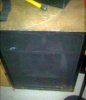
Also, note the material the cabinet is constructed from. That's Altec's patented Enviroboard.
 
Yes, all these big Altecs were made for applications like that.
Primary design goal of the OP's speakers was high acoustic output with controlled directivity from a point source. This makes them ideal for small space, near field monitoring applications such as stage monitors, drum monitors, and side fills as well as FOH arrays.
 
In response to the OP's first post:

So far I have had no luck with identifying the driver/horns on these and any help would be greatly appreciated!
Functionally, the LF section is parametrically equal to a 515-8GHP, and the HF a 299-8A. The horn is a constant directivity adaptation from the Mantaray family.

The design was originally cooked up as was the Mantaray horn by Electrovoice when Altec and EV were owned by Mark IV industries as I remember.
The Engine was at least in part, if not entirely designed by Bill H. He/GPA owns the trademark The Engine, and it is still in production today as the 212-8A.

Mantaray was designed by Cliff Henrickson and Mark Ureda from work originally done by D B Keele. All 3 gentlemen worked at both Altec and EV at various times.
 
Last edited:
In response to the OP's first post:

Functionally, the LF section is parametrically equal to a 515-8GHP, and the HF a 299-8A. The horn is a constant directivity adaptation from the Mantaray family.

The Engine was at least in part, if not entirely designed by Bill H. He/GPA owns the trademark The Engine, and it is still in production today as the 212-8A.

Mantaray was designed by Cliff Henrickson and Mark Ureda from work originally done by D B Keele. All 3 gentlemen worked at both Altec and EV at various times.

Thanks for the wealth of information! I am glad that the pictures provided of the engine help us all as reference since they are scarce! I will eventually clean them up and provide even better pictures. First, I will be listening to them to see how they sound, trying different tube and ss amps and then probably make them more presentable in my home if I like what I hear.

Do you think that the dividing network is a good pairing with these and should they be recapped? Or should they be biamped with an active crossover for better results?
 
I use to bi-amp them. Altec made plug modules for some of their processors to correct for deficiencies of smooth high frequencies when using a manta ray horn. The modules also corrected for phase issues with the speakers that the conventional passive crossover could not. If you read the sheet about the speakers you know they were never designed to be used for high fidelity reproduction. I guess you could combine them with some of EVs's or Altec dual inch woofer subwoofers. But they roll off near 30 Hz. JBL makes some dual 18's that will reach below 20 Hz that will break your bank. Home subs can't keep cup with these speakers unless you really have big bucks. Because of the speakers high efficiencies you will need some very quiet amps to push them with, other wise you will being hear sounds similar to frying bacon or eggs. Hums and buzzes will also be an issue. We used QSC amps with low power where big power was really a waste.
 
and you've got FOUR? Oh my. 2 per side should let you reach below the 200hz spec'd, but by how much we don't know. You'll very likely still need an LF option below them.

We have a user on AUB who recently got a pair. You might follow up on their thread/invite them here to compare notes.

IIRC the 1285B XO should be selectable 500/800/1200. If so, you'll want to keep those for their usefulness now (try to taste) or in the future.

Personally, I would go active with a steepish XO and see where you end up liking them.

If active but you don't have low power amps available, adding some series R can knock down the hums and buzzes revealed by the efficiency. More on the HF side to tame it down if need be...
Some folks will warn about added series R and potential damage to an amp, so research that first.
 
Power Guard is a patented circuit designed by Mcintosh. It compares the in put wave form to the output wave form and if there is more than about a 1.5% difference the amp reduces the drive un til they compare favorably. So you can over drive a Mac amp about 14 db with no more than 1.5% waveform error. Some say its a sophisticated compressor limiter. But its not if the amp is operating into a compromised driver it the circuit might control the output down to 1 watt or 10 watts or if the compromise goes away until the amp starts to clip and then the Power Guard will react to prevent clipping which on most Mac amps is about 30 % above rated power. So if you had a Mac 2200 rated at 200 watts channel the power guard would allow the amp to put out about 260 watts before going into operation at the onset of 1 to 2% clipping. That feature alone saved owners thousands of dollars in speaker and amp repairs. QSC has some thing Simi;lar and so does Crown. But neither work as well as Macs. system. Now some musicians don't like power guard because as you turn up the volume they want to hear that sound amps make when the are just starting or are distorting that cause the midrange and highs to have a particular sound quality. Thats not there with a Mac amp. Some say when pushed to hard the power guard sounds like a compressor limiter used by radio and TV stations. Well if your speakers are strong enough to supply the sound levels required without a chance of damage and the Mac amps are matched to the levels of the speaker capability, you should never hear the power guard work. Its only when you try to over drive the system the system beyond the capability of the system that you might hear the Power Guard working. Power guard was originally designed because home speakers didn't have a flat power band capability and any distortion created by bass or midrange would generate such HF distortion that the heat created would fry the tweeter and super tweeters. Professional systems should be designed to have a full spectrum equal power handling capability. Most do today. But back during the period of the DTS speakers the woofer could handle almost 10 times what the horn could with the crossover control wide open. So having power guard available with a properly matching power amp for a given speakers saved owners much dollars in expensive service calls and parts replacements. Power guard also helped amps from over heating by being driven into distortion. By Bi amping the potential distortion was reduced vastly to the tweeters and larger amps could be used to get the full fundamental of the sound produced by the woofers. Smaller amps could be used with the tweeters to cut down on costs. many times you could get 2 to 3 times the performance capabilities from one system bi amping as you could with a system using passive crossovers with reduced distortion and cross modulation.
 
Back
Top Bottom