• The move to the new server is done. There are some software and database maintenance updates in process. This has us passing the hat around to help out. We appreciate any donations. Seriously, even a dollar helps. The payment page may be found here - https://www.audiokarma.org/support.html

Need help on opamp replacement

KinoRodori

Member
Hi guys! I'm still a novice to DIY maintenance, repair and mods on hifi equipment. I am confident with my soldering skills but I'm a little short on circuit wisdom.

I have a TA-F222ESA (TA-F570ES in the west) that I recently repaired and it is working well. However its shortcoming is the phono-stage. It originally had an RC4560 opamp which was really sub par to my Sansui AU-555's phono stage. I've heard the NJM2068 is the go-to drop in replacement (used in higher end ES amps), but it isn't available locally. With my curious nature of experimenting for upgrades, I tried opamp jumping with 2 reputable opamp chips without changing the factory circuit. Of course, I kept a close eye at the datasheets to make sure no absolute maxima were crossed.:deal:

The first opamp was an LM4562 from National. Not the T.I. variant. It worked very well in all the inputs except the phono stage. Thru AUX, CD and Tuner, the sound was very detailed and very close to live impression. Bells and tings were lively and the vocals were not buried below other frequencies. Its primary problem is a bland, somewhat distorted and depthless phono. The soundstage was flat from low to mids and awfully high on the highs. I should say it made my ear drums itch.:rant:

The second opamp is the OPA2134 from T.I. and IT SOUNDS GORGEOUS. It worked well across all the inputs. I could safely say that my FLAC/CD inputs sound *almost* the same as the phono sound stage. It was that well balanced. Lows were low, less boomy vs the RC4560. Thicker than the LM4562. Mids were not as great as the LM4562 in non-phono inputs, but it's not 'buried' like the RC4560. Highs were a bit tapered off vs the LM4562, but not at all a major trade off. In phono, it is all and then some. I don't think I'll be jumping opamps soon. I know I don't need to. :music:

With that said, it sounds like there shouldn't be a problem. However me being me, I want to optimize the most out of the 222ESA and the OPA2134. I need help understanding what parts I need to replace in the EQ board to match it with the OPA2134's datasheet. It might just bring out the maximum potential of the opamp. Modified values are also welcome, if you have an idea to maximize the opamp. The phono part also has a circuit for Moving Coil (MC). There's a button that switches between MC and MM. I primarily use MM, but I wouldn't want to leave out the MC in the mod.

I'd also appreciate any advice on caps and other parts I should be concerned about since the amplifier is 30 years old.

I hate to beg for this but I want to be spoon-fed. I would really appreciate someone who could look into the service manual and the datasheet and dictate parts with its location on the board :bowdown: I don't mind a long wholesome lecture. I don't want any advise against anything I've done so far or suggestions on a replacement amp since I put myself in the point of return now :p I'm stingy and I don't have deep pockets.

TL;DR

Key points

  • replaced the RC4560 opamp with OPA2134 on TA-F570ES
  • it sounds great overall
  • the circuit is probably not the same as the OPA2134 datasheet
Job order :deal:
  • need parts list and which part it will replace, to match the datasheet or better
  • also want advice on aged components i should probably change on this 30 year old Sony
  • might try MC pickups so i want to optimize that circuit also
  • need to know which resistors affect the loading resistance (added knowledge) i might want to try 68k ohms, slightly higher than 47k ohms
  • teach me :bowdown:
 
Last edited:
Register to hide this ad
I don't know which parts need to be replaced
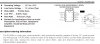
I've given 2 hours to study the differences of the orig. RC4560 and the OP2134. Pinouts, +/- in voltage ranges, PPv, oper. temp, %Thd 0.05 /( 0.01 /the 2134) I don't think the human ear can tell that diff.
IMO They are both close enough equivalent to drop in. Get an 8pin dip socket to solder in then you can swap. I notice there are some electrolytic caps in the orig. circuit that should be replaced (unless you have already)
Unless somebody else see's something I haven't
-----------------
upload_2021-4-15_12-3-45.png
 

Attachments

  • upload_2021-4-15_11-59-4.png
    upload_2021-4-15_11-59-4.png
    25.6 KB · Views: 8
I've given 2 hours to study the differences of the orig. RC4560 and the OP2134. Pinouts, +/- in voltage ranges, PPv, oper. temp, %Thd 0.05 /( 0.01 /the 2134) I don't think the human ear can tell that diff.
IMO They are both close enough equivalent to drop in. Get an 8pin dip socket to solder in then you can swap. I notice there are some electrolytic caps in the orig. circuit that should be replaced (unless you have already)
Unless somebody else see's something I haven't
-----------------
View attachment 2195346
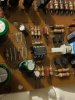
Thank you for taking the time to study this! I have soldered a socket, it has made opamp rolling easy. I had to carve out a part of the button arm that goes above the opamp to make everything fit.

I haven't changed anything in the original circuit. What electrolytic capacitors do I need to replace? What values would match what the OPA2134 needs?

I noticed the MM/MC switch is flanked by elect. capacitors. Are these the input caps that I need to replace?

Any mod suggestions would be appreciated

170748053_516839449480575_6005675391538710138_n.jpg
 
Are these the input caps that I need to replace?
hard to say. I see no shrinkage... caps are rated end of life by number of hours use. May be fine as is. I see the chip installed.
I guess the question is: Do you hear audibles you desire to your liking?
 
hard to say. I see no shrinkage... caps are rated end of life by number of hours use. May be fine as is. I see the chip installed.
I guess the question is: Do you hear audibles you desire to your liking?
Yes, it sounds great.

Apart from the popping sounds I occasionally hear in the left channel phono input, it sounds better than ever. (it sounds like something's boiling even if there's nothing plugged in the phono. at low volume, only in phono both MM/MC. not in any other input)

The mids seem a bit submerged vs the LM4562, not something I that kept me up at night.

The popping sound might be telling me something needs changing in the phono circuit. I haven't had this problem in the past.
 
Apart from the popping sounds I occasionally hear in the left channel phono input, it sounds better than ever. (it sounds like something's boiling even if there's nothing plugged in the phono. at low volume,
:dunno: When you get down to these finite symptoms it's hard to analyze long distance in hearing :D what you hear.
Clean the mm/mc switch? Assure TT ground wire grounding is good?
Boiling sound?? Rumble when TT platter on?
Separate/move the amp further away from TT?
Pops? while playing? or just idle...
 
:dunno: When you get down to these finite symptoms it's hard to analyze long distance in hearing :D what you hear.
Clean the mm/mc switch? Assure TT ground wire grounding is good?
Boiling sound?? Rumble when TT platter on?
Separate/move the amp further away from TT?
Pops? while playing? or just idle...
Sorry for the late reply!

I'm sure the switches are clean, though I haven't cleaned the input selector switch because it's one of those where the knob pushes or pulls a long film of something to the back of the amplifier on the input board.

The boiling sound is different from a TT rumble, and it happened ocassionally when the opamp was still fresh. It was all idle and also while playing. Basically it was present the whole time the phono input was used. Now however it's not that noticeable or barely there. I'm still wondering if there's certain components on the circuit that don't match what the OPA2134 is designed to run on.. :idea: I want to make the most out of it really
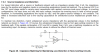
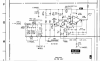
Can I have you mark which ones are the input capacitors, phono loading resistance, and source resistance of the phono input?
Screenshot 2021-04-19 150706.png
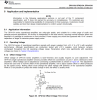
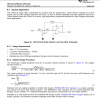
I was wondering if the source impedance of the amplifier is 2000 ohms as the OPA2134 spec sheet requires
Screenshot 2021-04-19 151439.png
I hope you understand, I wanna know what I'm reading here :bye: As much as possible I want to know what functions as what
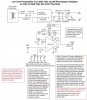
 
Last edited:
I also found this on diyaudioprojects, I wonder if I can adapt this sort of circuit design to my phono stage, disregarding the variable gain at the bottom. I'm really just after the "clean, detailed and wide sound stage" the design below achieved, but on my amplifier. It's all I could ever ask for...

Mine has a regulated voltage of -15 volts specified in the service manual. 3 volts different from the design below. So I think there's things to change if I want to achieve this.
https://diyaudioprojects.com/Chip/Opamp-Phono-Preamp/
LOMC-IC-Phono-NAB-Preamp-Rev-Aug-8-2014.jpg

I'm sorry I have so many questions :oops:
 
Mine has a regulated voltage of -15 volts specified in the service manual.
The operational Voltage of the 2134 is +/-2 to +/-18v. the current +/15v design is well within those specs, good to go.
Your desired inexpensive wall-rat phono circuit by no means compares to the Sony.. the opamp is the heart of the board which btw I made a mistake.. the rated %Thd of the 2134 is 0.0001%.. in addition to it's dual ch. FET design.
upload_2021-4-19_11-35-54.png

Combine that with the amplifier specs. An ES amp series in itself.. :thumbsup:
Power output: 80 watts per channel into 8Ω (stereo)
Frequency response: 2Hz to 200kHz :thumbsup:
Total harmonic distortion: 0.004% :thumbsup:

Damping factor: 100
Input sensitivity: 0.17mV (MC), 2.5mV (MM), 150mV (line)
Signal to noise ratio: 95dB (MC), 77dB (MM), 105dB (line)
Output: 150mV (line)

I (and many others would say) give it a min of a couple weeks of listening time. That 'noise' is gone and I think it's going to grow on you and those circuits dancing in your head will fade away. :D
 
Way above my head, but very interesting. I swapped op-amps (rather, my friend did it for me) on my Onkyo P304, and the difference was substantial.
 
Given that the collector resistors are 560 ohms, I don't think you have to worry about the input impedance seen by the opamp. It should be well under 2k. That boiling noise might be the transistors. They're very high Hfe low noise parts and those can get weird as they get older, just like the famous '458 types, also made by Hitachi. R415/C407 insure this thing is stable and changing opamp types can affect the needed values. I'd want to get a scope on it to be sure nothing was oscillating. The RC4560 is a 15 MHz part as is the 2134. The 4562 is more like 55 MHz, but I'd expect all of them to work similarly. Personally I don't much like the 2134, not because it doesn't sound good, but because it tends to run quite hot, which can't be good long term.
 
I don't think you have to worry about the input impedance seen by the opamp.
T.Y. @ConradH Hopefully the OP (novice) will grasp your description. Self admitted, many times I just haven't mastered "electronic composition" as you can. too oft (OP without test equipment) the only comparison is 'give it a listen for a time'. I did come across that thread where I gave you some likes akin to hearing/remembering and what you 'think/thought/remembered' you heard? Hopefully no tech. issues arise and listening is to his liking.
 
Your desired inexpensive wall-rat phono circuit by no means compares to the Sony.. the opamp is the heart of the board which btw I made a mistake..
...
Combine that with the amplifier specs. An ES amp series in itself.. :thumbsup:
I (and many others would say) give it a min of a couple weeks of listening time. That 'noise' is gone and I think it's going to grow on you and those circuits dancing in your head will fade away. :D
Thank you for the reassuring words. (You got me at wall-rat phono circuit :rflmao:) Also, you have guessed my recent experience correctly. :thumbsup: The boiling noise has actually disappeared since. I only heard it at the start, now it's very much gone. I think i've heard it only occasionally like after 2 days of no usage.

I just couldn't the shake the feeling that there's gotta be something off in the ES' circuit because it was solely designed for the RC4560 and NJM2068S. :dunno: Like maybe the input capacitors for the phono stage are different (my friend told me to use 10uF for MM input, heck idk where to place them), slight differences might be hindering the sound for all we know.. The rat's phono circuit was able to make so much out of the OPA2134 with just a bare design, soooo that's what got me thinking :crazy: I also noticed the volume is pretty low in phono, i have to crank it up to 10 o'clock+ to hear the music in detail (in comparison with the RC4560 which only needed around 9 o'clock; been using the same Sony XL20 pickup is used now which puts out 3 mV only). The other inputs like CD and tuner can deal with just 9 o'clock at line level...

The opamp may be "the heart" of the EQ board, but the phono and other inputs altogether seem like very well separated circuits. So what's done inside the phono circuit wouldn't affect the other inputs' sound at all. I could tell, because from the opamp jumps, the AUX inputs sound really great while the phono input is a russian roulette of screaming animal sounds :rflmao: With this much, I am sure the AUX inputs are the best way to really hear the opamp's sound signature. In the phono input, it seems like a different story. Which calls for an adapted phono circuit, something as well optimized as the "rat circuit".

Of course, I may be wrong though :blah:

Given that the collector resistors are 560 ohms, I don't think you have to worry about the input impedance seen by the opamp. It should be well under 2k. That boiling noise might be the transistors. They're very high Hfe low noise parts and those can get weird as they get older, just like the famous '458 types, also made by Hitachi. R415/C407 insure this thing is stable and changing opamp types can affect the needed values. I'd want to get a scope on it to be sure nothing was oscillating. The RC4560 is a 15 MHz part as is the 2134. The 4562 is more like 55 MHz, but I'd expect all of them to work similarly. Personally I don't much like the 2134, not because it doesn't sound good, but because it tends to run quite hot, which can't be good long term.
Hi @ConradH ! Thank you for joining in on this debacle... Is it really okay not to make the most out of 2000 ohms? It's a given that too much is bad, but too little might also be bad too. Thank you for pointing out the transistors, I'll look into replacements after checking soon :thumbsup:. About C407 and R415, do these affect the phono only or the aux inputs as well? After changing parts I'd eventually take it to a technician, because only he has an oscilloscope for audio equipment here in my city. May I also ask if the values of the input capacitors need changing? (Also which ones are they? Hence, novice :confused:) Both phono and aux input caps? I still don't get what my friend told me about the OPA2134 needing 10uF input caps. (He designs and builds phonostages from scratch) He has a hard time understanding the ES' circuit, which is why i came here:dunno:
 
Way above my head, but very interesting. I swapped op-amps (rather, my friend did it for me) on my Onkyo P304, and the difference was substantial.
Even I'm blown away when I heard this amp after installing the OPA2134. It really gave the higher-end ES a run for its money.:rockon: Having done so, I want to learn more from this and be able to 'optimize' the circuit. Indeed it's an interesting topic many people want to know about (in the back of their heads). It's a great achievement to improve something you'd think was obsolete than buy something new with your hard earned money. It's even more so rewarding to build something with your hands without it exploding! :rflmao:
 
Thank you for the reassuring words. (You got me at wall-rat phono circuit :rflmao:) Also, you have guessed my recent experience correctly. :thumbsup: The boiling noise has actually disappeared since. I only heard it at the start, now it's very much gone. I think i've heard it only occasionally like after 2 days of no usage.

I just couldn't the shake the feeling that there's gotta be something off in the ES' circuit because it was solely designed for the RC4560 and NJM2068S. :dunno: Like maybe the input capacitors for the phono stage are different (my friend told me to use 10uF for MM input, heck idk where to place them), slight differences might be hindering the sound for all we know.. The rat's phono circuit was able to make so much out of the OPA2134 with just a bare design, soooo that's what got me thinking :crazy: I also noticed the volume is pretty low in phono, i have to crank it up to 10 o'clock+ to hear the music in detail (in comparison with the RC4560 which only needed around 9 o'clock; been using the same Sony XL20 pickup is used now which puts out 3 mV only). The other inputs like CD and tuner can deal with just 9 o'clock at line level...

The opamp may be "the heart" of the EQ board, but the phono and other inputs altogether seem like very well separated circuits. So what's done inside the phono circuit wouldn't affect the other inputs' sound at all. I could tell, because from the opamp jumps, the AUX inputs sound really great while the phono input is a russian roulette of screaming animal sounds :rflmao: With this much, I am sure the AUX inputs are the best way to really hear the opamp's sound signature. In the phono input, it seems like a different story. Which calls for an adapted phono circuit, something as well optimized as the "rat circuit".

Of course, I may be wrong though :blah:


Hi @ConradH ! Thank you for joining in on this debacle... Is it really okay not to make the most out of 2000 ohms? It's a given that too much is bad, but too little might also be bad too. Thank you for pointing out the transistors, I'll look into replacements after checking soon :thumbsup:. About C407 and R415, do these affect the phono only or the aux inputs as well? After changing parts I'd eventually take it to a technician, because only he has an oscilloscope for audio equipment here in my city. May I also ask if the values of the input capacitors need changing? (Also which ones are they? Hence, novice :confused:) Both phono and aux input caps? I still don't get what my friend told me about the OPA2134 needing 10uF input caps. (He designs and builds phonostages from scratch) He has a hard time understanding the ES' circuit, which is why i came here:dunno:

Too low an impedance is rarely bad and you can be pretty sure Sansui designed the thing correctly. Don't worry about the input compensation caps unless some big problem shows up. The values would have to be established by testing, trial and error. AFAIK, nothing in the phono circuit should have anything to do with the AUX. That's not true for some other Sansui designs, but it appears to be for this one. IMO, this should be a perfectly decent phono section. I run an op-amp based phono in my DIY preamp and there's nothing wrong with them. Being brutally honest, you're not going to optimize this with what you have available. The first place one would start is with an inverse RIAA circuit, making sure both channels match the correct curve reasonably well, and match each other better than that. There are some arguments for very large coupling caps for phono stages but they come with their own problems Again, Sansui did know what they were doing, so don't change the values. I do worry about those transistors, as they could be the source of most of your problems if they're starting to go bad. I don't know of good substitutes because of the high Hfe, but maybe others here will have suggestions.
 
Too low an impedance is rarely bad and you can be pretty sure Sansui designed the thing correctly. Don't worry about the input compensation caps unless some big problem shows up. The values would have to be established by testing, trial and error. AFAIK, nothing in the phono circuit should have anything to do with the AUX. That's not true for some other Sansui designs, but it appears to be for this one. IMO, this should be a perfectly decent phono section. I run an op-amp based phono in my DIY preamp and there's nothing wrong with them. Being brutally honest, you're not going to optimize this with what you have available. The first place one would start is with an inverse RIAA circuit, making sure both channels match the correct curve reasonably well, and match each other better than that. There are some arguments for very large coupling caps for phono stages but they come with their own problems Again, Sansui did know what they were doing, so don't change the values. I do worry about those transistors, as they could be the source of most of your problems if they're starting to go bad. I don't know of good substitutes because of the high Hfe, but maybe others here will have suggestions.
Thank you for the explanation @ConradH i understand now my limitations in this situation I'm in.:bowdown:

Thank you for the reassuring words as well. I guess I was expecting too much from a design that's not even built by me. I think i gotta give more cred to the manufacturer for this 'decent' phono circuit. :beerchug:

I guess the best I can do now is just recap these 30 year old capacitors on the EQ board and hope that it'll bring in at least a little improvement. I've been thinking about using some WIMA MKS on the very small value caps, but I can't be sure if it would be effective since I can't tell which path holds more of the audio signal than the power.:idea: I'm sure the 3 nichicon muses i see here can be replaced with silmics... Any opinion? I don't mind spending a bit more for a few parts, as long as I'm told it's no problem. Unless there's a better alternative :bigok:

Also a correction! The amplifier is Sony, not Sansui. It's a 1991 Sony TA-F222ESA (TA-F570ES in the west) that I got from a japanese auction for 50$
(excl shipping:eek2:)

And it looked fairly immaculate for the price. I had worked on it before this opamp stunt, i changed flaky transistors 2SC2259 with KSC1845F, which fixed the horrid hissing it gave my speakers.:banana: Next on the agenda would be cleaning the input selector contacts and replacing the speaker relays (causing left channel loss over long listening periods and sligtly weaker left volume)

I should clarify that the Sansui i mentioned was an AU-555, which is very much far from using an opamp because it's built in 1969 or sso I wouldn't tamper with it or do a restomod, it's better off restored close to factory spec. I like vintage Sansuis that way ;)
 
Back
Top Bottom