

You are using an out of date browser. It may not display this or other websites correctly.
You should upgrade or use an alternative browser.
You should upgrade or use an alternative browser.


OldADC
Active Member
Really tricky with vinyl as no two playbacks are identical, though that's the best I've come up with as well. My point was that Eric shouldn't worry about poisoning the pot, as it's already poisoned. I don't want to derail this in to a listening test thread.
That way lies madness indeed, JP!! That discussion can go on forever. Double blind, listening fatigue in too long sessions, really its endless. So I agree with you thoroughly.
However, were I to point out even some simple things from the photos of the Lithuanian cartridge we were hunting on eBay, it might contribute to the preconceived notions. As an example, I'll mention one detail that has been covered in the thread already to some extent. The diamond is epoxy bonded to the solid boron cantilever with no evidence of slotting. Thus the motional relationship between the two is purely dependent on the strength of epoxy used and most assuredly no epoxy matches either boron or diamond. A clear flexural and vibrational susceptibility......cue the music of doom!!! There is more but I suspect you get my point.
I am most pleased that you have joined the thread on a more vocal basis, Tri_Pod. May you find a way to recover your beloved screenname. Tis important in a throw away world to maintain one's continuity of identity, as screen names are powerful juju in cyber worlds. I surely welcome your experience and insights to our conversation. When I started this thread, I was unsure whether there would be sufficient interest for it to take a life and be an interesting and contributory conversation. It has done so and I am delighted for it.

nailer
audionerd
Ears only. Cognitive bias always exists, we form preferences even before listening, and we're wired to hear differences where there are none.
In other words, any comparison is biased. Doesn't matter who is doing the comparison or the methodology used.

Pio1980
AK Member
I pretty much have to agree with the previous posting. Many times, I can hear more better at home than at a concert thanx to ideal pickup, sound, and reasonable loudness levels. This applies to everything from solo female to symphonic and rock.
I try to imagine how a piano would sound in my room, and use that as a standard. Nothing I can do to the piano or the room is going to make it sound more like itself in that space. Keep it simple, clean, honest, and not too loud to avoid swamping the room.
I try to imagine how a piano would sound in my room, and use that as a standard. Nothing I can do to the piano or the room is going to make it sound more like itself in that space. Keep it simple, clean, honest, and not too loud to avoid swamping the room.
OldADC
Active Member
With respect to the discussion on realism, I am fortunate enough to live where I can regularly attend musical events at Boston Symphony Hall, widely regarded as one of the best three acoustic spaces on this meager planet. Not only is the room (a book's worth of discussion here) nigh on to perfect, but there are expectations of perfect silence on the audience, from the performers, the management of the hall, and from one's fellow audience members. Cell phones and rustling of candy wrappers will get you seriously sanctioned by your neighbors or thrown out on the street entirely!! Cheers for that!!
Equally, there are jazz venues where audience quiet and stillness are equally expected and enforced. It is within these kind of live environments without sonic distraction that I find the subtlety of acoustic inspiration that sets my target goals for device performance as a part of the reproductive chain. My room at home will never sound like BSH or like The Black Orchid in Chicago, Downbeat in NY, or Preservation Hall in NO. Each has its own signature ambiance. But in each, one can hear the musicians, the instruments, and the music.
I simply want the things I design to do the best they can to capture the ambiance as best it can. What will be heard and perceived will be influenced or inevitably altered by the microphones, the recording engineer, the mix, the recording medium, the playback (and lets stick to vinyl for the spirit of the thread) turntable/tonearm/cartridge, electronics, loudspeakers, and room. But the whole can never compensate for a bad link in the chain. I never want to be that weak link!
Just to play internet troll for a moment, I also believe that the most critical components are those that must transform one form of energy to another, the transducers. Microphones turn acoustic to electrical (with internal transformations such as acoustic to mechanical, mechanical to electrical as a prevalent example), cartridges turn vibrational/mechanical to electrical, and loudspeakers turn electrical back to acoustic. If we stick to vinyl, that equally critical would be the cutting head for the master disc. And there are damn few of the good ones left. Mastering a vinyl disc is an art unto itself.
Perhaps there is room to address each of these issues with modern materials, technical capabilities, improved designs, better metrology in manufacturing for improved precision and repeatability of manufacture.....and the list goes on. But is there a sufficient interest in this quest for fidelity out there to express itself in a market that can support the work required?
So, a few questions?
Is digital music capable of providing the fidelity? I personally don't think so but many would argue that I'm completely full of it. I have yet to hear digital recreate a soundstage that I perceive as well as I do a very high end analog reproduction. (Note: no skimping on the high end part. Digital is good, but the best and only the best analog still beats it if you really care about instrument placement, air between the instruments, all that stuff) If I didn't feel this way, I wouldn't bother revisiting cartridge design and this older technology.
Would people be open to an alternative analog recording and reproduction technology that might supplant vinyl? Would you try it? Even more importantly, would you buy it? Keep in mind, it might be a true boon to the music world and the music industry because it would take everyone back to a physical item that held the recording. No more boosting downloads on the internet and cheating the artists of a means of making a living!! You would have to pay for your music again. (Let's leave aside cheating the music industry, my mixed feeling on "the industry" make it a Faustian bargain on its good days...)
Equally, there are jazz venues where audience quiet and stillness are equally expected and enforced. It is within these kind of live environments without sonic distraction that I find the subtlety of acoustic inspiration that sets my target goals for device performance as a part of the reproductive chain. My room at home will never sound like BSH or like The Black Orchid in Chicago, Downbeat in NY, or Preservation Hall in NO. Each has its own signature ambiance. But in each, one can hear the musicians, the instruments, and the music.
I simply want the things I design to do the best they can to capture the ambiance as best it can. What will be heard and perceived will be influenced or inevitably altered by the microphones, the recording engineer, the mix, the recording medium, the playback (and lets stick to vinyl for the spirit of the thread) turntable/tonearm/cartridge, electronics, loudspeakers, and room. But the whole can never compensate for a bad link in the chain. I never want to be that weak link!
Just to play internet troll for a moment, I also believe that the most critical components are those that must transform one form of energy to another, the transducers. Microphones turn acoustic to electrical (with internal transformations such as acoustic to mechanical, mechanical to electrical as a prevalent example), cartridges turn vibrational/mechanical to electrical, and loudspeakers turn electrical back to acoustic. If we stick to vinyl, that equally critical would be the cutting head for the master disc. And there are damn few of the good ones left. Mastering a vinyl disc is an art unto itself.
Perhaps there is room to address each of these issues with modern materials, technical capabilities, improved designs, better metrology in manufacturing for improved precision and repeatability of manufacture.....and the list goes on. But is there a sufficient interest in this quest for fidelity out there to express itself in a market that can support the work required?
So, a few questions?
Is digital music capable of providing the fidelity? I personally don't think so but many would argue that I'm completely full of it. I have yet to hear digital recreate a soundstage that I perceive as well as I do a very high end analog reproduction. (Note: no skimping on the high end part. Digital is good, but the best and only the best analog still beats it if you really care about instrument placement, air between the instruments, all that stuff) If I didn't feel this way, I wouldn't bother revisiting cartridge design and this older technology.
Would people be open to an alternative analog recording and reproduction technology that might supplant vinyl? Would you try it? Even more importantly, would you buy it? Keep in mind, it might be a true boon to the music world and the music industry because it would take everyone back to a physical item that held the recording. No more boosting downloads on the internet and cheating the artists of a means of making a living!! You would have to pay for your music again. (Let's leave aside cheating the music industry, my mixed feeling on "the industry" make it a Faustian bargain on its good days...)

tri_pod
Active Member
Hello Manfred
Will do. I did indeed use the 'Forgot Password' feature a few days ago but here too, seems to be a snag. During my absence, my ISP also changed.
Anyway, not to worry. I'm back in and sending you some of Cape Town's oppressive 42degrees C sunshine.
Regds
tri_pod
Will do. I did indeed use the 'Forgot Password' feature a few days ago but here too, seems to be a snag. During my absence, my ISP also changed.
Anyway, not to worry. I'm back in and sending you some of Cape Town's oppressive 42degrees C sunshine.
Regds
tri_pod

lini
just me...
Andre: Maybe you can pm one of the mods for admin help, in order to have the email adress changed, if possible...
Eric: Don't want to appear overly pessimistic, but I think a new analogue medium would be very difficult to establish at best. Maybe already because to my ears digital has become transparent enough to not really leave anything to be desired, but foremost because I think there'd be too little demand from the average consumer. And then there's also the question whether it would make much sense, considering that most stuff has already been recorded digitally for the last 35 years...
Greetings from Munich!
Manfred / lini
Eric: Don't want to appear overly pessimistic, but I think a new analogue medium would be very difficult to establish at best. Maybe already because to my ears digital has become transparent enough to not really leave anything to be desired, but foremost because I think there'd be too little demand from the average consumer. And then there's also the question whether it would make much sense, considering that most stuff has already been recorded digitally for the last 35 years...
Greetings from Munich!
Manfred / lini
OldADC
Active Member
Eric: Don't want to appear overly pessimistic, but I think a new analogue medium would be very difficult to establish at best. Maybe already because to my ears digital has become transparent enough to not really leave anything to be desired, but foremost because I think there'd be too little demand from the average consumer. And then there's also the question whether it would make much sense, considering that most stuff has already been recorded digitally for the last 35 years...
Manfred / lini
Not a single bit of that can be argued with, Manfred. Many do believe digital has reached comparable fidelity with higher sampling rates...all the progress that has occurred. And there is no doubt that the library of recording at this point is now dominated by digital. It would serve little purpose to analog record from digital masters. Just silly.
But the one tilt that may make a new format worthwhile is the argument that it would then require that some % of buyers actually purchase the source material as opposed to free, exceptionally low cost, or pirated downloads. Of course, nothing would last exclusively in the format domain before being transcribed into digital and then the downloading would begin. But I like posing the question and collecting the answers.
For arguments sake, if digital has reached level or better than old analog, then what is the motivation for the resurgence in vinyl given all the difficulties and limitations?? I have assumed that some have discovered additional musicality....but perhaps not. Perhaps it is just that is a better hobby with vinyl than with digital.

muovimies
Super Member
I think for a big part the vinyl resurgence has more to do with "feeling" than with any sound quality issues. It's just more fun to own records when you have a big cardboard cover and all that, instead of just bits on your hard drive, or an abstract right to use files over internet that are actually located somewhere across the globe. Vinyl just makes it all a lot more tanglible and fun for a lot of people, plus you get to go to record stores, there's that whole social thing to it - you don't have that experience with digital files. Sure, you can have "social media" sharing and internet forums, but that's not quite the same as hanging in your favourite record store talking with the owners or other clients. There's also the collectibility thing, each record is an individual and it's kind of satisfying to find stuff. And for the listening, you actually have to make some effort, not too much of a hassle but those little physical things to get the table spinning and record playing, the added incovinience makes you involved on a different level that certain types of people will find enjoyable. So yeah, I think you're right, it is a better hobby 
Then again, to my ears even a low quality vinyl setup (think entry level table that keeps decent enough speed and throw a cheap AT MM-cart in there) sounds more pleasant than average digital . Notice I said more pleasant, not better But I'll take a setup I can enjoy listening for more than 30 minutes at a time over one that gives me fatigue, even if it falls a bit short on ultimate fidelity. I'm sure I'm not the only one like that. I have hundreds of CDs mostly gathering dust because my ears don't take actually listening them all that well... some of that is just horrible mastering jobs, but some of it just seems intrinsic to CD-quality digital for whatever reason. Just for kicks I tried making digital rips of some LPs and burning them to CD, I was quite surprised how much better the original vinyl sounded in comparison, I wasn't expecting much of a difference to be honest. It might have been the AD-converter messing with it though. I have some rips I've done at 44.1, 88.2 or 96kHz & 24-bit, but it hasn't occured to me to try similar A/B with those, maybe I will some day, for those a better ADC was used.
I've been actually toying with the idea to try to run my CD-player through some kind of tube buffer, or gain stage to perhaps introduce just the right amount of warmth and tube compression to see if that perhaps would help with the fatigue. Yeah, basically introducing coloration and distortion in the chain on purpose with the hope it would actually make it enjoyable, I suppose there go my audiophile creditentals if there ever were any. But there's some pretty good music on those CDs, it would be fun to get enjoyment from them again. Switching from vinyl to CD the increased dynamic range and the certain solidity in lack of a better word is always a bit of an eye opener, but then again my vinyl rig does give me a somehow more believable presentation. It's hard to explain, but things just sound somehow more realistic and right, even though the rational part of my brain thinks the CD should be superior with its blacker-than-you'll-ever-get-from-vinyl backgrounds and ridicilously better dynamic range. For what it's worth, my vinyl setup consists currently of a heavy plinthed Lenco with a Fidelity Research FR-54 arm, and Ortofon MC10 Supreme LOMC, to give some idea. But if I hadn't enjoyed even my Pioneer PL-2 w/ an AT91 more than my CD-player, I wouldn't have gotten into upgrade frenzy with the vinyl stuffs.
The point of all this rambling is, for me putting all focus on vinyl was about both sound & the other factors, one of which was I wanted a hobby that lets me fiddle with things and satisfy the information craving part of my brain while also getting enjoyment of music back. YMMV
Then again, to my ears even a low quality vinyl setup (think entry level table that keeps decent enough speed and throw a cheap AT MM-cart in there) sounds more pleasant than average digital . Notice I said more pleasant, not better
But I'll take a setup I can enjoy listening for more than 30 minutes at a time over one that gives me fatigue, even if it falls a bit short on ultimate fidelity. I'm sure I'm not the only one like that. I have hundreds of CDs mostly gathering dust because my ears don't take actually listening them all that well... some of that is just horrible mastering jobs, but some of it just seems intrinsic to CD-quality digital for whatever reason. Just for kicks I tried making digital rips of some LPs and burning them to CD, I was quite surprised how much better the original vinyl sounded in comparison, I wasn't expecting much of a difference to be honest. It might have been the AD-converter messing with it though. I have some rips I've done at 44.1, 88.2 or 96kHz & 24-bit, but it hasn't occured to me to try similar A/B with those, maybe I will some day, for those a better ADC was used. I've been actually toying with the idea to try to run my CD-player through some kind of tube buffer, or gain stage to perhaps introduce just the right amount of warmth and tube compression to see if that perhaps would help with the fatigue. Yeah, basically introducing coloration and distortion in the chain on purpose with the hope it would actually make it enjoyable, I suppose there go my audiophile creditentals if there ever were any. But there's some pretty good music on those CDs, it would be fun to get enjoyment from them again. Switching from vinyl to CD the increased dynamic range and the certain solidity in lack of a better word is always a bit of an eye opener, but then again my vinyl rig does give me a somehow more believable presentation. It's hard to explain, but things just sound somehow more realistic and right, even though the rational part of my brain thinks the CD should be superior with its blacker-than-you'll-ever-get-from-vinyl backgrounds and ridicilously better dynamic range. For what it's worth, my vinyl setup consists currently of a heavy plinthed Lenco with a Fidelity Research FR-54 arm, and Ortofon MC10 Supreme LOMC, to give some idea. But if I hadn't enjoyed even my Pioneer PL-2 w/ an AT91 more than my CD-player, I wouldn't have gotten into upgrade frenzy with the vinyl stuffs.
The point of all this rambling is, for me putting all focus on vinyl was about both sound & the other factors, one of which was I wanted a hobby that lets me fiddle with things and satisfy the information craving part of my brain while also getting enjoyment of music back. YMMV
OldADC
Active Member
Muovimies, thanks so much for your input. I believe I agree on virtually every point. I had to chuckle at the "indefensibility" of washing digital signals through a tube stage in order to warm them up, humanize them, avoid listener fatigue....whatever it is that is making the whole experience more enjoyable and palatable. I'm not sure that it would work but if you do it, please report your results and impressions. My suspicion on why it might not work is based on my belief that the reason digital doesn't present the same soundstage as analog is the inevitable breaking of inter-frequency relative phase across the spectrum that definitionally happens with digital sampling independent of the sampling rate.
Math & Physics Geek Alert: For those analytically and mathematically inclined, this is an argument based in the required spectral continuity, including phase, for Fourier Transforms between the temporal and spectral domains. For the past 30 years I have worked in lasers and fundamental laser physics including ultrafast lasers. There, this Fourier relationship requires that if you want to generate an ultrafast pulse (picosecond or faster into the femtosecond regime) then you must maintain the spectral bandwidth of the laser. The shortest pulse in time requires the broadest spectrum. This equally holds in fast electronics. This is a limiting feature in this relationship called the time-bandwidth product where one can calculate the spectrum necessary to create a specific pulse width and vice versa. Measurement of very short pulsewidths are no simple feat and if one wants to understand the phase continuity constraints, then I recommend looking up the technique of "unwrapping the phase" inherent in the interpretation of Frequency Resolved Optical Gate (FROG) measurements. Wiki has a nice explanation. https://en.wikipedia.org/wiki/Frequency-resolved_optical_gating. The fundamental physical principles are the same....
For these phase continuity reasons, I'm not sure your tube stage will reconstruct continuity of phase relationships once they have been lost. But it would be a dang interesting experiment. Thanks for playing our game, and welcome aboard.
Math & Physics Geek Alert: For those analytically and mathematically inclined, this is an argument based in the required spectral continuity, including phase, for Fourier Transforms between the temporal and spectral domains. For the past 30 years I have worked in lasers and fundamental laser physics including ultrafast lasers. There, this Fourier relationship requires that if you want to generate an ultrafast pulse (picosecond or faster into the femtosecond regime) then you must maintain the spectral bandwidth of the laser. The shortest pulse in time requires the broadest spectrum. This equally holds in fast electronics. This is a limiting feature in this relationship called the time-bandwidth product where one can calculate the spectrum necessary to create a specific pulse width and vice versa. Measurement of very short pulsewidths are no simple feat and if one wants to understand the phase continuity constraints, then I recommend looking up the technique of "unwrapping the phase" inherent in the interpretation of Frequency Resolved Optical Gate (FROG) measurements. Wiki has a nice explanation. https://en.wikipedia.org/wiki/Frequency-resolved_optical_gating. The fundamental physical principles are the same....
For these phase continuity reasons, I'm not sure your tube stage will reconstruct continuity of phase relationships once they have been lost. But it would be a dang interesting experiment. Thanks for playing our game, and welcome aboard.
tri_pod
Active Member
Thank you gents.
@ Manfred
Many of us are 'warped' by time and sometimes too attached to nostalgia Shapes of things are also very often determined by whatever milling cutters are to hand..
@OldADC
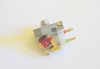
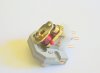
The suspension tube is adjustable for reach. The inner cylinder holding the suspension cable is also adjustable and so is the front pole shoe. Said features allow for very precise adjustment for optimum performance using customary test equipment and test records.
tri_pod
@ Manfred
Many of us are 'warped' by time and sometimes too attached to nostalgia
Shapes of things are also very often determined by whatever milling cutters are to hand..@OldADC
The suspension tube is adjustable for reach. The inner cylinder holding the suspension cable is also adjustable and so is the front pole shoe. Said features allow for very precise adjustment for optimum performance using customary test equipment and test records.
tri_pod

Mister Pig
Pigamus Maximus
Member last seen Sept 3, 2016.
Think this project has died on the vine.
Regards
Mister Pig
Think this project has died on the vine.
Regards
Mister Pig