Your's must still be valved then. (or reed relay)not all computers are the same .


You are using an out of date browser. It may not display this or other websites correctly.
You should upgrade or use an alternative browser.
You should upgrade or use an alternative browser.
New RCA cables. Sound is horrible.
- Thread starter Bingy
- Start date

petehall347
the brandy coffee man
it is old but not that old . it has on board audio .Your's must still be valved then. (or reed relay)

tadawson
Well-Known Member
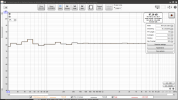
OK, fired up REW . . . The *only* way I can get to not display pink noise as flat is to errantly select "Spectrum" as a mode, as opposed to one of the RTA modes . . .Well I am measuring it another way - I like storing things in wav - and importing a pink noise file into REW needs 10 dB/decade correction. Since not many records contain good sweeps or pink noise; I left those rather poor tracks long time ago for high quality sweeps (CA-TRS1007/Ortofon).
'
Or, on the most current version, with RTA 1/48 octave:
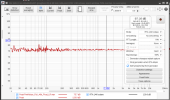
Last edited:

Thomas_AA
Well-Known Member
Running RTA is fine with pink noise. As mentioned I don’t do octave measurements for cartridges or other gear.
OK, fired up REW . . . The *only* way I can get to not display pink noise as flat is to errantly select "Spectrum" as a mode, as opposed to one of the RTA modes . . .
View attachment 3688179
Or, on the most current version, with RTA 1/48 octave:
View attachment 3688193

tadawson
Well-Known Member
And is the standard for audio analysis . . .Running RTA is fine with pink noise. As mentioned I don’t do octave measurements for cartridges or other gear.
The point is, I said "pink noise is flat on an RTA", and you argued. Set REW to actually *BE* and RTA and, well . . . true there as well.
And how you (atypically) use the tool does not change that.

In mine, the audio was integrated by the manufacturer onto the motherboard.mine hasn't got one .. not all computers are the same .
tadawson
Well-Known Member
But, meansuring/tuning a system is not (or should not be) "relative". You need to know that the potential issues that you see are real, and not artifacts of craptastic hardware. If you choose to deviate based on "taste", fine, but that doesn't justify a flawed tool (in the name of audiophool, perhaps?) 
Sure, if you are measuring just changes, it might work. (I could count the number of times I have felt the need to do that with a missing hand though . . . ).
Sure, if you are measuring just changes, it might work. (I could count the number of times I have felt the need to do that with a missing hand though . . . ).

JP
7480 74111110101115
Stating what's required for relative measurements doesn't imply that relative measurements are universally suitable for all applications. Obviously for before/after FR they'll do just fine, and if one is targeting a specific response they won't.
I couldn't count the number of times I've measured changes on the fingers and toes of everyone I know.
I couldn't count the number of times I've measured changes on the fingers and toes of everyone I know.
tadawson
Well-Known Member
But making a global statement (as per your comment) regarding your corner case isn't exactly accurate or honest either, since the initial comment did not specify your use case.Stating what's required for relative measurements doesn't imply that relative measurements are universally suitable for all applications. Obviously for before/after FR they'll do just fine, and if one is targeting a specific response they won't.
I couldn't count the number of times I've measured changes on the fingers and toes of everyone I know.
And, @catBot, for this one, dixie cups and string might have been enough!
JP
7480 74111110101115
But making a global statement (as per your comment) regarding your corner case isn't exactly accurate or honest either, since the initial comment did not specify your use case.
It was a standalone, self-explanatory comment. I never gave a specific case, certainly not "my" corner case. It would fit the OPs situation had they captured a before and after of the FR. The spirit of the comment was of enablement; that there are humble methods.
Do you have another straw man in mind, or are you about done?
tadawson
Well-Known Member
It was immediately after my comment, which placed it firmly in the context that I had set, since you made no statement(s) otherwise. (And I guess disproving BS and bad information is now considered "straws"?)
(And I find it hysterical that "relative" measurements and pretty much "irrelevant" in the majority of cases . . . )
(And I find it hysterical that "relative" measurements and pretty much "irrelevant" in the majority of cases . . . )
Last edited:
Thomas_AA
Well-Known Member
Yes that a mistake, but it works both ways with calibration. I don't use RTA much, perhaps if I do room measurements. For frequency response I use sweeps.And is the standard for audio analysis . . .
The point is, I said "pink noise is flat on an RTA", and you argued. Set REW to actually *BE* and RTA and, well . . . true there as well.
And how you (atypically) use the tool does not change that.
tadawson
Well-Known Member
NP! I just strive to ensure that other readers here get good information, that is generally based on best industry standards and practices.Yes that a mistake, but it works both ways with calibration. I don't use RTA much, perhaps if I do room measurements. For frequency response I use sweeps.
And, for your use case, I'm a bit surprised that you don't use white noise, since no "compensation" is needed (as with sweeps).
Myself, I tend to stick to pink, since it is more similar to human hearing, although most of what I do is system/room tuning, although running pink through a device post repair to validate seems viable as well from here.
It's all good, and hopefully folks can now understand both use cases!
- Tim
Thomas_AA
Well-Known Member
For the actual use case, there are no accurate pink or white noise tracks for frequency response measurements of cartridges that I know of. My initial suggestion was to use pink noise since the cable switch changes appeared to cause very large differences, and, secondly, pink noise tracks are more common to find on test records. If that would have showed no change, then he'd know it was not the cables at all and this thread would not have started. I don't use those pink or white noise any longer since I've got better test records.NP! I just strive to ensure that other readers here get good information, that is generally based on best industry standards and practices.
And, for your use case, I'm a bit surprised that you don't use white noise, since no "compensation" is needed (as with sweeps).
Myself, I tend to stick to pink, since it is more similar to human hearing, although most of what I do is system/room tuning, although running pink through a device post repair to validate seems viable as well from here.
It's all good, and hopefully folks can now understand both use cases!
- Tim
