I got mine in black. As you most likely know the problem is no gapless playback. That was initial disappointment. Also there was some problems with forwarding and back wasn't supported only to skip to the next track. PL100 I think it had a firmware update that gave that player gapless playback. PL20 also now has a firmware update that fixed the issues and put the smile back to my face. $200 is not bad price for the PL20. I manage to get mine for $180. PL100 and PL150 are car CD Players in a box. Nothing wrong with that. PL20 seems to be a new design that doesn't use old car CD player parts.These quality mini amps are great in my experience. Even the cheaply-made Lepai's sounded pretty good, but build quality was quite poor (had several fail after year or two). Fosi, Nobsound, SMSL are all great for what they are. I have Nobsound 2.1 powering my deck Polk speakers with in-ground sub -- the amp is outside in a protective box and has been through sub-zero winters and hot summers for 7 years and still sounds amazing. Have Fosi powering my kitchen 2.1 system, my living room TV 2.1 system, and the 2.1 audio system in a custom built arcade machine. All sound great and have been reliable. I have to agree with @Apreggiator that my Teac AG-H350 mini 5.1 receiver sounds slightly better than the micro amps, but not by much and for the price/size/convenience they are impossible to beat.
I have the SMSL PL100 CD Player. I had been looking for a LONG time for CD transport that was tiny and high quality and reasonably priced (most dedicated CD transports are ridiculously priced). The PL100 weighs a ton for as tiny as it is -- the density makes it feel like you are holding a brick!. And it works great. The faceplate graphics on the PL100 are ugly in photos, but it looks great in person. Now they have the PL150 and PL20. I still like the tiny design and layout of the PL100 best, but wish it had just a brushed silver face instead of the graphics. Haven't tried the other CD models, but I'd guess the quality is as good or even better. Hard to believe the quality you get for the price.


You are using an out of date browser. It may not display this or other websites correctly.
You should upgrade or use an alternative browser.
You should upgrade or use an alternative browser.
New world of HiFi with Chinese Class D Amps.
- Thread starter P.M.B.66
- Start date
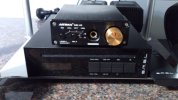

Ah, I'll just order some parts from Ali and build my own Eigentakt (or Hypex) amp then.I wouldn't be so sure about it. All the components for those amps you can find from Aliexpress.


Purifi is amazing, listened to it in the form of the well built SoundImpress PU400. (Their Hypex amps are great too.)One thing I've noticed is that even though a power amp's job should be to "add nothing" aka -a wire with gain, most all I've heard (even the better ones) do not accomplish this and add some color of their own. However, my Purifi Eval-1 class-D amp is the cleanest power amp I've ever heard, like a breath of fresh air that holds together extremely well at very high volumes with very little distortion, much better than other amps I've heard. It's extremely technical sounding. I know it's not a chinese amp, but is the closest of all the amps I've heard that seems to add nothing or take anything away from the music. I mention it because clarity of Class-D amps was mentioned earlier here and I can absolutely vouch for this. Maybe that's why it's called the Eval-1? It seems to allow for the evaluation of other connected equipment better without adding anything else to the signal so you can judge the other inter-connected components and equipment better.
P.s. regarding the Eval name; Iirc their first products were meant as evaluation (amp)boards for other manufacturers, but also made available for integration into a 'product' (which requires no r&d, just box the amp and power boards, test it, ship it) by various companies, next to the boards being offered directly to the public.

Ah, I see. So the 1ET400A modules may be engineered in Denmark (which sounds fancier) using Chinese parts for what is essentially Chi-Fi? It's a great way to add a bunch more money to the cost of a finished product than by claiming it was all from China in the first place.I wouldn't be so sure about it. All the components for those amps you can find from Aliexpress.

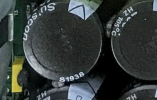
Sounds about right. IIRC, my version uses Rubycon caps (good) on the amplifier modules themselves, but Su'scon caps in the corresponding Hypex SMPS1200A400 power supply which are "sus" parts and not very high quality. They probably won't last as long as Nichicon. I should probably get in there and replace them with something more durable. I've had two Behringer DEQ2496 Mastering Processors fail within a couple years, both because of the cheap Chinese caps they used to help keep costs down to provide such a rich feature set at such a low msrp.

Adaboy5
Well-Known Member
These small amps remind of small micro systems of the early 2000's. They are available on the used market for cheap and are very good. I picked up a JVC executive system some years back for the bedroom and its killer. It can play DVD's, CD's, FM/AM, Aux, sub out remote, connect to a tv.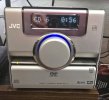
I get a kick out of these threads. ive owned many preamps and many amps. so many that I have gone back years later and bought the same things again after finding or upgrading a piece like the speakers.
ive built several hypex amps and ive had many ICePower class D amps.. the original ICE Power amps are a little too thin for my ears. cause fatigue. I just sold a 2502 and swapped it with a Class G Yamaha . it has the power of D but a little more fuller than the Crown 2502.
ive not bought the tiny amps mainly because my speakers are Polk LSiM707's and the need real balls not neutered and I dont think those baby amps can hang.
I am thinking about trying the new Purifi amps . they are different than the Hypex but how different I dont know.
ive built several hypex amps and ive had many ICePower class D amps.. the original ICE Power amps are a little too thin for my ears. cause fatigue. I just sold a 2502 and swapped it with a Class G Yamaha . it has the power of D but a little more fuller than the Crown 2502.
ive not bought the tiny amps mainly because my speakers are Polk LSiM707's and the need real balls not neutered and I dont think those baby amps can hang.
I am thinking about trying the new Purifi amps . they are different than the Hypex but how different I dont know.
Last edited:

Here's some classy well made Hong Kong class D amps that don't get much mention.....
 www.cymaxdigital.com
Power Amplifiers - Products - Cymax Digital Limited
www.cymaxdigital.com
I had the impression that both are very high quality. Only difference in my view might be where you use them or have personal preference even that you could use either one in similar success.Sounds about right. IIRC, my version uses Rubycon caps (good) on the amplifier modules themselves, but Su'scon caps in the corresponding Hypex SMPS1200A400 power supply which are "sus" parts and not very high quality. They probably won't last as long as Nichicon. I should probably get in there and replace them with something more durable. I've had two Behringer DEQ2496 Mastering Processors fail within a couple years, both because of the cheap Chinese caps they used to help keep costs down to provide such a rich feature set at such a low msrp.
View attachment 3704181
With a box it is from US$2400. These look good.Here's some classy well made Hong Kong class D amps that don't get much mention.....
Power Amplifiers - Products - Cymax Digital Limited
This has always been my point of argument. You mainly pay for the pretty box and brand name. You could build your own for lot less.
I generally agree, but your comparison is a 7 channel purify amp with toroidal transformer from Cymax vs: a 2 channel Hypex NCx500 with SMPS Hypex power supply...But from Ali you can find the internals for about US$550.
Two totally different beasts.
Of course. I didn't deep dive into it. Looks the same and there are many buying options.I generally agree, but your comparison is a 7 channel purify amp with toroidal transformer from Cymax vs: a 2 channel Hypex NCx500 with SMPS Hypex power supply...
Two totally different beasts.

In my main system I use eight channels of Purifi 1ET400A modules with Weiss OP2-BP discrete Opamps in the buffers. Each module has a dedicated Hypex SMPS1200A400 power supply. The drivers for each stereo channel are controlled by a 4x2 active crossover. A DSP keeps it all under accurate control for my listening room. Class D amplification works exceptionally well in this setup. I also have twelve Fosi V3 monos I utilize in other systems in my home and I have no regrets. I will probably never go back to A/B amps.
Nice.In my main system I use eight channels of Purifi 1ET400A modules with Weiss OP2-BP discrete Opamps in the buffers. Each module has a dedicated Hypex SMPS1200A400 power supply. The drivers for each stereo channel are controlled by a 4x2 active crossover. A DSP keeps it all under accurate control for my listening room. Class D amplification works exceptionally well in this setup. I also have twelve Fosi V3 monos I utilize in other systems in my home and I have no regrets. I will probably never go back to A/B amps.
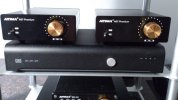
And here I'm thinking having two Aiyima A07 Premiums Bridged and Bi Amping is something extreme. 
Attachments
This 'Cheap and cheerful class D comparison (CCCDC)' comparison on ASR might be of interest to the readers of this thread. 
 www.audiosciencereview.com
Cheap and cheerful class D comparison (CCCDC)
This is what the title says: A quick comparison of cheap-ish class D amps. Rough inclusion criteria: Is a class D speaker amplifier Does not include a DAC Is below 350 $ for a stereo setup The contestants ManufacturerModelPrice rangePowerSINADPFFBLoad depend.BalancedVol. controlSub outLow...
www.audiosciencereview.com
This 'Cheap and cheerful class D comparison (CCCDC)' comparison on ASR might be of interest to the readers of this thread.
Cheap and cheerful class D comparison (CCCDC)
This is what the title says: A quick comparison of cheap-ish class D amps. Rough inclusion criteria: Is a class D speaker amplifier Does not include a DAC Is below 350 $ for a stereo setup The contestants ManufacturerModelPrice rangePowerSINADPFFBLoad depend.BalancedVol. controlSub outLow...
There is probably some good info here, because the testing is at least "apples to apples"
(even if they are slightly spoiled apples
- see below)That said, I think ASR does all of it's power testing with a 1khz signal, instead of the using full-spectrum 20-20khz with a specified +/- deviation (in other words, ASR is far below what the FTC amplifier rule requires for specs). The 1khz is highly offensive for a site claiming to be about "science". And doubly offensive given that Class-D amplifiers naturally struggle to have flat response over the full spectrum (20-20khz). Class-D can be made to have flat response full spectrum, but it is far from guaranteed -- choosing 1khz hides the inherent weakness area of modern amps. Choosing a testing criteria of 1khz for power tests also has nothing whatsoever to do with music.
To put this in context, this is a 1 khz test signal:
This is Dazed & Confused, as a representative music example:
To my ear, they seem dissimilar
I'm not sure why ASR doesn't get called out on this. If it was a valid test (full power, sustained, 20-20khz, with rated distortion, with FR deviation), ASR woudl be a great resource. Without that, it seems like a joke, for amp testing at least, that often paints a false picture.
That forum is full of hearing impaired morons that can't even hear the difference between Op Amps and only rely on numbers and misinformation in this cult forum. Sorry. Wouldn't waste my time. Give them few truths and they lose their s*** and can't debate like adults turning to personal insults. Unfortunately this audiophile hobby has many that can't hear and then turn to argue with people that can.This 'Cheap and cheerful class D comparison (CCCDC)' comparison on ASR might be of interest to the readers of this thread.
Cheap and cheerful class D comparison (CCCDC)
This is what the title says: A quick comparison of cheap-ish class D amps. Rough inclusion criteria: Is a class D speaker amplifier Does not include a DAC Is below 350 $ for a stereo setup The contestants ManufacturerModelPrice rangePowerSINADPFFBLoad depend.BalancedVol. controlSub outLow...

mrehorst
Super Member
I saw your interesting posts over there. How do you explain that all the Rs, Ls ,and Cs in the speaker's crossover have no effect on the sound but differences between op-amps are audible? It seems unlikely...That forum is full of hearing impaired morons that can't even hear the difference between Op Amps and only rely on numbers and misinformation in this cult forum. Sorry. Wouldn't waste my time. Give them few truths and they lose their s*** and can't debate like adults turning to personal insults. Unfortunately this audiophile hobby has many that can't hear and then turn to argue with people that can.
There was no discussion about surround sound. Plus too much challenge again got me banned even that I provided references to back it up. All I got after that was requests to put it in different wording, nit-picking and disrespect that I dished back or ignored. Yeah that forum is a cult with mislead minions mostly. Not sad as it was expected that the admin couldn't handle the truth.I saw your interesting posts over there. How do you explain that all the Rs, Ls ,and Cs in the speaker's crossover have no effect on the sound but differences between op-amps are audible? It seems unlikely...
-------------------------------------------------------------------------------------
But if you are talking about surround sound the effect has to come from the Audio Visual Receiver itself plus the original source to create the surround sound effect (DVD/Blue Ray usually). That's another point why AVR is not the best for Bi Amping and doesn't work. We are still talking about 2.0/2.1 systems. So taking front signal and rear signal that are different and asking the speaker to do two different things simultaneously won't have a good result. That should be logical.
But two separate Stereo Amps with volume knob the same signal Left and Right used to power the High and Low separate you get more power and the control between the woofers and Tweeters separate by controlling the power. Crossover balances the power between High and Low but by powering the High and Low separate you now have the control. You controlling the power between high and Low the crossover loses lot of it intended function. Yes it is still there but not doing much.
If you ask a question from Google you get fairly good answer. "Benefits of passive amping?
Passive bi-amping provides several potential benefits, primarily by delivering more power and control to speakers that have separate inputs for high and low frequencies.
Crutchfield +1
The main benefits include:
- Increased Power and Headroom: By using a separate amplifier channel for each speaker section (woofer and tweeter), you are effectively providing more total power to each driver. This results in greater dynamic range and more headroom, which can lead to a cleaner and fuller sound, especially during demanding musical passages.
- Better Driver Control and Tighter Bass: The extra power dedicated to the low-frequency driver can result in tighter, more controlled bass response and more impactful low notes.
- Reduced Intermodulation Distortion: By separating the amplification for different frequency ranges, the low-frequency signals are less likely to modulate or interfere with the high-frequency signals, which helps to reduce distortion and "muddy" sound.
- Improved Clarity and Soundstage: Many listeners report increased clarity, better definition, and a wider, more open soundstage, as the separation of signals allows for a more accurate placement of instruments within the stereo image.
- Easier Load for Amplifiers: The speaker presents a less complex and "easier" electrical load to each amplifier because each amp only has to deal with a limited frequency band. This can reduce stress on the amplifiers.
- Cost-Effective Upgrade Path: If you already own a compatible receiver or a second amplifier, passive bi-amping can be a relatively inexpensive way to improve sound quality compared to upgrading the main amplifier or moving to a more complex active system with external crossovers.
-------------------------------------------------------------------------------------------------------------------
Op Amps we have been talking about Class D Amps all along where the circuitry is simple. If we were talking about expensive A/AB Amps with over the top complicated circuitries you would be right the audible difference would be minimal and you most likely wouldn't hear the difference. But Class D is very simple where changing something small can make a huge difference to bad or worse or brilliance. That's why there are popping new vendors selling specially made Op Amps that can cost as much as the Amp itself. Yes there is a big difference. But here is the catch that gets halve of the audiophiles nickers in a knot. Their hearing is not good enough. These people only rely on numbers because their hearing is poor and now we are back into the circuitry design where you can and can't. I personally don't claim to have a super human hearing but it is good enough to spot differences even on youtube blind tests. Of course not all because some just are very very poor quality and some Op Amps are so close that it is more of a guess from a gut feeling. But if you would ask to spot differences between ne5532, opa1612 or Sparkos Op Amps you should be able to hear it with a good difference even on moderate youtube comparison.
Again ask a question. "why different Op amps sound different on Class D amps and not on class A/AB amps?"
Op-amps in Class D amps have a higher impact on sound because they operate within the critical, high-gain feedback loop that shapes the pulse-width modulation (PWM) and manages output filter interaction, whereas in Class A/AB amps, they often only act as pre-gain stages with less impact on the final output.
YouTube +1
Key Reasons for the Difference:
- Feedback Loop Sensitivity: In many Class D designs, the input op-amp is directly involved in the feedback loop that controls the switching mechanism. A different op-amp changes the loop gain and speed, significantly affecting the reconstruction of the audio signal.
- Interaction with Output Filter: Class D amps use an output inductor/capacitor filter. The op-amp's characteristics influence how the amplifier handles the impedance load of the speaker, which can lead to high-frequency variations (brightness or harshness) depending on the chip used.
- Input Stage Role: In Class A/AB amplifiers, the input stage (op-amp) is generally just a pre-amplifier stage. While it sets the input impedance, it is less critical to the final output signal's integrity compared to the switching modulator of a Class D amplifier.
- Modern Class D Design: In older or budget Class D designs, the lack of post-filter feedback made them more sensitive to the op-amp choice. Newer, high-end designs (like Purifi) are less susceptible to these changes.
Ooberpad +4
StereoNET +2
-------------------------------------------------------------------------------------------------
Hope that helps.
Last edited: