• The move to the new server is done. There are some software and database maintenance updates in process. This has us passing the hat around to help out. We appreciate any donations. Seriously, even a dollar helps. The payment page may be found here - https://www.audiokarma.org/support.html

NIKKO SOUND SYSTEM, SET UP HELP!

Whatever you do don't turn it on with those bare speaker wires like that. If the two wires (+/-) touch one another you may get a smoke show. The bare wires plug into the speaker terminals on the back of the speaker.

On the back of the amp the top row is speaker A and the red and black terminals on the left are for the right speaker, the red and black pair on the right are for the left speaker. Confused yet? Notice below each pair is a R for right speaker and a L for left speaker.

Take the bare, unconnected end of the speaker wire and connect the pair on the R terminal to the right speaker and the pair on the L terminal to the left speaker. The back of the speakers will also have a red and black. Make sure the red on the amp is on the red of the speaker and the black on the black of the speaker. Each speaker L and R will have one pair of wires from the corresponding L and R from the amp.
 
Good stuff said above...
I also suggest that you unplug the tape deck, equalizer and synth from the set up completely. Just tuner to preamp to amp and amp to speakers. While you are rearranging things, put the Alpha amp on the top of the stack so that it doesn't get too hot. Start it at lowest volume and don't turn it up for a few minutes, then very slowly. It may have some issues due to its age, but it may be worth it to get it serviced as required.
 
The speakers must wire to the Alpha as pictured. The alpha is the power amplifier. The Beta30 is the preamplifier that handles all the inputs from various sources. Your sources are tuner, tape deck, turntable, etc. The easiest to start with is the Gamma 30 tuner, the pre-amplifier, and the amplifier only. Connect left-right from the tuner to left-right labeled "tuner" on the back of the Beta preamp. Connect pre-amp "out" on the Beta to the "in" terminals on the Alpha amplifier. Connect the speakers to the aalpha amplifier. Now you have source (tuner) into pre-amp with all it's controls into the power amplifier into speakers. Plug everything in to power and turn it on you should at least get static. You may need to connect a small piece of wire to antenna to get an FM station. Good luck. By the way, yes it looks like the speakers probably need some work but should push SOME sound. If you see or smell any smoke unplug everything. I'm only partially kidding.
Hey Tom! Thanks for the break down!
So I'll start with the Alpha, Beta and Gamma, but should I assume that I will not be using the power distributor until I start increasing my sources, ie tape deck, turntable, etc?
 
I STRONGLY suggest you find a friend who has some idea of hooking up stereo equipment BEFORE you plug anything in and turn it on. Wouldn't want to cause any unnecessary damage to the equipment you just saved.
 
Hey Tom! Thanks for the break down!
So I'll start with the Alpha, Beta and Gamma, but should I assume that I will not be using the power distributor until I start increasing my sources, ie tape deck, turntable, etc?

Yeah ignoring the tape deck, synth, and equalizer would probably be the best bet for now. Honestly I wouldn't even bother fully disconnecting them without really noting how it was all connected together first. I'd think testing wise it would be worth bypassing that power distributor. The other thing is you'll want to make sure everything is actually switched off. If they were going through the distributor the power buttons/switches for each component is potentially in the on position and driven by the buttons on the power distributor. Ideally you'd be using a variac to slow start equipment that's been sitting for a long time to prevent damage. If you've got some decent techs in the area it might be best to start there and see if they can bring up the equipment slowly.
 
The reason for using a variac is that electronics that have been sitting for a long time particularly the capacitors in them are more prone to failure when they suddenly try to come back to full power after being unused for an extensive period. With a variac the power can be controlled and slowly brought up giving the capacitors time to reform.
 
Lots of good advice here...but sometimes bordering on information overload. There has to be at least one member in LA who could take time to contact Ms Woo, arrange a visit, inspect all the gear, then connect everything up properly to give her years of enjoyment. By no means am I denigrating Ms Woo's ability...but a setup like that could be quite intimidating.
 
Susan,

DO NOT turn anything on until speakers are properly connected. Look at the 2nd pic of your posts #15 and #16, showing the loose ends of the speaker wires. Each speaker wire (cable) is actually a pair of wires. Those individual wires must never be allowed to touch each other when the amplifier is on, else severe and expensive damage could very likely happen to your amplifier (the Apha)

And in your pics it appears that indeed one of those pairs of wires are twisted together or at least touching each other.

As for the speakers themselves, it is not possible to determine just by looking whether they would be safe to connect to. The one with the missing dust cap (in the center of the speaker) is of concern. I would not hook up that speaker (or any speaker really) until it is tested with a meter for possible short circuit. If there is a short circuit, it would damage the Alpha in the same way as described above.
 
Last edited:
Hi Aptone- I tried looking for a manual, but seems a lot harder to find. One of the speakers are broken. Not sure If I can use that one.
Do you know if this fixable?

Thanks for looking for a manual. As Roger 2 and others say above, do not turn anything on with the speaker wires touching each other as shown in post #15. The dust cap is torn on one speaker, but it is hard to know if it is just cosmetic or if the speaker is really damaged internally. It may still work. Can you share a picture of the back of the speakers where the speaker wires would connect? There may be screws with + and - markings or black and red colored posts like on the back of the Alpha amplifier.

To connect the speakers the wire connected to the red + post needs to be connected to the red + connection on the speaker. The same with the back - wire. Twist the metal wire strands together to make a nice tube as opposed to a spray. This will reduce the risk of one strand of wire from the red (+) wire touching the black (-) wire, which is a short circuit and can cause damage.

Most speaker wires, which are a pair of metal conductors, have some way to tell one conductor from the other. If the speaker wires do not have silver and copper colored metal conductors visible though the plastic insulation (if age has not turned the metal brown and indistinguishable from each other), and there is not a white stripe like OutlawSun says, then the speaker wire may have ribs on one side of the plastic insulation on the wire and the other side may be smooth. This will help you figure out which side is (+) and which is (-). Look to see how smooth or ribbed, silver or copper, or white striped or plain is connected to the Alpha Amplifier, and do the same thing at the speaker.
 
Gulp. 400+ watts power input to that solid state amp. That's serious equipment. Find someone who really does know what they are doing to help you get it up and running. Maybe not the kid next door. You will really like that stereo when it's all working.
 
a lot of advice here. But to me all Bad advice....skips over pieces of equipment, so it's not being connected properly. Assumptions are made to not use those pieces, or ignore them. No, hook them all up properly. The EQ goes between the preamp and the amp which is not even addressed. I came here looking to see how to connect the ATD-1 (Nikko Time Delay) and it's ignored too. Personal preference on whether you dial it up or not, but at least connect the equipment properly instead of bypassing half of it.
 
a lot of advice here. But to me all Bad advice....skips over pieces of equipment, so it's not being connected properly. Assumptions are made to not use those pieces, or ignore them. No, hook them all up properly. The EQ goes between the preamp and the amp which is not even addressed. I came here looking to see how to connect the ATD-1 (Nikko Time Delay) and it's ignored too. Personal preference on whether you dial it up or not, but at least connect the equipment properly instead of bypassing half of it.

You want to put the equalizer in the tape monitor loop, not between the preamp and the amplifier. This is so that you can easily remove it from the signal path to achieve the 'purest' signal if desired. You can also look it up in the owners manual, the Nikko eq owners manuals can be found on manualmachine.com.

HTH,

bs
 
You want to put the equalizer in the tape monitor loop, not between the preamp and the amplifier. This is so that you can easily remove it from the signal path to achieve the 'purest' signal if desired. You can also look it up in the owners manual, the Nikko eq owners manuals can be found on manualmachine.com.

HTH,

bs
won't both my tape monitor loops be occupied by the cassette deck and RTR?
 
won't both my tape monitor loops be occupied by the cassette deck and RTR?

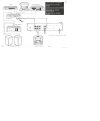
Nope. The EQ has four pairs of RCA receptacles. Two are to be plugged into the receiver, and the other two are for the tape deck to be plugged into it. I've attached the diagram from the Nikko EQ-20 for your reference.

The four pairs of connectors on the EQ should be an indication by themselves as to how it was intended to be connected to the system.

HTH,

bs
 

Attachments

  • EQ-20.jpg
    EQ-20.jpg
    38.3 KB · Views: 5
Nope. The EQ has four pairs of RCA receptacles. Two are to be plugged into the receiver, and the other two are for the tape deck to be plugged into it. I've attached the diagram from the Nikko EQ-20 for your reference.

The four pairs of connectors on the EQ should be an indication by themselves as to how it was intended to be connected to the system.

HTH,

bs
Thanks for that !!
 
Back
Top Bottom