• The move to the new server is done. There are some software and database maintenance updates in process. This has us passing the hat around to help out. We appreciate any donations. Seriously, even a dollar helps. The payment page may be found here - https://www.audiokarma.org/support.html

NJM5532 vs NJM2068, Looking for opinions for replacing an NJM4558

I have a Kenwood Basic C1 preamp (and another for spare parts) and after going thru it, it is my reference preamp. It has a NJM2068DD in "flat amp" location (first line-level stage) and then a NJM2114D in the "tone control" stage.

Although the C1 was designed as a basic preamp, it has a very neutral sound and adds absolutely nothing to the signal path. Signal to noise is >90dB at unity gain.

I swap out the NAD and Kenwood every few months.

I just bought a Kenwood L-1000C, it arrived earlier this week. It will probably be at least a couple of months before I will be able to do anything with it but I am looking forward to doing a restomod and comparing it to my Yamaha CX-1.

Cheers,
James
 
Thanks for the info. :thumbsup:
At this point I have decided to use the NJM2068DD to start with. Today I installed a socket and should be finished with the modding early next week. Then I will give it a test ride.

Cheers,
James
I don't care what anyone says, the 2068 used within its limits (which are not too many for preamp duty) will sound as good as the boutique op-amps that cost $20 versus the 2068. I even have the JRC version of the infamous National LM4562 and I can't tell any difference.
 
For the record I used the NJM2068DD in my amps to start with and the amps sounded pretty good. For reference this op-amp is being used in the inverting circuit of one amp when two of them are bridged together. For one stand alone amp the op-amp never comes into play.

After a month+ I replaced the 2068 with a LME49720, which is a better version of the LM4562. The amps sounded decidedly better with the 49720. I did raise the voltage supply stabilizing caps from 10µF to a 47µF with a 0.1µF piggybacked.

:beerchug:,
James
 
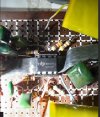
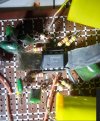
I have a picture of my op-amp swap in my DIY phono preamp. Presently, I used the LM4562. I think it is a much better op-amp, with a brighter and cleaner sound. The sound of the NJM2068 is closer to the LM4562. The NE5532 is also capable, giving a clean, neutral sound. In my subjective listening impression, the op-amps rank as follows: 1. LM4562, 2. NJM2068, 3. NE5532. The LM4562 offers the most musical, refined sound, the NJM2068 is a close second, and the NE5532 provides a more neutral, analytical character. The NE5532 is regarded as a classic, versatile op-amp that delivers a very neutral, transparent sound.

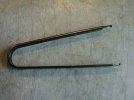
There is a flat plastic straw under the op-amp that is used for easier pulling out and swapping the op-amp.
 

Attachments

  • NE 5532AP TEXAS INSTRUMENTS PHONO PREAMP made in China.jpg
    NE 5532AP TEXAS INSTRUMENTS PHONO PREAMP made in China.jpg
    103.7 KB · Views: 23
  • JRC 2068D PHONO PREAMP.jpg
    JRC 2068D PHONO PREAMP.jpg
    93.8 KB · Views: 23
  • LM4562 TEXAS INSTRUMENTS PHONO PREAMP.jpg
    LM4562 TEXAS INSTRUMENTS PHONO PREAMP.jpg
    177.7 KB · Views: 21
Recently, I bought two Muses8820 op-amps mainly because I was curious to see if there was any audible sonic differences between the 2068 & 5532.

The price was right too and affordable for testing or experimenting. Below is a list of op-amps I swapped in/out of my pre-amp for listening comparisons:

LM4562
Muses8820
NJM2114
NJM2068
5532
NJM4580
NJM4562

CD is my go to source for listening comparisons. Loudspeakers are three-way horn system >100dB efficient.

1. From a residual noise standpoint, I could not detect any audible difference between any of the above listed op-amps. Ear up (2 inches away) to the tweeter, there is a faint hiss.
2. In all honesty, I could not pick any "one as better" between any of the above op-amps. They all sounded great despite their price and performance differences.
 
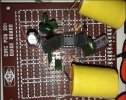
This is my simple DIY project for an active phono preamp using the NE5532N op-amp. The circuit is fully functional, and I have tested it successfully. I built it on a pre-drilled PCB, which made the assembly process easier. The sound quality is good. Overall, I am pleased with the results of this project.
 

Attachments

  • actual phono preamp build.jpg
    actual phono preamp build.jpg
    158.7 KB · Views: 24
  • gorex active phono preamp.jpg
    gorex active phono preamp.jpg
    55.5 KB · Views: 26
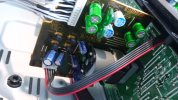
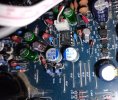
I just change the op amps local supply caps to polymer that's enough of a gain without getting into op amp complexities and different often tiny SMT package sizes.

Polymers have lower ESR, a better response at all frequencies so bypassing is unnecessary, better lifespan and absorb more ripple than conventional wet aluminium electrolytics, only downside is they are slightly more expensive. Done this many times always get a more exacting cleaner presentation. Polymers are the silver cans.
 

Attachments

  • IMG_20260629_124308.jpg
    IMG_20260629_124308.jpg
    96.1 KB · Views: 10
  • IMG_20260628_163130~2.jpg
    IMG_20260628_163130~2.jpg
    155.9 KB · Views: 10
Last edited:
Back
Top Bottom