• The move to the new server is done. There are some software and database maintenance updates in process. This has us passing the hat around to help out. We appreciate any donations. Seriously, even a dollar helps. The payment page may be found here - https://www.audiokarma.org/support.html

No DC Bias in 8010

Mike244

Active Member
Hi,
I start serviced my "new" 8010 (Europe version of 771) and saw some minor (I hope) problems: noise from both channels on minimal volume position, variable DC voltage on output- 2-15 mV, and most strange thing - no DC Bias!!! On both channels its 0 and not changed during adjustment with VR03-VR04. I replaced all 4 transistors in diff-cascade on new SA992 - noise became less but still hearable. I checked both 2SC281 -its ok. All 4 output transistors also was checked with transistors tester and its OK.
Most magic things that reciver play good hifi sound! ;)
Whats my next steps -checking (replaycing) SC1124/SA706?
 
Register to hide this ad
What is DC bias? Are you referring to DC offset or bias current? Where are you measuring and what meter are you using?

Also, what voltage does it operate on? A true European version will not operate on 110V.

- Pete
 
hi,
DC idle current I mean. I try set it up by Service manual - putting DC milliammeter instead fuse F01/F02.
Im in Europe and have 230V in wall socket :)

WBR
Mike
 
ok, I did it with "classic" way - measuring voltage on emitter resistors R15, R16(0,33Ohm) - and its work - I can adjust and setup 6,6mV on each resistor ! :rockon:
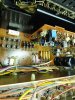
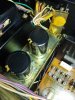
at the same time slightly updated the rectifier board and main caps:
2021-06-23 21-23-46.JPG 2021-06-23 21-23-36.JPG
 
Last edited:
ok, I did it with "classic" way - measuring voltage on emitter resistors R15, R16(0,33Ohm) - and its work - I can adjust and setup 6,6mV on each resistor !
You probably have a blown meter fuse, used to protect the current ranges of a meter.
 
Seems unlikely then, but it should work both ways - what other explanation can there be?
 
I also have an 8010. It's playing in the kitchen right now. We have been having an ongoing discussion about the definition of a "European" model. If you can see the ID plate on the back of your 8010, does it list 4 input voltages or just 220/240? On the power cord, does it have a flat two blade power plug or is it directly compatible with your power outlets?

- Pete
 
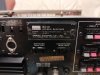
Pete, on ID plate I have 4 Voltage - see photo. Unfortunately, the native plug was barbarously cut off, so I can't say anything about it - I was extending the cable

2021-06-25 22-28-00.JPG
 
Thanks for checking. The 4 voltages indicate it's a General Export Model available to any Sansui distributor worldwide. The mid '70s alternate versions like the 8010 fall into this category. All that I've seen are General Export models. Many of them may have been distributed in Europe so the alternate versions may have been preferred by European distributors. It's also interesting the original plug was cut off. The General Export models all came with the flat two blade plug common to Japan and North America.

As far as your idle current issue, I'm with John, check the meter fuse and that it's set correctly to measure amperage. Usually this means changing the positive probe to the A/mA terminal. I apologize if this seems insultingly basic but we've seen this mistake many times.

- Pete
 
ok i forced myself to check the fuses in all 3 testers. It's hard to believe, but in all 3 they were burned !!!! This is despite the fact that one of the digital testers is practically new (2 months since I received it) and I don't remember measuring the current with it before that Sansui !
And one small problem remains - the output voltage spontaneously changes from 0 to 5-7mV, even after replacing all 4 transistors in the differential stages of both channels. Is it worth replacing the SC1124 / SA706 transistors to find the source of the problem?
 
Last edited:
The DC offset will dance around a little. 5-7mV is actually very little movement. If you are seeing that variation when measuring idle current, something is off. Try a little freeze spray.

- Pete
 
0001043_freeze-spray_300.jpeg

It's a very cold aerosol for chilling components. It can cause a failing component like a leaky transistor or diode to act up. It may get better or worse when chilled but any change will indicate a faulty component.

- Pete
 
Back
Top Bottom