


You are using an out of date browser. It may not display this or other websites correctly.
You should upgrade or use an alternative browser.
You should upgrade or use an alternative browser.
NS-1000M upgrade opinions?
- Thread starter Soundscape
- Start date
Register to hide this ad
Though this has been turned into a kit to sell a particular brand of caps. Work appears to be thorough.
Edit Would have to agree on the use of iron core inductors, ie don't, while foil is expensive, it's a one off cost, even the woofer inductor can be air/foil.
Haven't studied/compared the final results of each implementation, hopefully both use quality components. When I eventually get a NS-1000 x/m... from yahoo I would diy the xover.
Edit Would have to agree on the use of iron core inductors, ie don't, while foil is expensive, it's a one off cost, even the woofer inductor can be air/foil.
Haven't studied/compared the final results of each implementation, hopefully both use quality components. When I eventually get a NS-1000 x/m... from yahoo I would diy the xover.
Last edited:

Wow. That sounds like one huge-ass network he's putting in front of the drivers!
What are the odds the speaker would actually sound better?
What are the odds the speaker would actually sound better?

this video looks like a lot of drama.Wow. That sounds like one huge-ass network he's putting in front of the drivers!
What are the odds the speaker would actually sound better?
If you want no non-sense and proven improvements, look at http://www.troelsgravesen.dk/Yamaha-NS1000.htm
I just wish Troels made something similar for the NS-2K
this video looks like a lot of drama.
If you want no non-sense and proven improvements, look at http://www.troelsgravesen.dk/Yamaha-NS1000.htm
I just wish Troels made something similar for the NS-2K
I tried the Troels crossovers. Listened to them for a few years.
They did fix some of the issues mentioned in that video and the bass response was definitely better, but I suspect they also made the speaker less sensitive because they seemed to use higher order filters with more resistance in line with the drivers. I communicated with Troels and fiddled with that a lot even descreasing that resistance, which improved the sound a bit to my ears.
After a few years of comparing the Troels crossovers to the stock rebuilt crossovers (I have two sets of NS-1000M), I eventually removed the Troels crossovers, rebuilt another set of stock NS-1000M crossovers with really good Mundorf caps (stock values), and now the Troels crossovers have been retired. They sounded good, but somehow less transparent. There seemed to be less of the "the band is in the room" sensation with the Troels crossovers.
I do believe there is something to the "less is more" design methodology for audio as far as the signal path goes. Dropping more stuff in your signal path is rarely an improvement...

Yes indeed and thanks for what I was already thinking!I do believe there is something to the "less is more" design methodology for audio as far as the signal path goes. Dropping more stuff in your signal path is rarely an improvement...

Danny says all crossovers are cheesy though. As soon as he said the 8 caps were polycaps I knew I wouldn't do much to the crossover. Might swap the cement mold resistor with a Mills type. Maybe see if I could orient the coils better if possible. Tin wires to the driver posts and call it good. $20 job.
Best to hope for with a crossover is to do no "harm" and break even. You never break even. Another one for less is more... I'd stick with the OEM design and replace iron core inductors... and caps. Always thought those 8 cylindrical caps were electrolytic, learn something every day...Danny says all crossovers are cheesy though.

Sparkplug
Super Member
If, god forbid, I ever have to redo my 500M crossovers, there are speaker specific electrolytic caps here that sell for $30 to $60 each. They’re supposed to be excellent though I don’t know by way of direct experience. Other than that, I ain’t touchin nothin …Danny says all crossovers are cheesy though. As soon as he said the 8 caps were polycaps I knew I wouldn't do much to the crossover. Might swap the cement mold resistor with a Mills type. Maybe see if I could orient the coils better if possible. Tin wires to the driver posts and call it good. $20 job.
Last edited:
Drifting off topic a little... @Sparkplug I'd be interested in your comments/views on post #7 at
The general premise being well designed crossovers would only use electrolytics in the bypass positions, ie, not in audio path so using boutique items in these positions would be wasteful. Trying to learn something.
Yamaha NS-500m crossover schematic help
I posted this previously in the speaker forum and it was buried by traffic, before anyone that might be able to help could see it. I have exhausted every resource I could find to obtain a copy of the crossover schematic for my new to me NS-500m speakers. It seams the service manual that has what...
audiokarma.org
The general premise being well designed crossovers would only use electrolytics in the bypass positions, ie, not in audio path so using boutique items in these positions would be wasteful. Trying to learn something.
Sparkplug
Super Member
I don’t think I’m remotely qualified to give advice on speaker refurbishment, however, personally I consider those shunt capacitors as audio path as well. If I ever touch my NS-500M pair, I’d use whatever type caps that are already installed. From some photos I’ve seen, they look like electrolytic but one can never be sure by photos alone, some may well be high grade film.Drifting off topic a little... @Sparkplug I'd be interested in your comments/views on post #7 at
Yamaha NS-500m crossover schematic help
I posted this previously in the speaker forum and it was buried by traffic, before anyone that might be able to help could see it. I have exhausted every resource I could find to obtain a copy of the crossover schematic for my new to me NS-500m speakers. It seams the service manual that has what...audiokarma.org
The general premise being well designed crossovers would only use electrolytics in the bypass positions, ie, not in audio path so using boutique items in these positions would be wasteful. Trying to learn something.

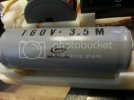
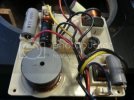
Also, I wouldn’t touch the inductors as they’re incredibly hard to match and hardly ever go bad.
I picked up my 500M pair (3-way) in an auction for less than a couple of hundred bucks and they amaze me everyday. Paired up with the B-2, it’s like having Beethoven’s string quartets performed for you in your living room, live. If you’re thinking of upgrading the crossovers, don’t go cheap would be my advice, electrolytic or otherwise … save elsewhere. Always follow the manufacturer’s lead. If you ever go through with this, please advise of the results, would really like to know.
Edit: There was no post#7 at the link above, the last post was #6 … did I miss something?

Last edited:
They sure look like electrolytics eh? If Danny's right, that's the first mass produced speaker I've ever seen with polycaps throughout the crossover network. Usually see poly's just in the tweeter ckt on the good speakers.Always thought those 8 cylindrical caps were electrolytic, learn something every day...
Not regarding NS-1000's at the moment:
I see the same stuff in almost all speakers 2 grand and below. The good brands use polycaps in the tweeter and electrolytics everywhere else cuz they're really cheap cost.
I think the bass ckt suffers the most from penny pinching manufacturers. They use iron core coils to reduce size & cost & electrolytics for the same reason. Complimentary air core coils & poly caps in the bass ckt are huge when ya put good parts in there. I leave the iron core coils alone honestly.
The big payoff is a smooth frequency roll off between ckts. Electrolytics are fast and sound tight, but sound fine with analog source music. Digital source music though, and all that compressed streaming stuff nowadays, is poor to my ear with cheap crossover parts.
The cement mold resistor dulls the tweeter, cheap cost there too. I use like for like values on every part, just better quality parts. Long story short:
New polycaps
New resistor
Stagger apart existing coils
Direct solder wires to drivers
My MO

I see the same stuff in almost all speakers 2 grand and below. The good brands use polycaps in the tweeter and electrolytics everywhere else cuz they're really cheap cost.
I think the bass ckt suffers the most from penny pinching manufacturers. They use iron core coils to reduce size & cost & electrolytics for the same reason. Complimentary air core coils & poly caps in the bass ckt are huge when ya put good parts in there. I leave the iron core coils alone honestly.
The big payoff is a smooth frequency roll off between ckts. Electrolytics are fast and sound tight, but sound fine with analog source music. Digital source music though, and all that compressed streaming stuff nowadays, is poor to my ear with cheap crossover parts.
The cement mold resistor dulls the tweeter, cheap cost there too. I use like for like values on every part, just better quality parts. Long story short:
New polycaps
New resistor
Stagger apart existing coils
Direct solder wires to drivers
My MO
thanks for the feedback. I looked up Troels crossovers back when I had NS-1000 and most people that used them sounded happy with the upgrade and I actually thought by eliminating the pots, his solution actually removed components from the signal path rather than add.I tried the Troels crossovers. Listened to them for a few years.
They did fix some of the issues mentioned in that video and the bass response was definitely better, but I suspect they also made the speaker less sensitive because they seemed to use higher order filters with more resistance in line with the drivers. I communicated with Troels and fiddled with that a lot even descreasing that resistance, which improved the sound a bit to my ears.
After a few years of comparing the Troels crossovers to the stock rebuilt crossovers (I have two sets of NS-1000M), I eventually removed the Troels crossovers, rebuilt another set of stock NS-1000M crossovers with really good Mundorf caps (stock values), and now the Troels crossovers have been retired. They sounded good, but somehow less transparent. There seemed to be less of the "the band is in the room" sensation with the Troels crossovers.
I do believe there is something to the "less is more" design methodology for audio as far as the signal path goes. Dropping more stuff in your signal path is rarely an improvement...
On the note of the video in question here, it was likely a defected speaker set that manifested the ringing in the mids. I am speculating since I never did any measurements myself, but I've seen measurements done and shared by others and the ringing Danny is calling out, was not there.
Last edited:
now we're talking...saving money on concert tickets every time you turn the system onPaired up with the B-2, it’s like having Beethoven’s string quartets performed for you in your living room, live.

so might need to improve more than your speakers in your system, but I could not agree with you more on the system.Digital source music though, and all that compressed streaming stuff nowadays, is poor to my ear with cheap crossover parts.
me like that. Lytics would be dried up anyway after 40+years.I use like for like values on every part, just better quality parts
Sparkplug
Super Member
now we're talking...saving money on concert tickets every time you turn the system on
I thought the same thing. Usually people just ship him one speaker to save shipping cost. Maybe he got trolled on purpose or by accident with a faulty driver in the speaker. He seems legit but maybe he brainwashed me a little from too many videos on his channel. It's oddly addictive.it was likely a defected speaker set that manifested the ringing in the mids.
Sometimes I get exhausted from technicalities and partake in threads like this. Just grab a stool at the Yamabar and shoot the breeze.
do a little search on the DIY forum on this video and topic. The graphs I saw there did not show the ringingSometimes I get exhausted from technicalities and partake in threads like this. Just grab a stool at the Yamabar and shoot the breeze.
Similar threads

- Replies
- 3
- Views
- 1K


