• The move to the new server is done. There are some software and database maintenance updates in process. This has us passing the hat around to help out. We appreciate any donations. Seriously, even a dollar helps. The payment page may be found here - https://www.audiokarma.org/support.html

Old Panasonic LL/LN Capacitor ID Help Needed

mcdmgb

AK Subscriber
Subscriber
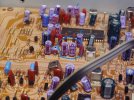
I am trying to determine which caps in a Harman Kardon TD202 cassette deck are low noise/low leakage caps. The deck currently has a mix of TK and Panasonic e-caps which I believe are original from the early to mid 1980s. Unlike other service manuals, the SM for this unit does not indicate any of the e-caps as LL/LN, but I would be surprised if the deck doesn't have any. In my limited experience, the LL/LN caps usually have an orange or yellow sleeve. Not so in this unit. All the caps have some shade of blue sleeves. I observed that there is a difference in polarity markings of some of the Panasonic caps connected to the Dolby chip, making me think that Panasonic at that time used that difference to designate their LL/LN e-caps from their standard e-caps. Attached is a picture that shows the two different types of polarity markings as shown on the caps in the blue circle. The cap on the right is rated at 0.68 uf/50v and the left is rated at 2.2 uf/50V. I am assuming that the cap on the right is a LL/LN cap and that Panasonic used that style of polarity markings to designate their LL/LN e-caps. There are 4 other caps in the photo with polarity markings similar to the right cap. The others are (3) 0.68 uf/50V and (1) 1uf/50V and are associated with the Dolby circuit. These 5 e-caps are the only ones in the unit with this style of polarity marking. Can someone verify my assumption regarding the style of polarity marking on the right cap designating a LN/LL e-cap?

Thanks
 

Attachments

  • P1010015.edit.JPG
    P1010015.edit.JPG
    156 KB · Views: 23
Register to hide this ad
I can't help with your actual question regarding the original caps.

But, I can advise you that most of us now replace low-value electrolytics with film caps. These caps are not low-leakage, they are (for all intents and purposes) no-leakage. The lower the leakage, the lower the noise. Win win. And, the sizes and prices are generally doable below about 4.7µF

Back in the day, film caps were unavailable in low voltage, and were both huge and expensive in values above 1µF. Electrolytics were tiny and cheap in comparison.

I like the Kemet R82 series, in 50V or 63V, whatever's available in the value I need. They can also be had with long leads as opposed to shorter PCB pins;

 
I can't help with your actual question regarding the original caps.

But, I can advise you that most of us now replace low-value electrolytics with film caps. These caps are not low-leakage, they are (for all intents and purposes) no-leakage. The lower the leakage, the lower the noise. Win win. And, the sizes and prices are generally doable below about 4.7µF

Back in the day, film caps were unavailable in low voltage, and were both huge and expensive in values above 1µF. Electrolytics were tiny and cheap in comparison.

I like the Kemet R82 series, in 50V or 63V, whatever's available in the value I need. They can also be had with long leads as opposed to shorter PCB pins;

Any reason you prefer these polyester to polypropylene? I usually use polypropylene. Especially in the signal path, like say, Wima's for PCB mount. So I usually just go with polypropylene for pretty much everything. That way I only have to keep one type in stock.
Thanks.
 
Any reason you prefer these polyester to polypropylene? I usually use polypropylene. Especially in the signal path, like say, Wima's for PCB mount. So I usually just go with polypropylene for pretty much everything. That way I only have to keep one type in stock.
Thanks.

I do prefer Polypropylene, but even Polyester is a vast improvement over electrolytic. I also I find that the Kemet's are usually in stock in the values/voltages that I need.
My days of stockpiling hundreds of all different components are over; I'll order (sometimes..) to get the price break, but that's it.
 
I do prefer Polypropylene, but even Polyester is a vast improvement over electrolytic. I also I find that the Kemet's are usually in stock in the values/voltages that I need.
My days of stockpiling hundreds of all different components are over; I'll order (sometimes..) to get the price break, but that's it.
True, the polyester are better than those lytics. I just hadn't ever used the Kemit's. Do you know off hand if they make a polypropylene film cap in that style?
I'm done stocking a lot of parts these days myself other than buying extra resistors and diodes when ordering. They're cheap and good to have on hand. I bought a big selection of surplus 1w carbon films from .5 ohm to 3meg about 4 years ago. I've had to replace the more common ones since. I payed around $10 for them. 10ea. on tape of all the values in the selection. And there is a huge selection.
I'll have to remember the Kemits. :thumbsup:
 
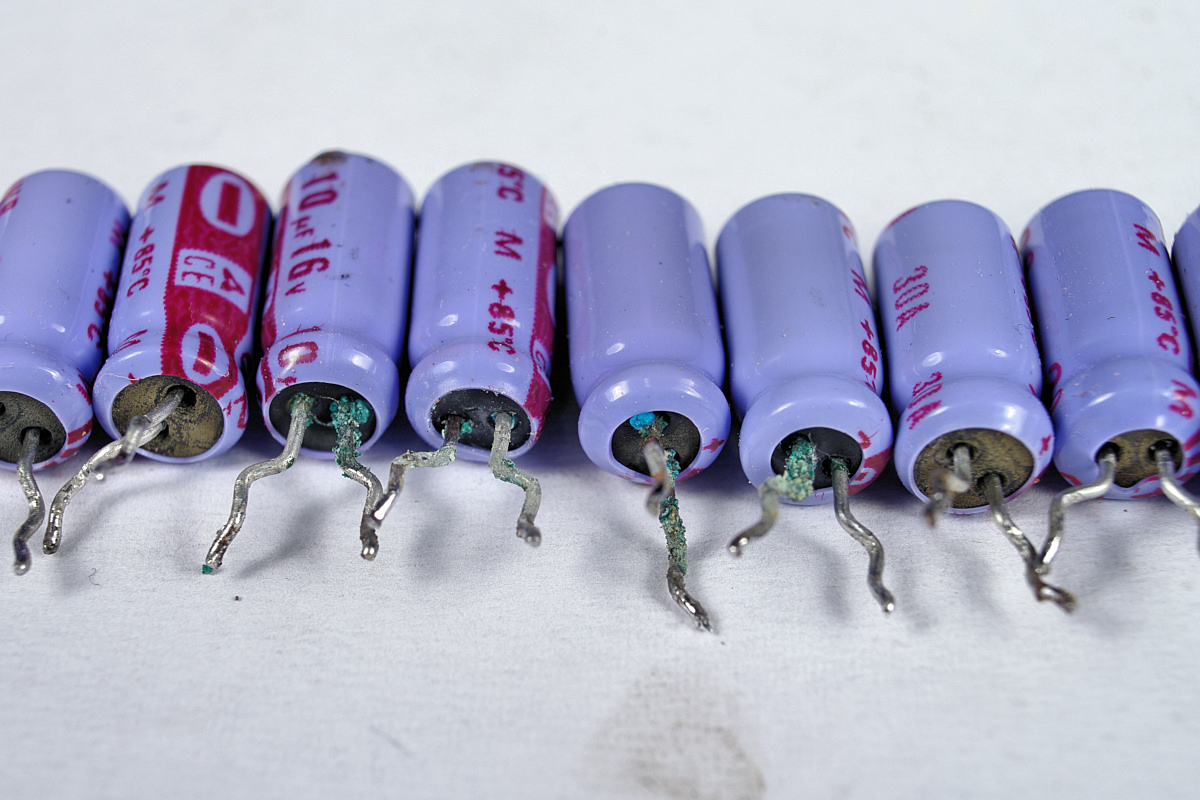
I've read they could either be low ESR caps, or audio/LL. From where I've seen them in circuits, I'd say LL. I replace them on sight as I've found them to be crap, open, and generally falling apart and corroded. These were pulled from an H/K EQ8 and were in the signal path.

19762420235_9f39e6f7e2_o.jpg
 
I've read they could either be low ESR caps, or audio/LL. From where I've seen them in circuits, I'd say LL. I replace them on sight as I've found them to be crap, open, and generally falling apart and corroded. These were pulled from an H/K EQ8 and were in the signal path.

19762420235_9f39e6f7e2_o.jpg
They do seem to something other than a standard e-cap. There were 5 of them in the Dolby circuit and nowhere else. I can't find the values I need in LL e-caps, so I'm taking the suggested of the earlier poster and replacing them with film caps.
 
Yes, anything below 3.3uF I replace with film. I also like the Kemet R82 series with long leads (Z3, CK, or DQ at the end of the part number). Can't stand the short pins of the Wimas, even though they might come in PP. There are other series of Kemets that are PP, but I like the compact size of the R82s. In fact, I don't even find Wima MKP series (PP) in anything larger than 1uF at mouser. The MKS series isn't PP, its Polyethylene Terephthalate (PET).
 
Last edited:
Yes, anything below 3.3uF I replace with film. I also like the Kemet R82 series with long leads (Z3, CK, or DQ at the end of the part number). Can't stand the short pins of the Wimas, even though they might come in PP. There are other series of Kemets that are PP, but I like the compact size of the R82s. In fact, I don't even find Wima MKP series (PP) in anything larger than 1uF at mouser. The MKS series isn't PP, its Polyethylene Terephthalate (PET).

A while back I buggered up a parts list somehow and did NOT order my usual Kemet R82's with the long leads. I ordered the short pin types instead...I can't believe I did that!
 
Just looked again at both mouser and digikey. The ONLY PP caps I can find in the "upper" values of 1uF to 4.7uF are limited to 2.2uF and 1uF, and are available in 7.5mm lead spacing, which then requires bending the leads a bunch. I doubt many can hear the difference between PP and Polyester, so I'll probably just stick with the R82 series.
 
that's my main go to for film caps above 1uf. i use kemet ph426 pp for smaller values. but i've got your regular stock of panasonic and wimas as well.
Unfortunately, lead spacing is too wide for most applications IMHO at 15mm starting at 1uF and up.
 
I doubt many can hear the difference between PP and Polyester, so I'll probably just stick with the R82 series.

I don't know about you, but I (unfortunately) regularly have to deal with the "special" people who think they can hear the difference between dielectrics :rolleyes:
 
i don't go all gung ho with replacing polar 'lytics with films like the masses on here do.

there are instances where it can cause problems.

i'm not smart enough to know where it can or can not be done so i play it safe.

if i see once where it caused a problem then i may think twice but if i see where it happened to 2 different people then i pay attention.
 
I also stock some small quantities of low value lytics in 100V for some PS type uses.
i don't go all gung ho with replacing polar 'lytics with films like the masses on here do.

there are instances where it can cause problems.

i'm not smart enough to know where it can or can not be done so i play it safe.

if i see once where it caused a problem then i may think twice but if i see where it happened to 2 different people then i pay attention.

Yes indeed. There are some PS applications where the small amount of leakage through an electrolytic is a calculated factor to ensure stability.
 
Yes indeed. There are some PS applications where the small amount of leakage through an electrolytic is a calculated factor to ensure stability.
The recommendations that I have seen suggest using films only in the audio path. I don't think that I have seen any suggestions that they be used in the PS. Have you used films for PS applications?
 
I use them very rarely in power supply applications, except in small values where required for decoupling or bypassing needs. This is mostly in regulated tube-type power supplies, or in SS supplies where a film cap is originally specified.

The applications where film caps can cause problems is when you use them as replacements for electrolytics in solid state supplies. Some circuit topologies (and especially some solid state voltage regulator IC's) don't take kindly to this substitution, causing instability or even outright oscillation.
 
Yes indeed. There are some PS applications where the small amount of leakage through an electrolytic is a calculated factor to ensure stability.
@EastPoint had an issue where he replaced a polar 'lytic with a film in the signal path and it put noise on a control. he installed a new polar 'lytic, problem solved.
 
Back
Top Bottom