I have a friend who asked for my help on setting up his whole house system. Here is what he wants to do:
Drive multiple zones of speakers simultaneously from one amplifier at moderate listening volume. The amp is a Sansui AU-5500 35 wpc and is rated to handle two sets of 8 ohm speakers (so total load of 4ohm is ok)
He has one pair of 8 ohm speakers in the living room, one pair of 8 ohm speakers on the deck, and two pairs of ceiling mount 4 ohm speakers to go in the dining room.
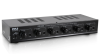
He picked up this Pyle 6 channel selector so that he could have volume control over the different zones with the assumption that he could just connect everything as their own stereo pair and all will be fine but I am not so sure how the Pyle selector works or if this would be ok for the amp.
Based on my understanding connecting the two sets of 8 ohm speakers should be fine for the amp, however throwing the additional two pairs of 4 ohm ceiling speakers makes things complicated. A direct parallel connection to the amp would show an impedance of less than 2 ohms and would likely cause damage to the amp. We could wire the two pairs 4 ohm ceiling speakers in series to make the dining room a single 8ohm load, but three 8 ohms loads in parallel would still be less than 4 ohm for the amp to drive and I would be worried about smoking the amp.
The thing I am unclear on is if this Pyle unit does anything to adjust the overall impedance that the amp sees so that more speakers can safely be connected. Looking inside the Pyle unit it appears there is a couple transformers for each channel, is it possible that these are used to adjust the impedance for each channel so that with all speakers connected the amp still only sees a 8 or 4 ohm load? The wording in the manual doesn't really say and includes an impedance chart showing what the impedance is with multiple speakers connected:
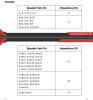
My interpretation of this is that if you connected 3 pairs of 8 ohm speakers the overall impedance would be 3.1 ohms, which seems not good for the amp. I am curious if anybody has more experience with these units and what they are capable of.
The Pyle unit can connect two sources and has an A/B selector for which amp powers which speakers, so the option I suggested was to use the Sansui in the A input to power the 8 ohm living room and the dining room speakers, with the dining room ceiling speakers wired in series making them an 8 ohm load also. Then run from the pre-out or tape out of the Sansui into a second amp with the output connected to the "B input" of the Pyle, and use this to drive the outdoor speakers.
But I dunno, maybe that is not necessary and everything can just be connected to the Pyle and powered by just the Sansui amp? Any insight appreciated, Thanks I uploaded the Pyle manual here too
Drive multiple zones of speakers simultaneously from one amplifier at moderate listening volume. The amp is a Sansui AU-5500 35 wpc and is rated to handle two sets of 8 ohm speakers (so total load of 4ohm is ok)
He has one pair of 8 ohm speakers in the living room, one pair of 8 ohm speakers on the deck, and two pairs of ceiling mount 4 ohm speakers to go in the dining room.
He picked up this Pyle 6 channel selector so that he could have volume control over the different zones with the assumption that he could just connect everything as their own stereo pair and all will be fine but I am not so sure how the Pyle selector works or if this would be ok for the amp.
Based on my understanding connecting the two sets of 8 ohm speakers should be fine for the amp, however throwing the additional two pairs of 4 ohm ceiling speakers makes things complicated. A direct parallel connection to the amp would show an impedance of less than 2 ohms and would likely cause damage to the amp. We could wire the two pairs 4 ohm ceiling speakers in series to make the dining room a single 8ohm load, but three 8 ohms loads in parallel would still be less than 4 ohm for the amp to drive and I would be worried about smoking the amp.
The thing I am unclear on is if this Pyle unit does anything to adjust the overall impedance that the amp sees so that more speakers can safely be connected. Looking inside the Pyle unit it appears there is a couple transformers for each channel, is it possible that these are used to adjust the impedance for each channel so that with all speakers connected the amp still only sees a 8 or 4 ohm load? The wording in the manual doesn't really say and includes an impedance chart showing what the impedance is with multiple speakers connected:
My interpretation of this is that if you connected 3 pairs of 8 ohm speakers the overall impedance would be 3.1 ohms, which seems not good for the amp. I am curious if anybody has more experience with these units and what they are capable of.
The Pyle unit can connect two sources and has an A/B selector for which amp powers which speakers, so the option I suggested was to use the Sansui in the A input to power the 8 ohm living room and the dining room speakers, with the dining room ceiling speakers wired in series making them an 8 ohm load also. Then run from the pre-out or tape out of the Sansui into a second amp with the output connected to the "B input" of the Pyle, and use this to drive the outdoor speakers.
But I dunno, maybe that is not necessary and everything can just be connected to the Pyle and powered by just the Sansui amp? Any insight appreciated, Thanks I uploaded the Pyle manual here too
Attachments
Last edited: